Toddler Girl Bedroom · Listicle
20 Toddler Bedroom Girl Setups On A Tiny Budget

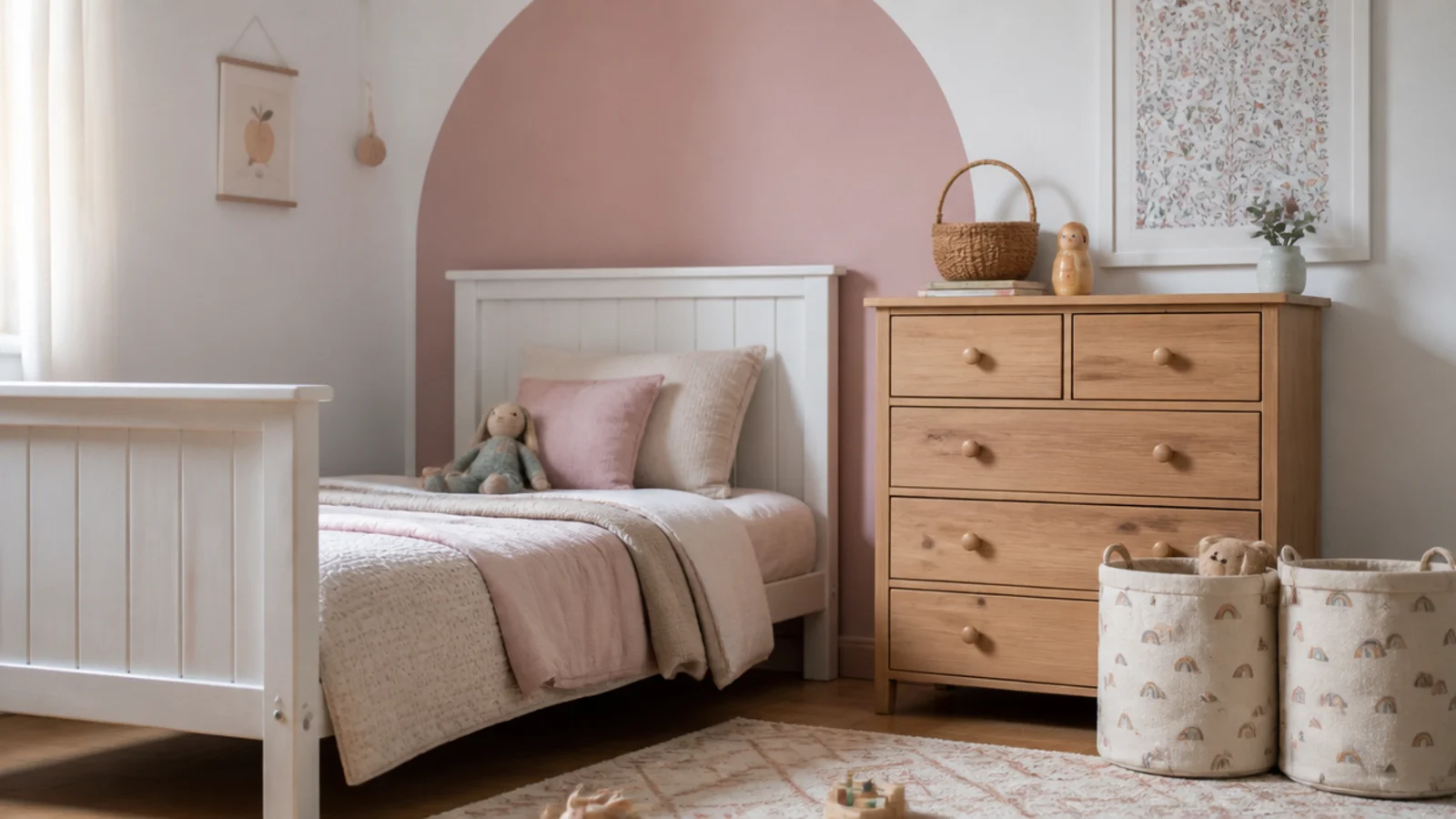
The cheapest room I ever put together for a two-year-old came to about $260, and most of that was the mattress. Everything else was thrifted, repainted or made from a single board. What I learned doing it is that a toddler bedroom girl setup fails on the same three things whether you spend $300 or $3,000: furniture that is not strapped down, blinds with a cord on them, and storage she cannot reach. Those are all cheap to fix. What costs money — the frame, the dresser, the rug — is exactly what secondhand markets are full of. Here are twenty setups that keep the safety spend and cut everything else.
In this guide22 sections — tap to openHide
- 1.Where a toddler bedroom girl budget actually goes
- 2.Rearrange before you buy anything at all
- 3.Buy the mattress new and thrift the rest
- 4.One tester pot paints the only feature you need
- 5.Convert the cot instead of buying a bed
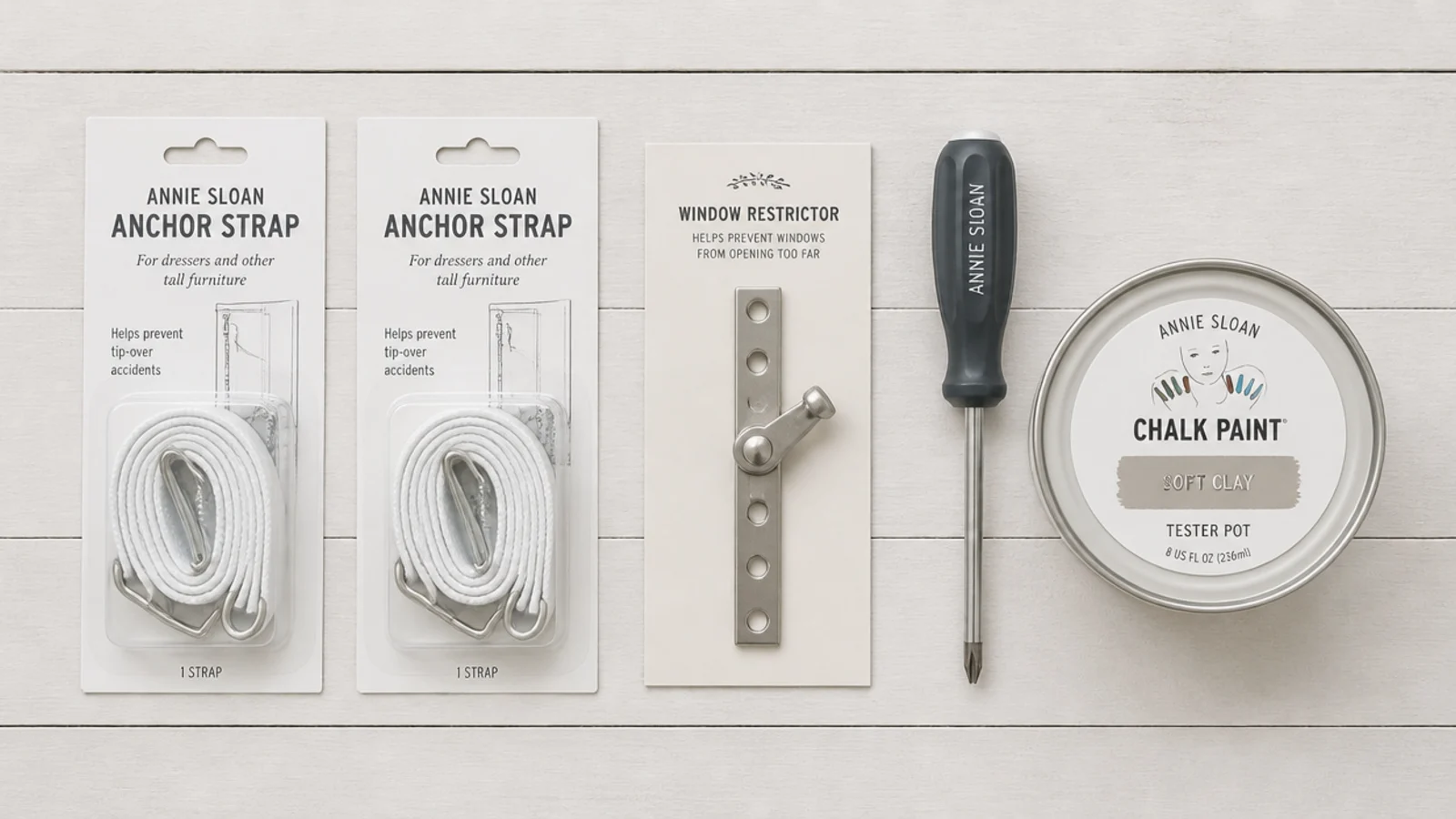
- 6.Spend twelve dollars on straps before anything else
- 7.A fifteen dollar decal pack does the theme
- 8.Fabric bins at four dollars beat toy boxes
- 9.Sand and repaint a charity shop dresser
- 10.Turn a curtain panel into a bed canopy
- 11.Replace corded blinds for about thirty dollars
- 12.Make a floor cushion from a duvet cover
- 13.Cut three picture ledges from one board
- 14.Change the knobs, keep the furniture
- 15.Rotate library books instead of buying them
- 16.Build a peg rail from a batten and dowel
- 17.Paint the inside of the wardrobe, not the outside
- 18.Low voltage fairy lights well above the bed
- 19.Sew cushion covers from remnant fabric
- 20.Frame her own paintings in cheap clip frames
- 21.A hand-me-down rug over a new gripper pad
- 22.Mistakes to Skip
Where a toddler bedroom girl budget actually goes
Two things get bought new. The mattress, because a used one carries an unknown history of damp, and the safety hardware, because it costs almost nothing. A new single mattress runs $120 to $200, cordless blinds $30 to $70 a window, a two-pack of anchor straps about $12, and a window restrictor $8. That is your non-negotiable list, and it comes to roughly $180 to $290 depending on window count.
Everything structural can be secondhand. Solid wood dressers, bed frames, bookcases and chairs turn up constantly at $20 to $60, and a solid carcass with ugly paint is a far better buy than new flat-pack at the same money. Three checks before you hand over cash: no cracked joints, no lidded toy box unless it has a safety hinge, and nothing painted before 1978 unless you are prepared to test for lead. Sand, prime and repaint with a water-based low-VOC paint, then strap anything over about 24 inches to a stud.
The theme layer is the last $60 to $90. Cushion covers, a duvet set, a decal pack and a tester pot. Keep it there and the room can change character three times before she starts school without you buying furniture twice. If the floor plan is the real constraint rather than the money, the small room layouts come first.
1. Rearrange before you buy anything at all
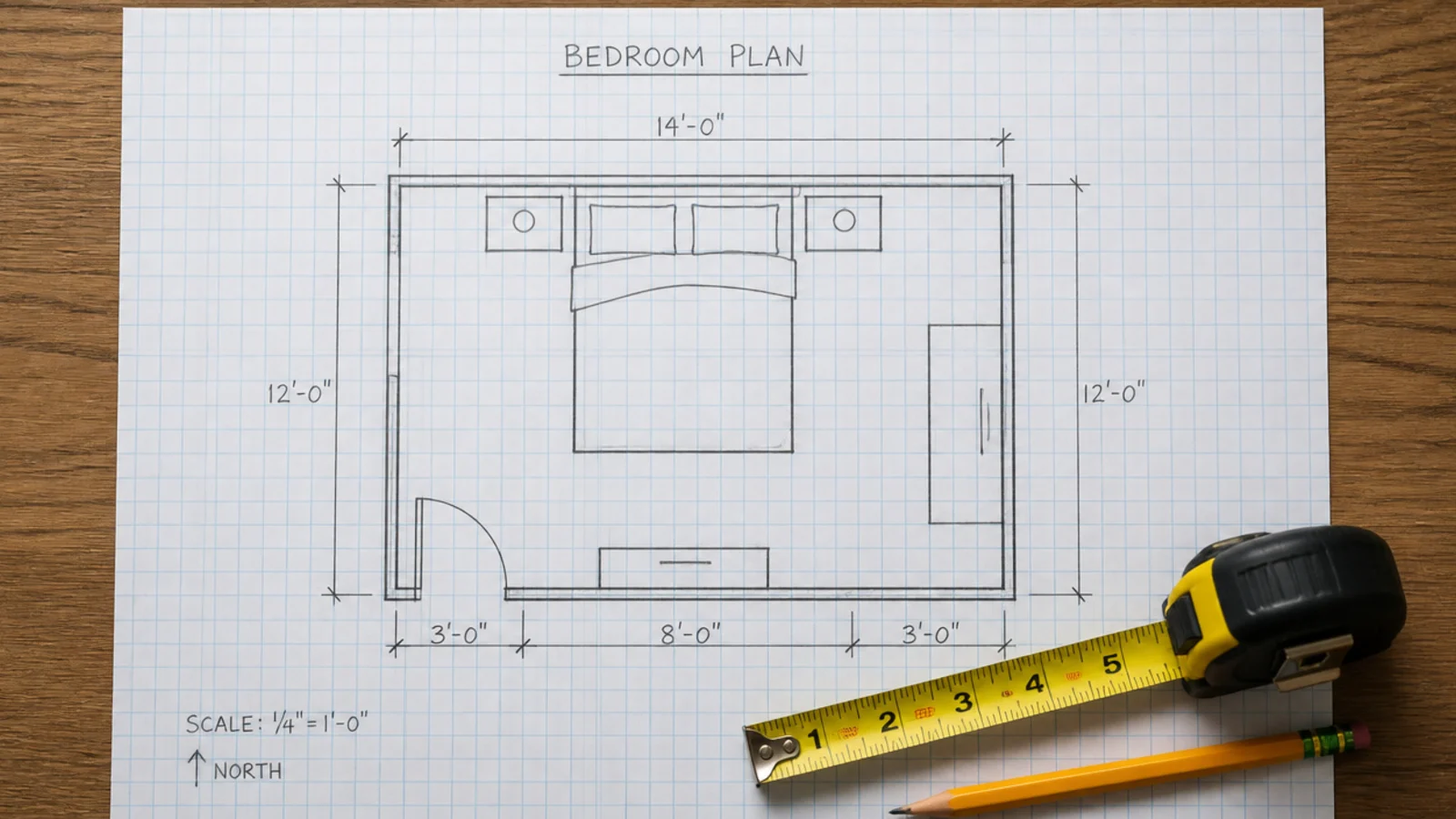
Draw the room on graph paper at a quarter inch to the foot and move paper rectangles around before you move furniture. Half the rooms I am asked to fix need nothing bought — they need the bed off the window wall, 36 inches of clearance to the sill, and the play zone consolidated into one 25 square foot patch instead of three scattered corners. Free, and it takes an evening.
2. Buy the mattress new and thrift the rest
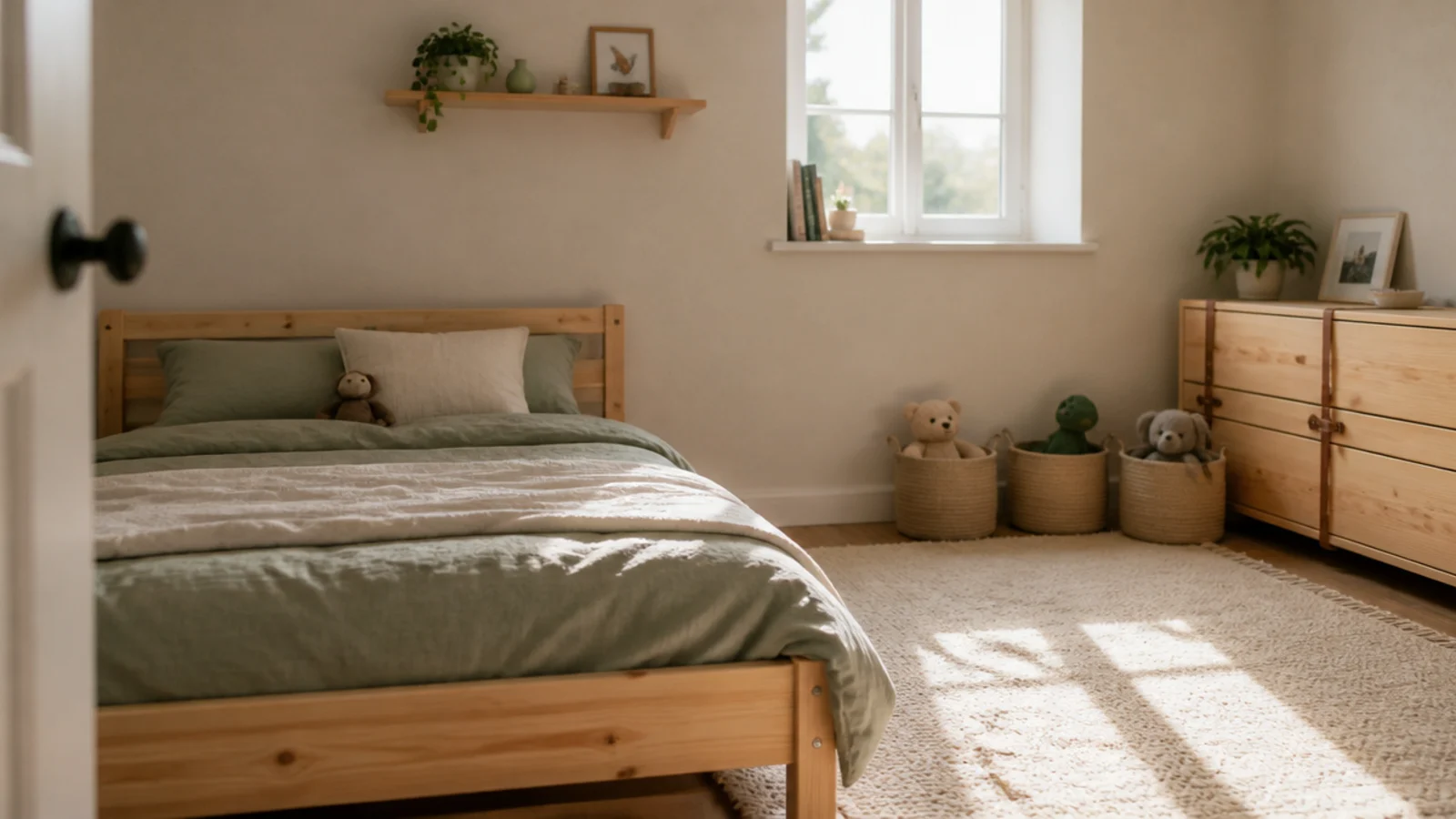
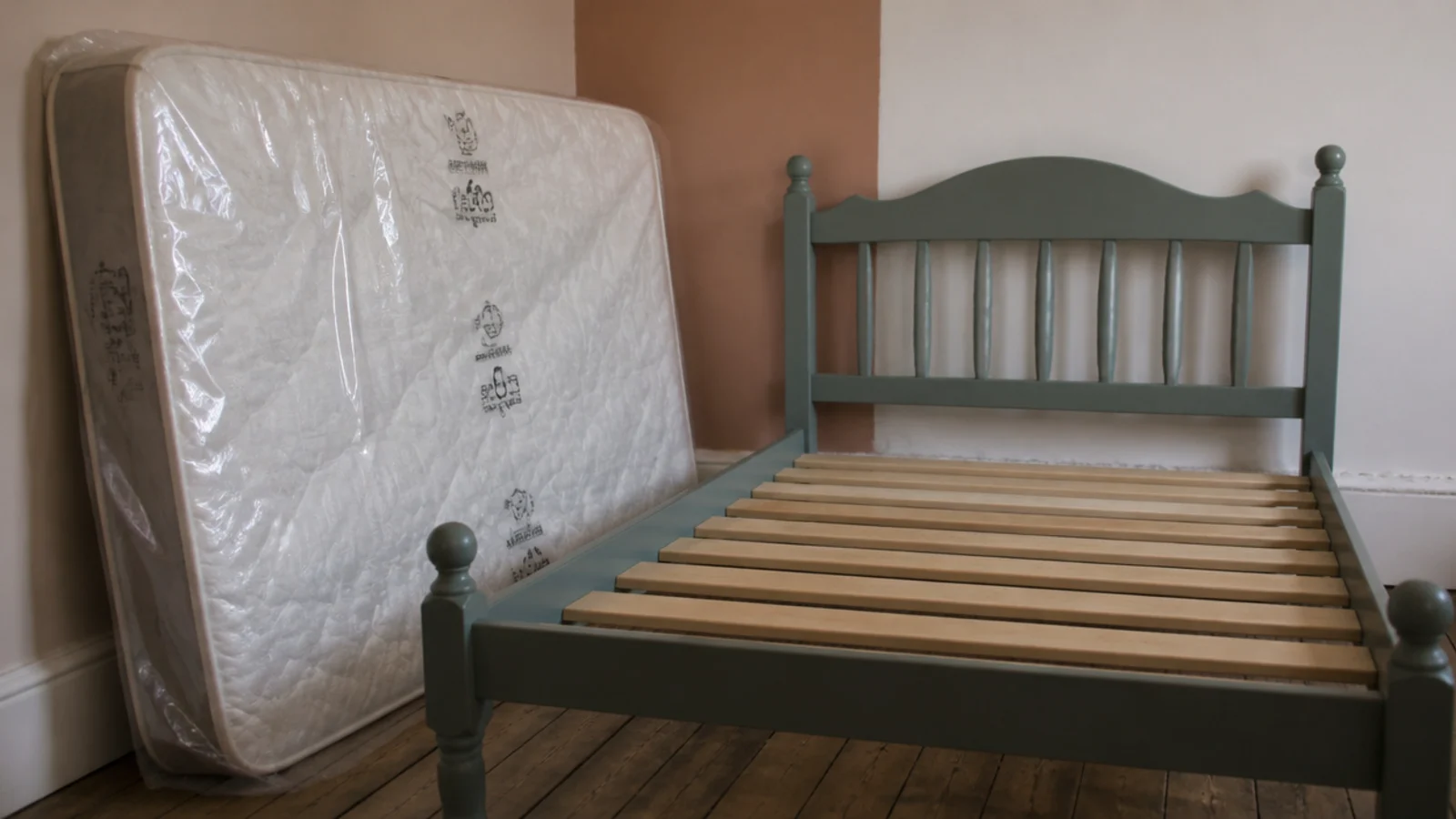
A new twin mattress at $120 to $200 is the single item worth full price. Secondhand mattresses can carry mould in the core and dust mite loads you cannot wash out, and there is no way to inspect either. Frames, on the other hand, are just timber: a solid pine single turns up secondhand at $30 to $60, and a coat of paint hides forty years of scuffs.
3. One tester pot paints the only feature you need
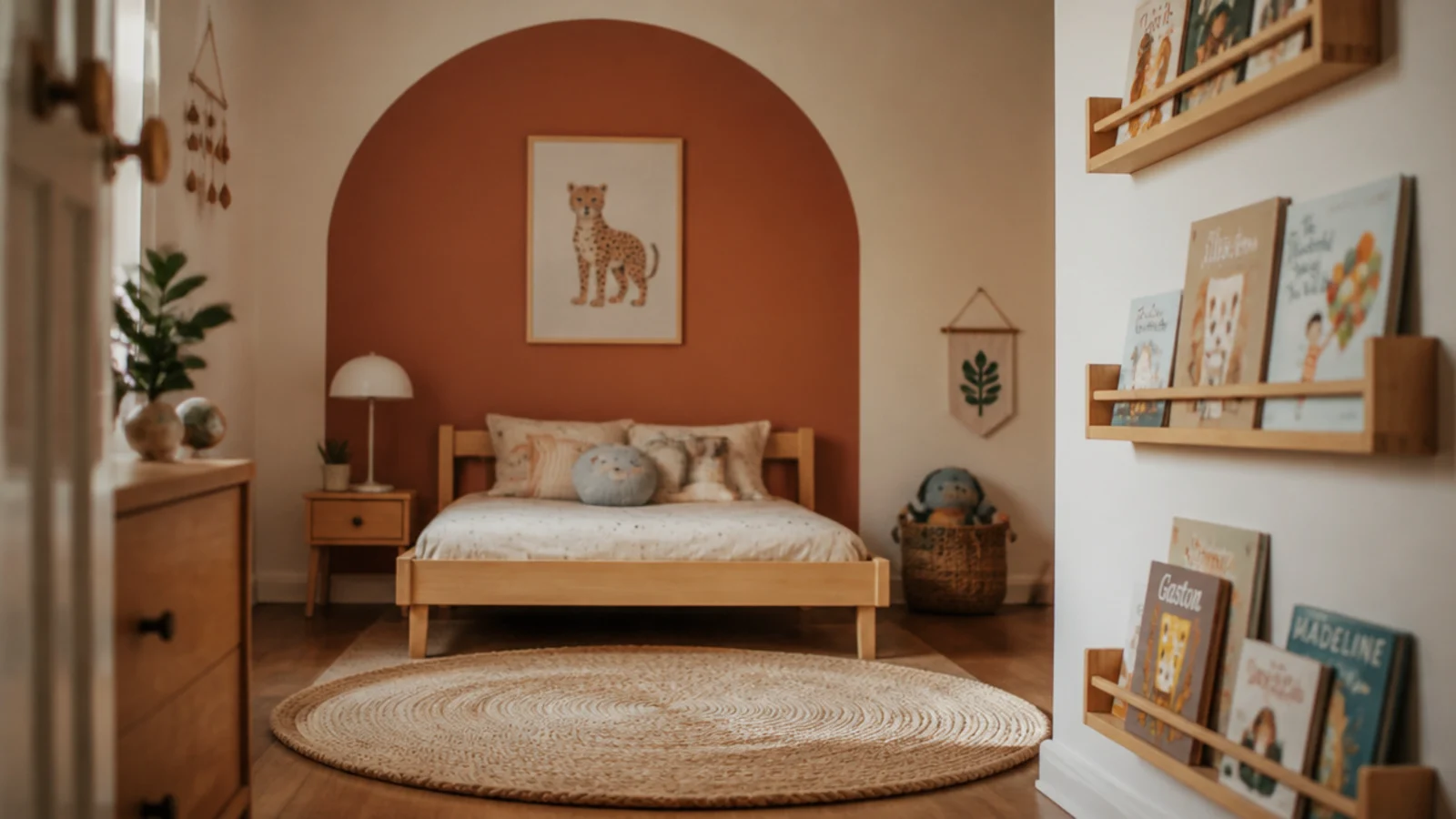
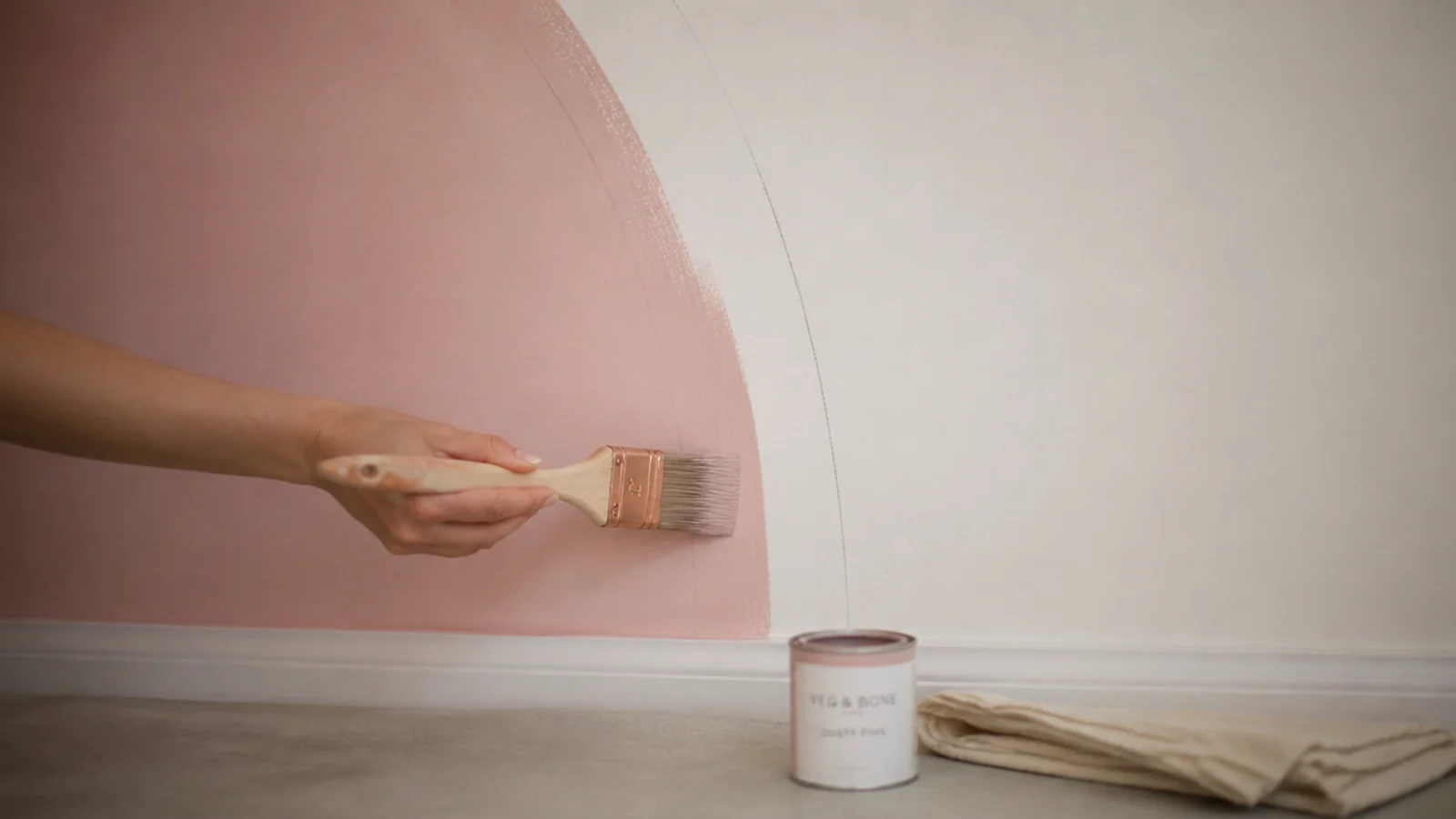
An 8 ounce tester covers roughly 12 to 15 square feet, which is exactly one painted arch behind a bed or one colour band stopping at 40 inches. Mark the curve with a pencil and a length of string pinned at the centre, cut in with a 2 inch brush, and stop below the pillow line so scuffs land on the plain paint. Total cost about $8 and one evening.
4. Convert the cot instead of buying a bed
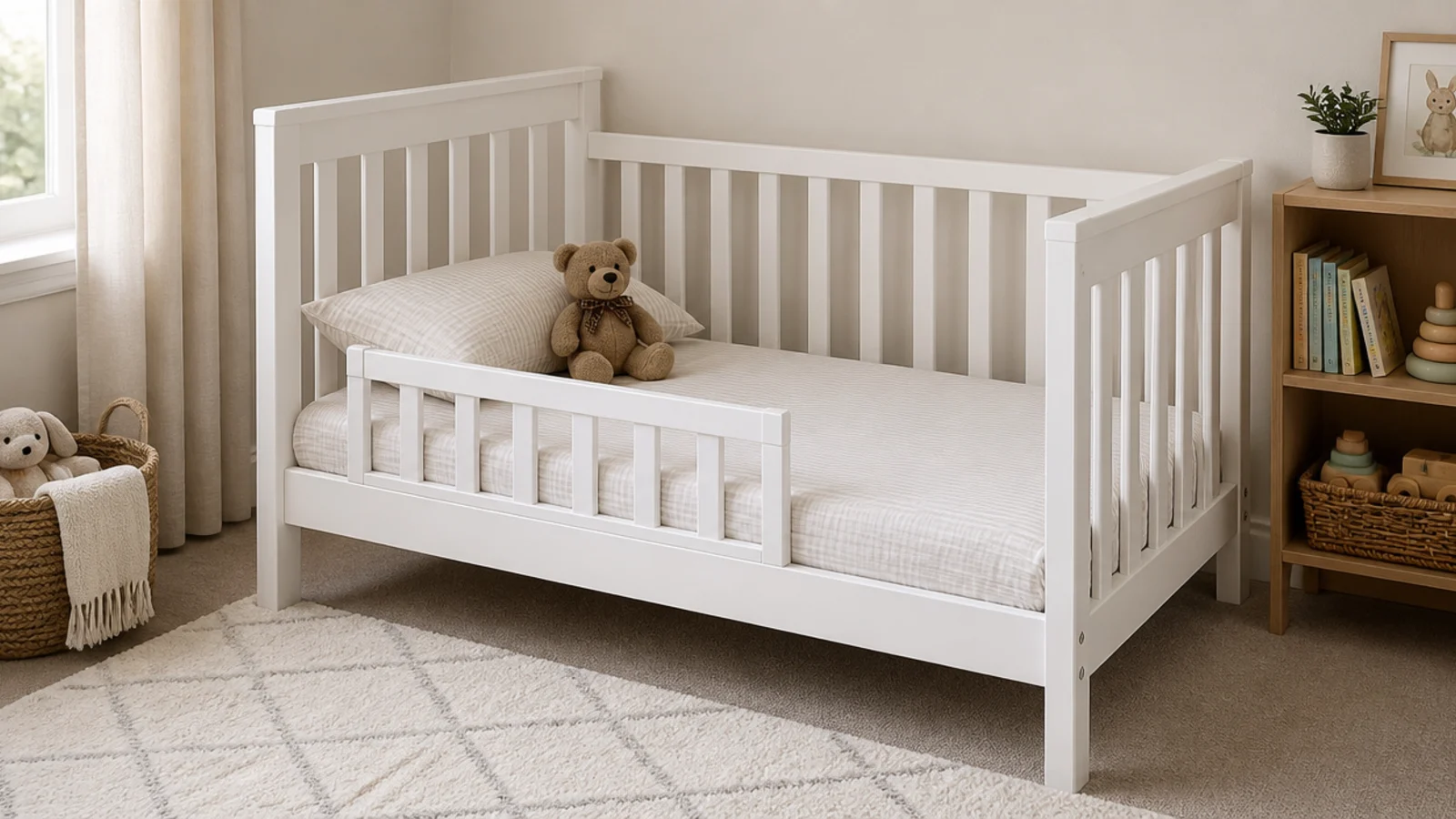
Most cots sold in the last decade convert: one side panel comes off, a short toddler guard rail goes on, and the same 28 by 52 inch cot mattress carries over. Kits run $20 to $50 against $80 to $200 for a new frame. Check the model number first, fit the rail so it rises at least 5 inches above the mattress, and confirm the gap between rail and mattress stays under 3.5 inches.
5. Spend twelve dollars on straps before anything else
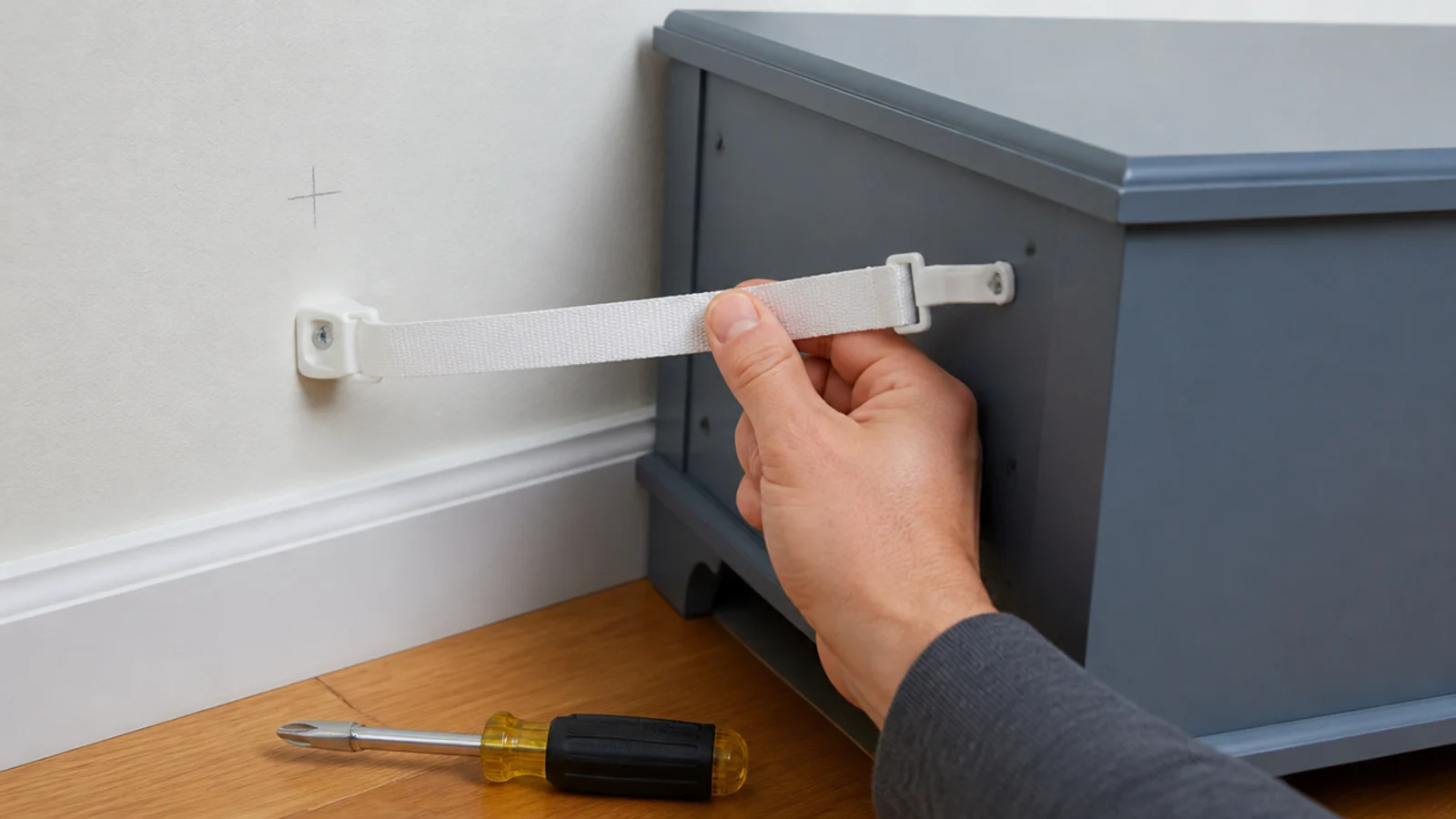
A two-pack of anchor straps is the best value purchase in the entire room. Two per tall unit, driven into studs at the top corners, tightened until the piece will not rock when the top drawer is open and leaned on. Secondhand furniture almost never comes with the original hardware, so buy the straps at the same time you buy the dresser, not later.
6. A fifteen dollar decal pack does the theme
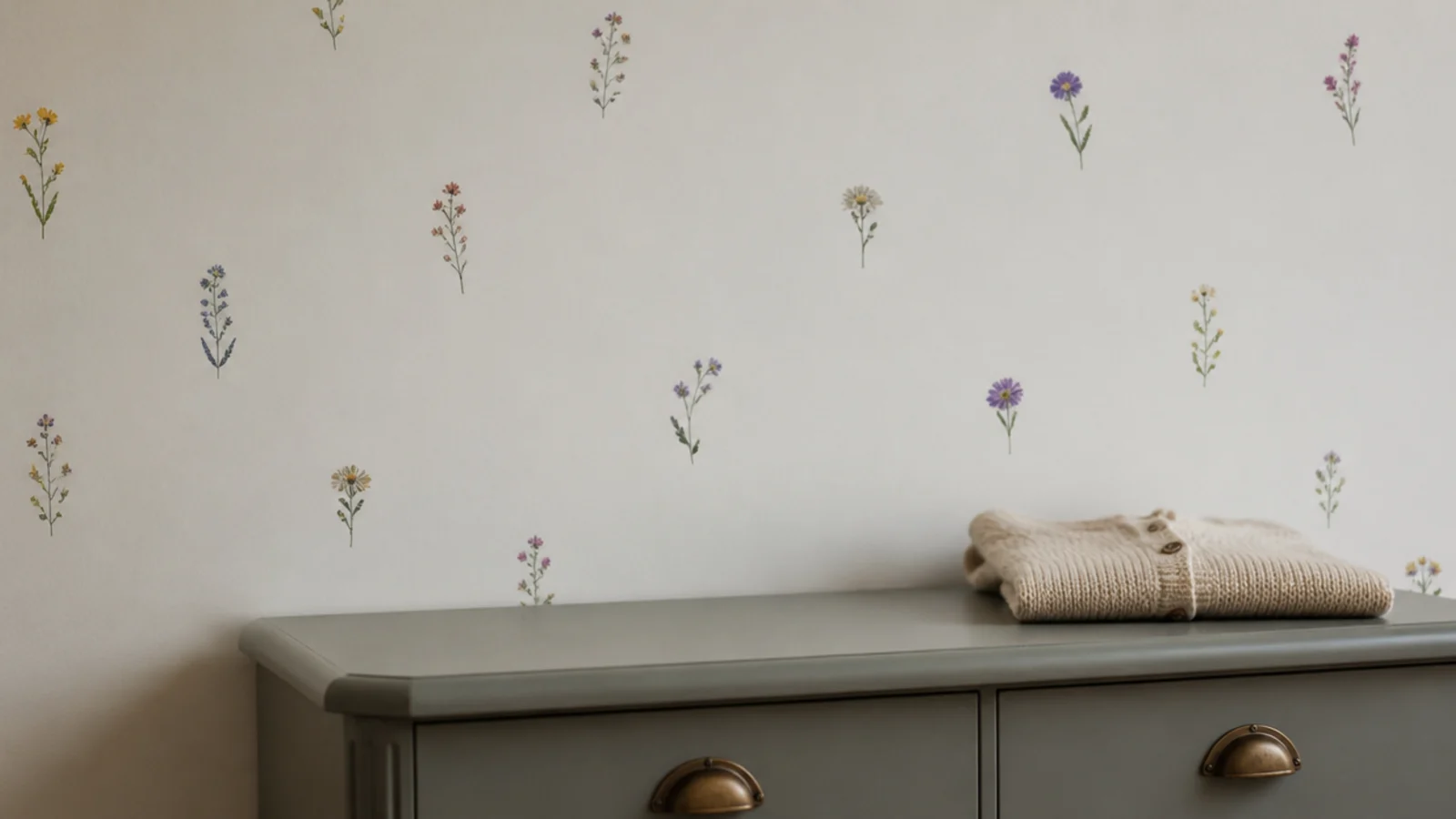
Fabric-backed decals cost $15 to $40 a pack, go up in twenty minutes and come down without taking paint with them. That makes them the honest budget alternative to wallpaper, which runs $40 a roll plus paste plus a steamer at the other end. Scatter them unevenly rather than in a grid, and keep them off the wall directly behind the pillow where fingers pick at the edges.
7. Fabric bins at four dollars beat toy boxes
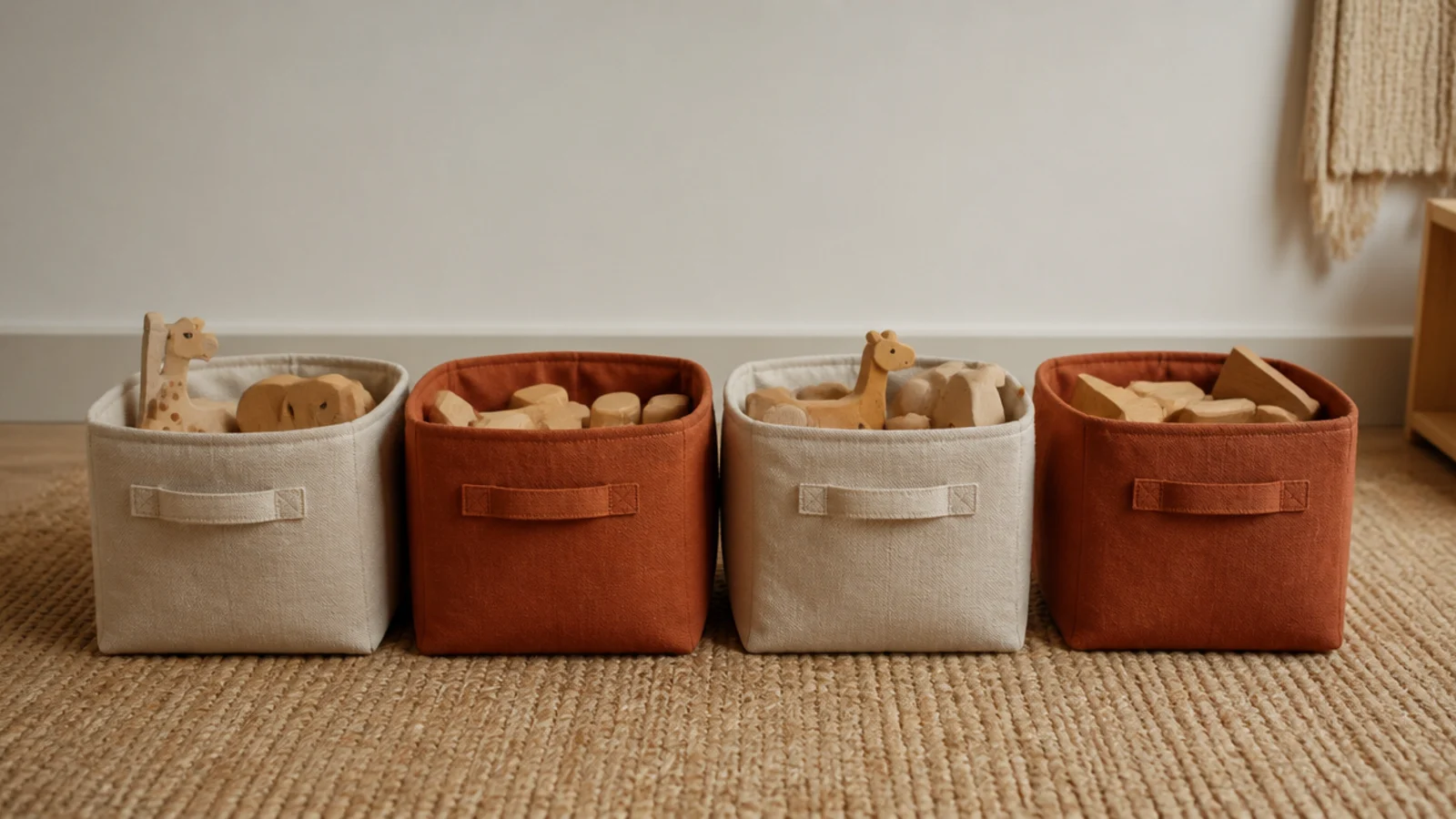
Collapsible fabric bins cost $4 to $9 each and do everything a $70 toy box does, minus the lid that traps fingers. Keep each one under 5 pounds when full so she can carry it herself, sit them directly on the floor rather than inside a shelving unit, and buy one more than you think you need — the spare absorbs whatever arrives at Christmas.
8. Sand and repaint a charity shop dresser
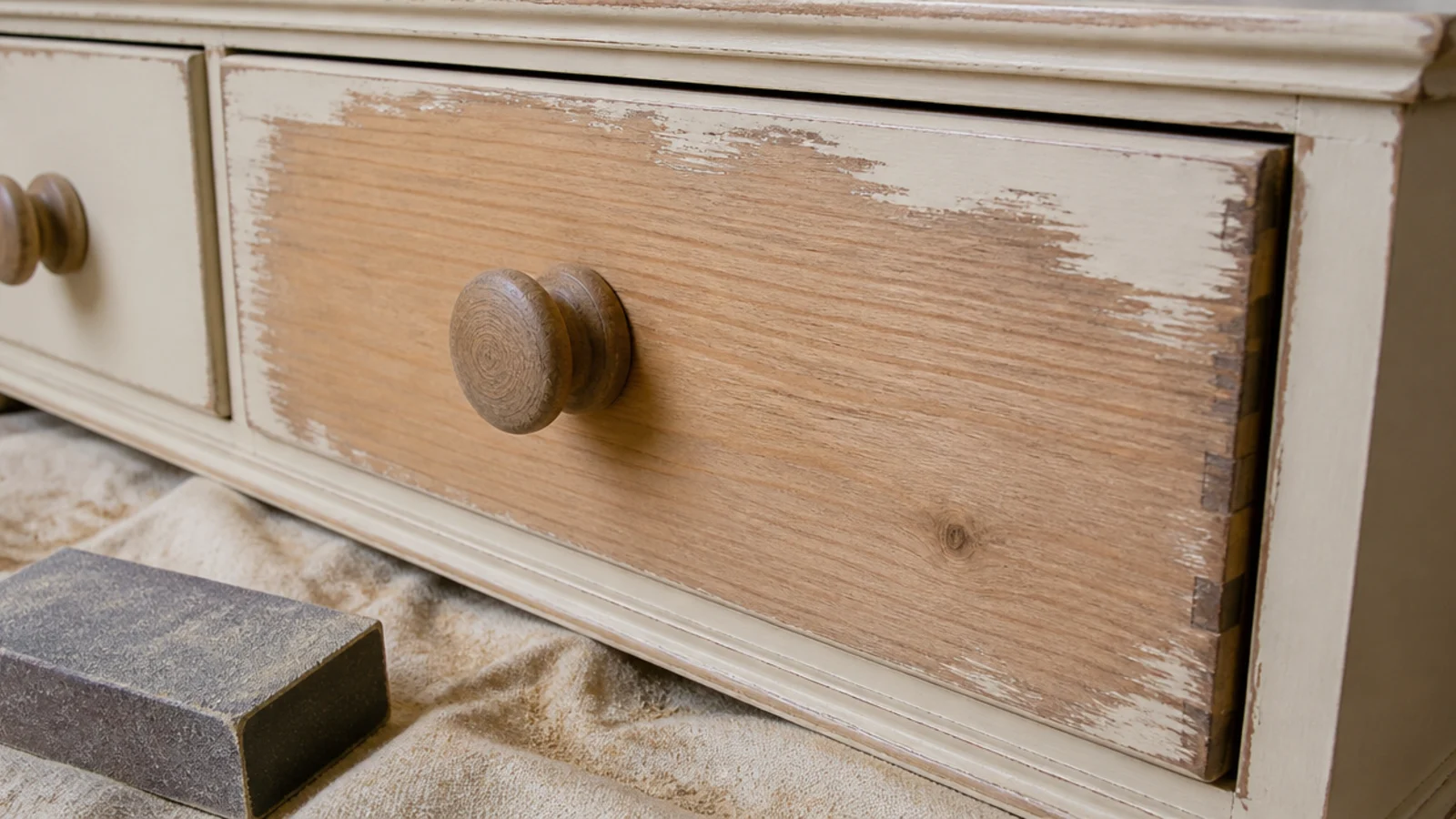
A solid wood dresser at $30 to $60 beats new particle board at $150 every time, because the carcass and the drawer runners are the parts that fail. Sand to 180 grit, prime, and finish in a water-based low-VOC eggshell. Two hours of work, about $25 in materials, and the result takes a wipe-down for the next decade. Strap it before it goes into service.
9. Turn a curtain panel into a bed canopy
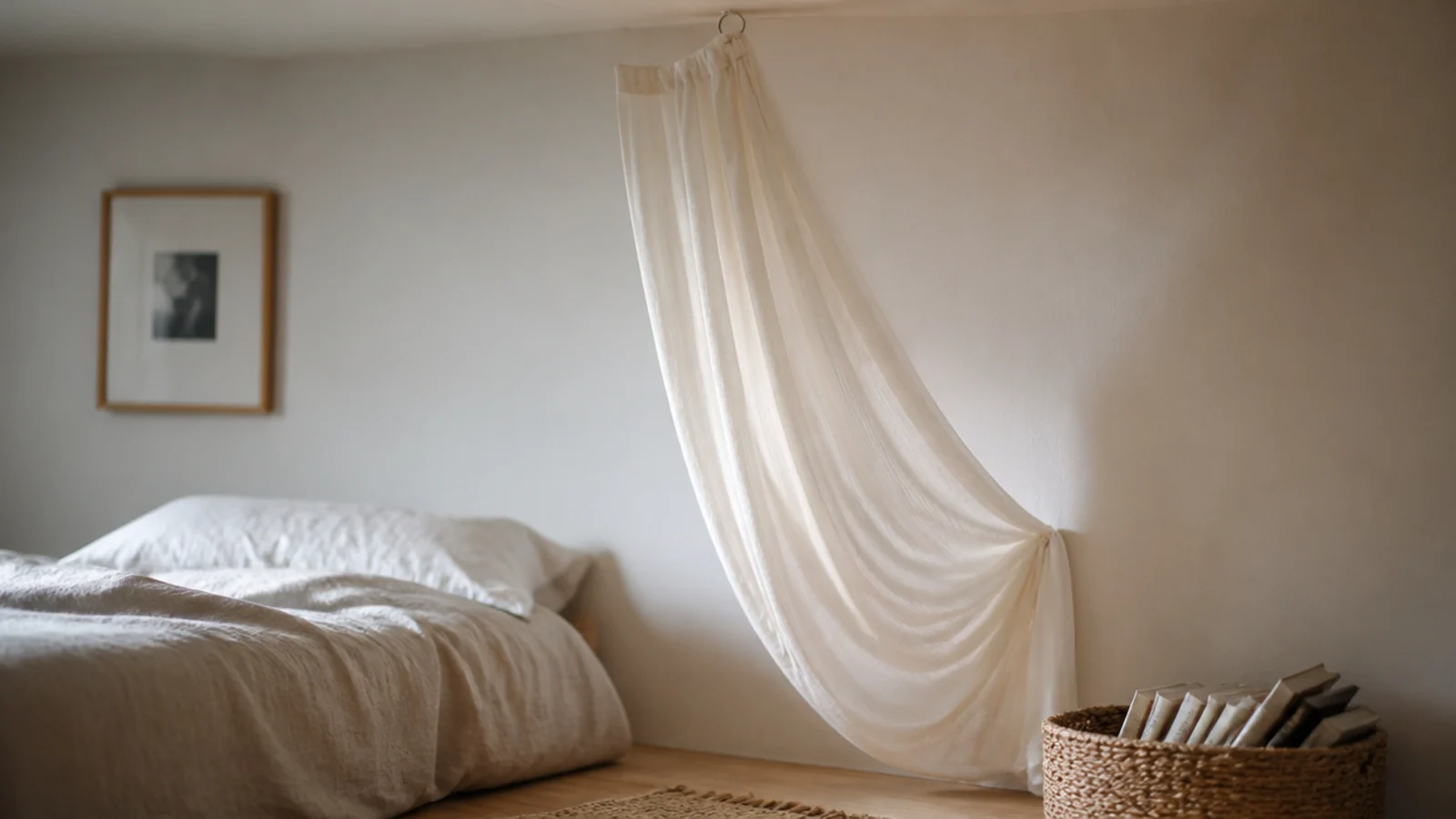
A single sheer panel costs $8 to $15 and loops through one ceiling hook to make a canopy for a fraction of the $50 kits. Fix the hook into a joist at the foot of the bed, never above the pillow, and let the fabric fall to one side so nothing hangs over her face. Unlined cotton or muslin only, and take it down for a 40 degree wash every couple of months.
10. Replace corded blinds for about thirty dollars
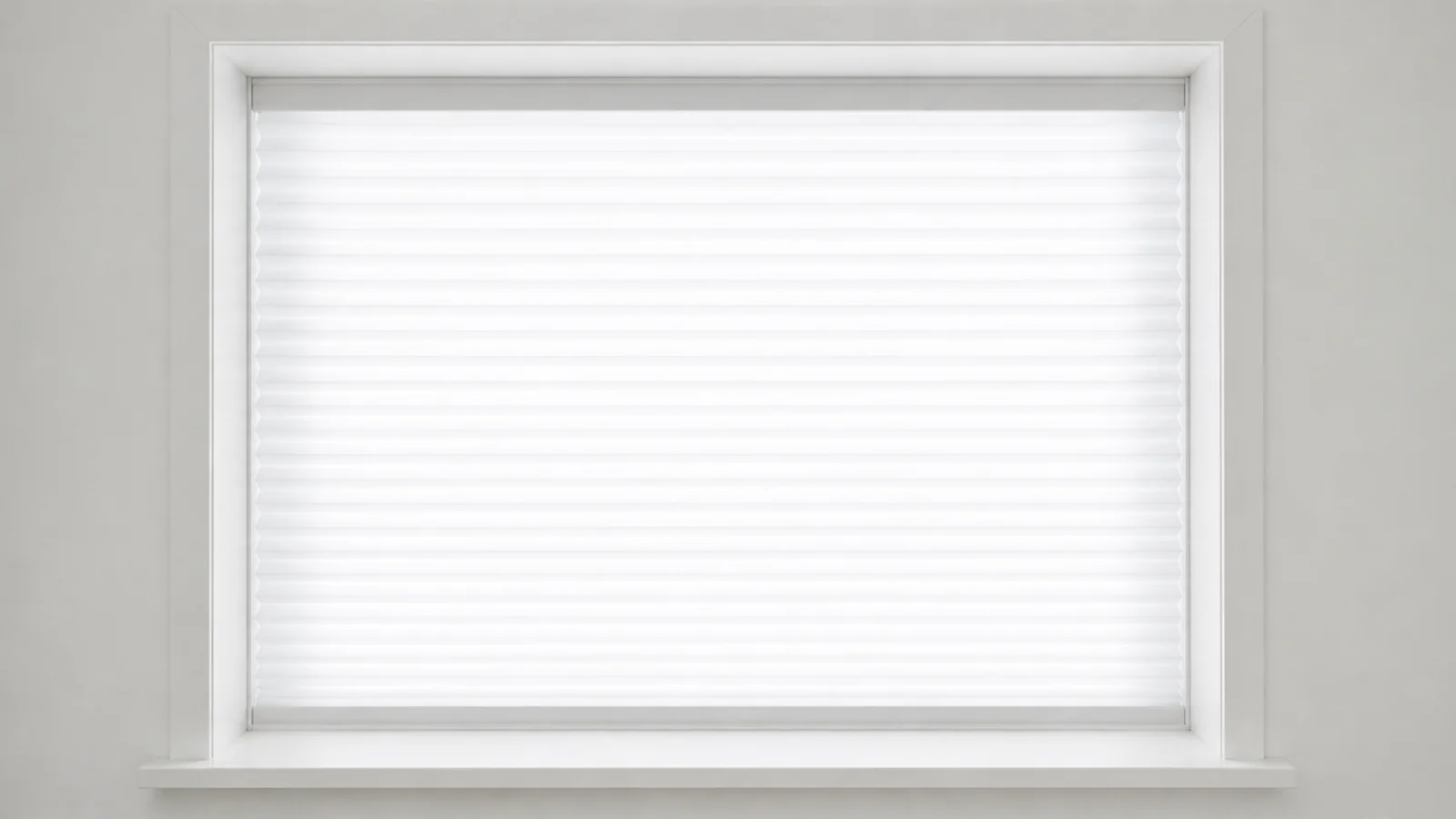
If the room has looped-cord blinds, this is the one job on the list that cannot wait for payday. Cordless cellular or roller blinds start around $30 for a standard window and cut to size in-store. While the old ones are down, move any climbable furniture 36 inches back from the sill and fit an $8 window restrictor. Together that is under $50 and it removes the two worst hazards in a child's room.
11. Make a floor cushion from a duvet cover
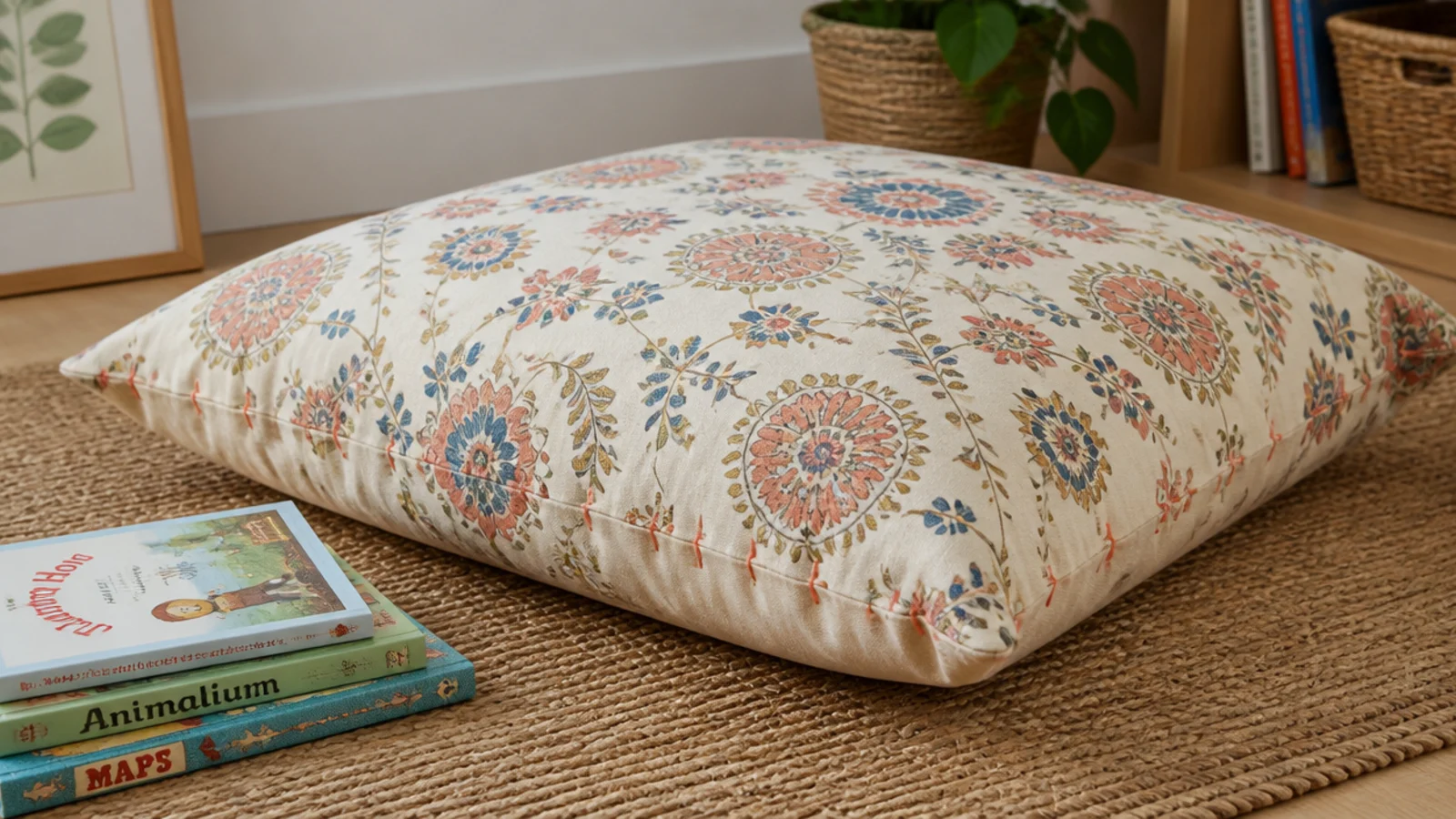
A single duvet cover, cut down and stuffed with an old pillow or offcut wadding, makes a 24 inch floor cushion for the cost of thread. It is the seat that gets used most in a toddler room, because floor level is where she already is. Keep the cover removable with an envelope back so it goes in the wash without unpicking anything.
12. Cut three picture ledges from one board
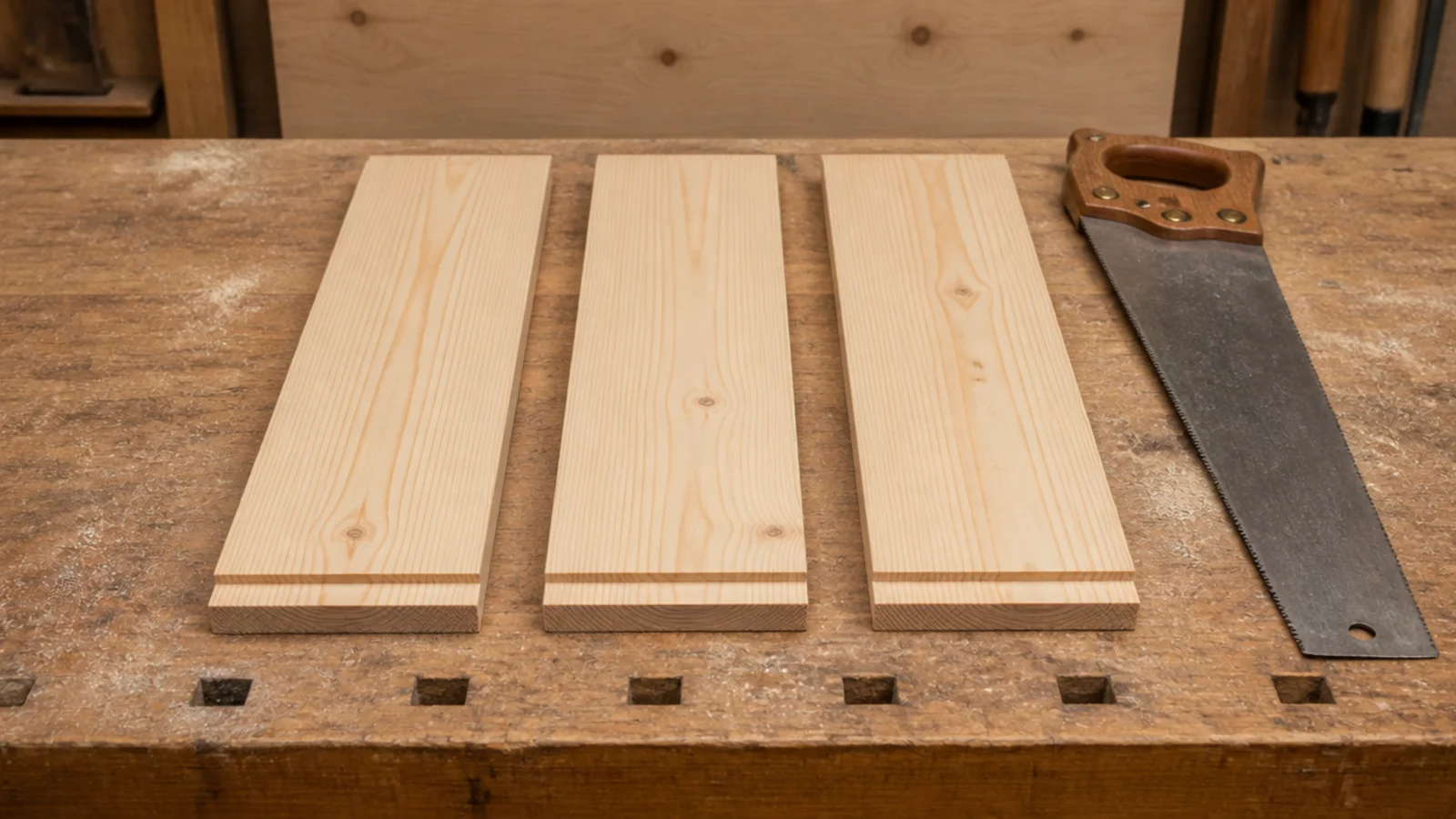
One 8-foot length of 1x4 pine at about $12 yields three 30 inch ledges, and a strip of quarter round glued along the front edge stops the books sliding. Mount them at 24 to 30 inches so she can reach and reshelve. Fix into studs or use toggles rated 25 pounds each — a loaded ledge is heavier than it looks. The floating shelf guide has the bracket spacings.
13. Change the knobs, keep the furniture
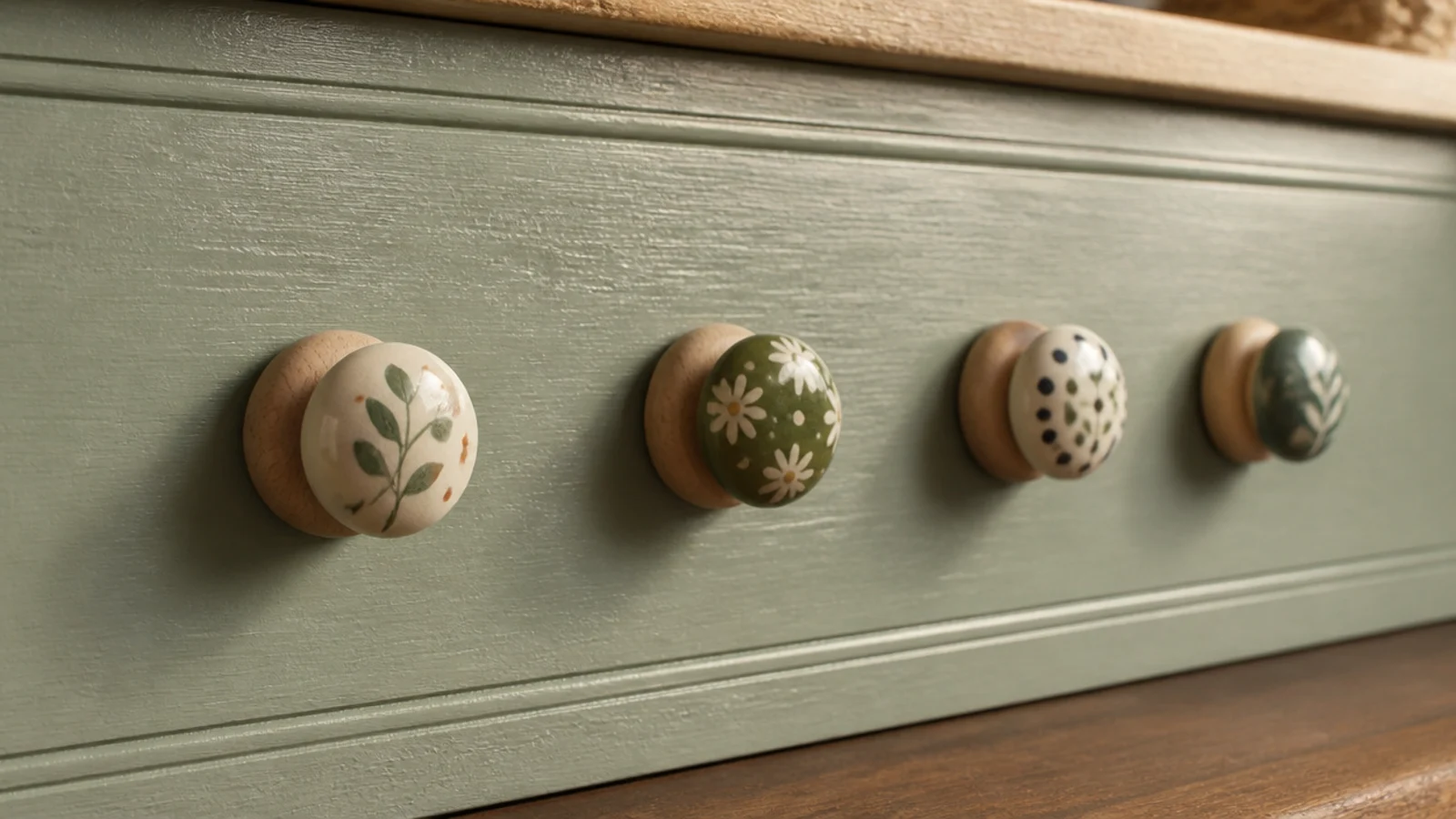
Four ceramic or turned wood knobs at $2 to $5 each change the character of a dresser more than repainting it does, and they take ten minutes with a screwdriver. Check the screw length against the drawer front thickness before buying, and choose smooth rounded shapes without a sharp edge at toddler head height.
14. Rotate library books instead of buying them
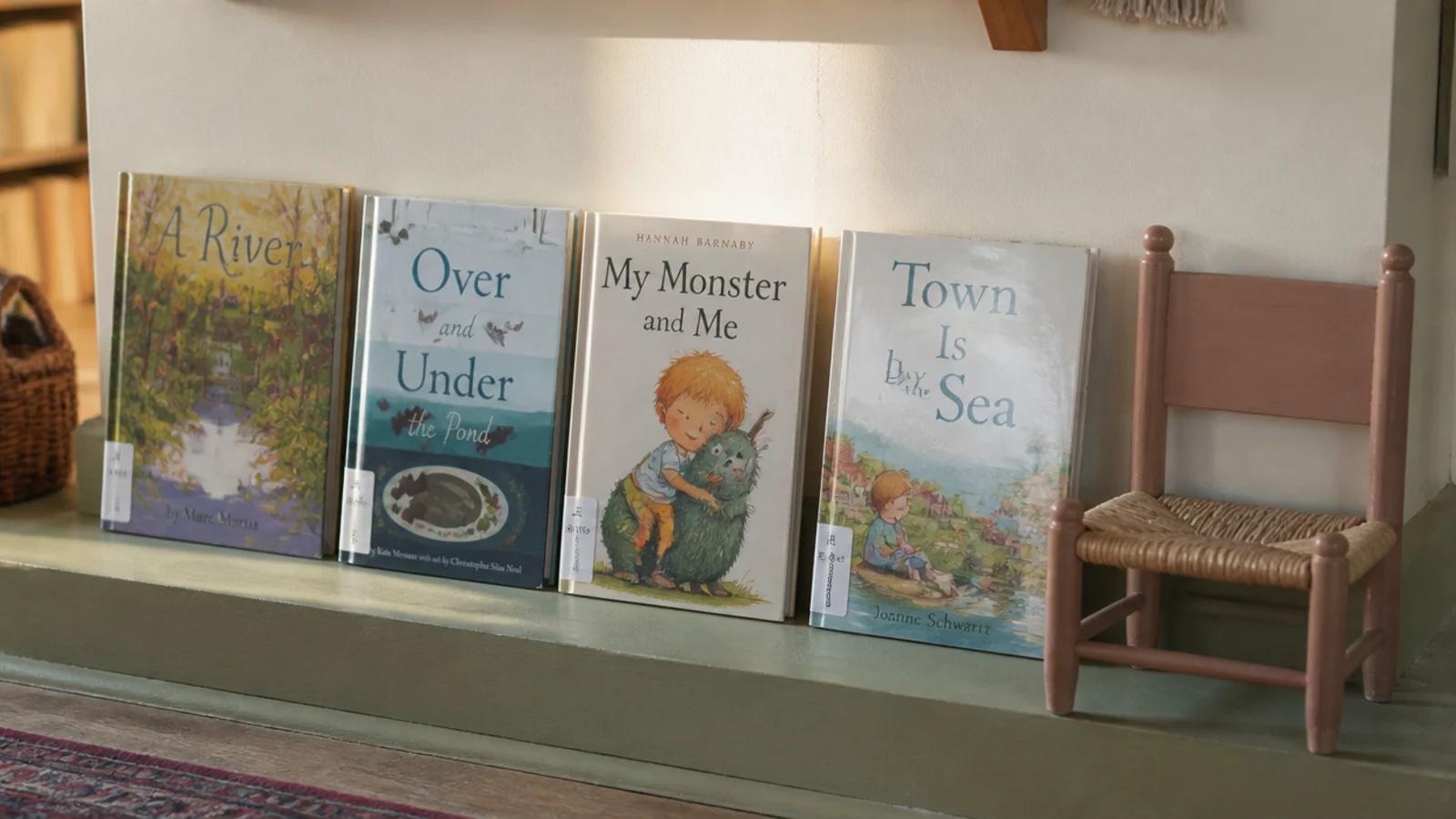
Four borrowed picture books on a ledge, swapped every week, beats thirty owned ones jammed spine-out on a shelf. Owned books get pulled off in a heap and reshelved by an adult; four facing covers get chosen and put back. It also means the visible book selection in the room changes constantly, which costs nothing at all.
15. Build a peg rail from a batten and dowel
A 36 inch length of 1x3, six lengths of 1 inch dowel glued into drilled holes, and two screws into studs makes a peg rail for about $10. Mount it at 36 inches so she can hang her own coat, space the pegs 8 inches apart, and sand every end round. It is the single most useful piece of DIY in a toddler room.
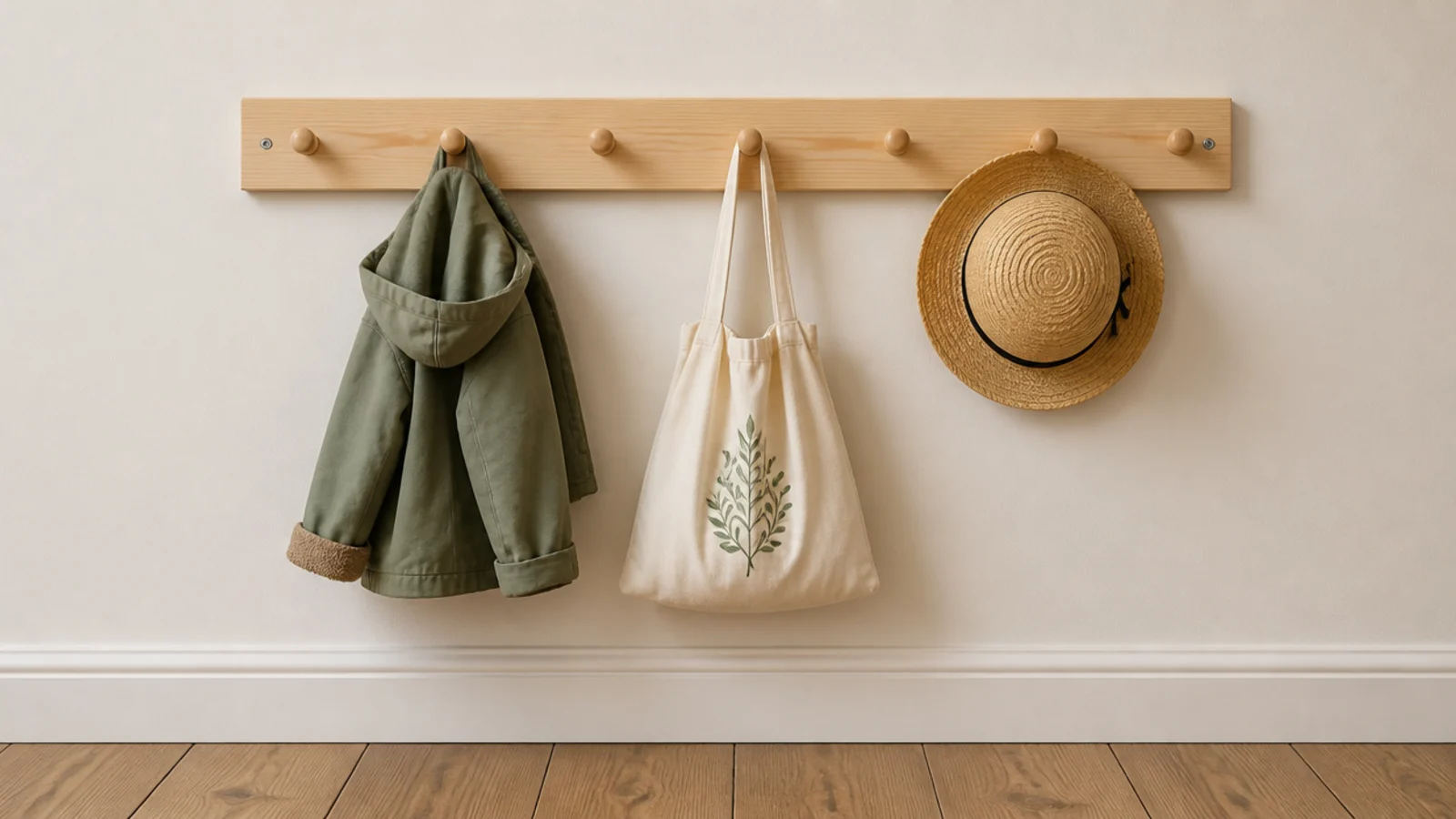
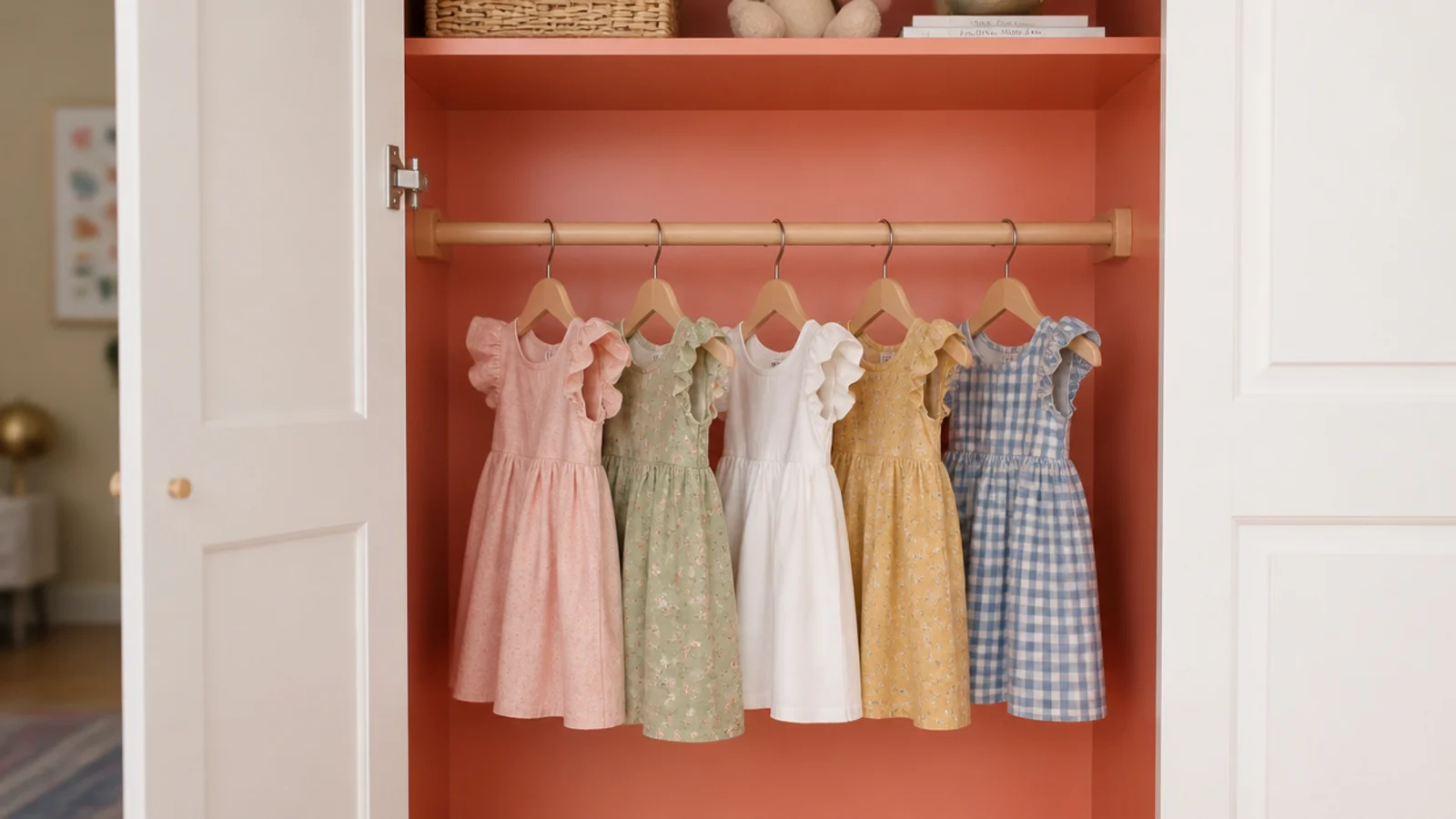
16. Paint the inside of the wardrobe, not the outside
Painting a wardrobe interior in a strong colour costs one tester pot and hides nothing when it is closed, which makes it the safest place to be bold. Drop the hanging rail to 30 to 36 inches at the same time and she can choose and hang her own clothes. Both jobs together take an afternoon and about $15.
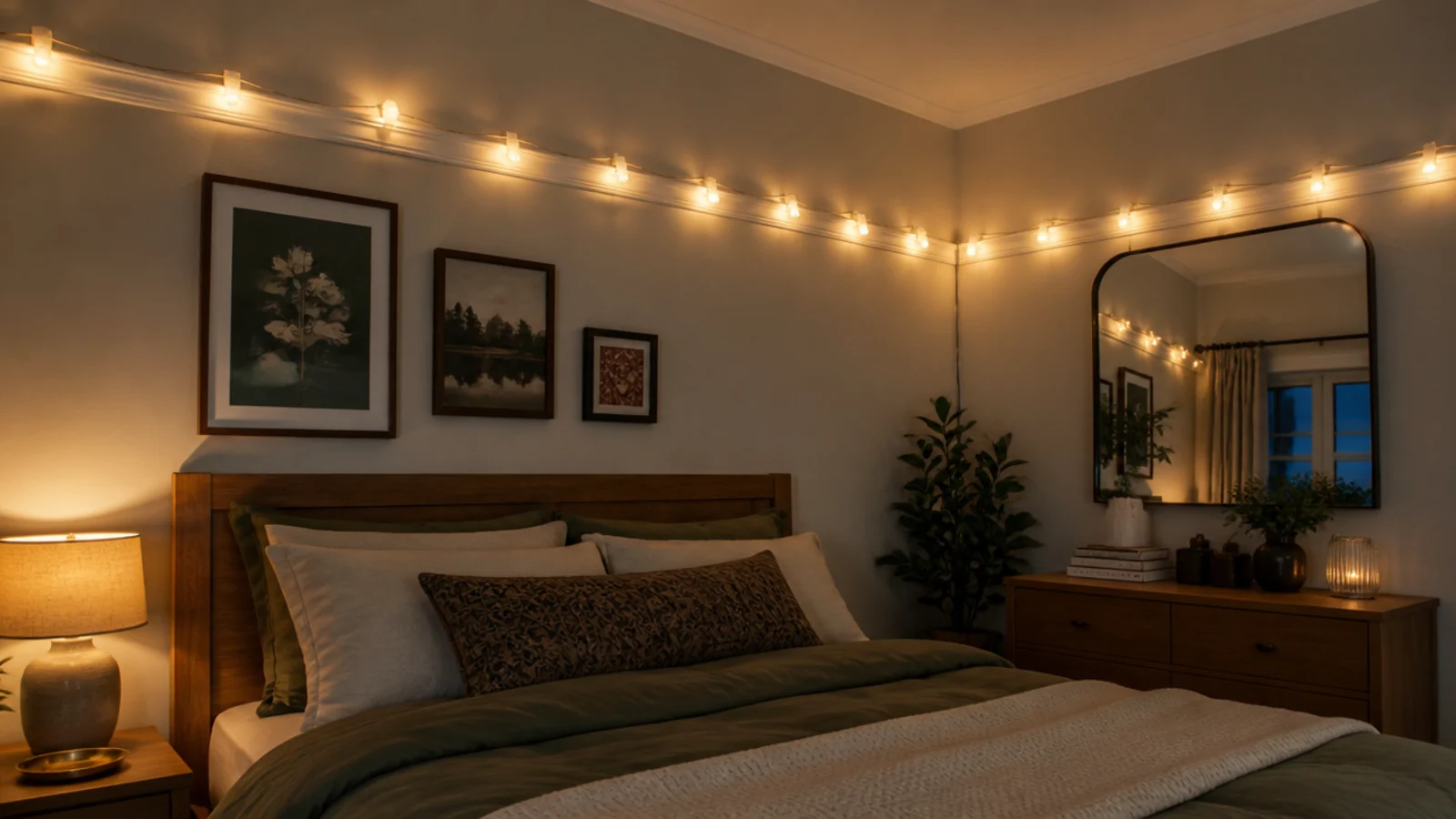
17. Low voltage fairy lights well above the bed
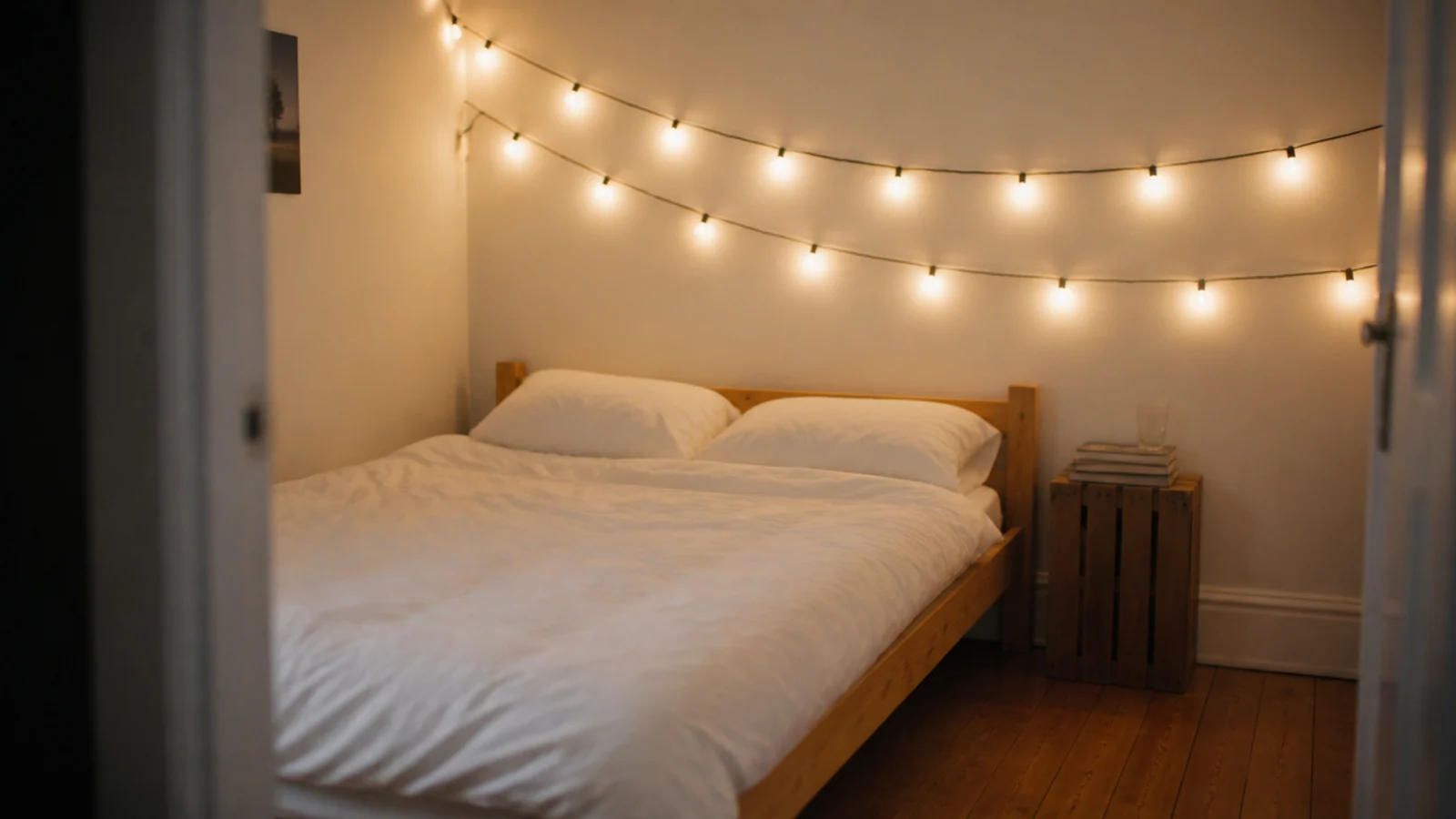
A low-voltage LED string at $10 to $20 is the cheapest ceiling upgrade there is, provided the whole run sits high on the wall or along a picture rail with the cable clipped tight and the transformer behind furniture. No cable within reach of the mattress, nothing draped over a bed frame, and switched off at the wall for sleep. The fairy light setups guide covers routing properly.
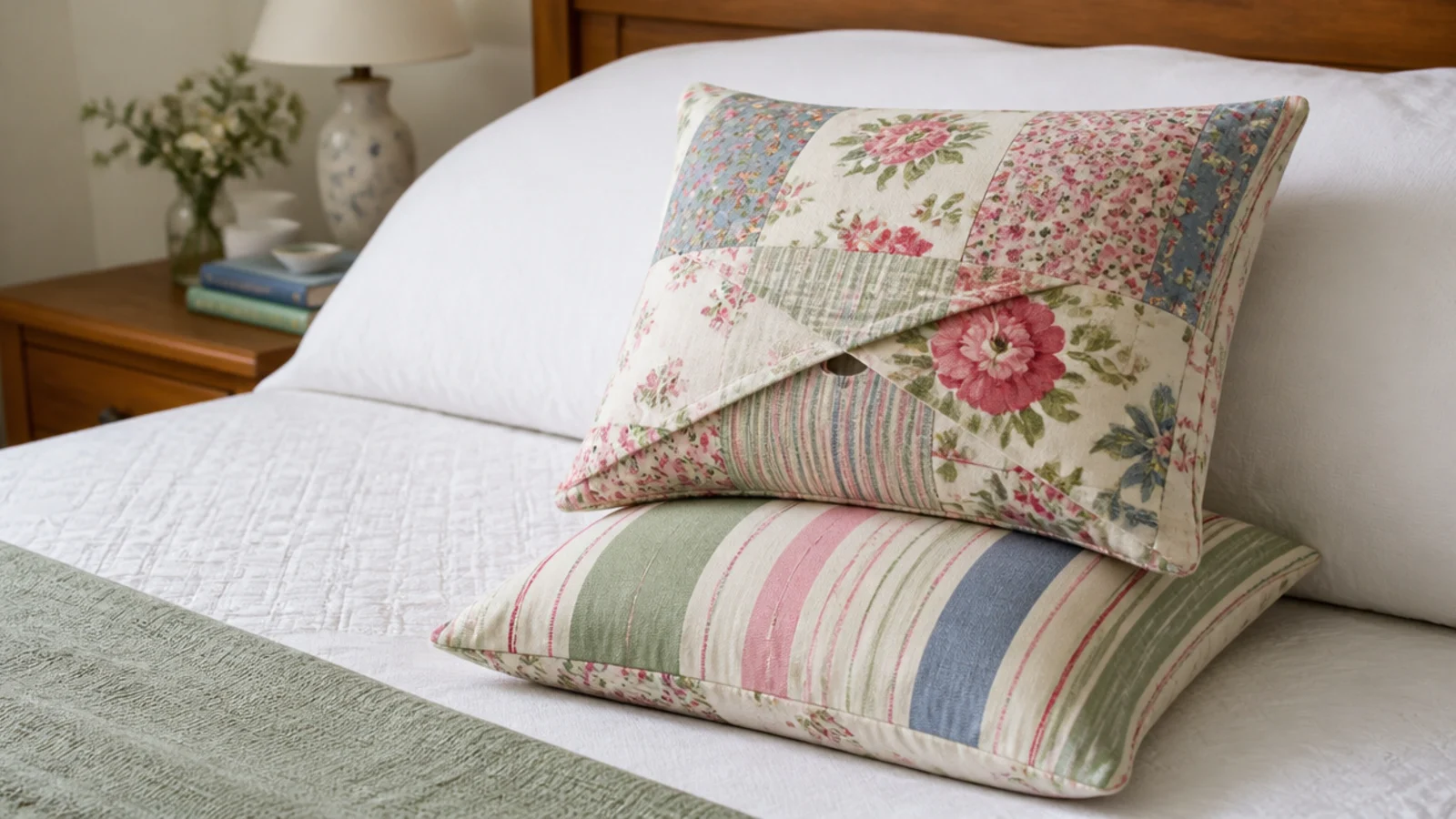
18. Sew cushion covers from remnant fabric
Remnant bins sell half-yard pieces at $3 to $6, enough for a 16 inch cover with an envelope back and no zip. Two covers cost less than one finished cushion and let you match a paint colour exactly rather than hunting for it. Wash the fabric before you cut it, because cotton shrinks about three per cent on the first wash.
19. Frame her own paintings in cheap clip frames
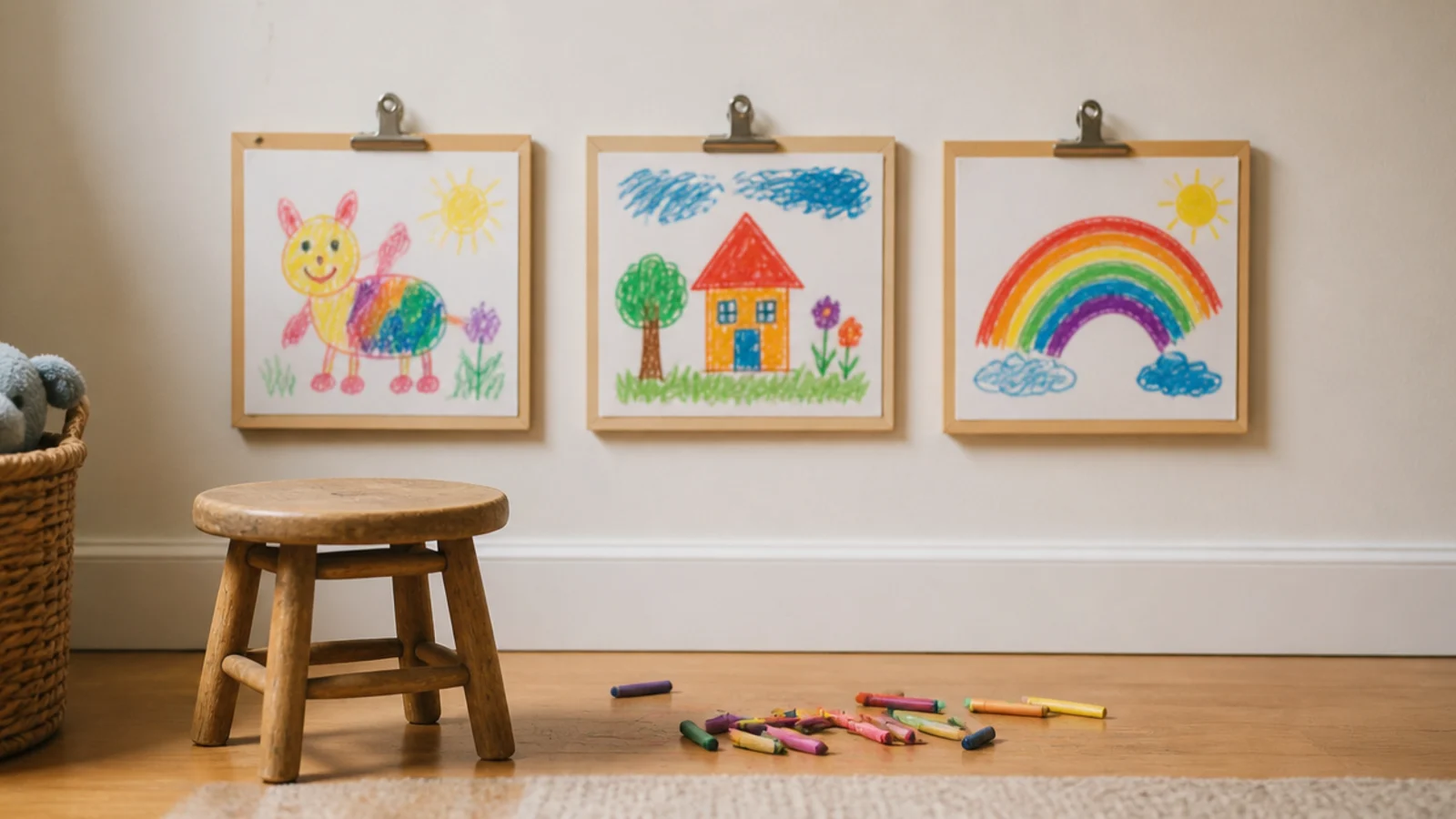
Clip frames at $4 to $8 turn a stack of nursery paintings into a gallery wall, and swapping the artwork takes seconds. Hang them centred at 36 inches, use acrylic-glazed frames rather than glass, and hang them anywhere except the wall directly above the pillow. Rotate every couple of months so the room keeps up with her.
20. A hand-me-down rug over a new gripper pad
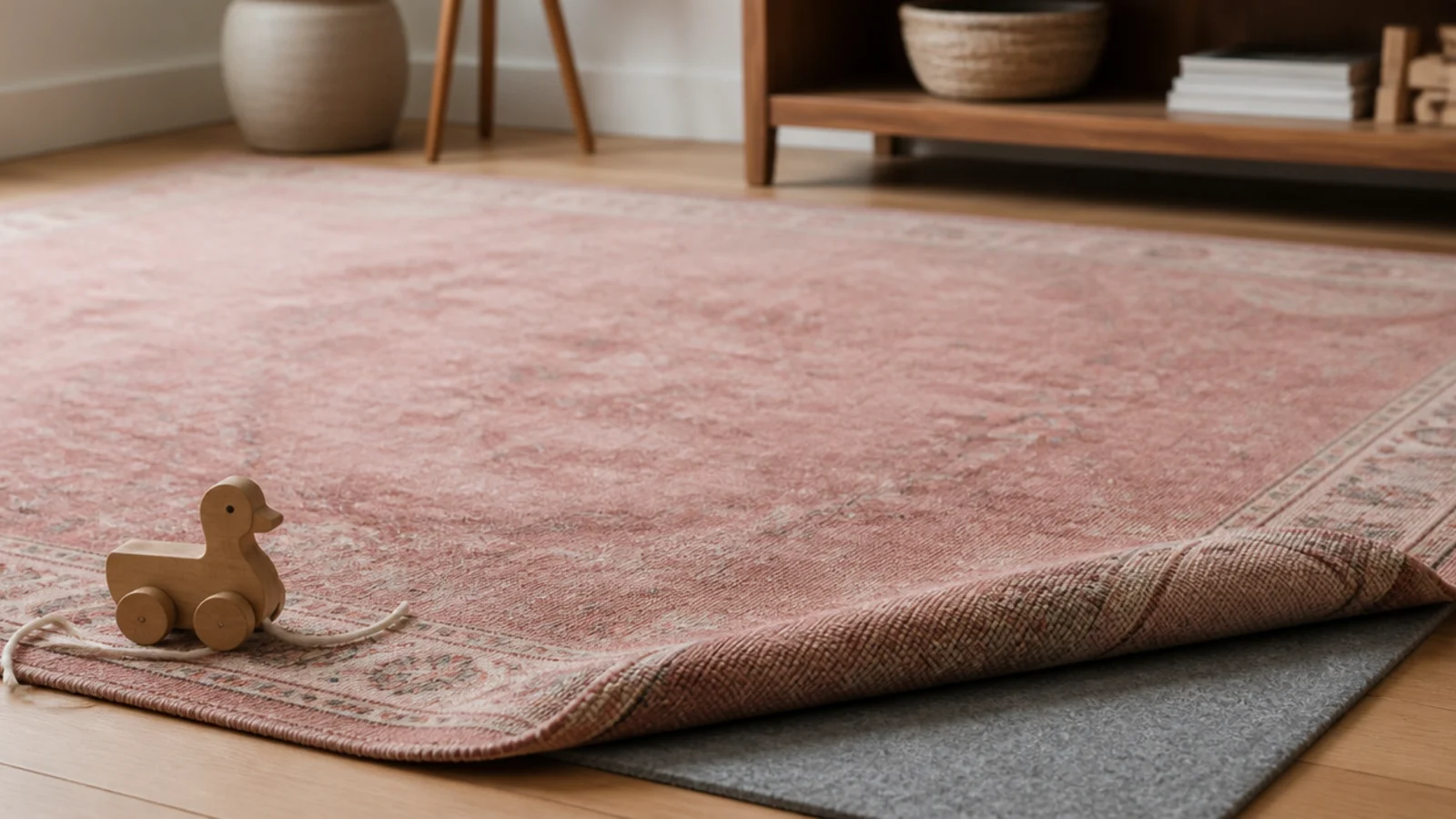
An inherited wool rug is worth having even faded, but the underlay should always be new: a $20 non-slip pad cut two inches smaller on every side stops the corners curling into a trip hazard. Keep the pile under half an inch so ride-on toys roll, and check the rug is machine washable or at least spot-cleanable before it goes near a two-year-old.
Mistakes to Skip
- Saving money on the mattress. It is the one item where secondhand carries a real risk you cannot inspect, and it is also the thing she spends eleven hours a night on.
- Buying a lidded toy box because it was cheap. Unless it has a slow-close safety hinge and ventilation holes, it is a finger trap and a hiding place. Open bins cost less and work better.
- Leaving corded blinds up because new ones are not in the budget this month. Tie-downs and cleats are a stopgap that fails the first time somebody forgets. Cordless replacements start at $30.
- Painting thrifted furniture without sanding and priming. Paint over old varnish peels in sheets within a year, and a toddler will find the loose edge before you do.
Cheap and safe are not in tension here — the safety items are the least expensive things in the room. Once the frame and storage are sorted, the main toddler bedroom guide covers the layout decisions in more depth, and if you are wondering which decorative buys are worth the money at all, the decor I regret buying is the honest version.
Frequently asked questions
What should I buy new for a small child bedroom?
The mattress and the safety hardware, and very little else. A used mattress carries an unknown history of damp and dust mites, and anchor straps, window restrictors and cordless blinds are too cheap to compromise on. Everything else — frame, dresser, rug, shelving, bins — thrifts well.
How much does a budget toddler room cost to put together?
A thorough refresh of an existing room runs about 250 to 400 dollars if you thrift the furniture. That covers a mattress at 120 to 200, cordless blinds at 30 to 70, anchor kits at 12, a tester pot of paint at 8, and roughly 60 dollars of textiles.
Is secondhand furniture safe in a child bedroom?
Usually, with three checks. Confirm the finish is not pre-1978 lead paint, sand and repaint with a water-based low-VOC product, and add anchor straps yourself since older pieces rarely ship with them. Reject anything with a cracked frame, a lidded toy box without a safety hinge, or a wobbly base.
What is the cheapest way to change the look of a room?
Textiles and paint, in that order. New cushion covers, a duvet set and a pair of unlined curtains come to about 70 dollars and change the whole colour story. A tester pot painting one arch or one band costs eight dollars and takes an evening.
Can I keep the cot instead of buying a toddler bed?
Often yes. Many cots convert by removing one side and fitting a toddler rail, using the same mattress, and the conversion kit runs 20 to 50 dollars against 80 to 200 for a new frame. Check your model number before assuming, because not every cot has a kit.
Want more like this? Browse all 15 toddler girl bedroom guides — they all use the same measurements and budget tiers.

Pin it for later
Save this to your Toddler Girl Bedroom board
Pin it now so it is waiting for you when the tape measure comes out — and so the next person hunting for this idea can find it too.
Save this pinKeep going
More ideas worth saving while you have the tape measure out.