Study Desk Decor · Listicle
20 Wall Decor Study Room Desk Ideas Worth Copying

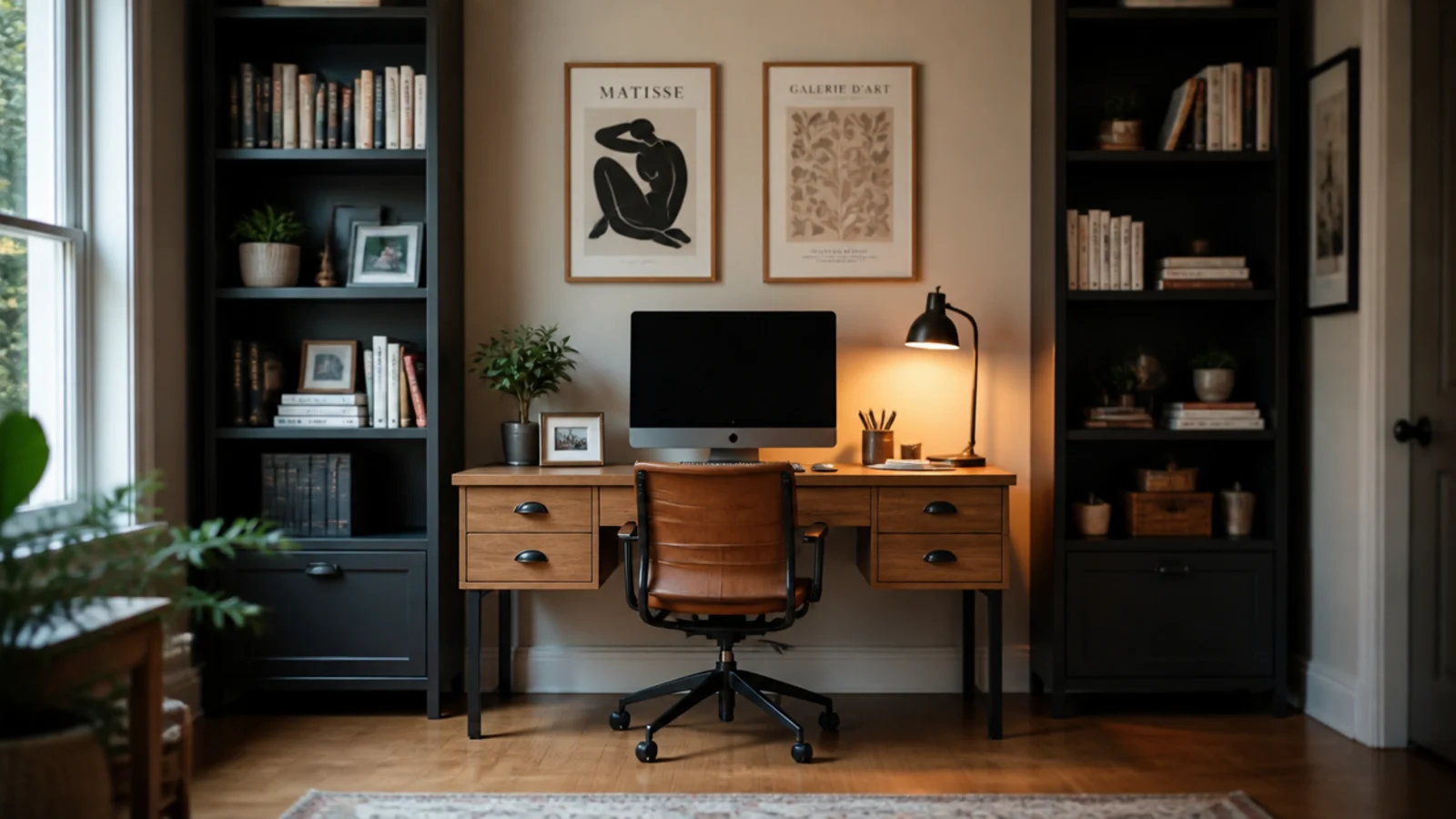
Wall decor study room desk ideas are usually shown on a single wall in an empty room, which is not the problem most people have. A real study room has a door swinging into one wall, a window taking most of another, a radiator under it, and a desk that has to go somewhere sensible in what is left. The layouts below are organised around those constraints rather than around a photograph. Each one carries the height it hangs at and the span it can safely cover. Twenty arrangements, all measured from the desk or the floor rather than guessed.
In this guide22 sections — tap to openHide
- 1.What wall decor study room desk ideas usually miss
- 2.Flank the desk with two full-height bays
- 3.Run a picture rail at sixty inches
- 4.Grid nine small frames on the return wall
- 5.Take one shelf wall to wall at twenty inches
- 6.Anchor the wall with one large print
- 7.Slat the wall behind the desk in timber
- 8.Panel to the shelf line and stop
- 9.Flank the monitor with two pegboards
- 10.Frame a cork panel with moulding
- 11.Paper the alcove only
- 12.Stack three picture ledges
- 13.Hang a pair of wall lamps
- 14.Use open cubes at thirteen-inch clear height
- 15.Stretch a low ceiling with a tall mirror
- 16.Put storage above the door line
- 17.Paint a magnetic panel behind the desk
- 18.Size the whiteboard to the desk width
- 19.Rail a row of plants above the window
- 20.Pair a dark wall with pale shelves
- 21.Leave the window reveal completely bare
- 22.Mistakes to Skip
What wall decor study room desk ideas usually miss
Three things decide a study room wall before taste gets a say.
The desk position sets the reference height. A gallery wall you mostly see standing centres at 57 to 60 inches. The same group above a desk drops to around 50, because the desk becomes the visual base and a high group floats away from it. Shelves above a desk go 18 to 24 inches up from the surface, 8 to 10 inches deep.
Span decides shelf width. Three quarter inch stock sags past a 32 inch unsupported span with books on it, and the bow is permanent. Two 30 inch bays either side of a 48 inch desk is a layout that works; one 60 inch run is a layout that fails by the second term.
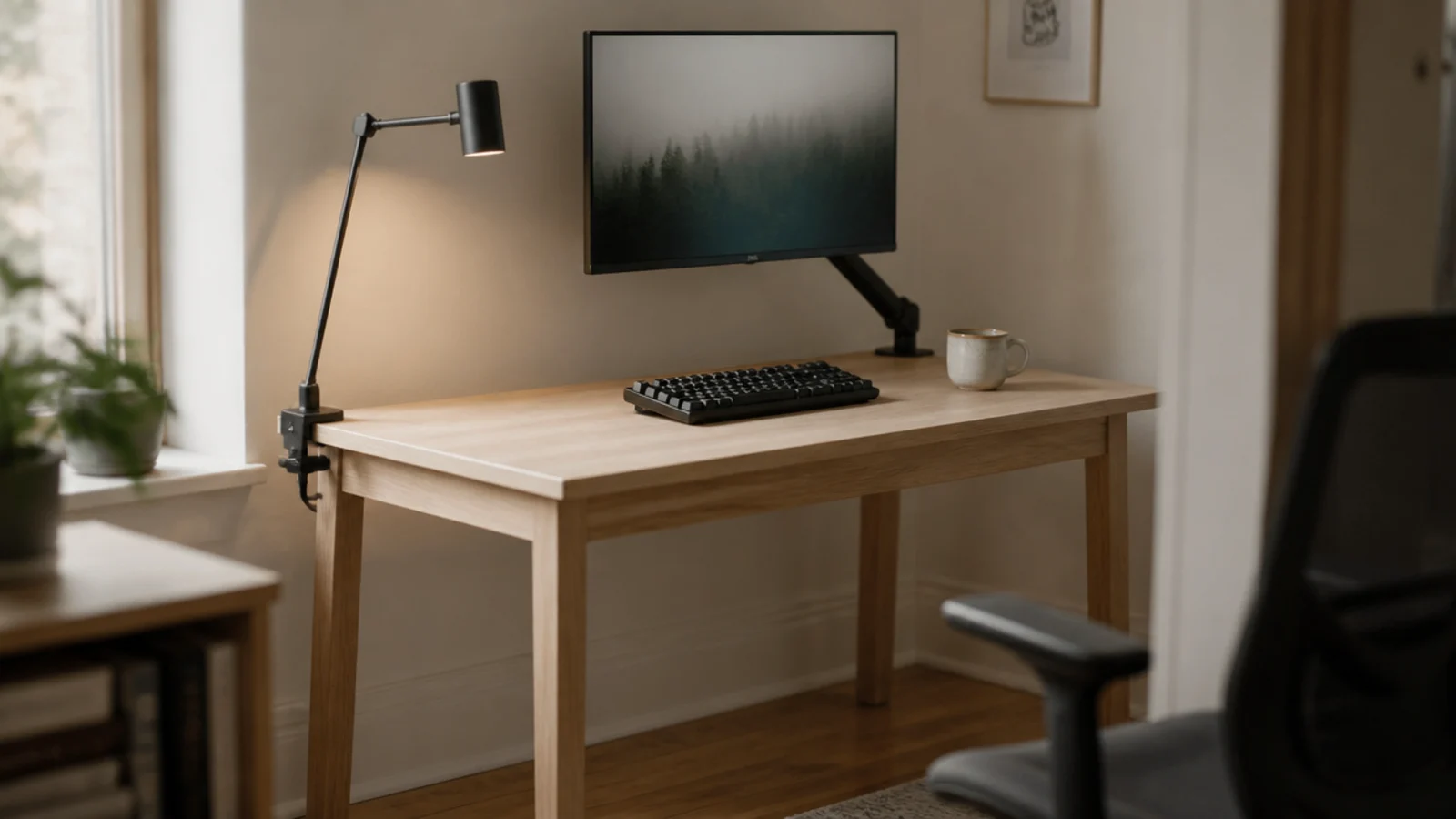
The light has to miss the screen. Every fitting wants to sit outside a thirty degree cone from your eyes to the monitor. Pairs of wall lamps go 15 to 20 inches above the desk and about a third in from each end.
Costs vary widely: a picture rail run is $30 to $60, a pegboard $12 to $25, a full alcove of shelves $120 to $300 in materials. For the order to do it in, the study desk wall decor steps run through the whole sequence.
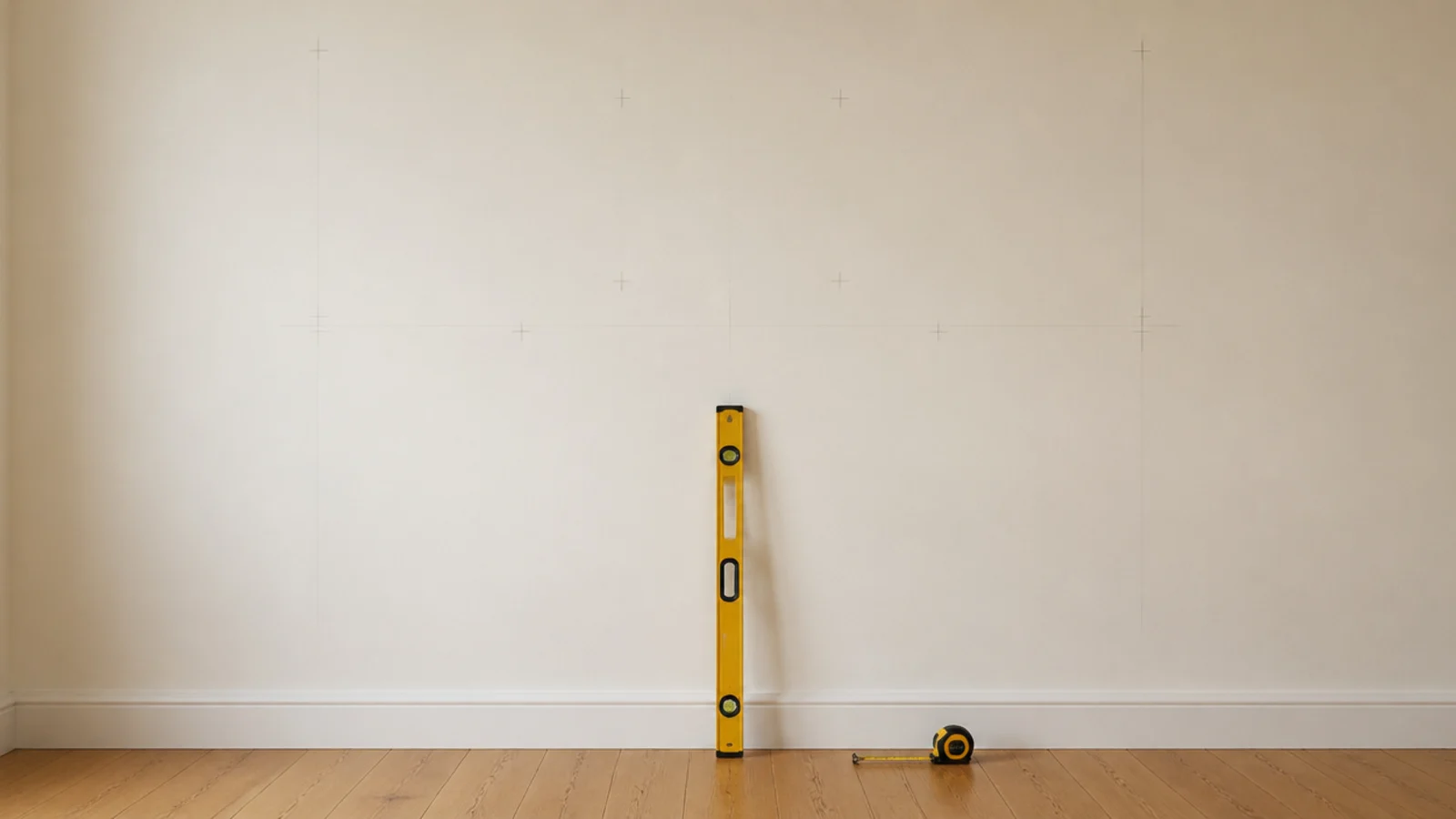
1. Flank the desk with two full-height bays
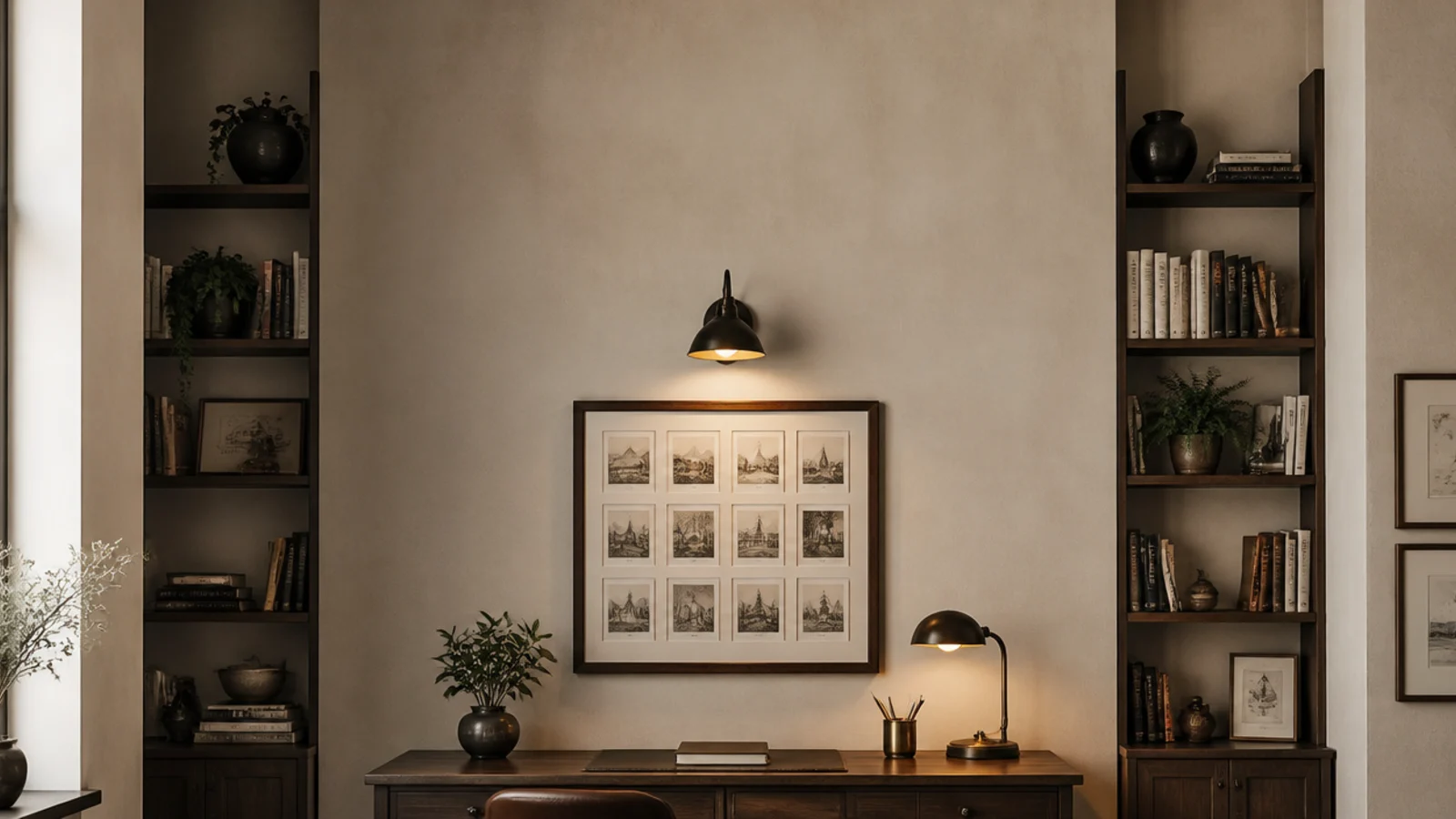
Two tall shelving bays either side of a desk turn a piece of furniture into what reads as built-in joinery. Keep each bay under 32 inches wide, paint the shelves and the wall the same tone, and leave the section directly behind the monitor clear. Materials run $120 to $300 for a pair.
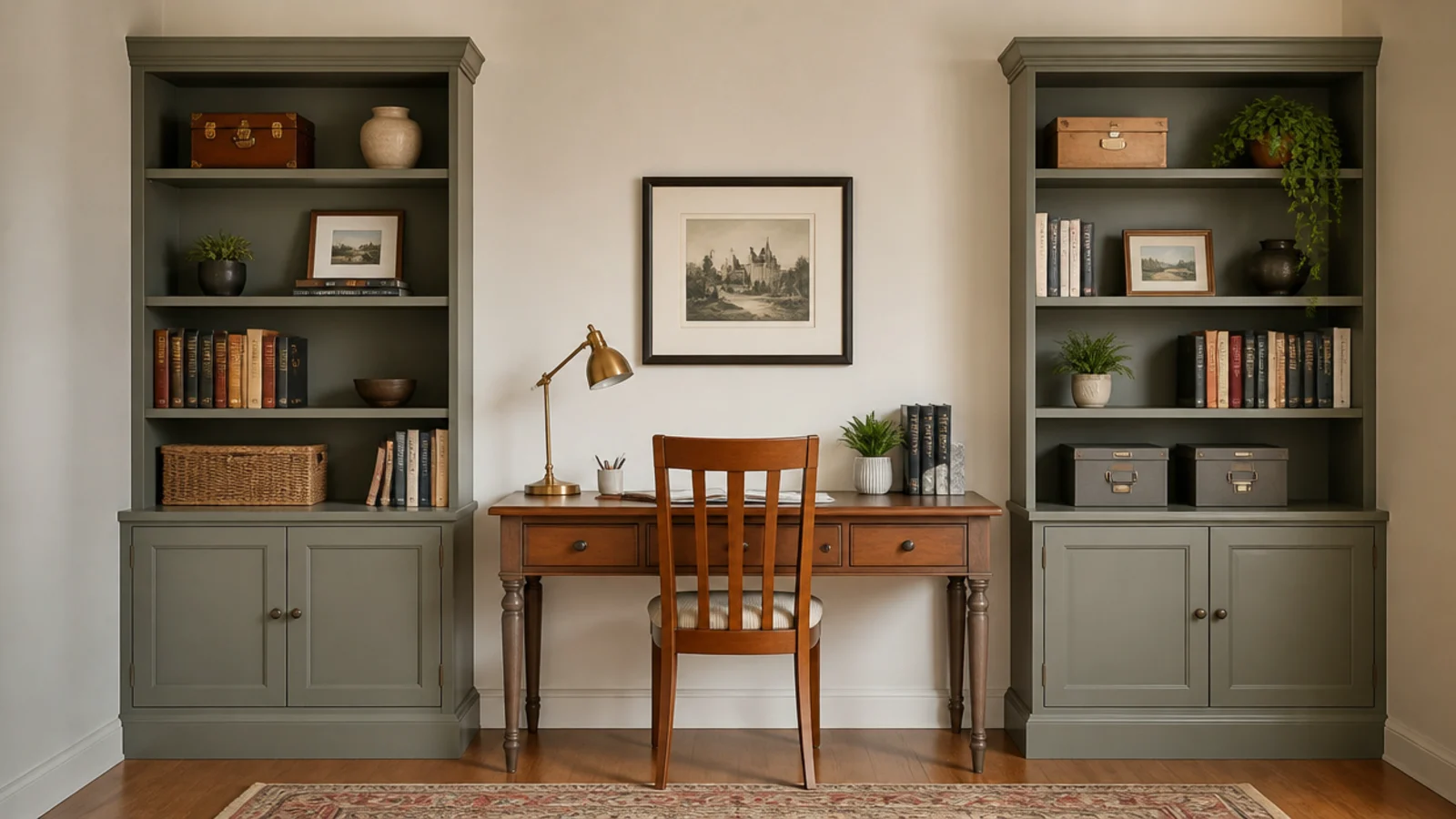
2. Run a picture rail at sixty inches
A timber rail fixed into studs at around 60 inches lets you hang and rehang the entire wall on cords with no further holes. It suits a rental, a room where the layout is still moving, and anyone who changes prints often. Expect $30 to $60 for a full wall run.
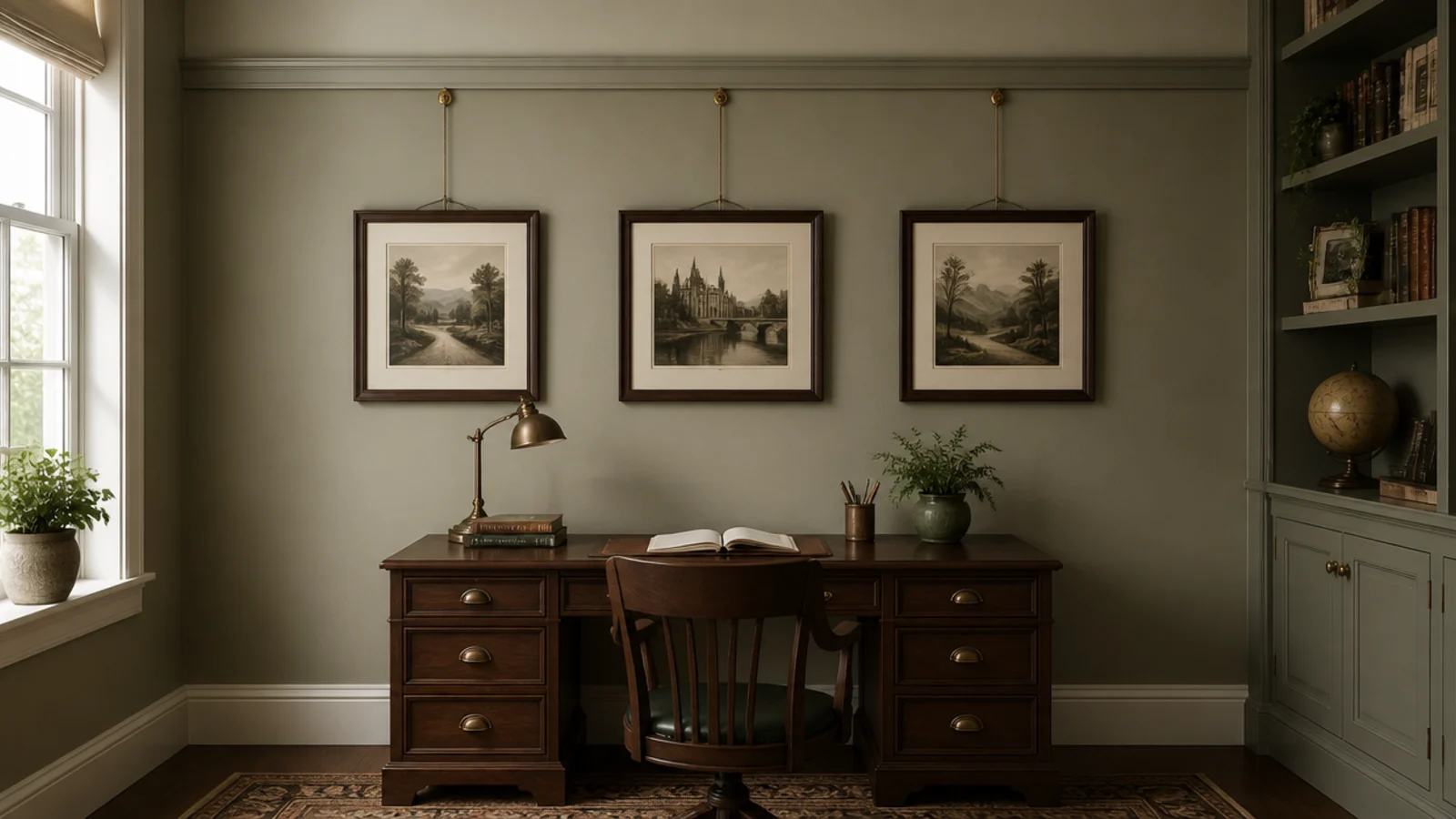
3. Grid nine small frames on the return wall
Nine identical small frames in a three by three grid with 2 inch gaps read as one large piece and cost far less. Put them on the return wall rather than behind the screen, where the pattern would compete with everything on the monitor all day.
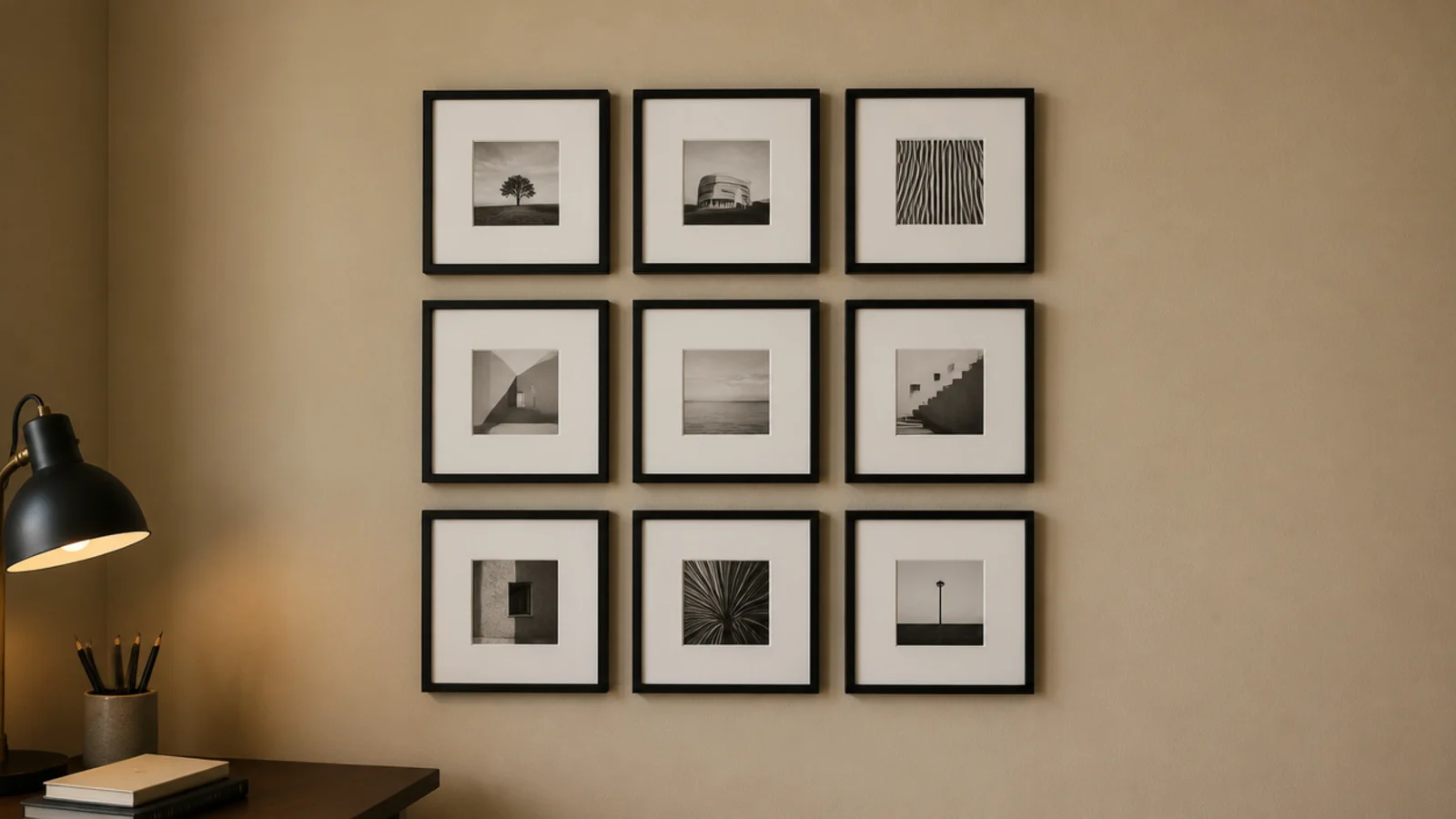
4. Take one shelf wall to wall at twenty inches
A single unbroken shelf running the full width of the room makes a narrow study read wider, because the eye follows one long horizontal. Support it every 30 inches into studs and glue a front lip on. Nothing else on that wall — the line does the work.
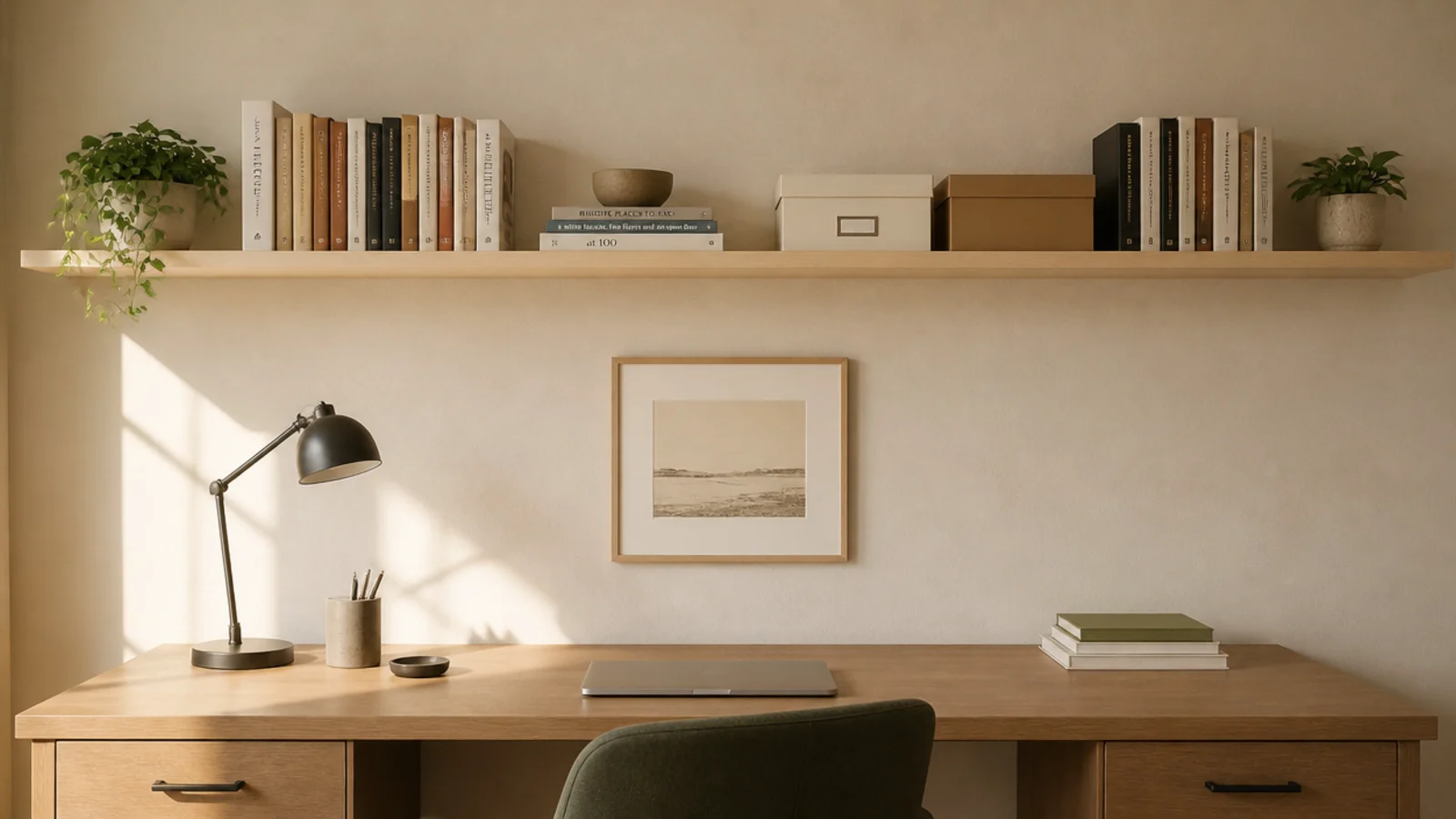
5. Anchor the wall with one large print
One piece 24 by 36 inches or larger, centred on the desk with its bottom edge 10 to 12 inches above the surface, settles a busy room instantly. It is also cheaper than six small frames and takes twenty minutes instead of an afternoon of measuring.
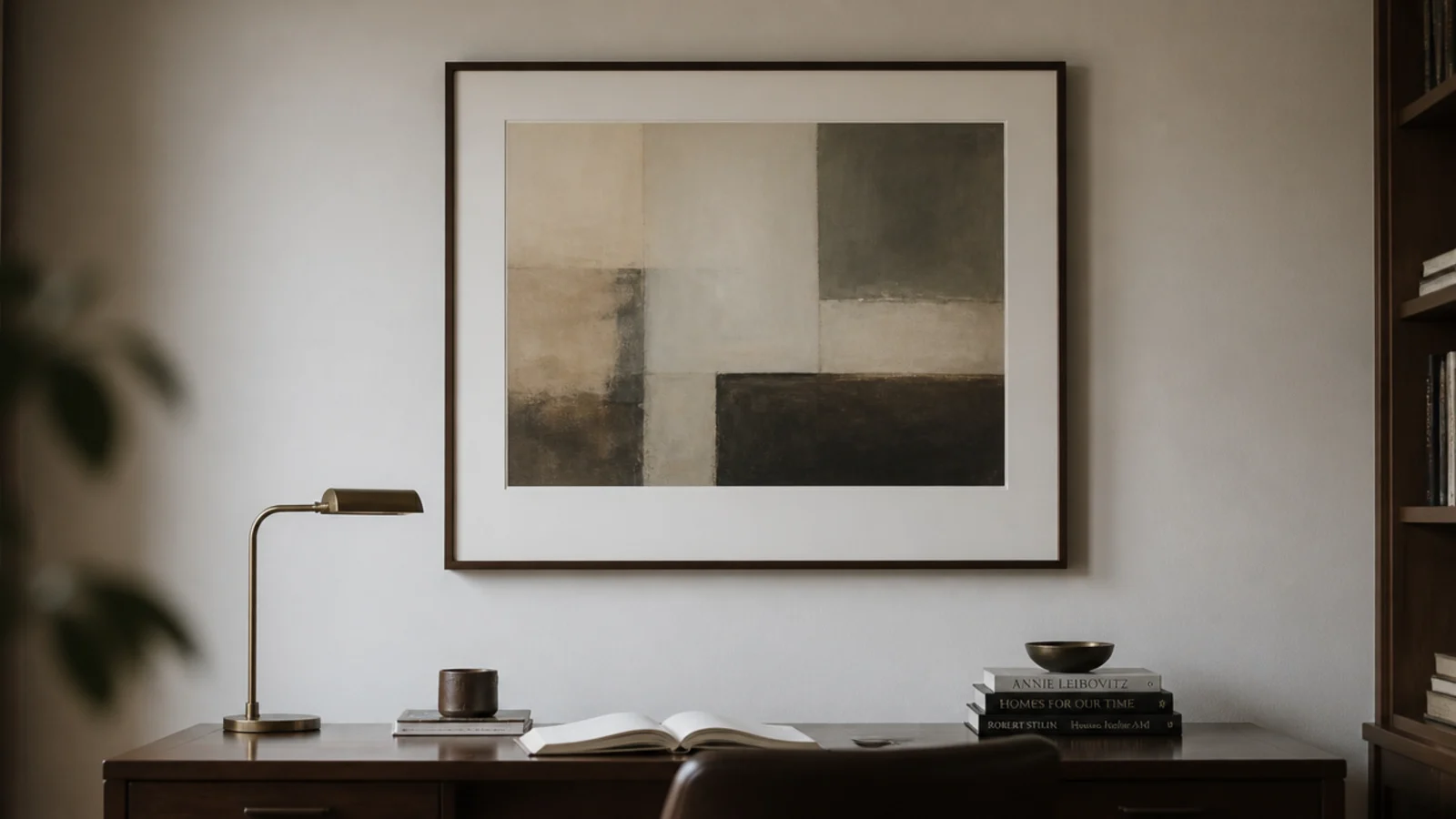
6. Slat the wall behind the desk in timber
Vertical battens with even gaps add texture and absorb a surprising amount of the echo that makes a hard study room tiring on calls. Keep the slats under 3/4 inch proud so the desk still sits flush, and take the panel floor to ceiling rather than stopping at head height.
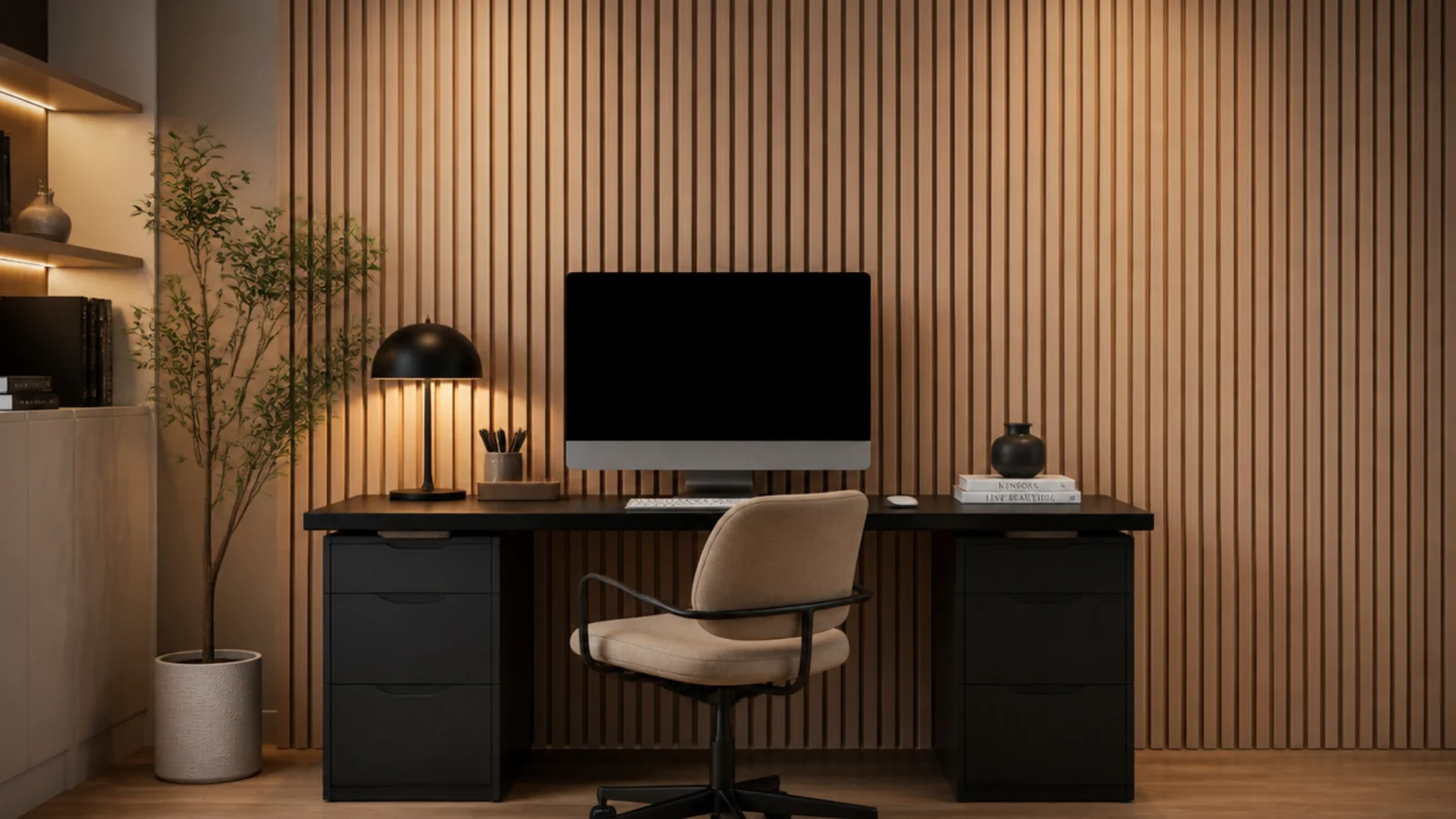
7. Panel to the shelf line and stop
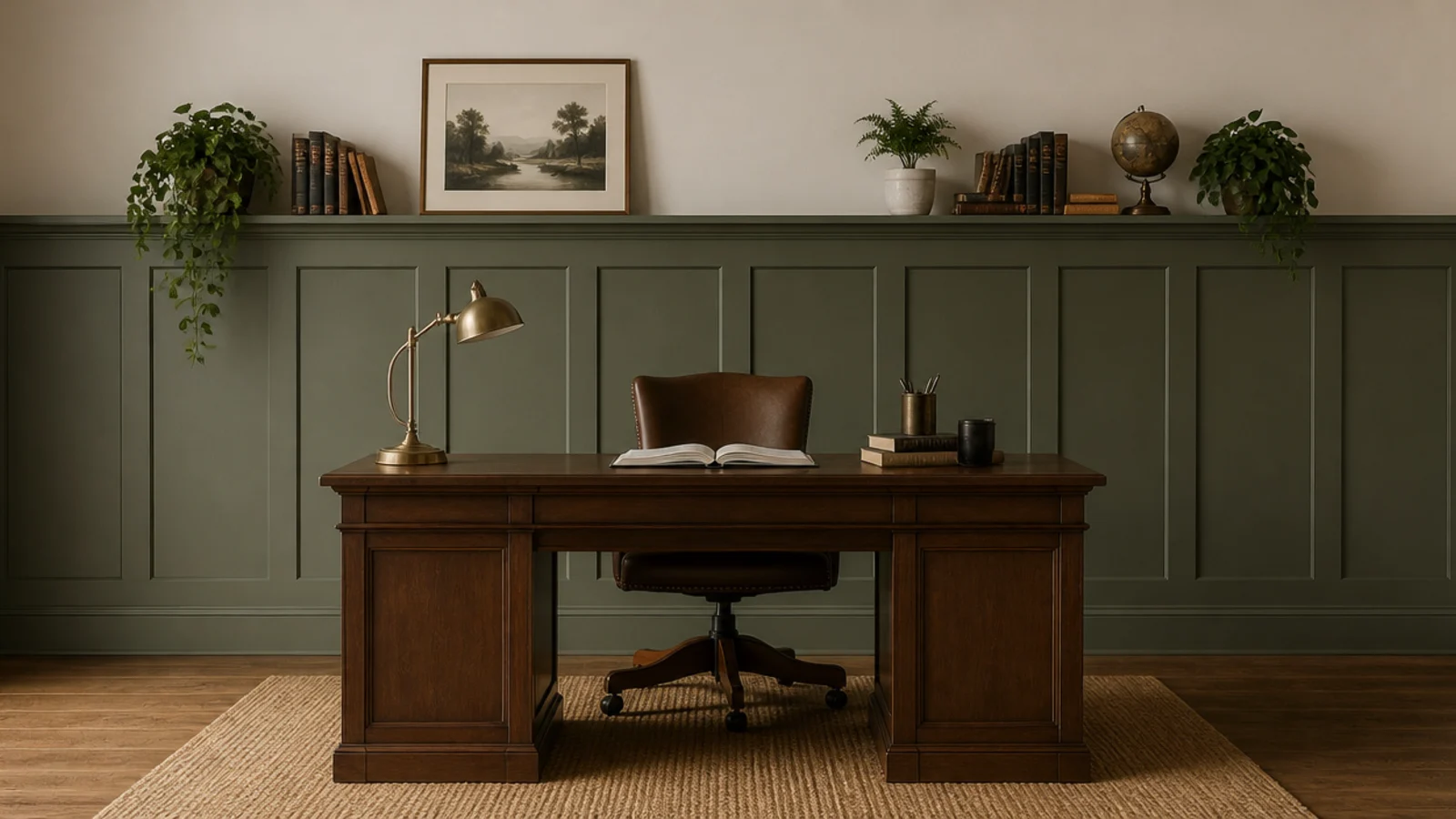
Half height panelling that finishes in a clean horizontal line at the shelf level gives the lower wall some substance without closing in a small room. Keep the beading shallow, under half an inch, and use a matt paint so the lamp does not bounce off the raised faces.
8. Flank the monitor with two pegboards
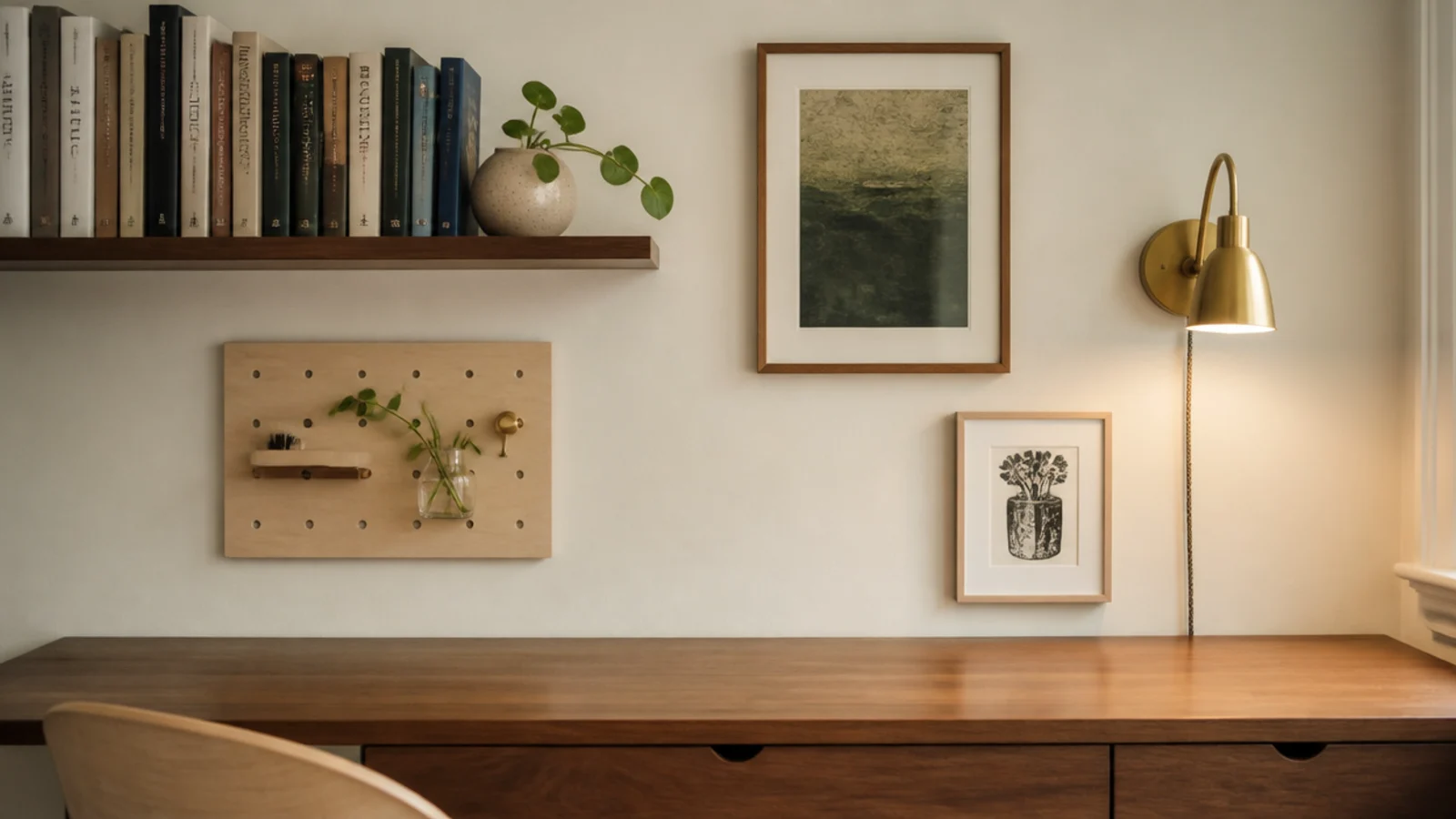
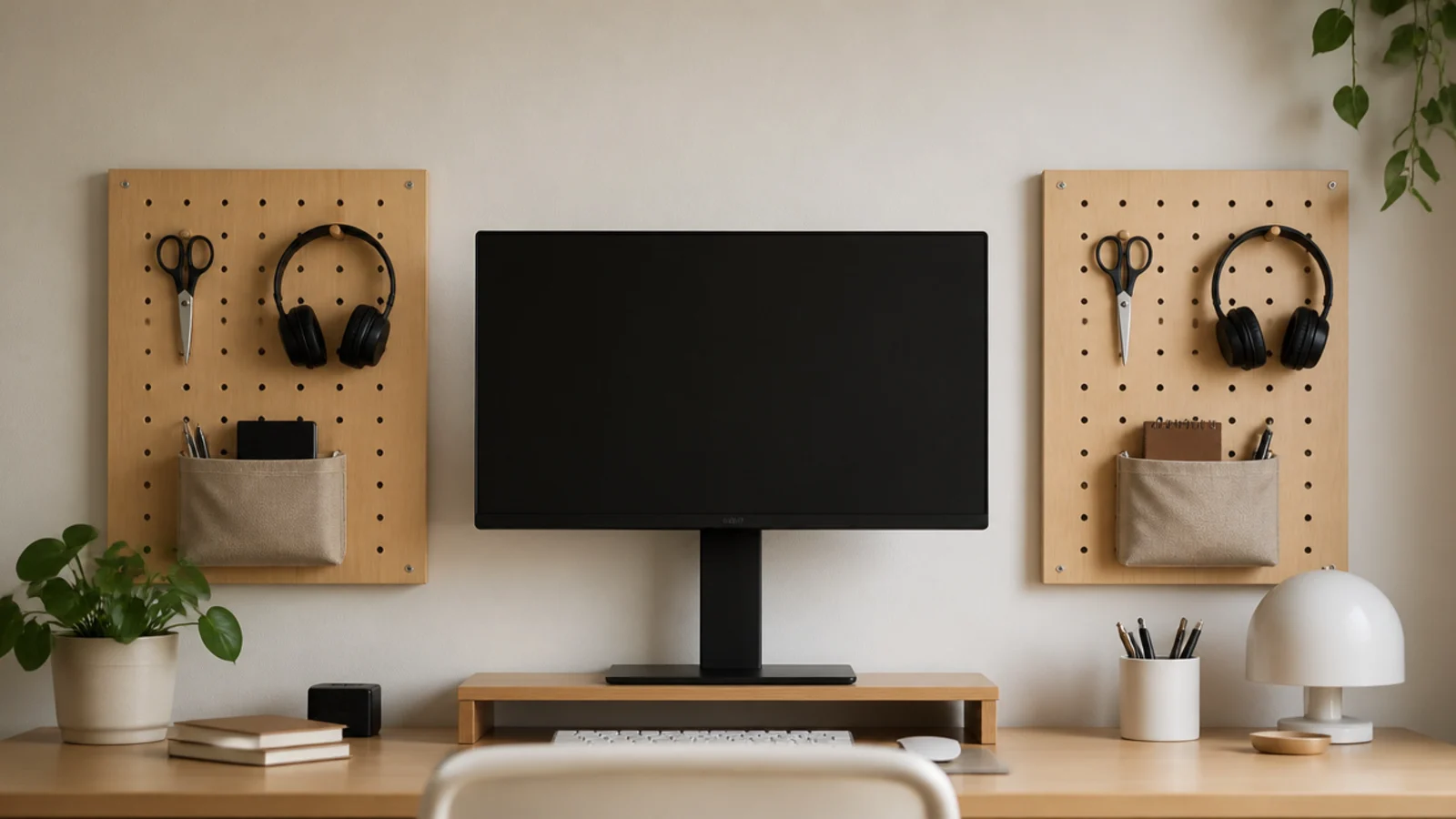
Two small pegboards either side of the screen hold more usefully than one large panel behind it, and they keep the wall directly behind the monitor clear. Leave 12 to 16 inches above the desk before the bottom edge, and pack both out on half inch battens.
9. Frame a cork panel with moulding
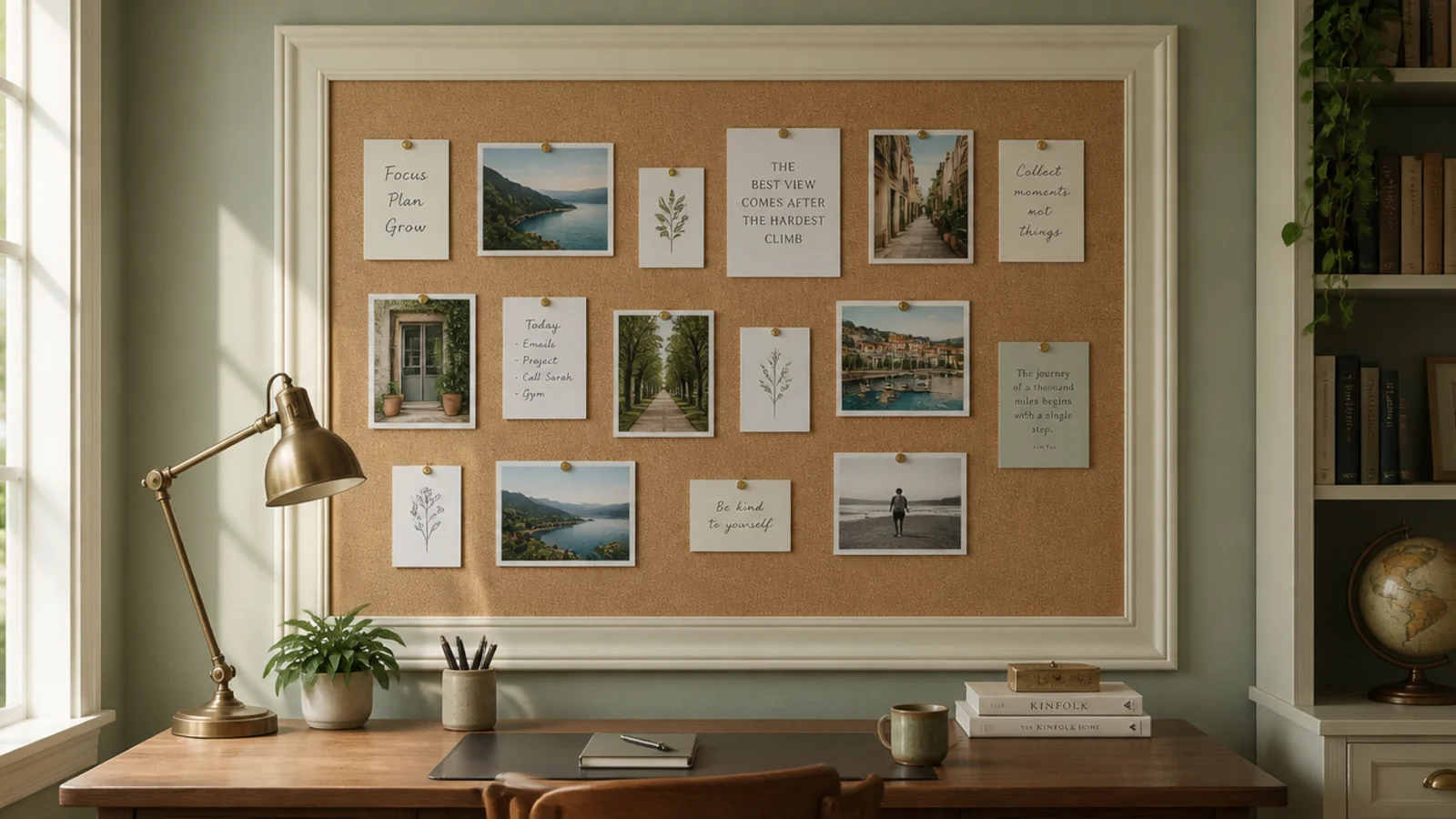
A large cork sheet inside a painted moulding frame turns a functional surface into something that looks intended. Size it to the desk width, hang the bottom edge 10 to 12 inches above the surface, and seal the moulding to the wall so pins do not pull the edges loose.
10. Paper the alcove only
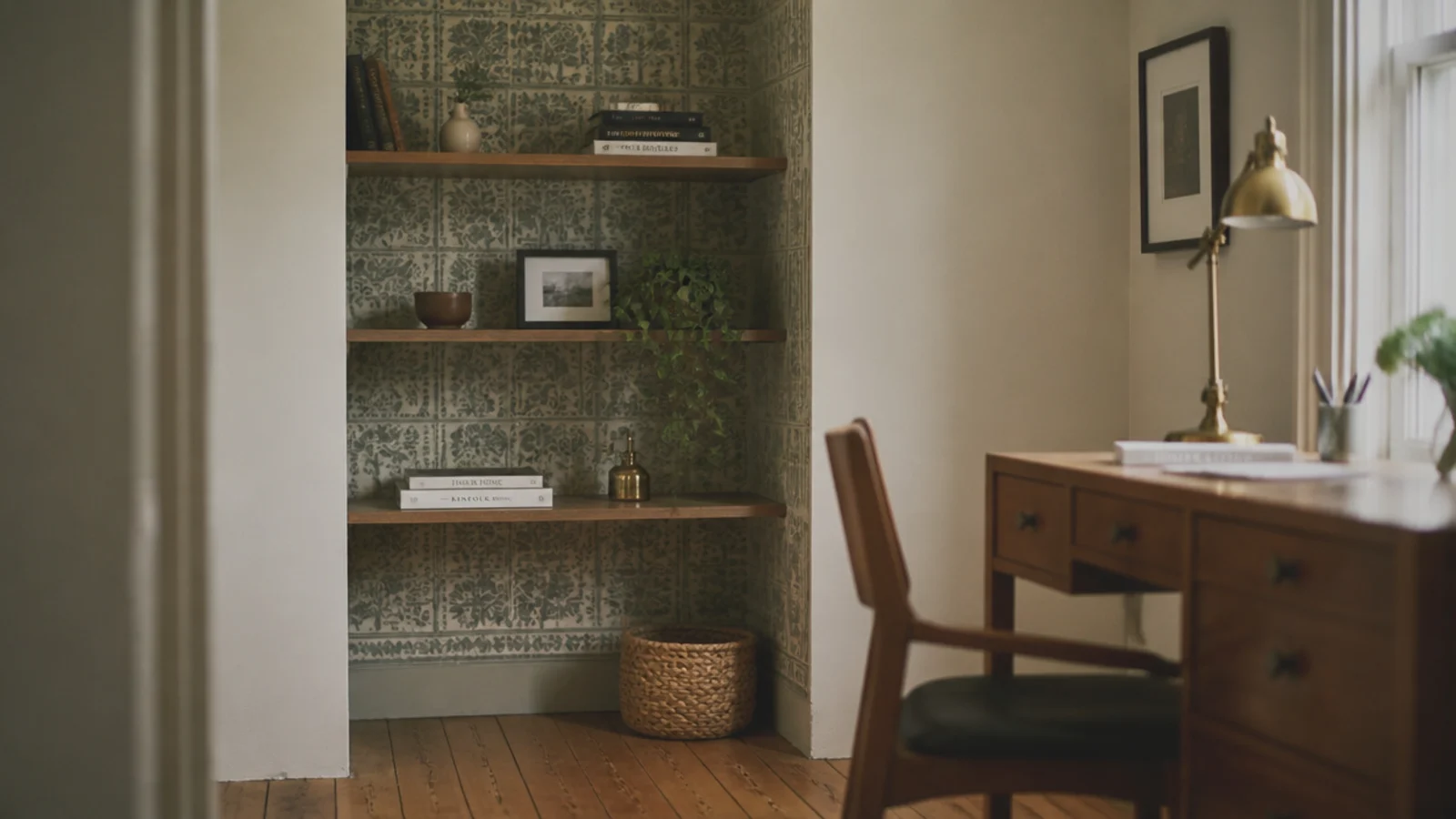
One roll of paper inside a chimney alcove costs $30 to $60 and gives the room a defined pocket without committing the whole space. Keep the pattern small in scale and non-reflective, and take it into the alcove corners rather than stopping at the shelf edges.
11. Stack three picture ledges
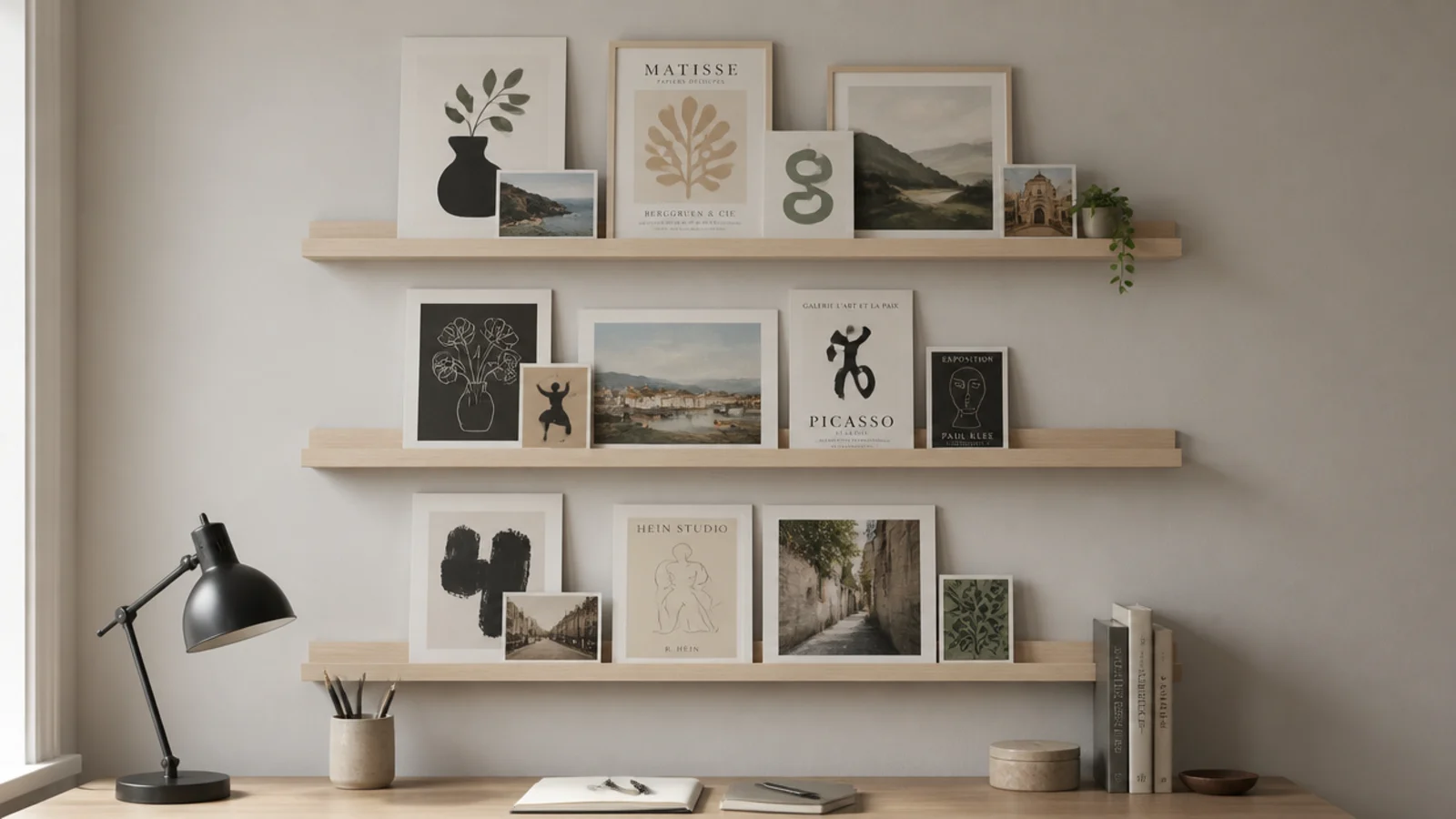
Three shallow ledges, 4 inches deep, spaced 13 to 16 inches apart, hold thirty leaning prints and postcards on six fixings. It is the most changeable wall treatment there is, and the small front lip means nothing slides off when a door slams.
12. Hang a pair of wall lamps
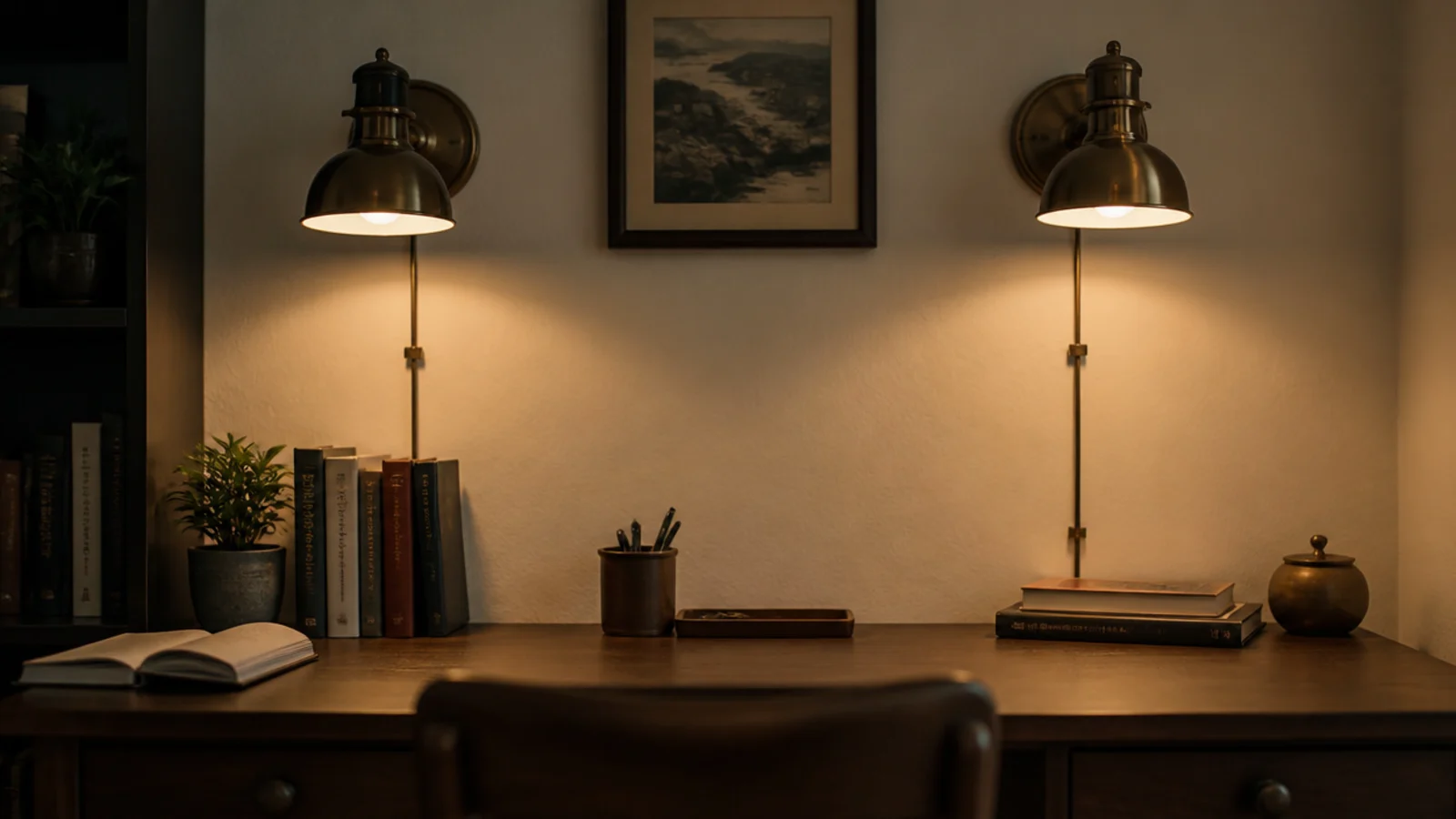
Two lamps 15 to 20 inches above the surface and a third in from each end give a wide desk even light with no shadow in the middle. Plug-in versions suit a rental. Aim for 450 to 800 lumens each and check both stay out of the screen reflection.
13. Use open cubes at thirteen-inch clear height
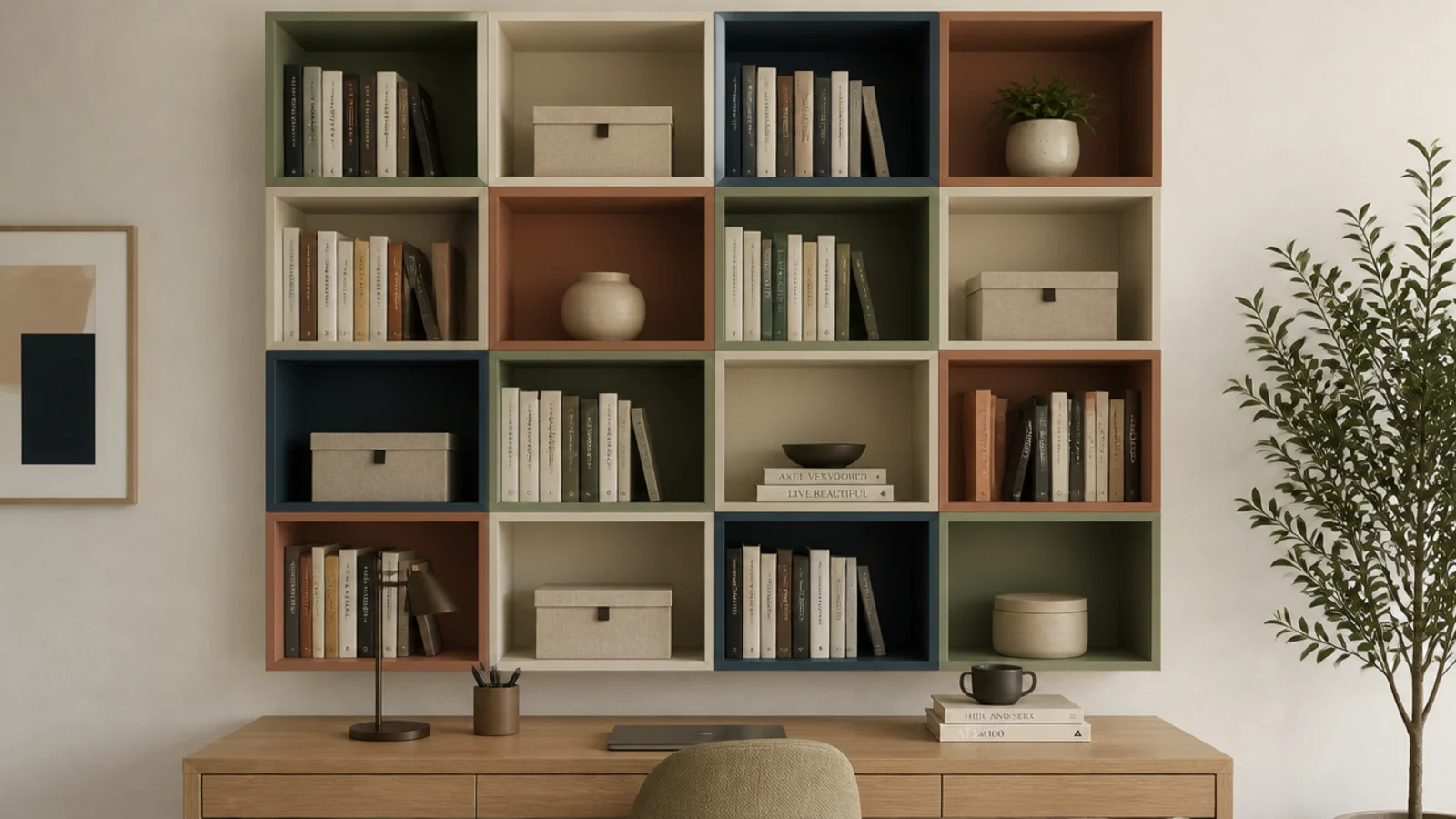
Cube shelving works above a desk when the clear internal height is 13 inches or more, which takes any hardback upright. Below 11 inches your best books lie flat forever. Keep the depth to 10 inches and fix the top of the unit to the wall.
14. Stretch a low ceiling with a tall mirror
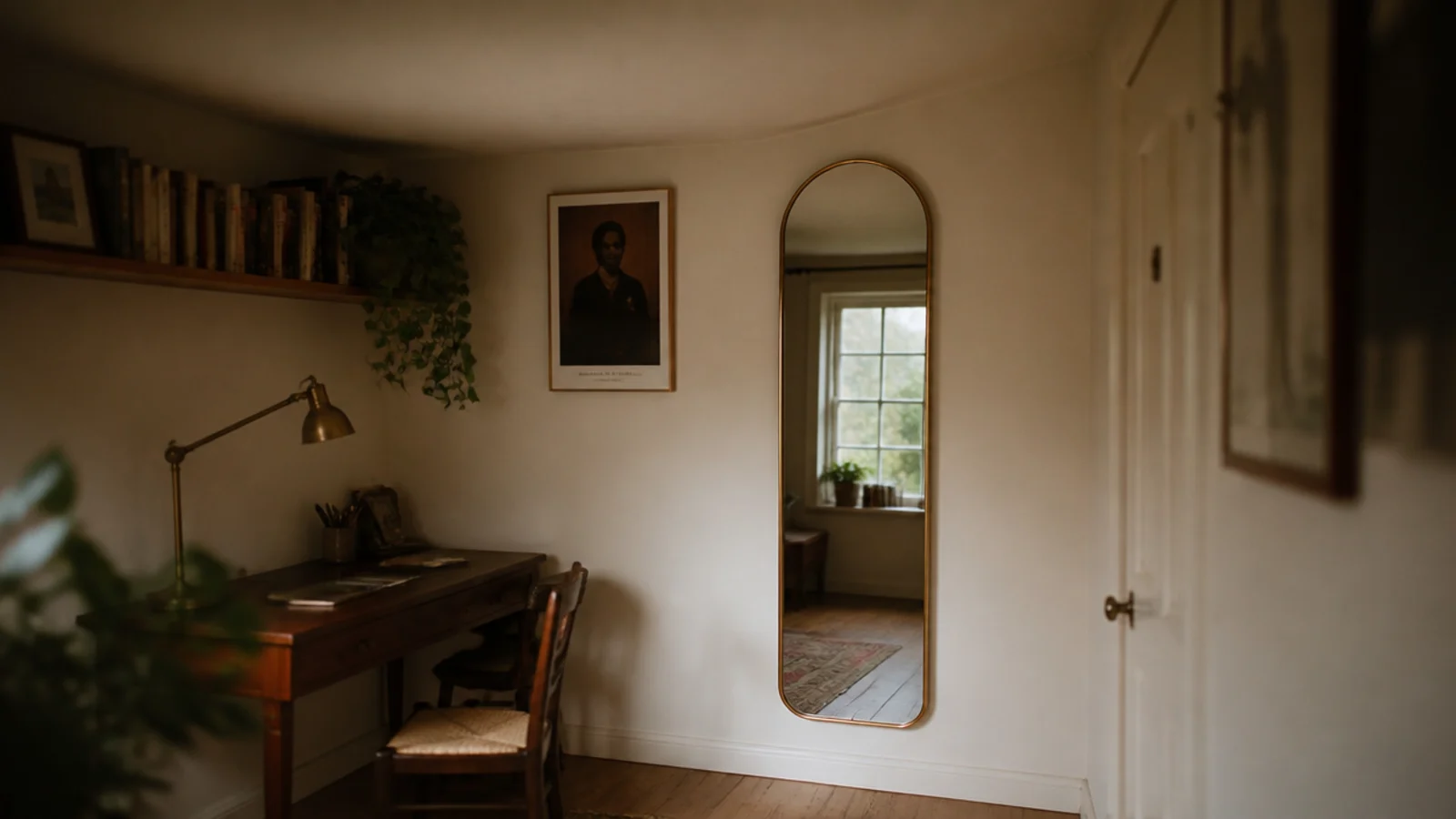
A narrow mirror hung vertically beside the desk draws the eye up and gives a low room some height. Keep it off the wall directly behind the screen, and check from the chair that it is not reflecting the window into your monitor.
15. Put storage above the door line
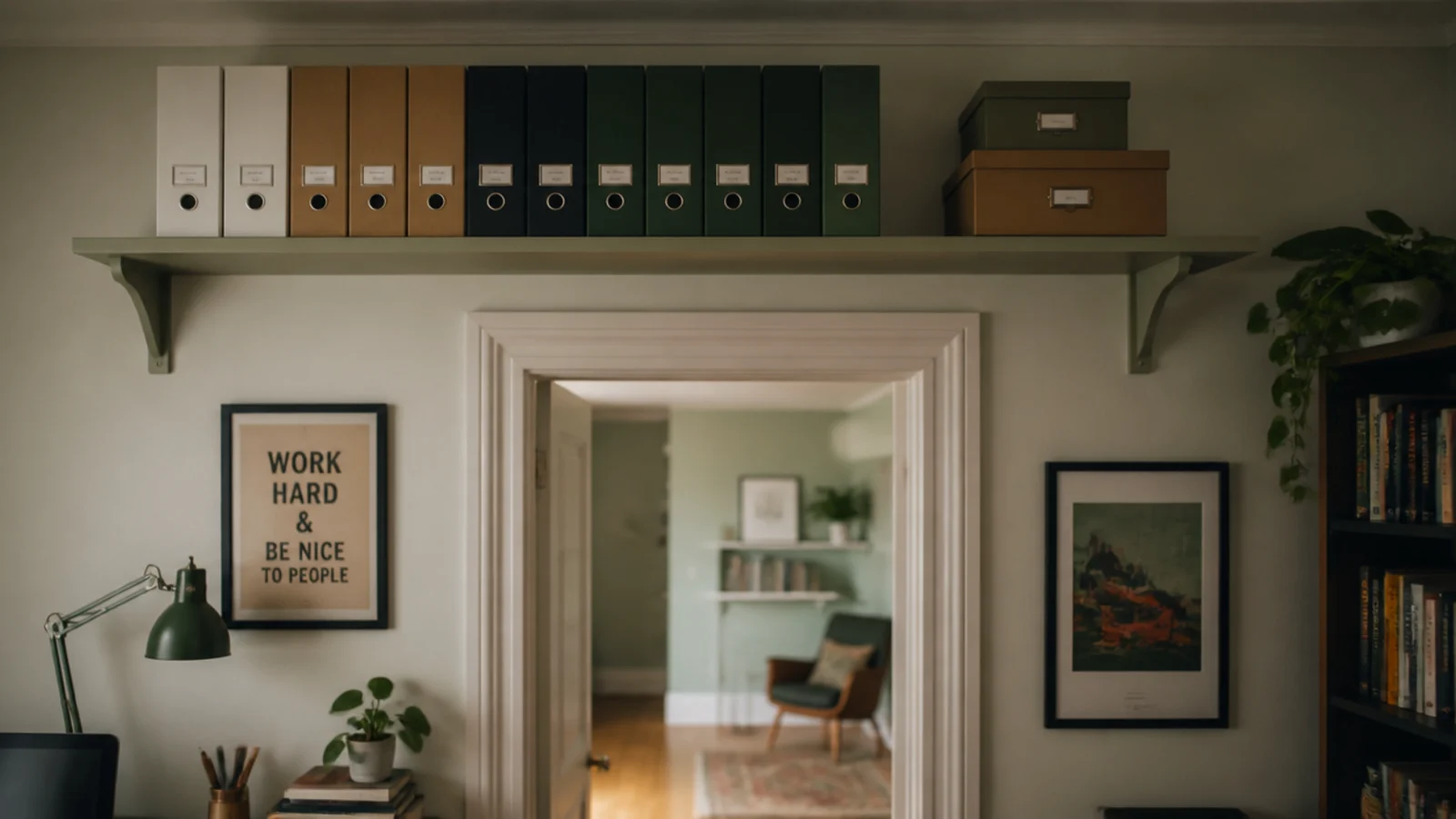
The wall above a doorway is dead in almost every room. A shelf across it, about 12 inches below the ceiling, takes box files and finished folders. Keep only things you need a few times a term up there, since a chair or step is involved every time.
16. Paint a magnetic panel behind the desk
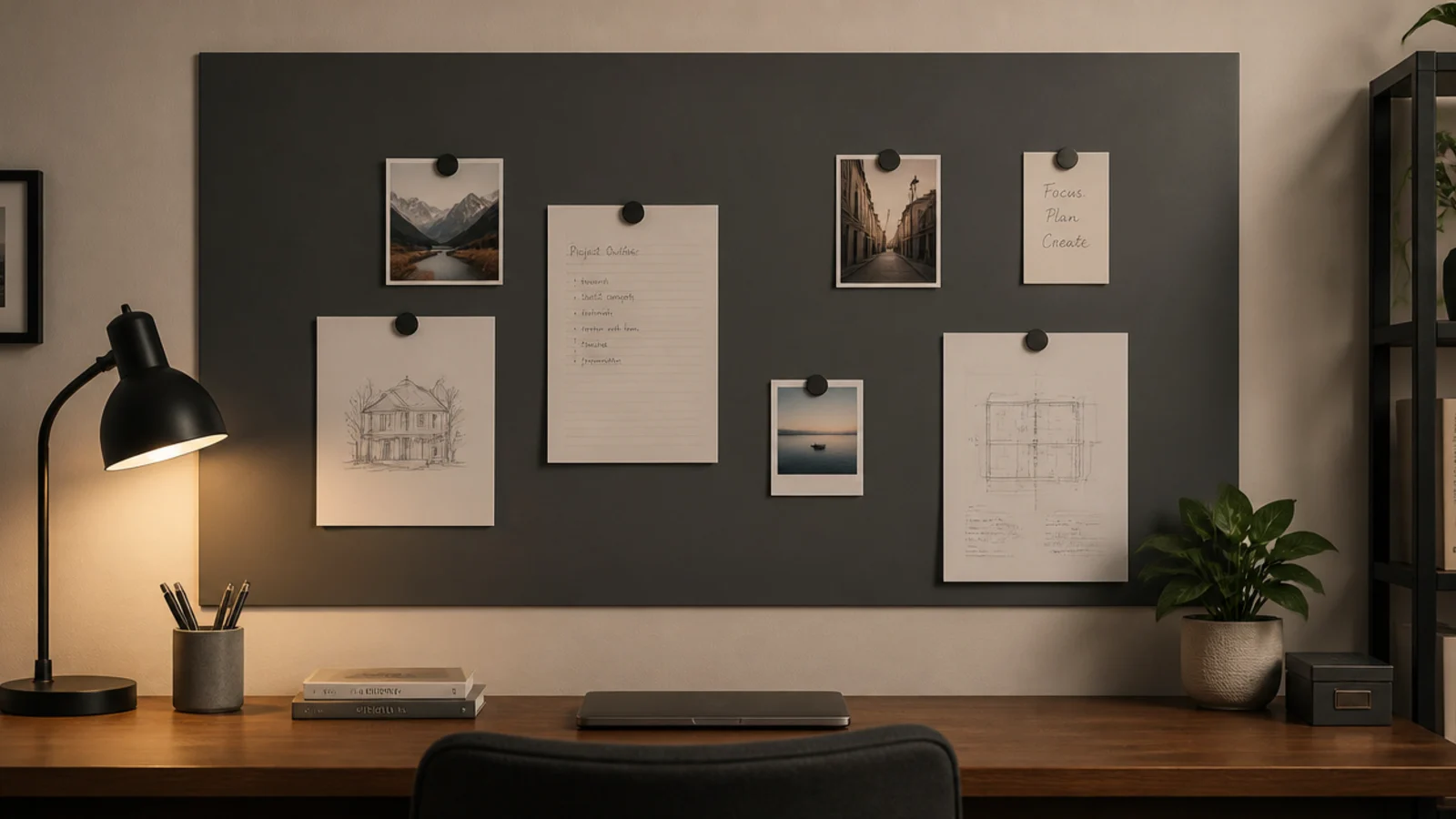
Two coats of magnetic primer under a topcoat gives you a panel that holds paper with no pinholes and no board. A quart covers about 30 square feet. Keep it well away from anything with a hard drive, and be aware the hold is modest — a few sheets, not a folder.
17. Size the whiteboard to the desk width
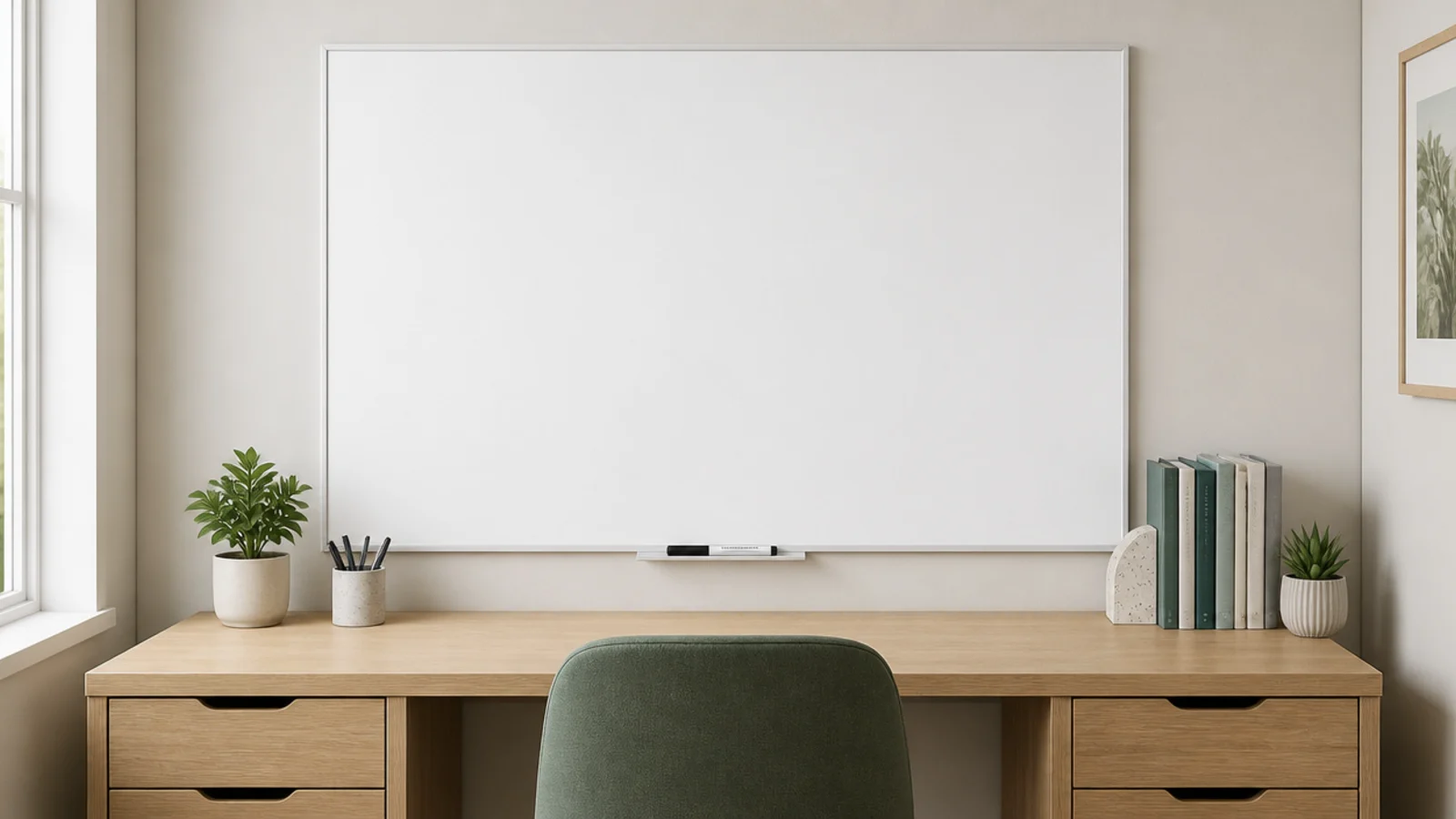
A board matched to the desk width reads as designed; one narrower or wider by a few inches reads as whatever was in stock. Hang the bottom edge at 10 to 12 inches above the surface so you can write on the lower third from the chair.
18. Rail a row of plants above the window
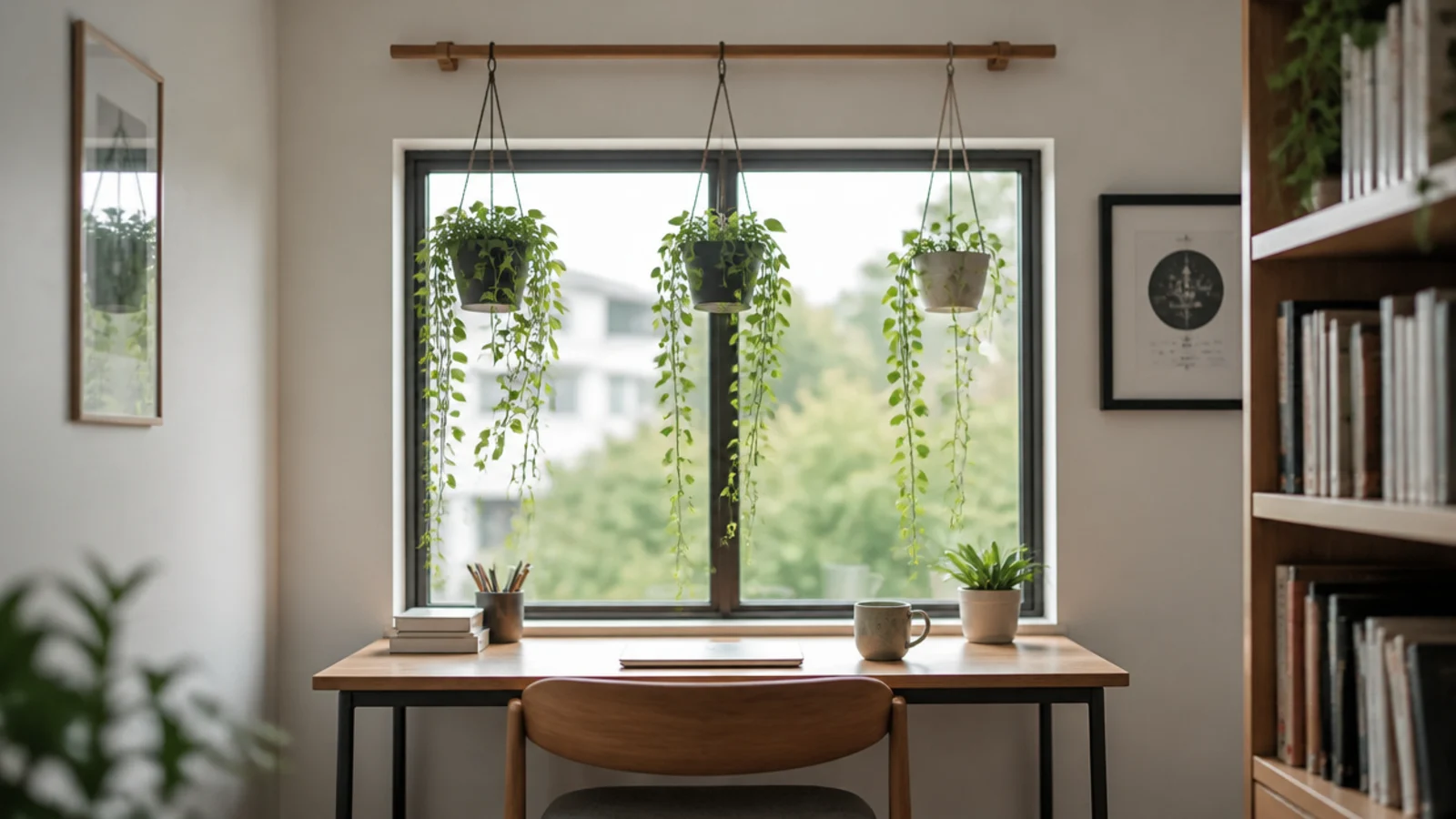
A slim rail above the window carries three small pots on hooks, putting greenery in the brightest part of the room without giving up any desk. Keep pots under two pounds each filled, and fix the rail into studs rather than the window lintel.
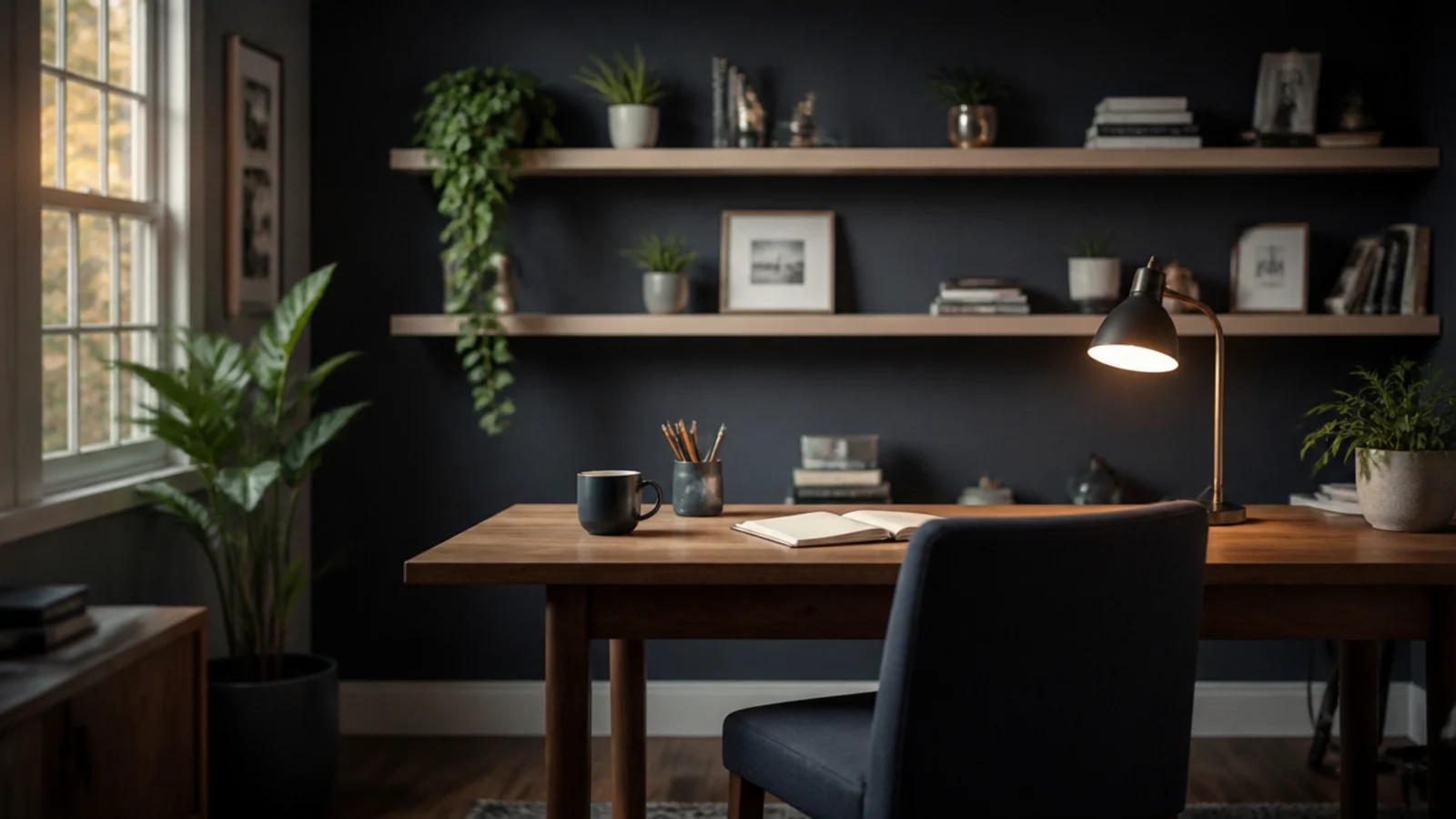
19. Pair a dark wall with pale shelves
A deep wall colour with pale shelves in front of it makes the shelves read as architecture rather than storage. It also gives every object on them a silhouette. Keep the paint matt, and put the darkest tone on the wall you do not face while working.
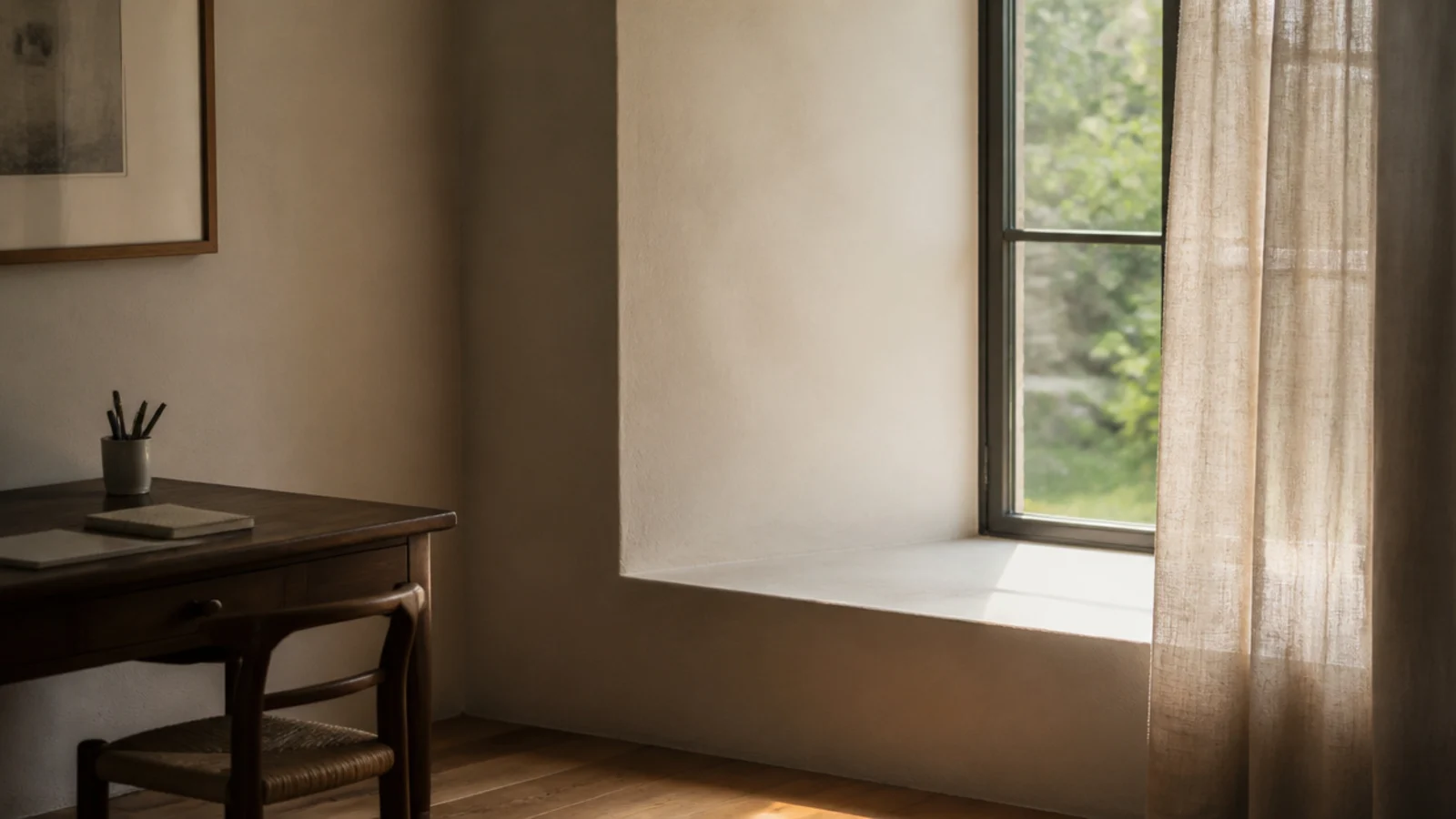
20. Leave the window reveal completely bare
Whatever else the room does, keep the reveal and the wall immediately beside the window clear. Anything hung there cuts daylight you cannot get back, and it puts an object into the exact sightline you use to rest your eyes between tasks. The twenty-foot rule is worth knowing here: looking at something roughly twenty feet away for twenty seconds every twenty minutes is what actually relaxes the focusing muscle, and a window is usually the only thing in a small room far enough away to qualify. Hang a board across that reveal and you have removed the one distance the room offered.
For a softer, more decorative treatment of the same wall, the study desk wall decor aesthetic layouts go further on palette and mood. Built-in shelves for a living room cover alcove joinery in depth, and the living room hanging lights guide has fixtures that suit a study doubling as a shared room.
Mistakes to Skip
- Running a single shelf longer than 32 inches without support. It will bow under books within a term, and a bowed shelf never straightens once the load comes off.
- Centring the arrangement on the wall rather than the desk. The eye reads desk and wall as one block, and an eight inch offset reads as a mistake however careful the spacing.
- Hanging anything on the wall immediately beside a window. You lose daylight you cannot replace and gain an object in the exact spot your eyes go to rest.
- Choosing glazed frames for the wall opposite a window. They mirror the glass all afternoon and you will end up moving every one of them.
Frequently asked questions
What height should a gallery wall centre on in a study room?
Fifty-seven to sixty inches from the floor for a wall you mostly see standing, but drop it to around fifty inches when the arrangement sits directly above a desk. The desk changes the reference point, and a group hung at standing gallery height above a desk floats too far from the surface below it.
How wide should shelving be either side of a desk?
Keep each bay under 32 inches of unsupported span in 3/4 inch stock, so a pair of 30 inch bays either side of a 48 inch desk works well. Wider than that and the shelves bow under books permanently. Add a vertical divider or a solid front lip if you need a longer run.
Can I panel the wall behind a study desk?
Yes, and half height panelling stopped at the shelf line works better than full height in a small room. Keep the beading shallow, under half an inch, so a desk can still sit flush against the wall, and paint it matt so the task lamp does not bounce off the raised faces.
Where should paired wall lights go above a desk?
Fifteen to twenty inches above the desk surface and roughly a third in from each end, so the pool of light overlaps in the middle of the working area. Keep both fittings outside a thirty degree cone from your eyes to the screen or you will see them reflected every evening.
How do I use the wall above a study room door?
Run a shelf across at about 12 inches below the ceiling for things you need a few times a term — box files, spare paper, folders you have finished with. It is dead wall in almost every room, and it keeps the reachable storage free for what you use weekly.
Want more like this? Browse all 15 study desk decor guides — they all use the same measurements and budget tiers.
Pin it for later
Save this to your Study Desk Decor board
Pin it now so it is waiting for you when the tape measure comes out — and so the next person hunting for this idea can find it too.
Save this pinKeep going
More ideas worth saving while you have the tape measure out.