Bedside Table Ideas · Listicle
20 White Bedside Table Ideas That Brighten A Room

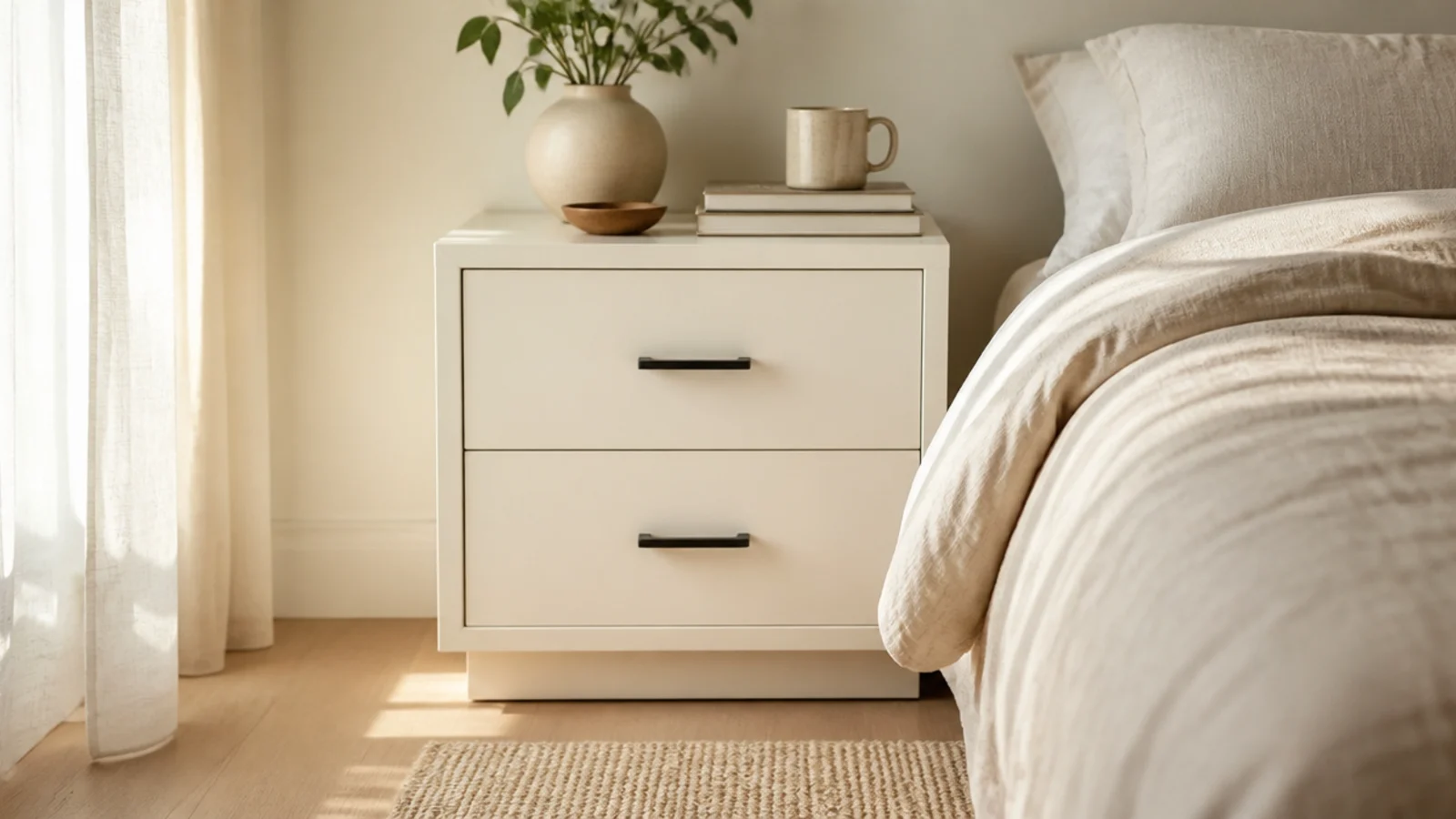
White bedside table ideas are chosen for one reason — a bedroom that feels brighter and larger — and they fail for two: the wrong white, and a finish that cannot survive a water glass. I have painted four nightstands white and got the first two wrong, once by matching a paint chip rather than the wall, and once by using a flat matte that marked the first time somebody put a mug down. Here are twenty that hold up, with the sheen levels, primers and undertones that decide whether the piece still looks crisp in year three.
In this guide22 sections — tap to openHide
- 1.What white bedside table ideas get wrong about white
- 2.Choose the white against the wall, not against a chip
- 3.Warm whites north, cool whites south
- 4.Eggshell or satin, never flat matte
- 5.Stain-blocking primer or the knots will bleed
- 6.Lacquered white for a genuinely wipeable surface
- 7.Limewash over timber so the grain still reads
- 8.A white ceramic or plaster pedestal
- 9.Tone-on-tone: white marble on a white base
- 10.Contrast hardware in black or brass
- 11.A white table against a colour-drenched wall
- 12.Keep something dark low in the room
- 13.One wood element stops white feeling clinical
- 14.Beadboard or panelled fronts in white
- 15.A skirted table with a washable cover
- 16.Match the white to the bedding, not the ceiling
- 17.Scuff repair in two minutes
- 18.A removable top layer where the marks land
- 19.Off-white and greige as the practical alternative
- 20.In a small room, let the floor run underneath
- 21.Test three whites at 8am and 8pm
- 22.Mistakes to Skip
What white bedside table ideas get wrong about white
White is not a colour so much as a set of undertones, and the undertone is what either agrees with your room or fights it. A warm white carries yellow or a trace of red, a cool white carries blue or grey, and a brilliant optical white carries a blue brightener that makes it read stark and slightly grey beside cream bedding.
Sheen is the second decision and the more practical one. Flat matte has almost no binder at the surface, so it absorbs a mark and cannot be wiped. Eggshell at roughly 10 to 25 percent gloss and satin at 25 to 35 wipe clean while still looking soft under a lamp. Full gloss shows every fingerprint on a surface you touch in the dark.
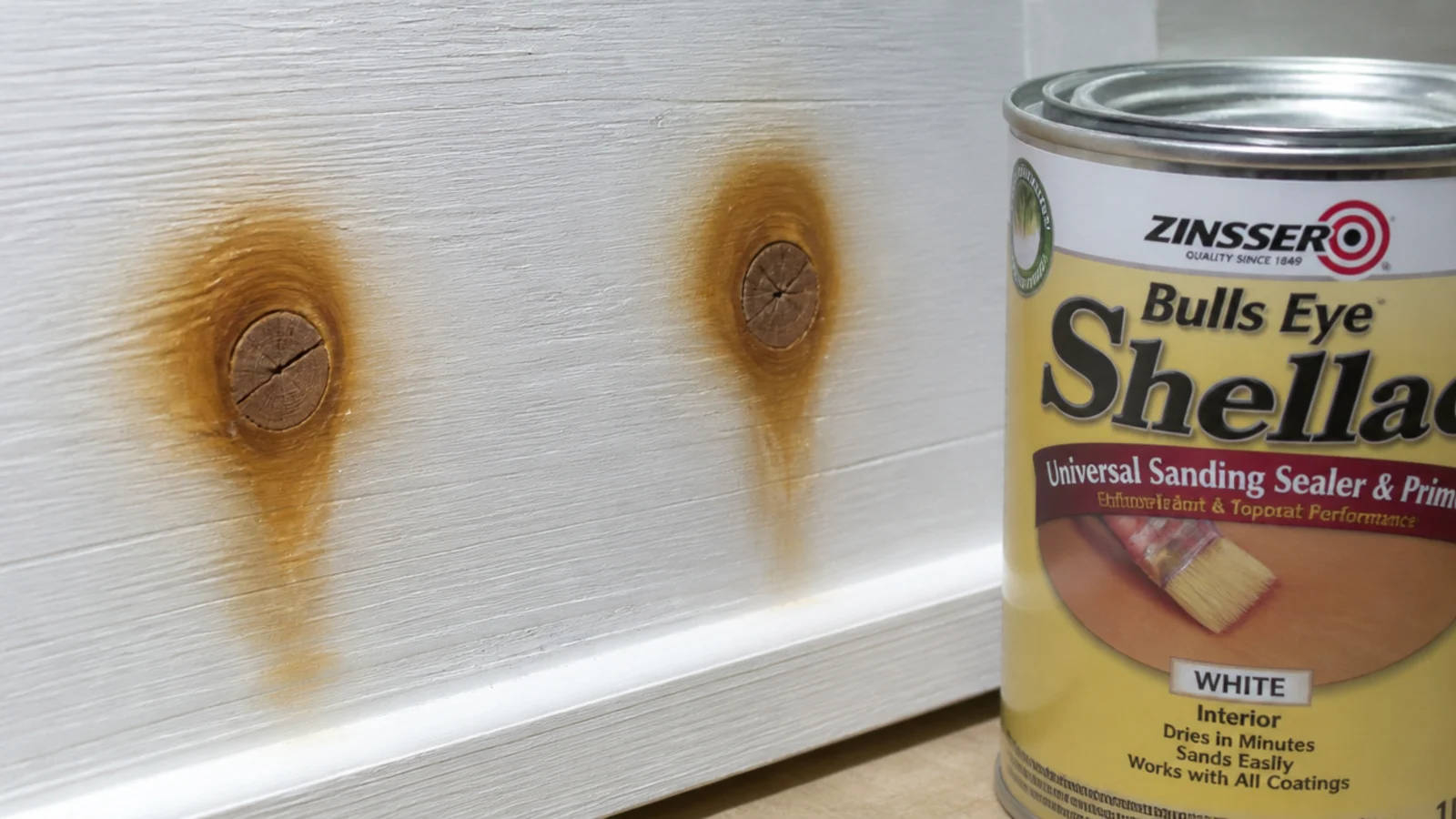
Third is yellowing, and it is entirely avoidable. Oil-based paint and oil-based varnish both amber with age — visible within two years and obvious within five. Use water-based paint and a water-based topcoat over white, always. The other yellowing culprit is tannin bleeding through from knots in pine, which needs a shellac-based stain-blocking primer rather than a standard undercoat.
Budget-wise, a secondhand table plus primer, paint and a topcoat runs 25 to 45 dollars; a factory-lacquered white cabinet runs 120 to 350. For the tonal logic that sits behind all of this, the aesthetic principles are worth reading first.
1. Choose the white against the wall, not against a chip
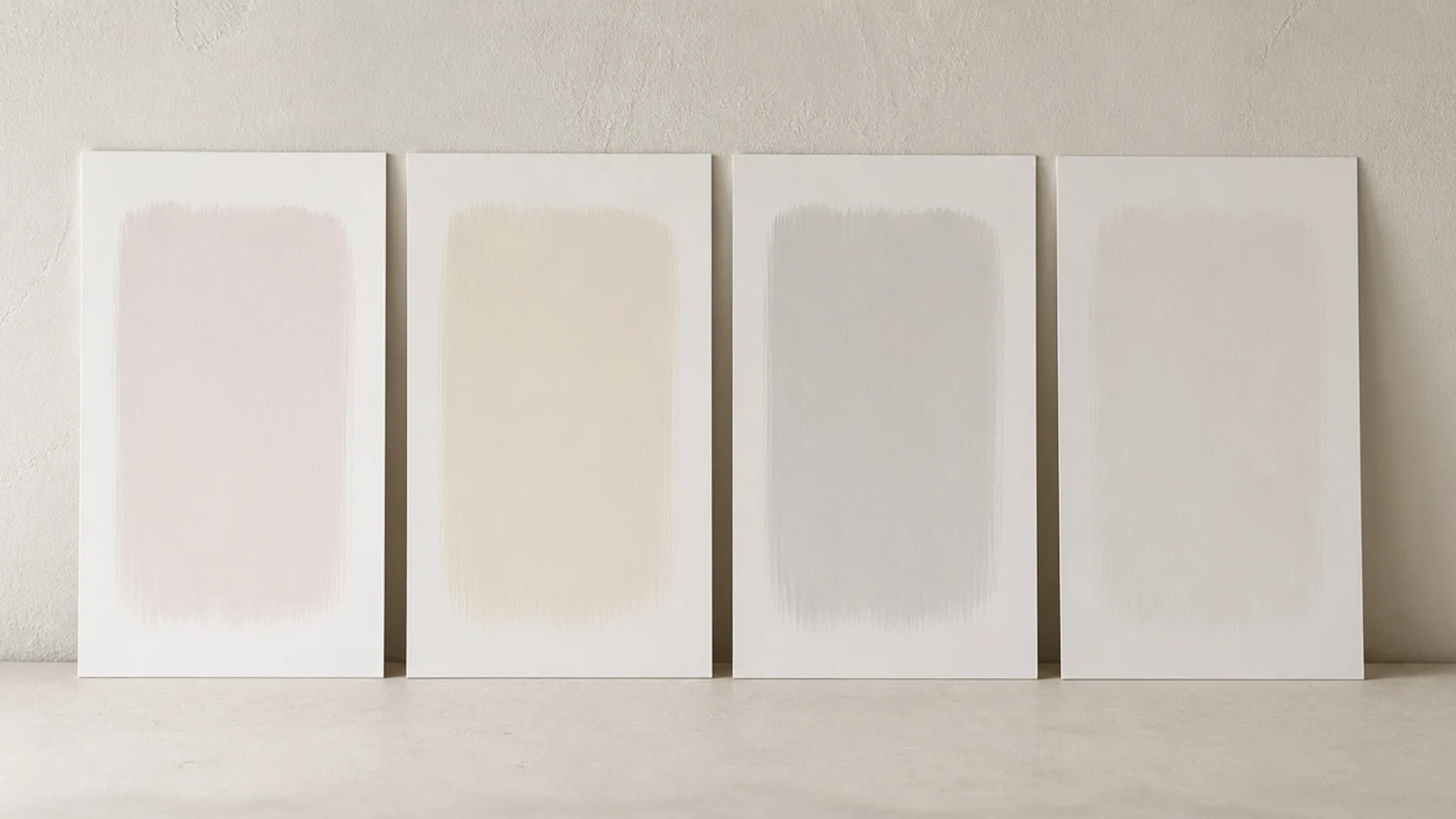
A two-inch paint chip held in your hand is judged against your skin tone and whatever else is nearby. Brush a sample onto card, hold it flat against the wall so the two surfaces meet with no gap, and the undertone becomes obvious immediately. A white that looked neutral on the chip will often read distinctly pink or green once it sits against your actual wall colour.
2. Warm whites north, cool whites south
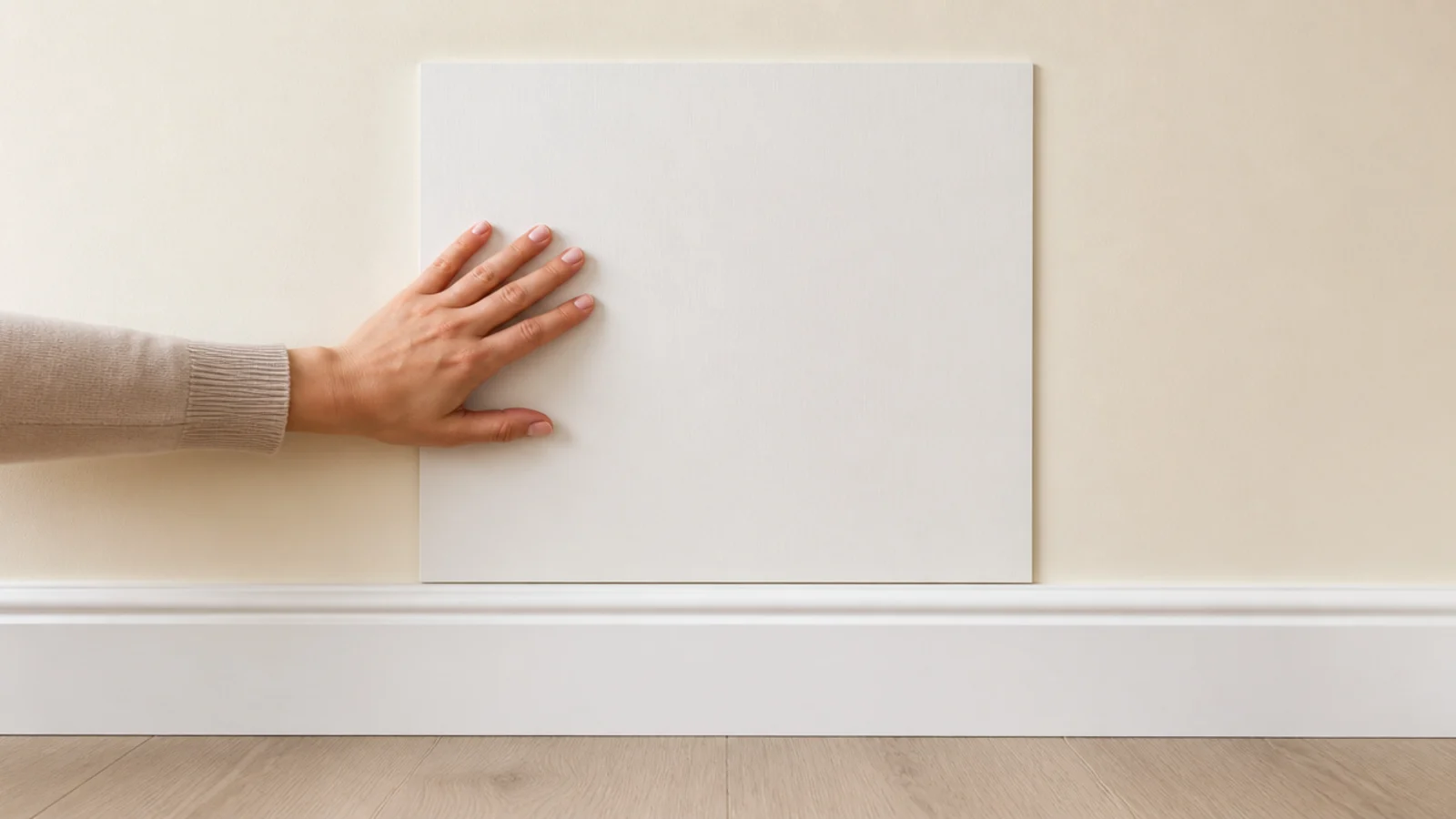
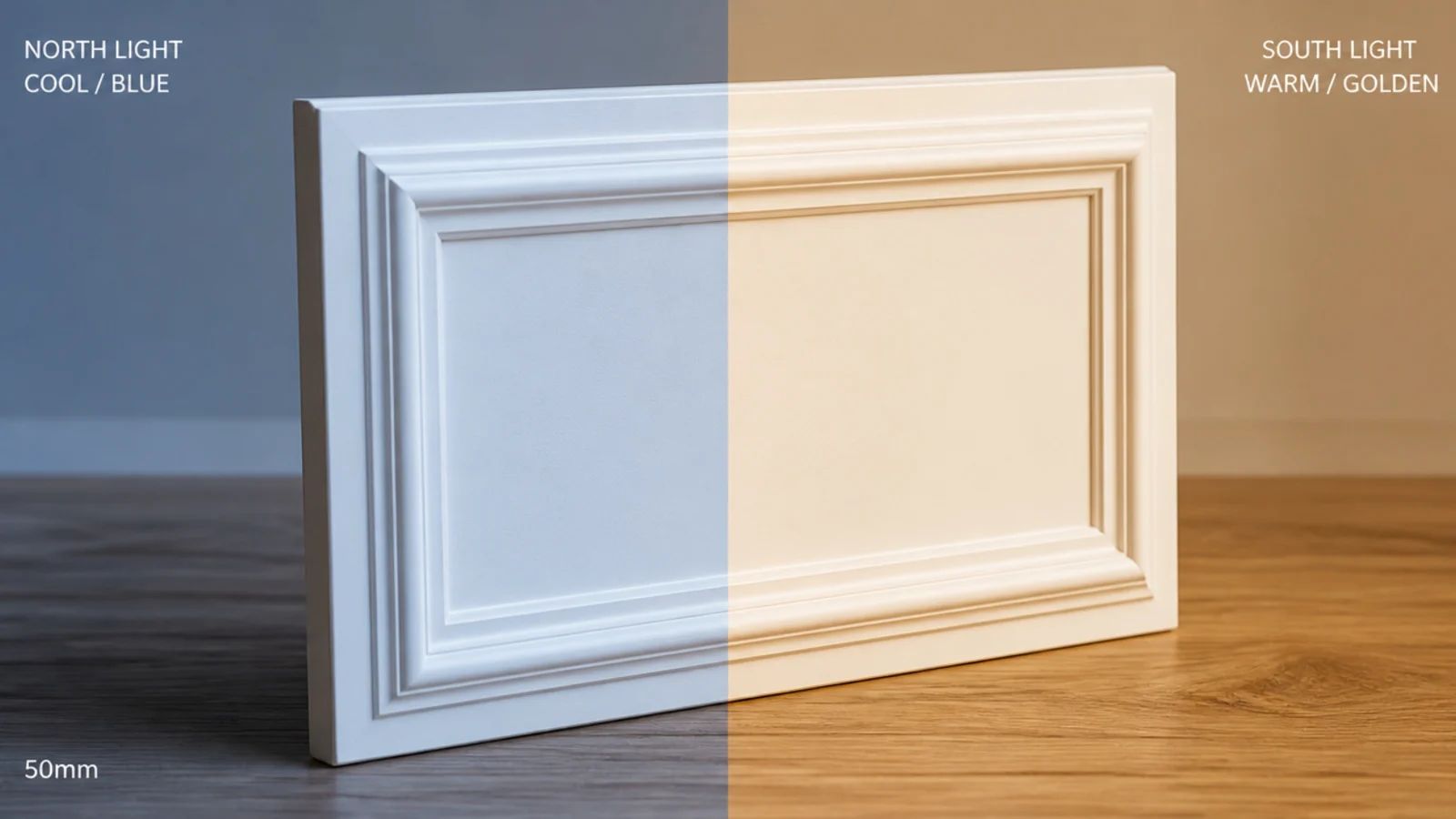
North-facing rooms get cool blue-grey light all day, which drains warmth out of everything and turns a cool white distinctly grey. Choose a white with a yellow or red undertone there. South-facing rooms get warm light that pushes a warm white toward cream, so a cleaner, cooler white holds its crispness. East and west rooms change through the day and want something close to neutral.
3. Eggshell or satin, never flat matte
Flat matte white is beautiful for about a fortnight. On a bedside surface it takes a mark from a sleeve, a mug, a hand cream lid, and none of them wipe off because there is no binder at the surface to wipe. Eggshell or satin gives you a cleanable film with only a soft sheen. Reserve matte for the sides if you like the look, and use satin on the top.
4. Stain-blocking primer or the knots will bleed
Pine knots contain resin and tannin that migrate straight through water-based paint and appear as amber rings within weeks. A standard acrylic undercoat does not stop this. A shellac-based stain-blocking primer does, in one thin coat, and it dries in about 45 minutes. Spot-prime the knots first, then prime the whole piece. Skipping this is the most common reason a repainted table looks stained by month two.
5. Lacquered white for a genuinely wipeable surface
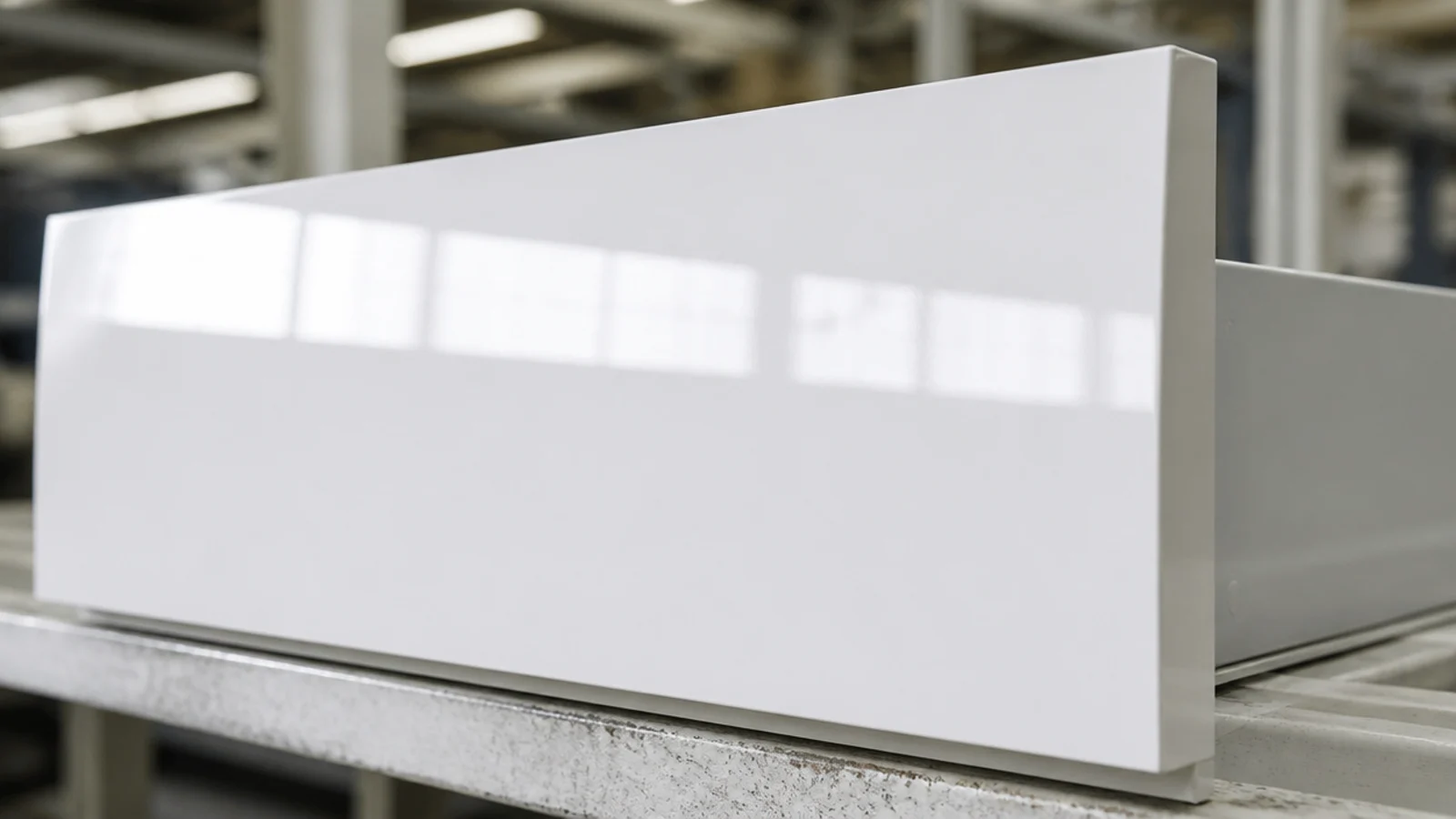
A factory-sprayed lacquer or a two-pack finish gives a hard, non-porous film with no brush marks at all, which is what makes an inexpensive cabinet look expensive at close range. It is also the most practical white finish for a surface holding a nightly glass of water. The tradeoff is repairability — you cannot touch in a lacquer chip invisibly the way you can with paint.
6. Limewash over timber so the grain still reads
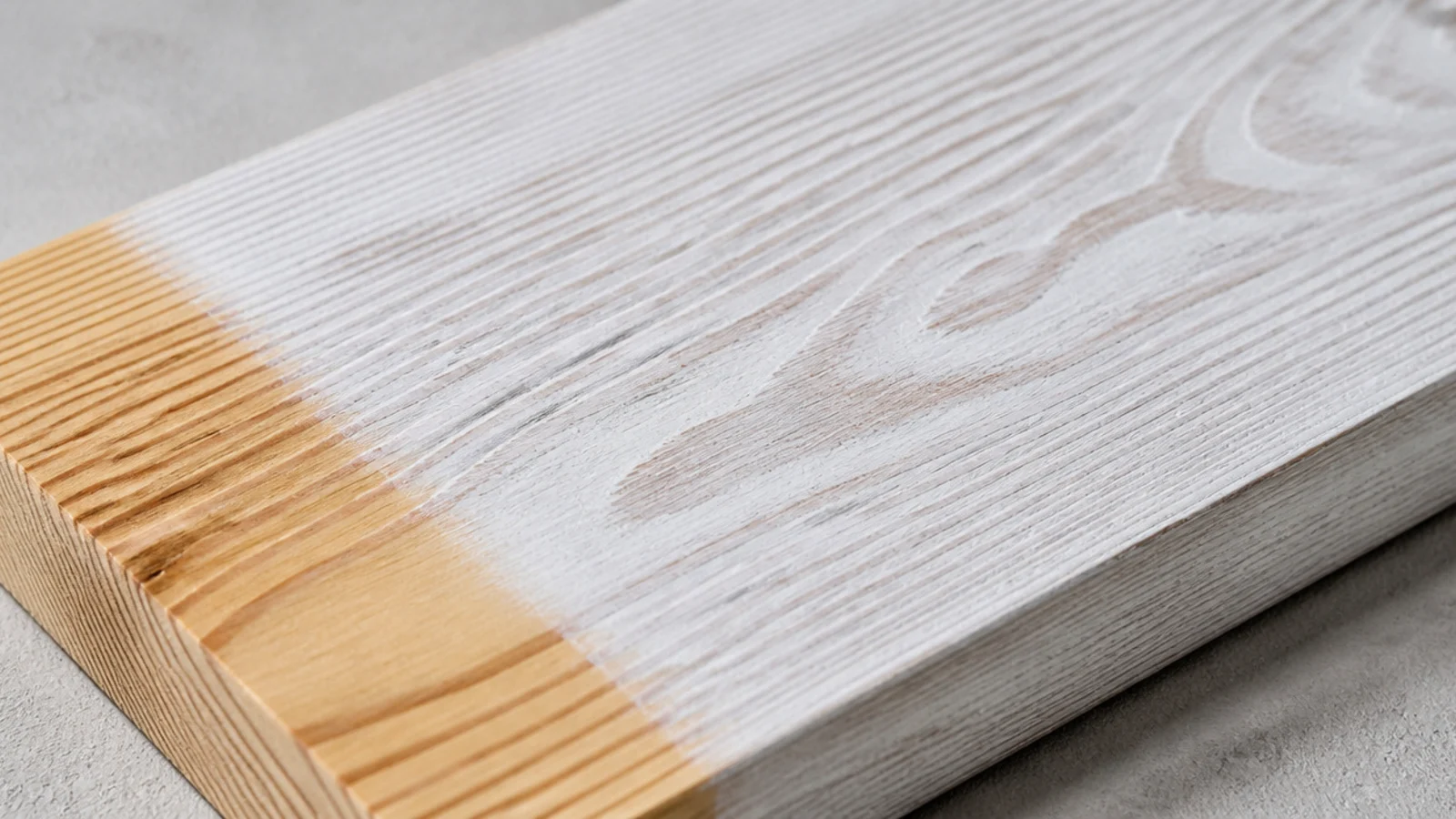
Limewash and thinned chalk paint sit as a thin chalky film that lets the grain pattern read straight through. It is the answer if you want white without losing the fact that the piece is wood. Two thin coats give a soft weathered look; one coat wiped back gives a barely-there veil. Seal with a matte water-based topcoat, because raw limewash chalks off onto clothing.
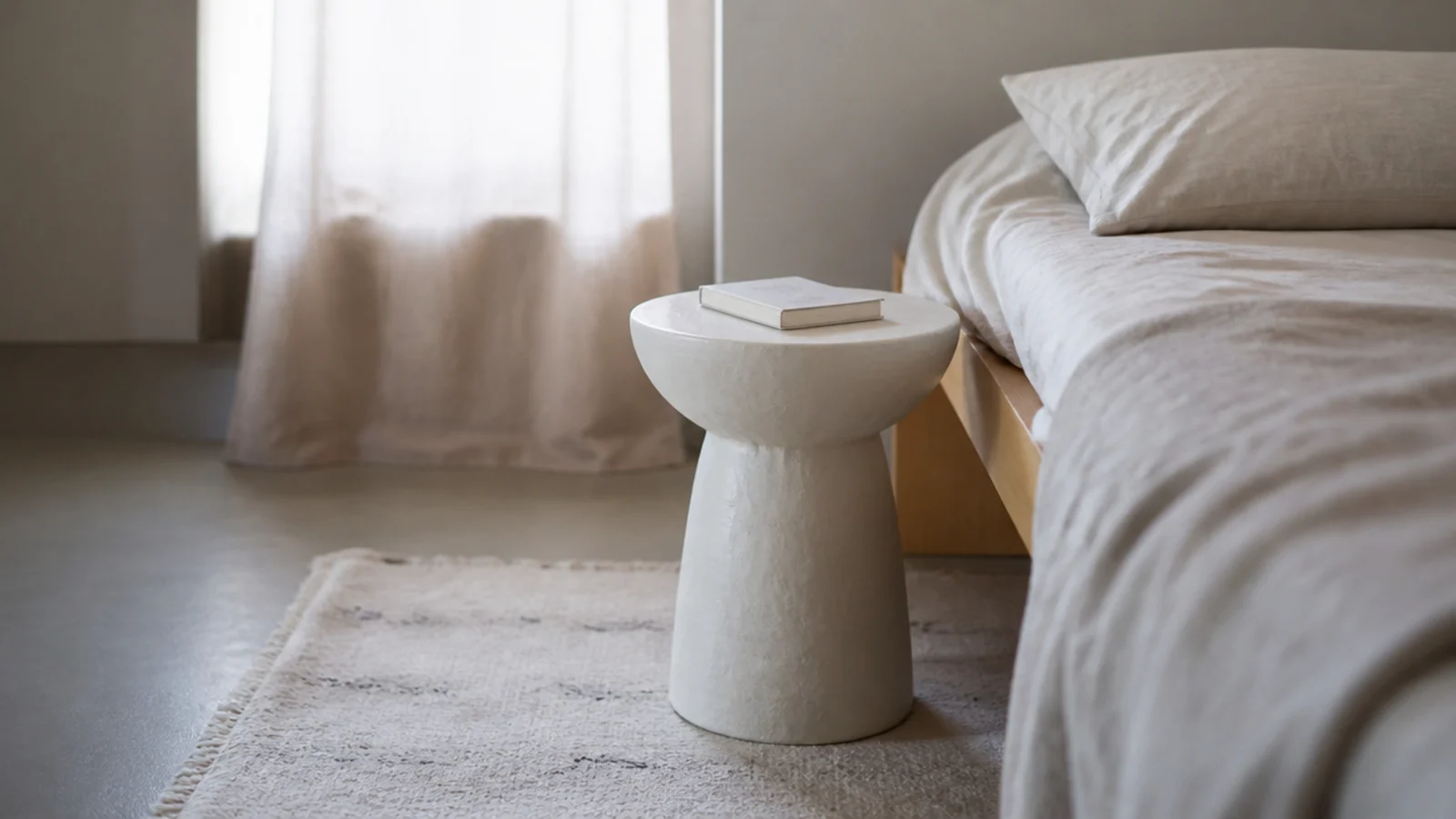
7. A white ceramic or plaster pedestal
A glazed ceramic or plaster-finished pedestal gives you white as a material rather than as a coat of paint, with no joints, no hardware and no edges to chip. Slight irregularity from hand forming is what stops it looking mass-produced. Check the base is flat and unglazed underneath so it does not scratch a timber floor, and add felt pads regardless.
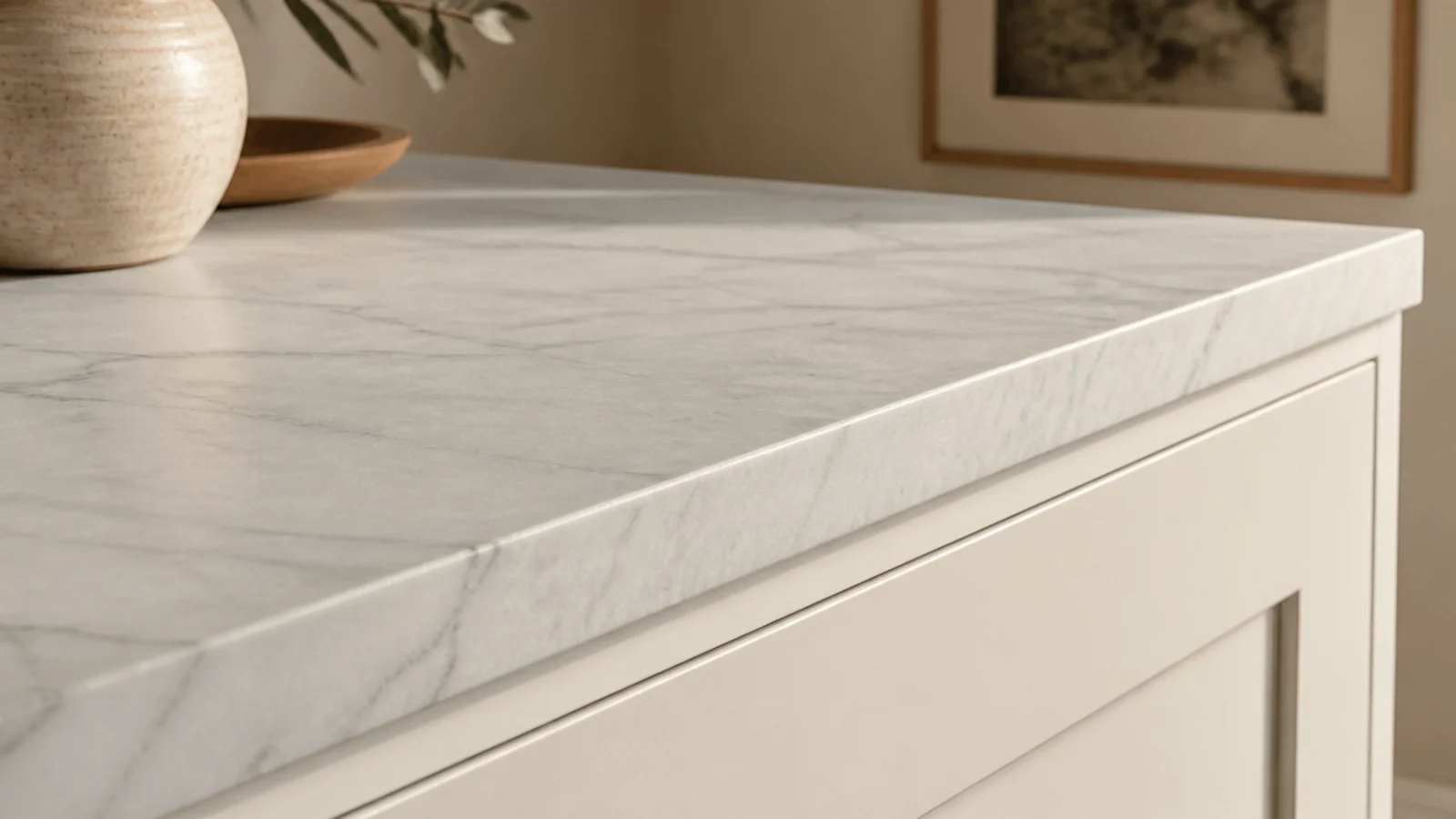
8. Tone-on-tone: white marble on a white base
Pair a honed white marble or quartz top with a plain white painted base and you get depth from the change in texture rather than from a change in colour. Marble beside a bed also stays cool and never rings from a glass, though it must be sealed annually or a spill of anything acidic will etch it permanently. Quartz needs no sealing and costs less.
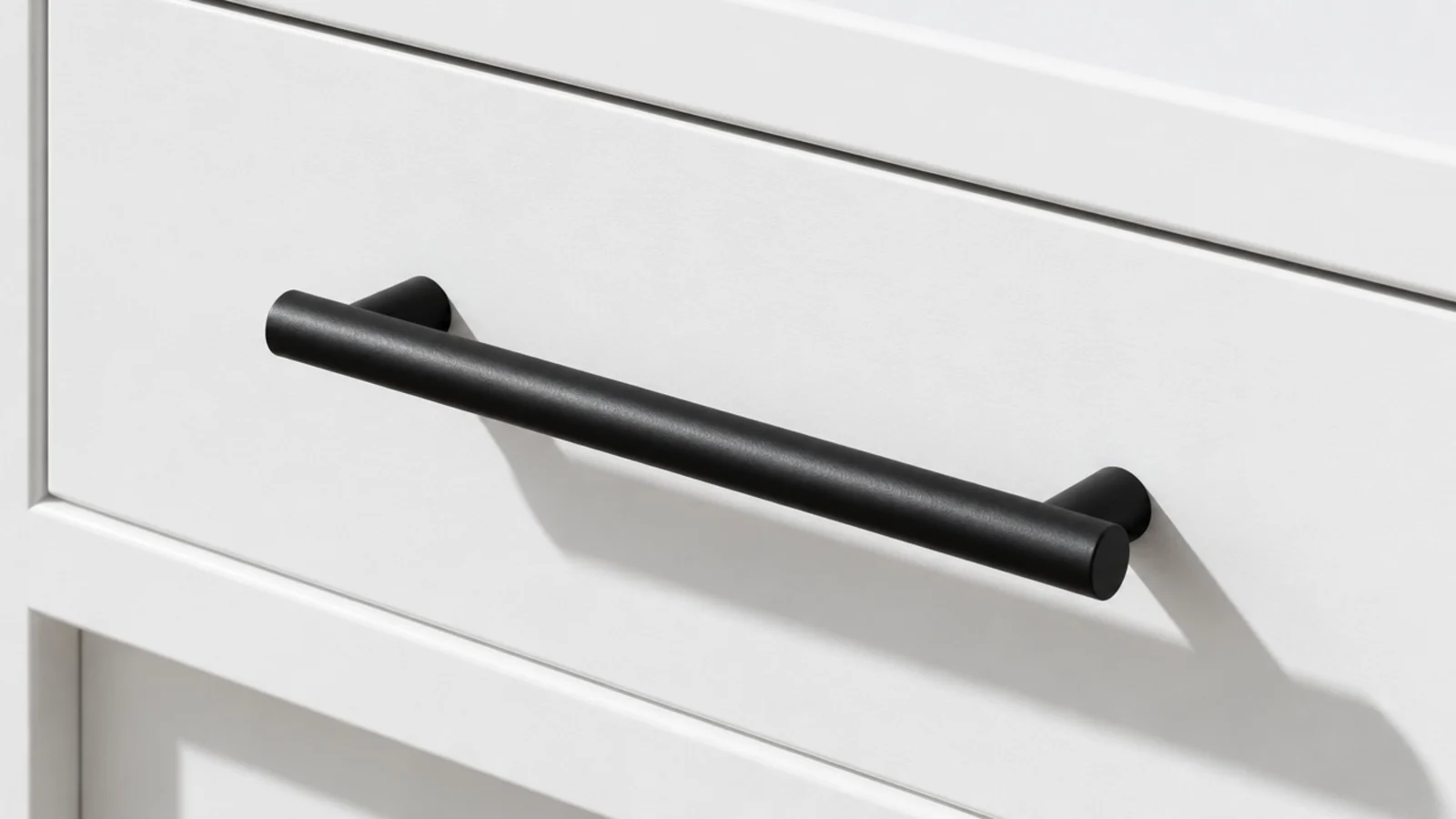
9. Contrast hardware in black or brass
White gives the eye nowhere to land, so the hardware becomes the focal detail by default. Matte black bar pulls read graphic and modern; aged brass reads warmer and softer. White ceramic knobs on a white cabinet disappear entirely, which is a legitimate choice only if something else in the arrangement provides contrast. Budget 6 to 20 dollars a pull.
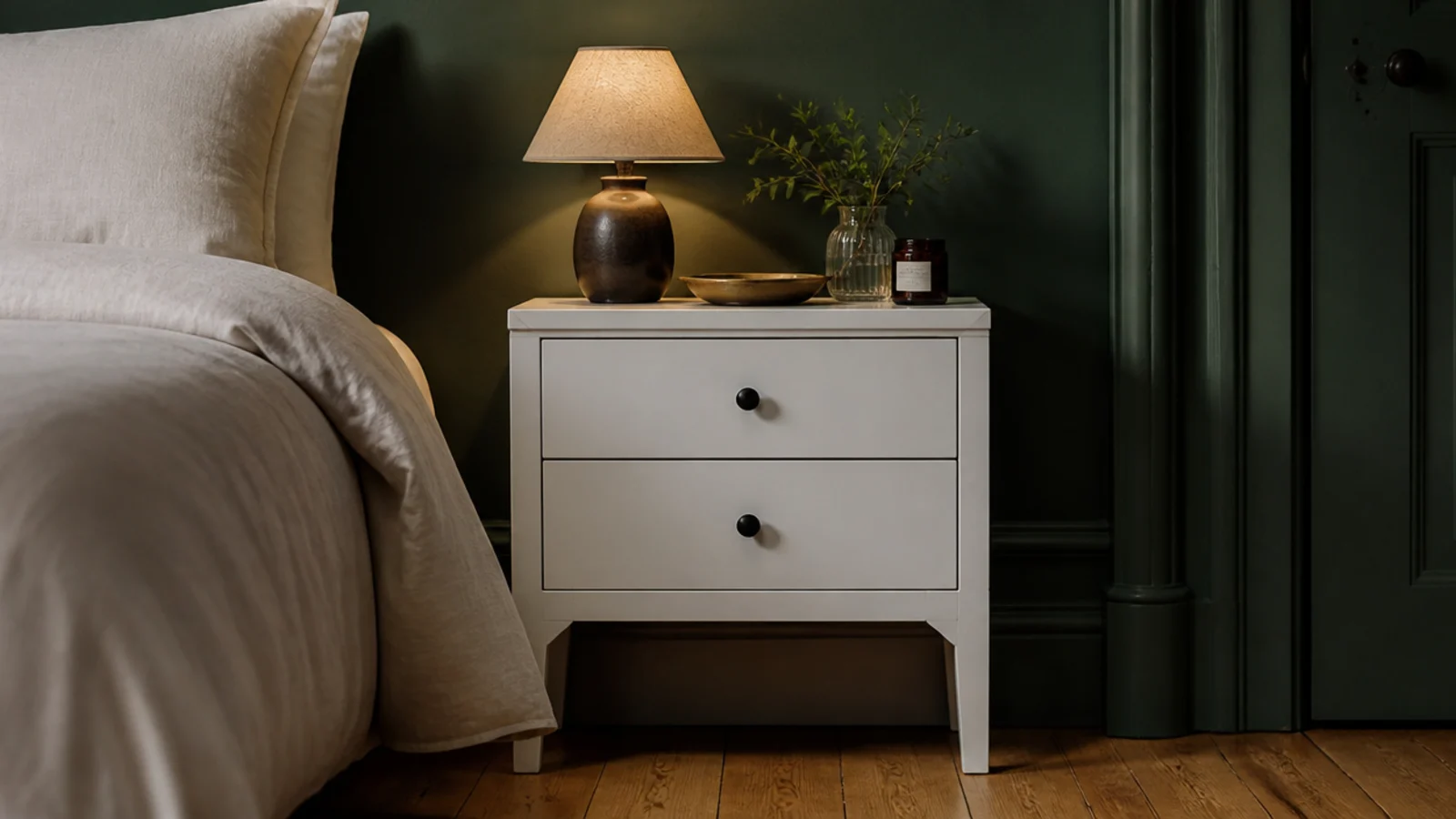
10. A white table against a colour-drenched wall
The most striking use of a white nightstand is against a saturated wall — deep green, oxblood, navy, clay. The white stops reading as a default and starts reading as a deliberate punctuation mark. Take the colour across the woodwork and skirting too, since a white skirting board under a deep wall will visually cut the table off at the ankles.
11. Keep something dark low in the room
White furniture on a pale floor against a pale wall floats, and the room reads insubstantial rather than airy. One dark element low down — a charcoal rug, a dark lamp base, a black metal bed frame — anchors the whole arrangement. It only takes one, and it should sit below mattress height where the eye reads it as ground rather than decoration.
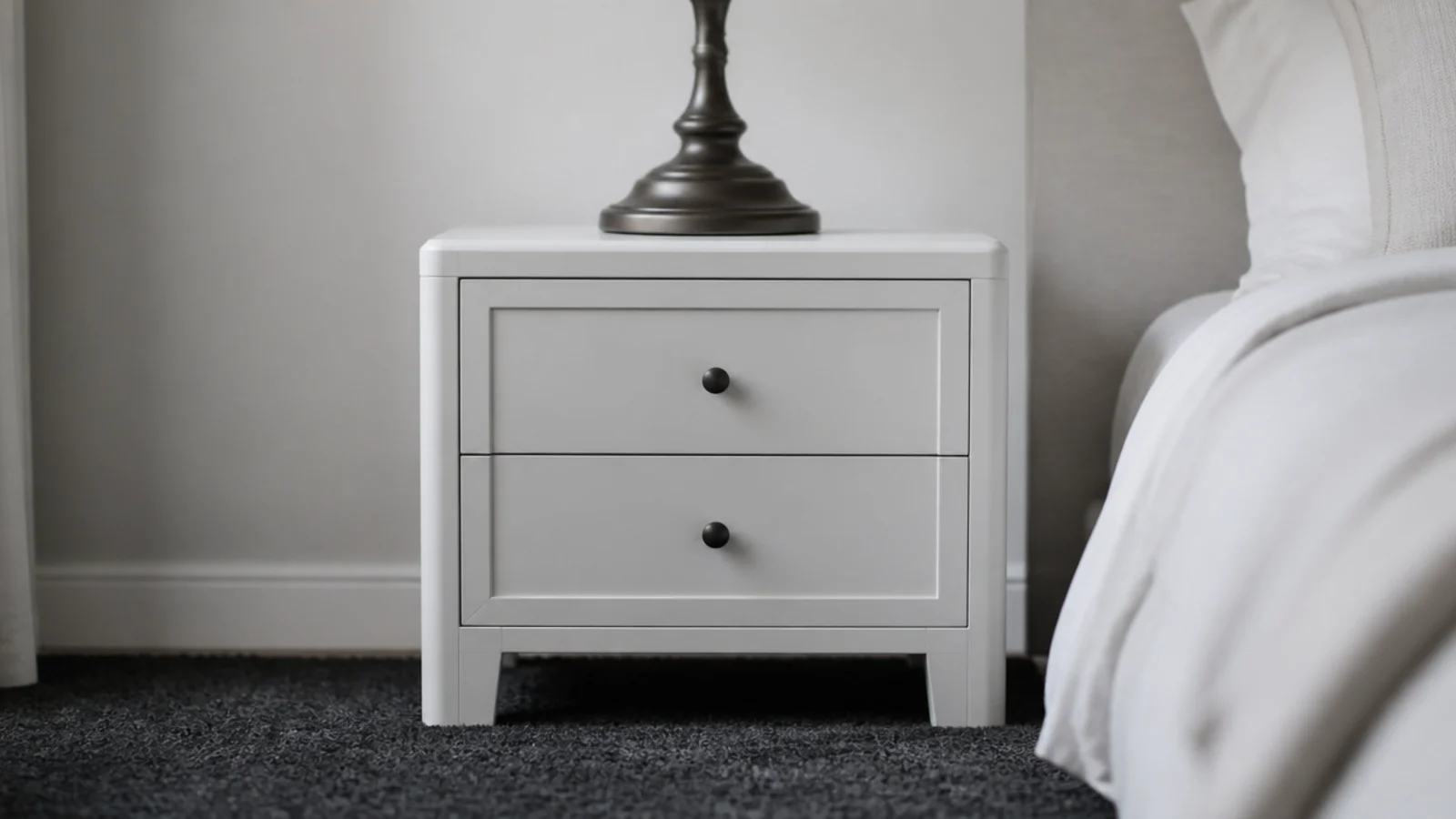
12. One wood element stops white feeling clinical
An all-white bedside arrangement with white ceramics and a white shade tips quickly from calm into clinical. Add one natural material with visible texture: a rattan tray, a timber box, a linen runner, an unglazed clay dish. One is usually enough, and it should be something with an irregular surface, because the problem with too much white is uniformity rather than colour.
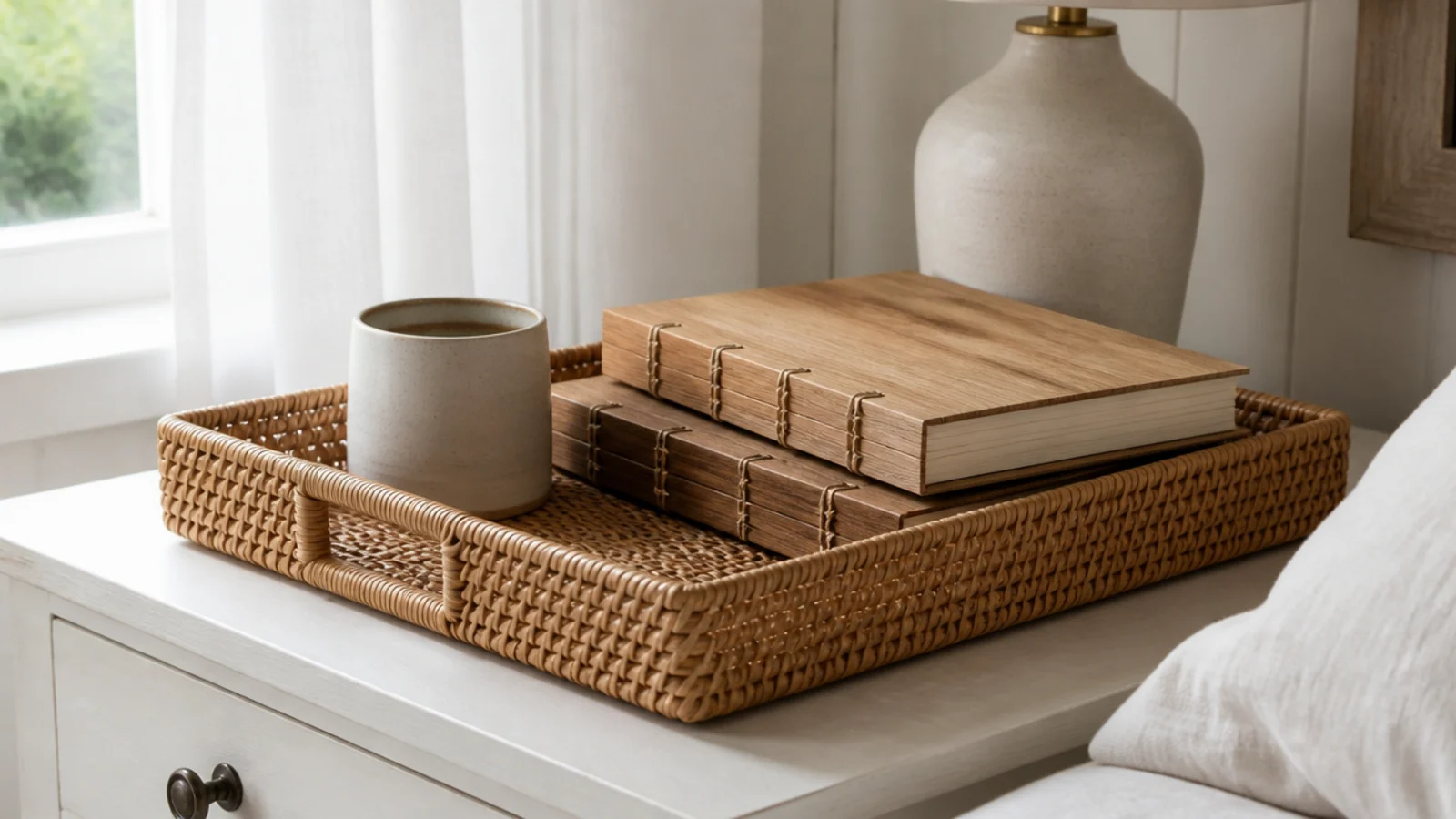
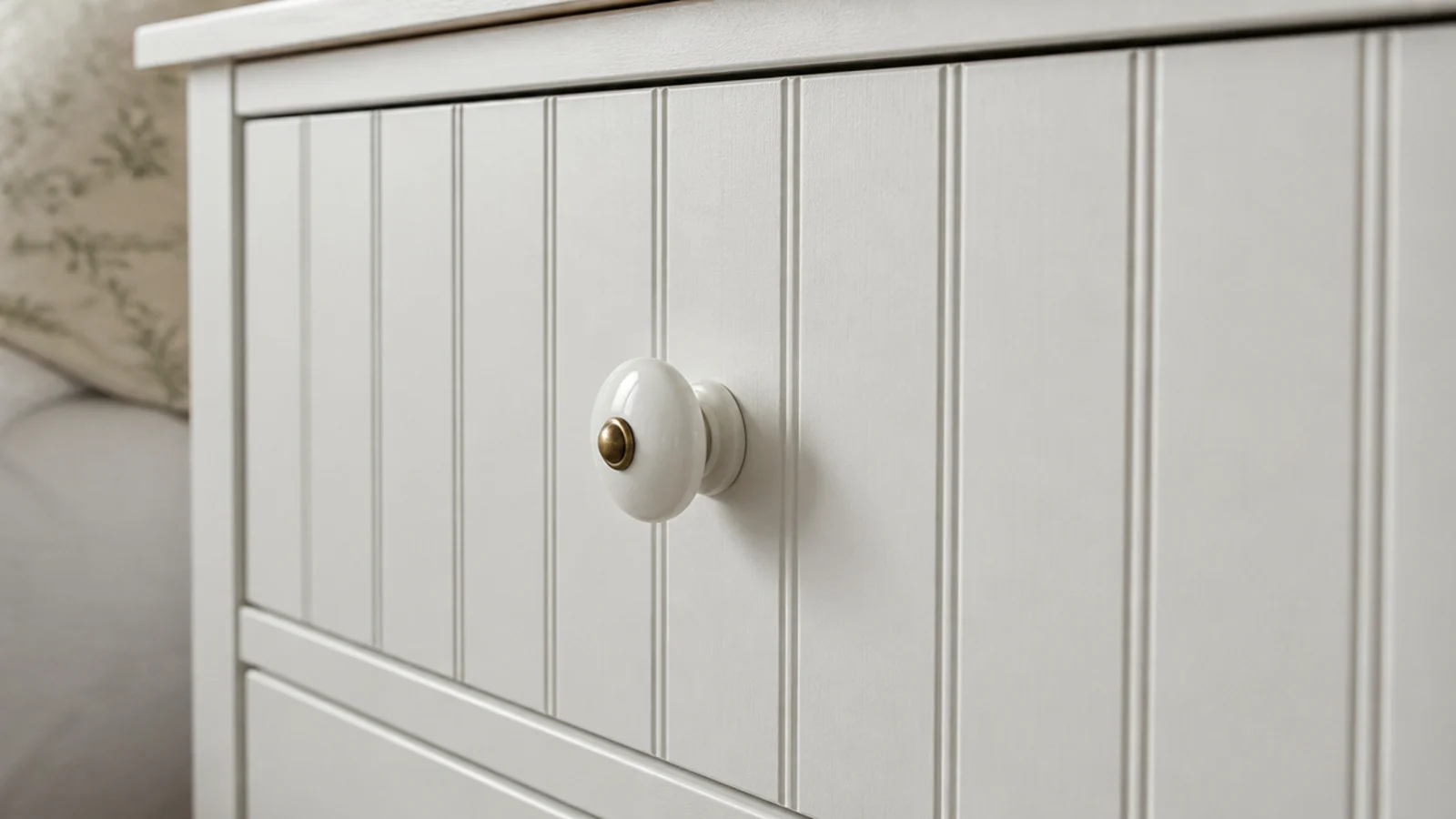
13. Beadboard or panelled fronts in white
Flat white panels have no shadow, which is why an inexpensive white cabinet often looks flat in photographs and in life. Beadboard, a shaker panel or a simple applied moulding gives the surface a set of fine shadow lines that change through the day. You can retrofit it with 6mm beaded panel glued to an existing flat front for around 15 dollars a drawer.
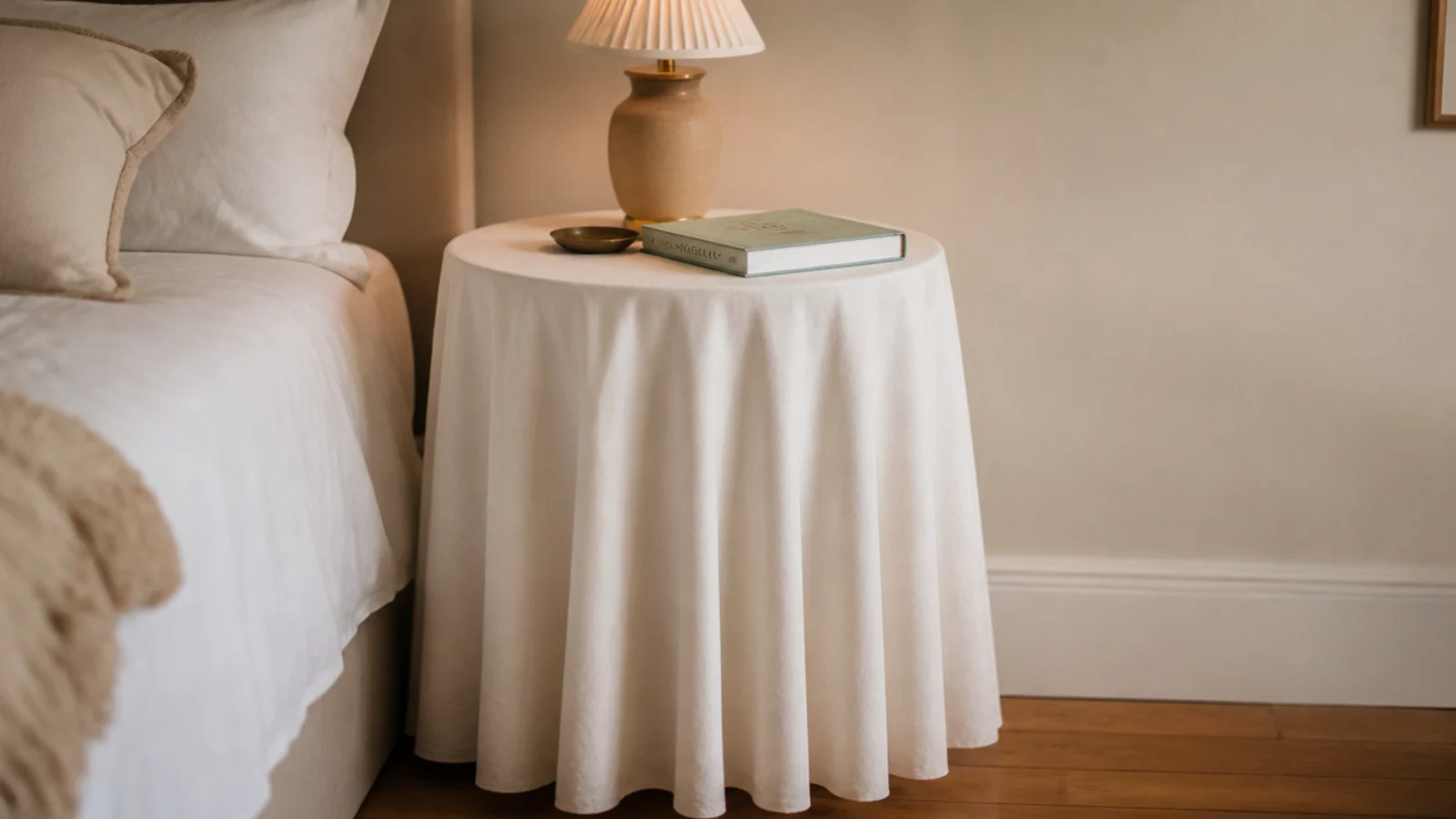
14. A skirted table with a washable cover
A round table dressed in a floor-length white linen or cotton skirt hides whatever you store underneath and puts a soft vertical surface beside the bed. The practical advantage is that the cover comes off and goes into the machine at 40 degrees, which no painted finish can offer. Use a table 16 to 18 inches across and hem the skirt to clear the floor by half an inch.
15. Match the white to the bedding, not the ceiling
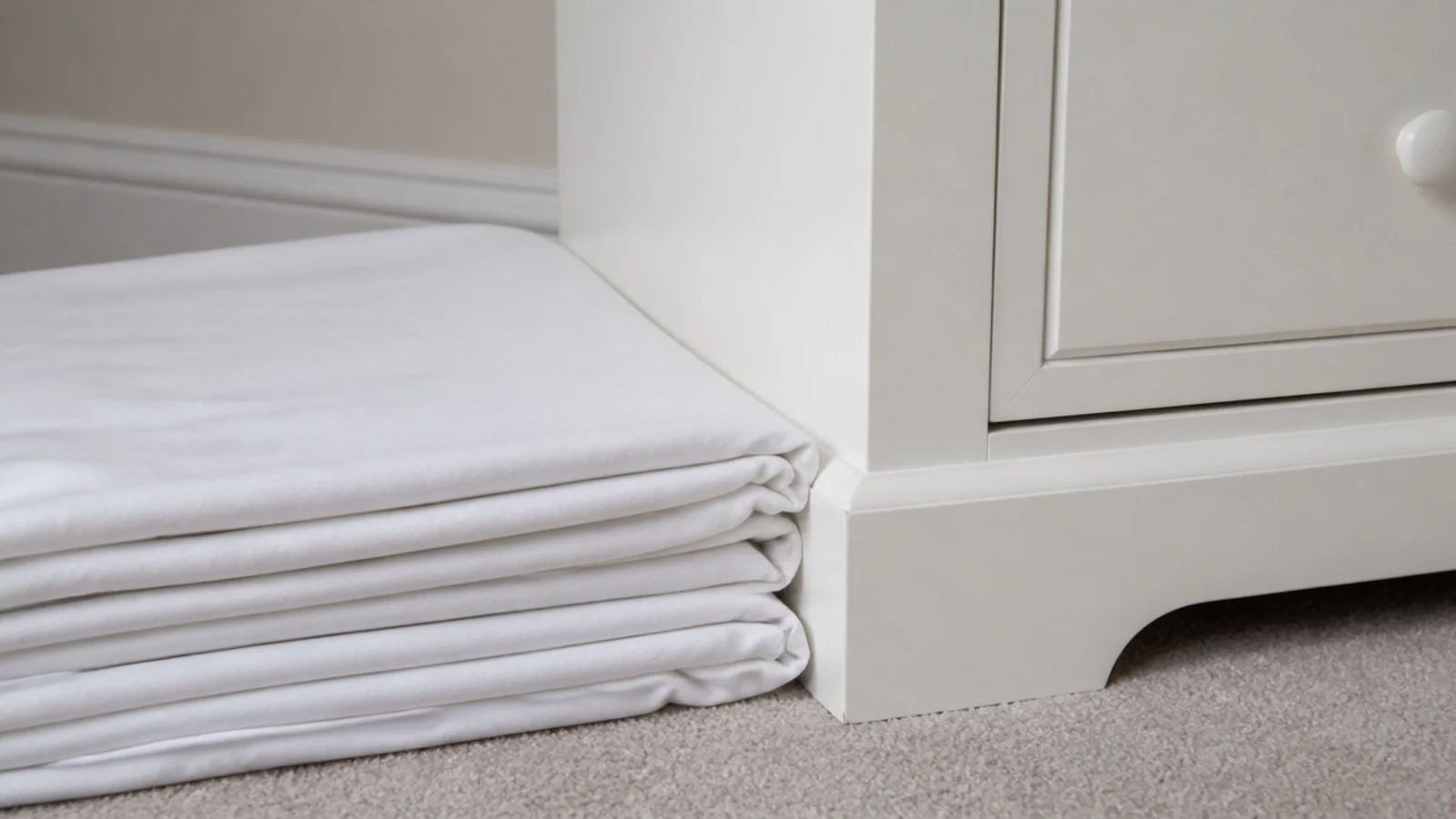
You see a bedside table against sheets and pillowcases every day, and against the ceiling almost never. If the bedding is a warm ivory linen, a cool bright white cabinet beside it will look grey and slightly dirty. Take a pillowcase to the paint shop, or hold the sample against the folded bedding at home. It is a thirty-second check that prevents the most visible mismatch in the room.
16. Scuff repair in two minutes
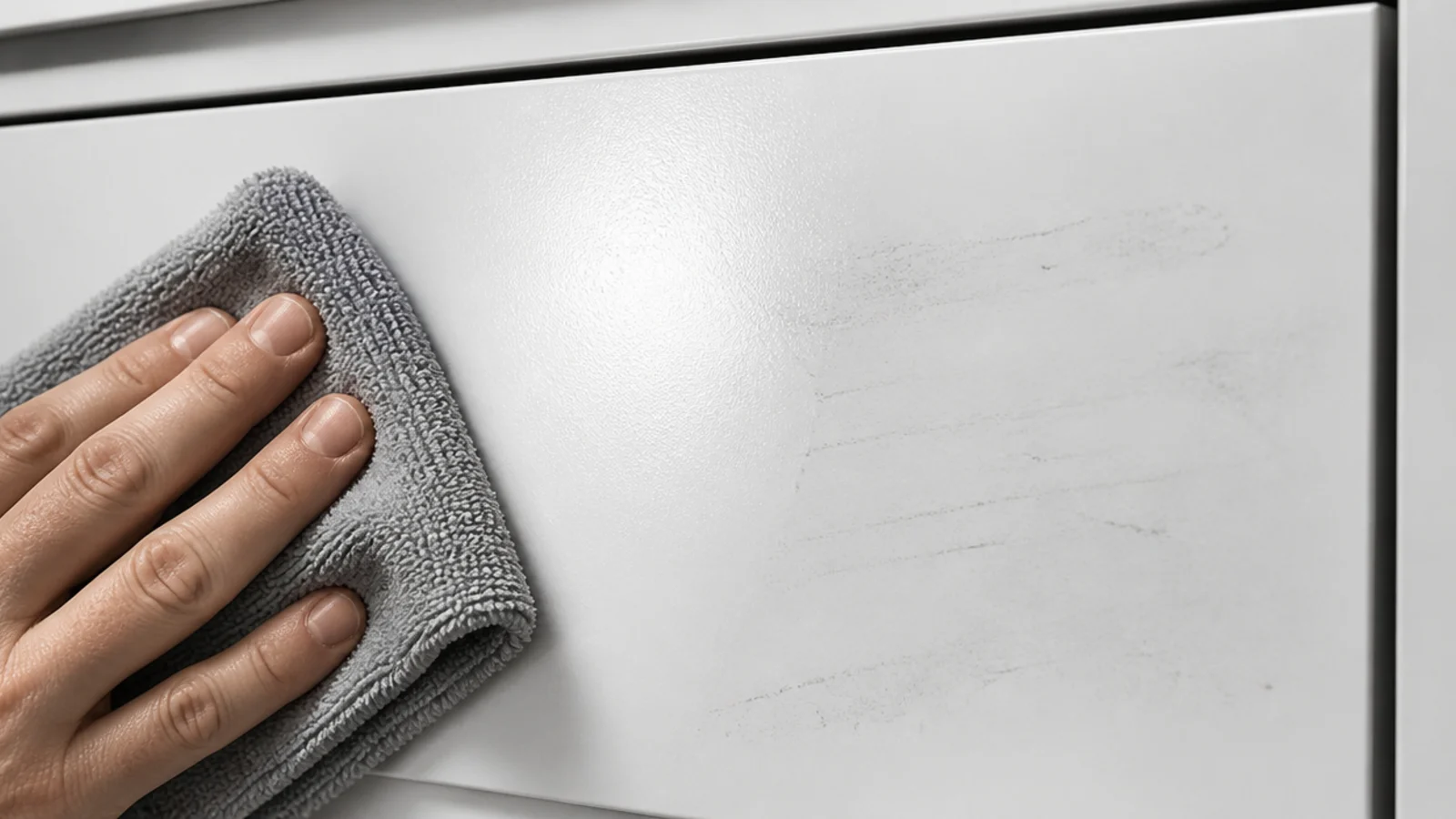
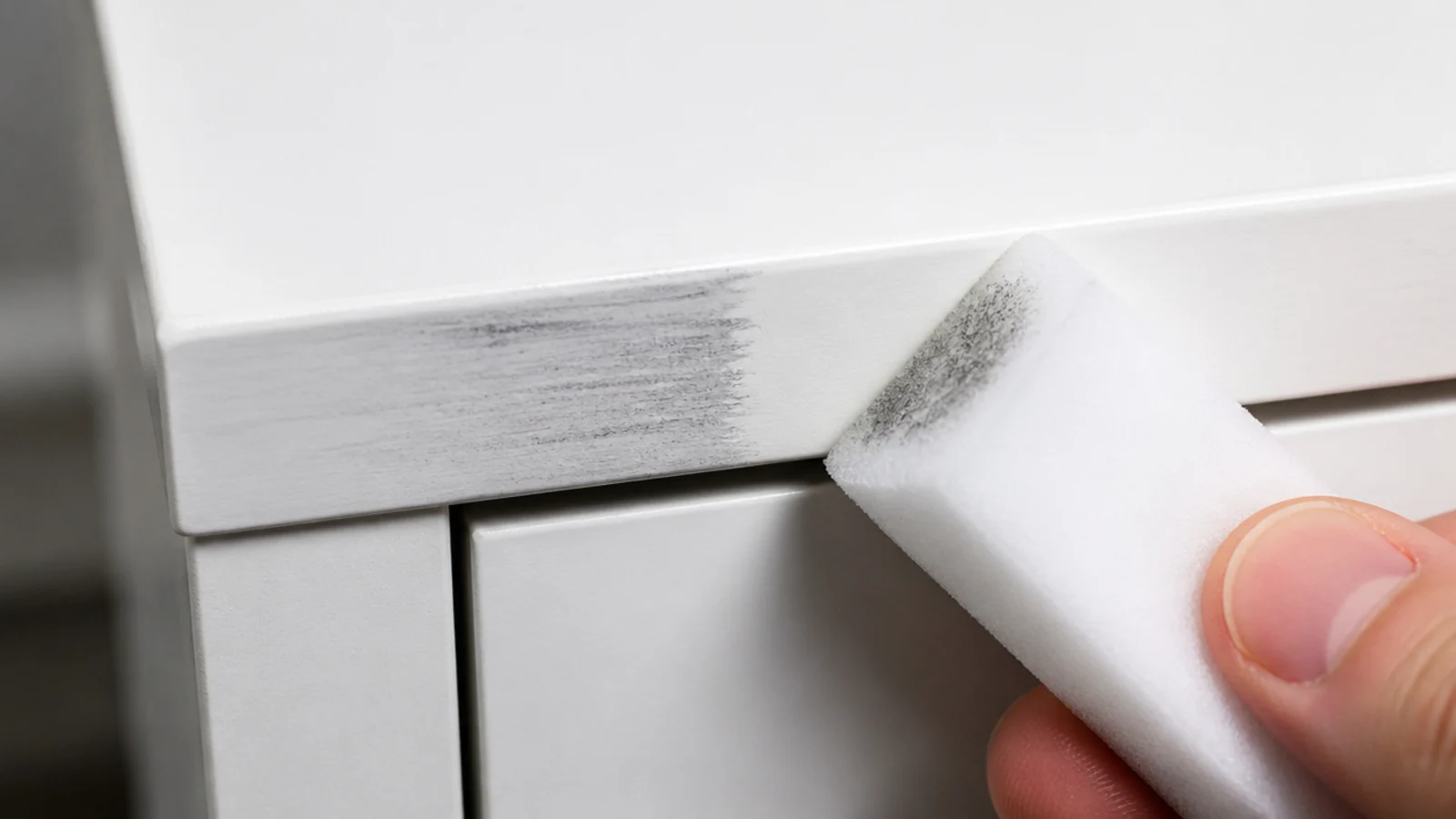
Keep a melamine foam sponge and a white touch-up pen in the drawer. The sponge lifts rubber marks, pencil and most scuffs in seconds — it works by very fine abrasion, so keep it off flat matte finishes where it will burnish a shiny patch. The pen fills edge chips well enough to be invisible from three feet, and costs about six dollars.
17. A removable top layer where the marks land
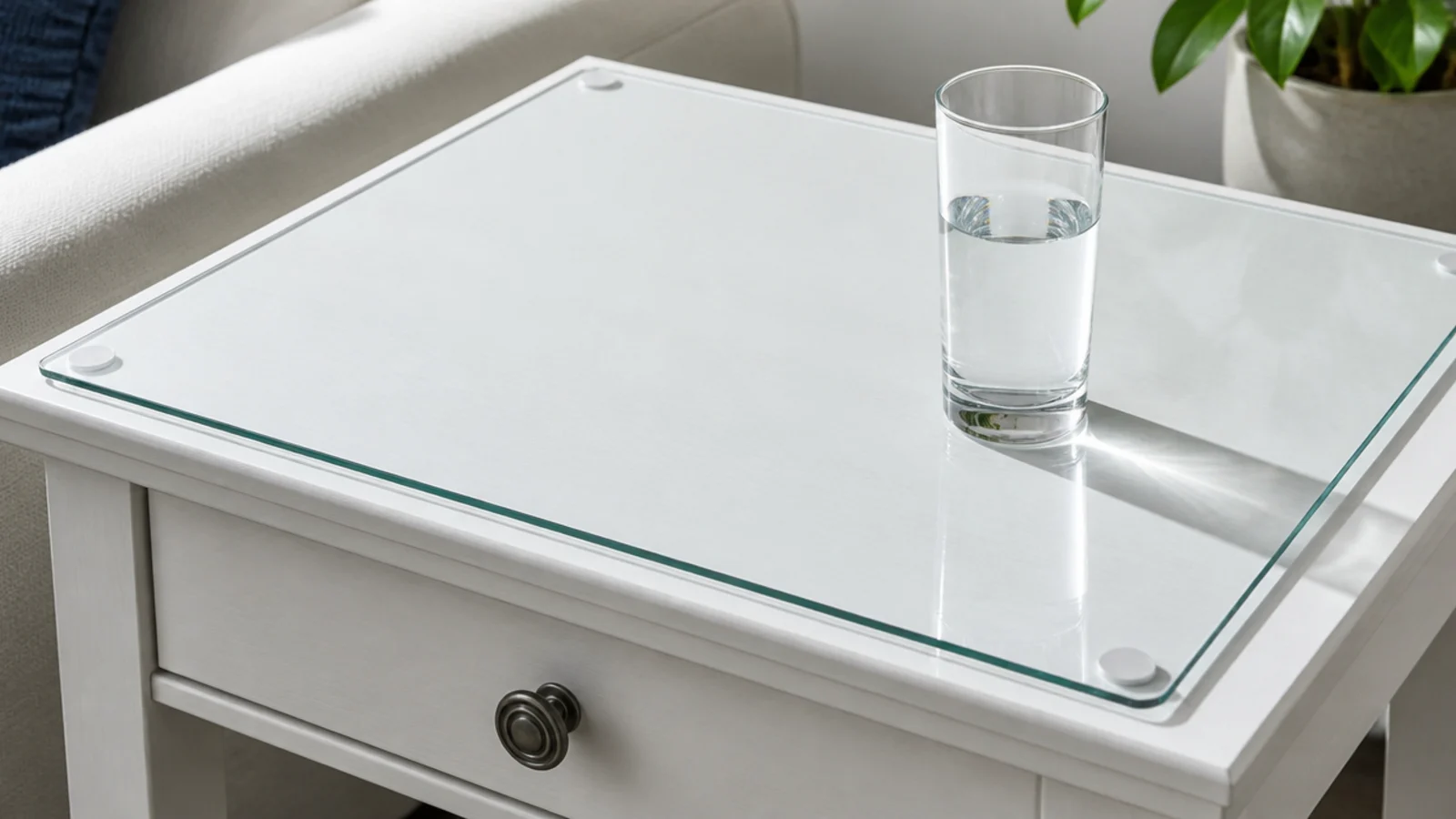
Ninety percent of the damage on a white bedside table happens on the top surface, from cold glasses and hand cream. A cut glass panel with polished edges and felt pads underneath, or a simple tray, takes all of it. Glass cut to a 16-inch round costs 25 to 50 dollars, and it means you can use a softer, prettier finish underneath than the surface would otherwise tolerate.
18. Off-white and greige as the practical alternative
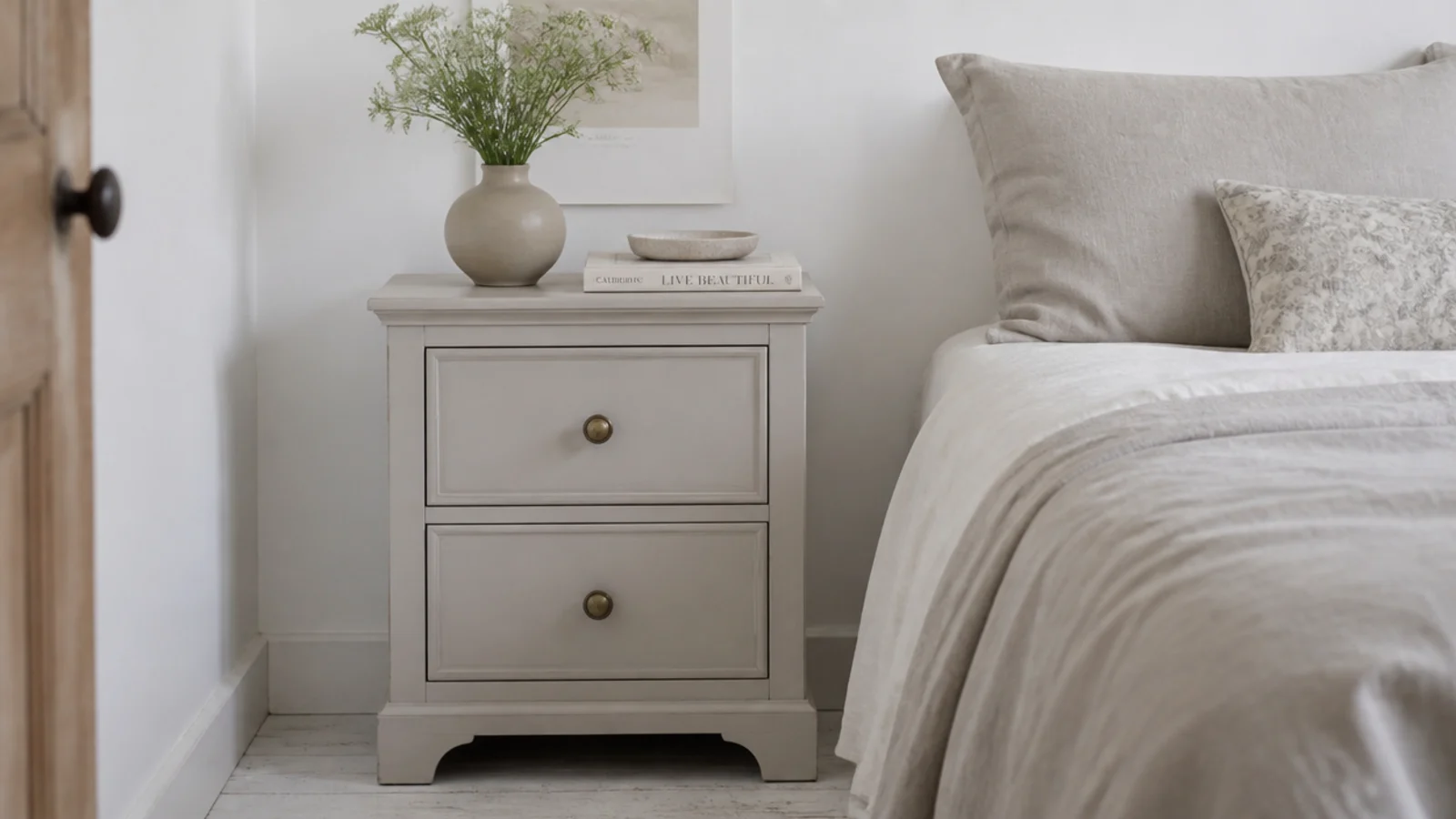
If a room takes real traffic — children, pets, a shared bedroom — a half step off pure white hides roughly twice as much. Warm off-whites and soft greiges keep the brightening effect while forgiving the marks that show instantly on a true white. They also sit more comfortably beside natural timber, which almost every bedroom has somewhere.
19. In a small room, let the floor run underneath
A white box sitting flat on the floor has the same visual bulk as a dark one; what makes white furniture feel light is seeing the floor continue beneath it. Choose slim legs with at least five inches of clear space underneath, and keep that space genuinely clear. The narrow gap solutions cover proportions where the floor space is tight to begin with.
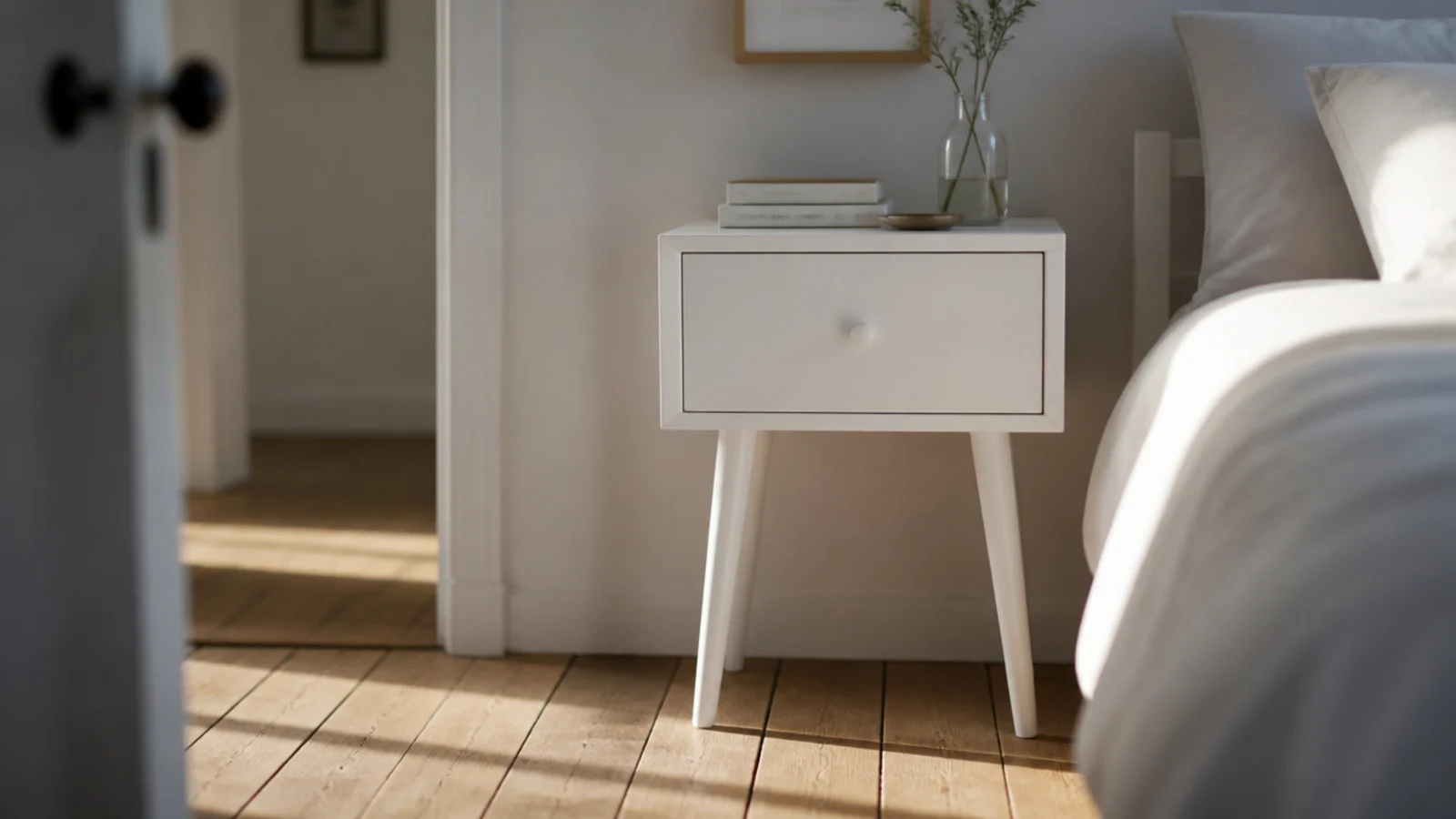
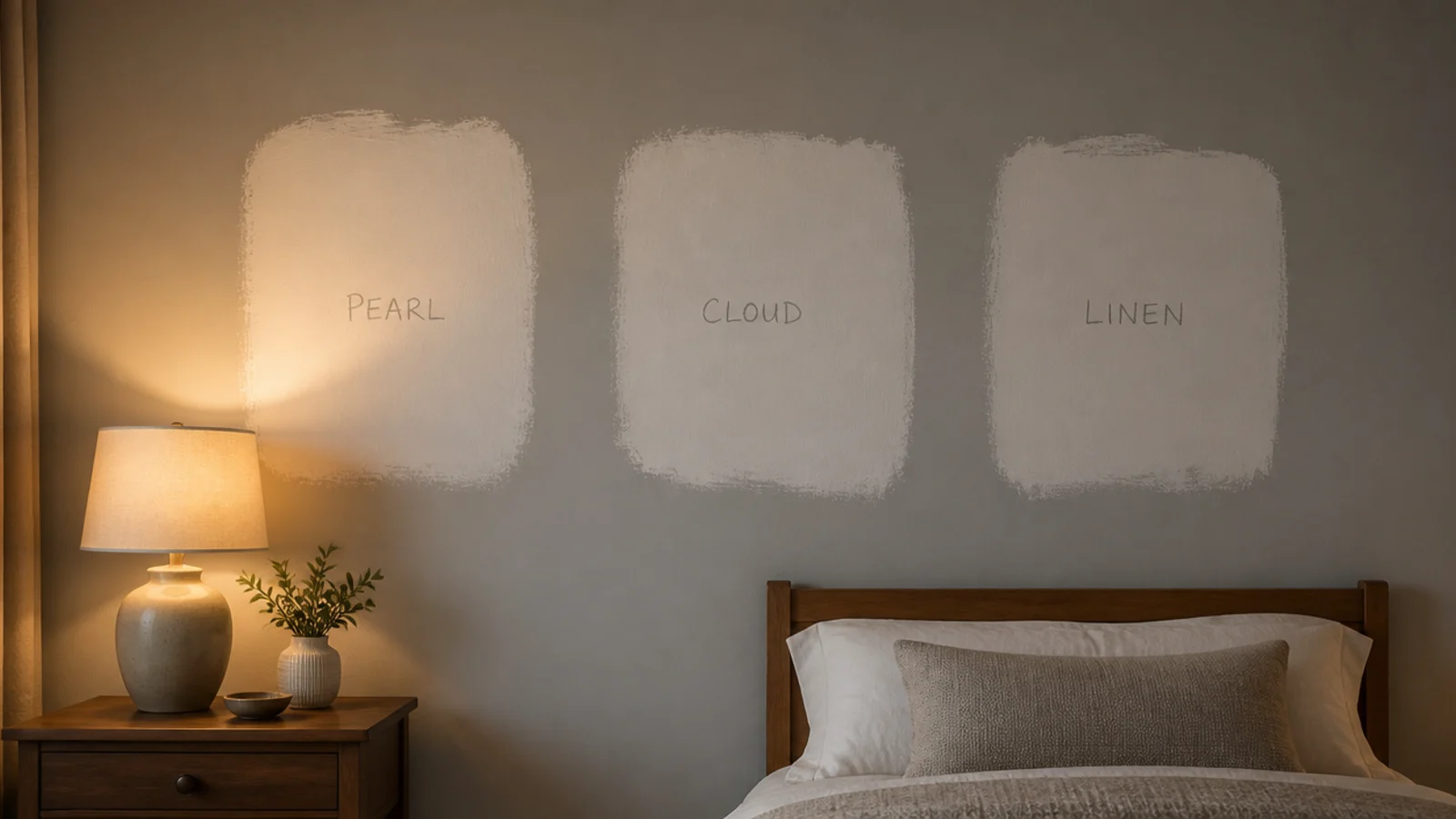
20. Test three whites at 8am and 8pm
Paint three large patches directly onto the bedroom wall — at least A4 size, since small swatches lie — and look at them in morning daylight and again at night with only the bedside lamp on. Whites shift enormously between 5500K daylight and a 2700K bulb, and a bedside table is judged under lamplight more than under the sun.
For a bright surface that has to work hard every morning, the same finish rules apply in this vanity organization guide. And where the light itself is doing the brightening rather than the paint, bedroom fairy lights give a warm low glow that flatters a white finish at night.
Mistakes to Skip
- Painting over pine knots without a shellac-based primer. The tannin migrates through and shows as brown rings within a few weeks.
- Using an oil-based topcoat over white. It ambers with age, so a crisp white becomes cream by year two and yellow by year five.
- Choosing flat matte for the top surface. It looks perfect until the first mug goes down, and then it stays marked permanently.
- Matching the white to the ceiling. You judge the table against your bedding every night and against the ceiling essentially never.
- Going all white with no texture. Without one natural material and one dark point, the arrangement reads sterile rather than serene.
Frequently asked questions
Which white paint is best for a bedside table?
A warm off-white in eggshell or satin, matched against your wall rather than chosen from a chip. Flat matte marks the moment a glass or a sleeve touches it, and brilliant optical white reads grey and cold beside cream bedding. Eggshell has enough sheen to wipe clean without looking plastic under lamplight.
Why did my white table turn yellow?
Two likely causes. Oil-based paint and oil-based varnish both amber with age, noticeably within two years and strongly within five, so use water-based products over white. The other cause is tannin bleeding through from knots in pine, which shows as brown rings and needs a shellac-based stain-blocking primer to stop.
Does a white bedside table work in a small bedroom?
Yes, and it is one of the few reliable ways to keep a tight room feeling open, because a white table against a pale wall has almost no visual weight. Keep the legs slim and let the floor run visibly underneath. A solid white box sitting on the floor gains back all the bulk you were trying to lose.
How do I stop a white bedside table looking clinical?
Add one warm material and one dark point. A timber top, a rattan tray or a linen runner brings texture, and black or aged brass hardware gives the eye somewhere to land. Pure white on white with white ceramic hardware is what tips a bedroom from calm into a waiting room.
How do you clean scuff marks off a white table?
A melamine foam sponge lifts most rubber and pencil marks in seconds, though it very slightly abrades the finish so keep it off flat matte paint. For deeper chips, a white furniture touch-up pen costs about six dollars and fills an edge chip well enough to be invisible from three feet.
Want more like this? Browse all 15 bedside table ideas guides — they all use the same measurements and budget tiers.

Pin it for later
Save this to your Bedside Table Ideas board
Pin it now so it is waiting for you when the tape measure comes out — and so the next person hunting for this idea can find it too.
Save this pinKeep going
More ideas worth saving while you have the tape measure out.