Bedside Table Ideas · Listicle
25 Gorgeous Wooden Bedside Table Ideas To Steal

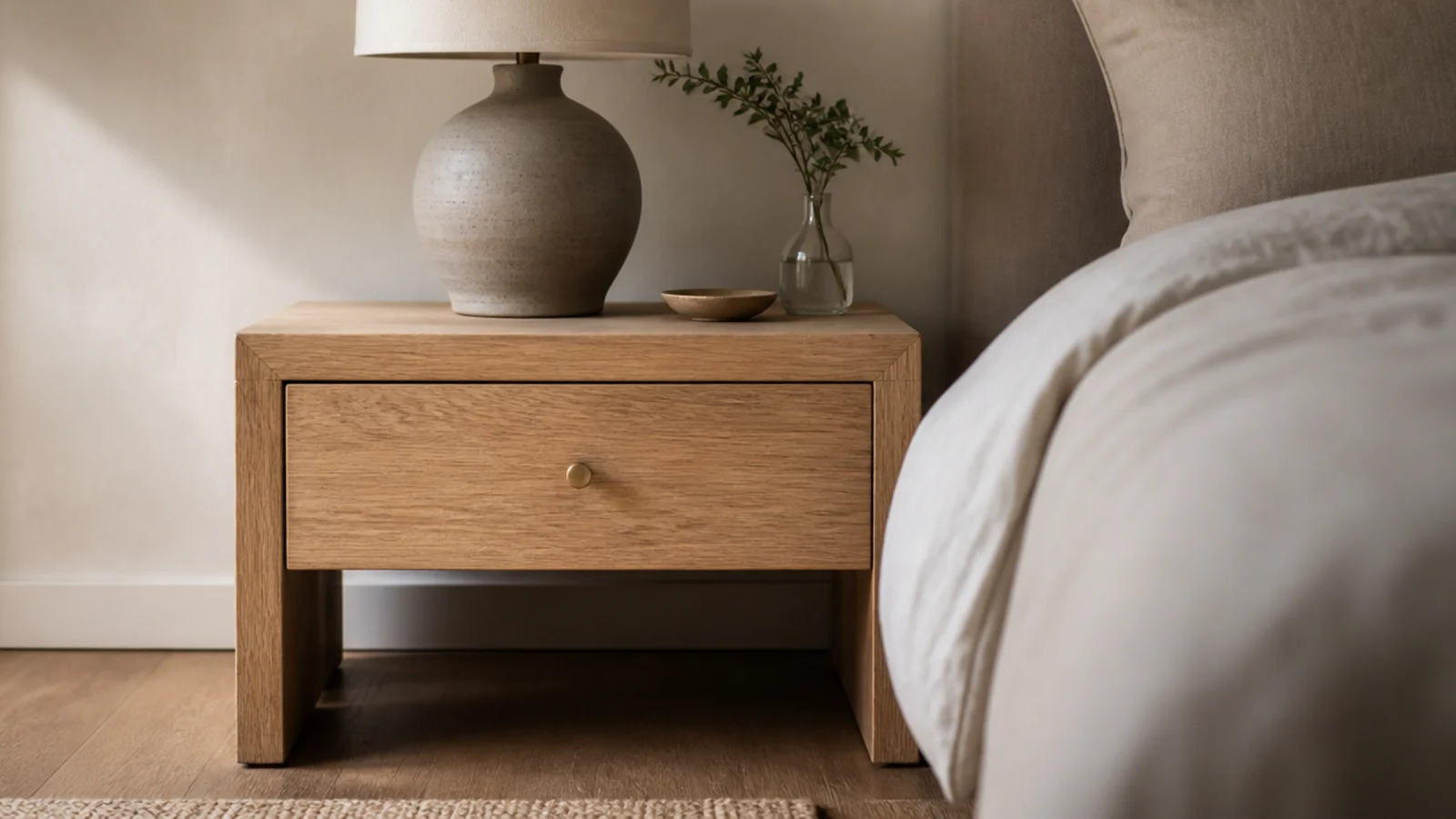
Wooden bedside table ideas get chosen from photographs, which is exactly why so many of them disappoint in a real bedroom. A photograph flattens grain, misreads tone under studio lighting, and tells you nothing about whether a top will dent when you set a hardback down. Species is the decision that matters, and it is made before shape, finish or price. Below are twenty-five worth stealing, sorted by what the timber itself does — how hard it is, how it shifts colour, how it moves with the seasons, and which finish each one wants.
In this guide27 sections — tap to openHide
- 1.What wooden bedside table ideas depend on before colour
- 2.White oak against red oak
- 3.Walnut for a dark room without black paint
- 4.Ash as the cheap stand-in for oak
- 5.Cherry darkens two shades in its first year
- 6.Beech: hard, plain and cheap
- 7.Rubberwood, and what flat-pack solid wood means
- 8.Mango wood and its price-to-hardness ratio
- 9.Reclaimed pitch pine with the nail holes left
- 10.Elm and its interlocked figure
- 11.Match the floor by undertone, not species
- 12.Quarter-sawn oak and the ray fleck
- 13.A live-edge slab and how much sapwood to keep
- 14.A butterfly key across a check
- 15.Through-tenons left visible as decoration
- 16.Finger-jointed panels and how to spot them
- 17.End grain used as the top surface
- 18.Slotted fixings so a solid top can move
- 19.Hardwax oil against polyurethane
- 20.Ebonising oak with iron and vinegar
- 21.Lime wax in open-grain oak
- 22.A two-tone table: dark top, pale base
- 23.Burn and brush the base
- 24.Sand to 180 and stop there
- 25.Keep solid wood off the radiator side
- 26.Buy secondhand teak and refinish it
- 27.Mistakes to Skip
What wooden bedside table ideas depend on before colour
Three properties decide how a timber table ages, and none of them are visible in a listing photograph.
Hardness first, measured on the Janka scale. Ash sits at about 1320, white oak 1360, beech 1300, walnut 1010, cherry 950, mango 1070 and rubberwood 980. A bedside table takes a glass, a book and a phone rather than real abuse, so anything above about 900 is fine — but below that, a dropped lamp base leaves a permanent dent.
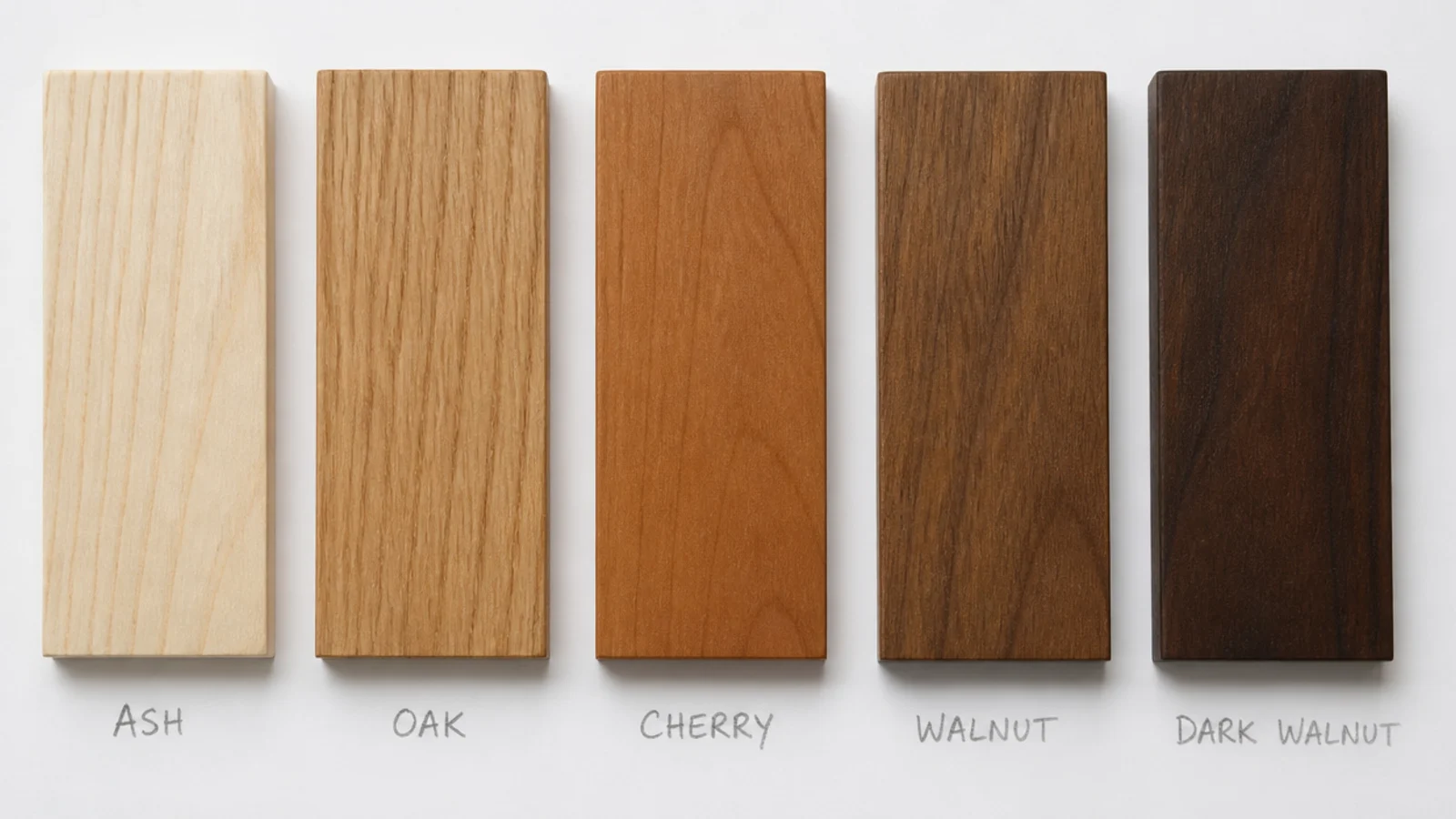
Tone shift second. Cherry darkens dramatically in its first year of light exposure, walnut lightens slightly, and oak yellows under an oil finish. Buy cherry expecting the piece you own in a year rather than the one in the shop.
Movement third, and it is the one that breaks tables. A solid timber top expands and contracts across its width with humidity — roughly an eighth of an inch on a sixteen-inch top between a damp winter and a centrally heated January. That is why a solid top must be attached with slotted fixings or figure-of-eight clips rather than screwed rigidly to a frame.
Prices, roughly: pine 40 to 90 dollars, rubberwood or mango 80 to 180, ash or beech 150 to 300, white oak 250 to 600, walnut 400 upward. If you would rather build than buy, the under-fifty builds use most of the same timbers.
1. White oak against red oak
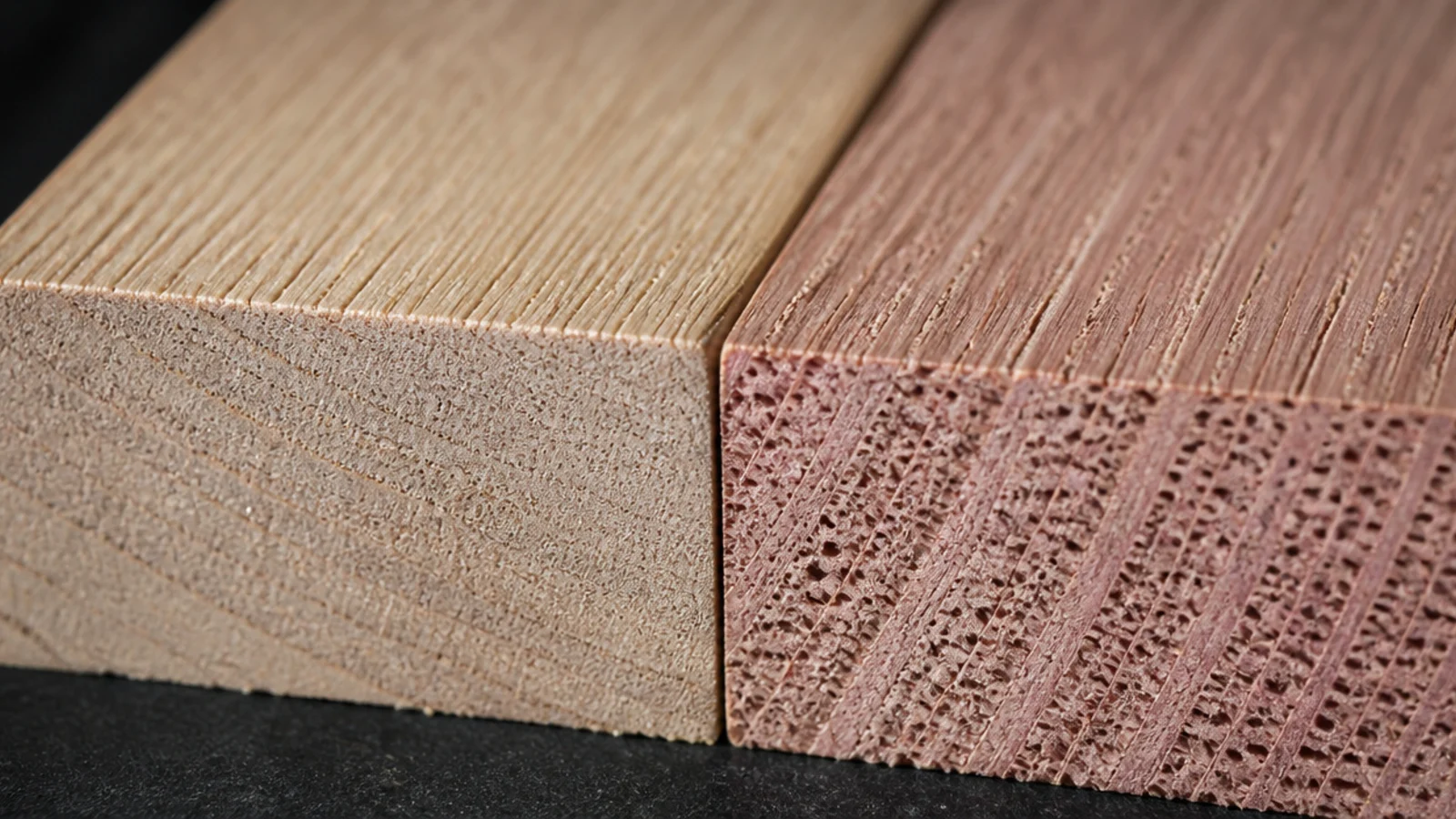
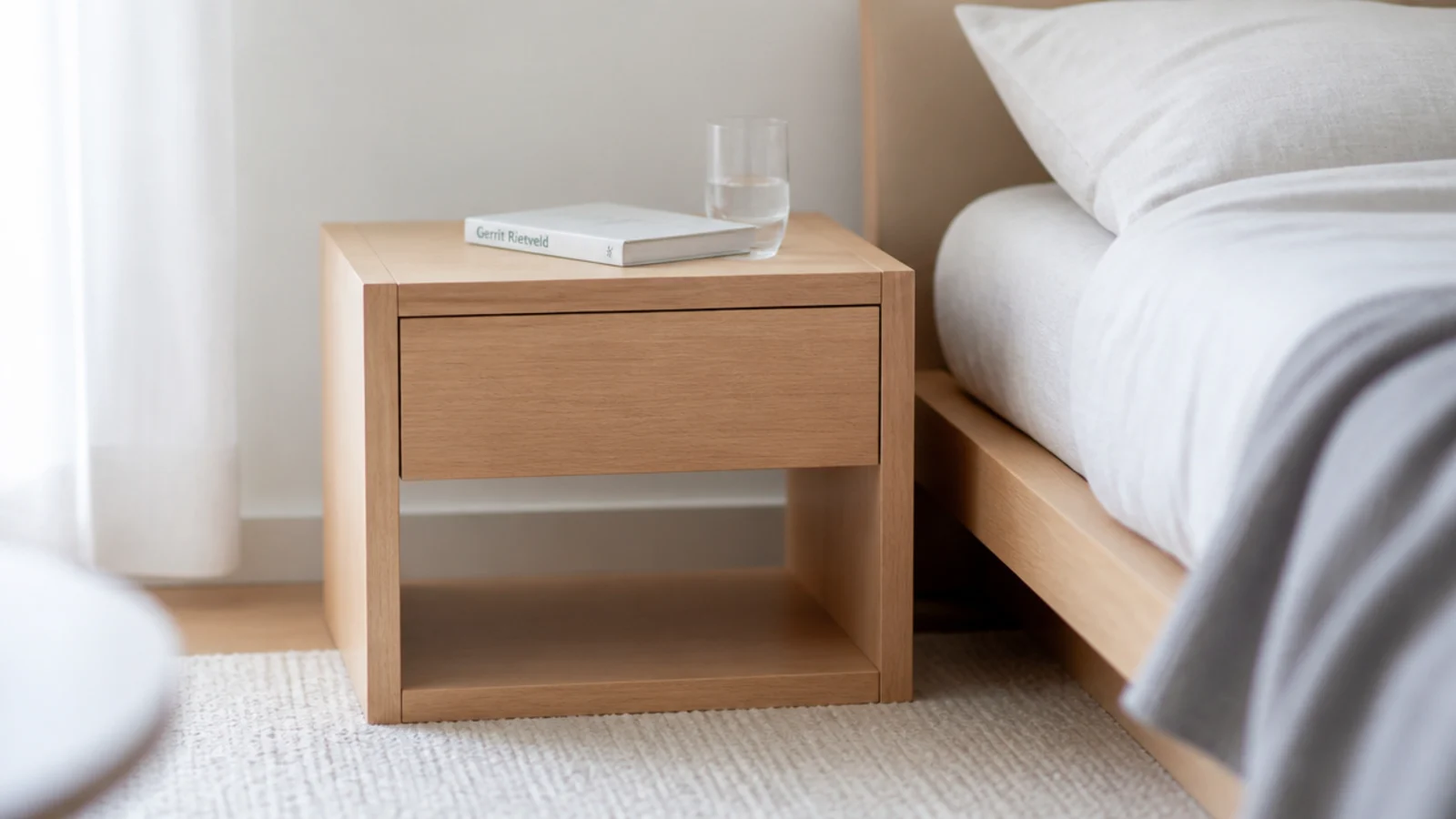
They are sold interchangeably and they are not interchangeable. White oak has closed pores, a tighter straighter figure and a greenish-brown cast; red oak has open pores you can literally blow air through along the grain, a coarser figure and a distinct pink cast that fights most bedroom palettes. White oak also resists water rings far better, which matters on a surface that holds a glass every night.
2. Walnut for a dark room without black paint
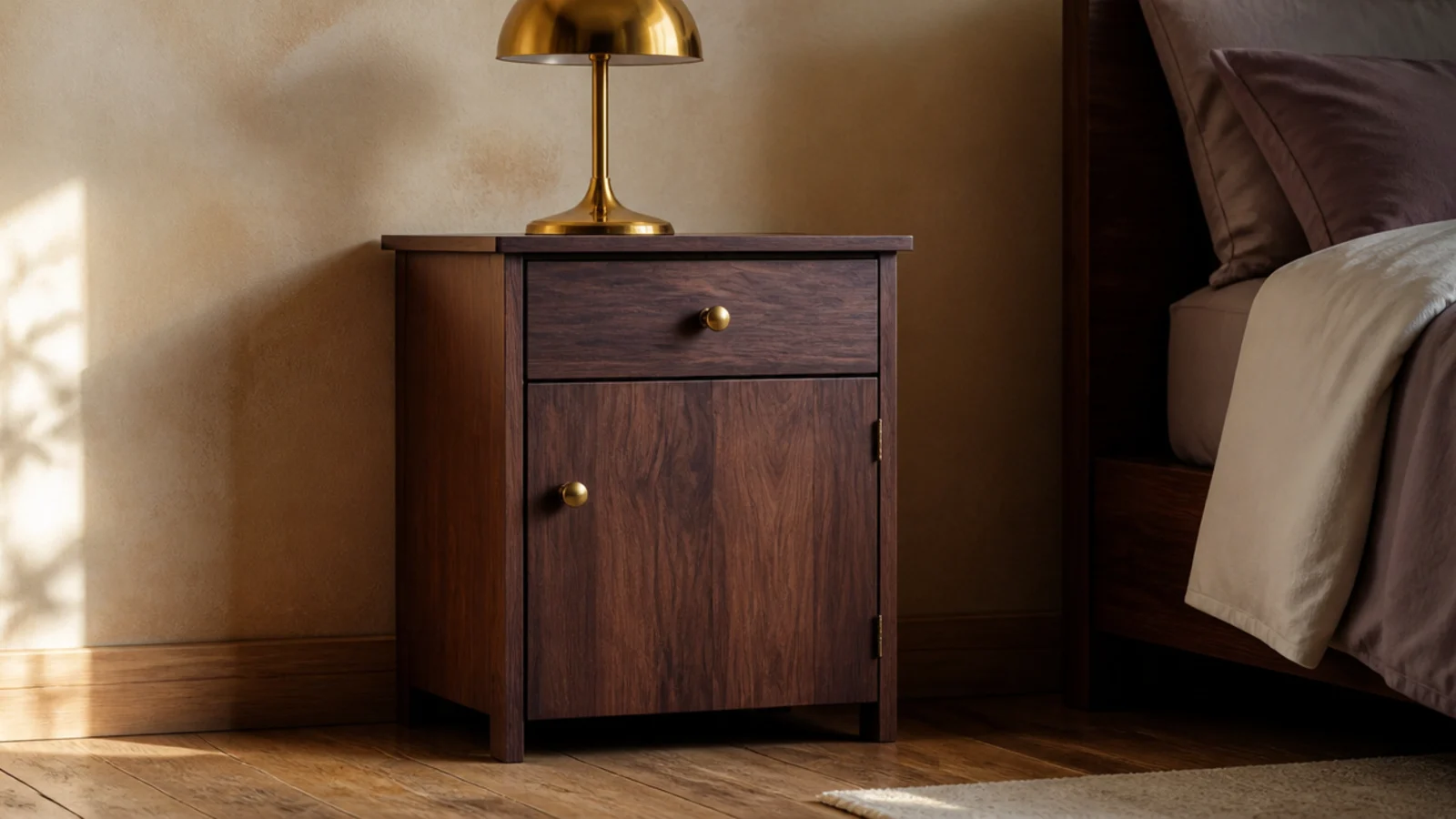
Walnut gives you depth without the flatness that black paint brings. It reads chocolate with purple and grey undertones, and because the grain stays visible the piece never becomes a silhouette. It is softer than oak at around 1010 Janka, so expect small dents. Buy American black walnut rather than walnut-stained rubberwood — the stained version has no figure and turns muddy under lamplight.
3. Ash as the cheap stand-in for oak
Ash is harder than oak, paler, straighter-grained and usually 30 to 40 percent cheaper. The difference is character: ash runs in long parallel lines where oak has more interruption and figure. In a room where you want blonde timber to sit quietly rather than star, ash is the better buy. It also takes a white or grey wash more evenly because the grain is more uniform.
4. Cherry darkens two shades in its first year
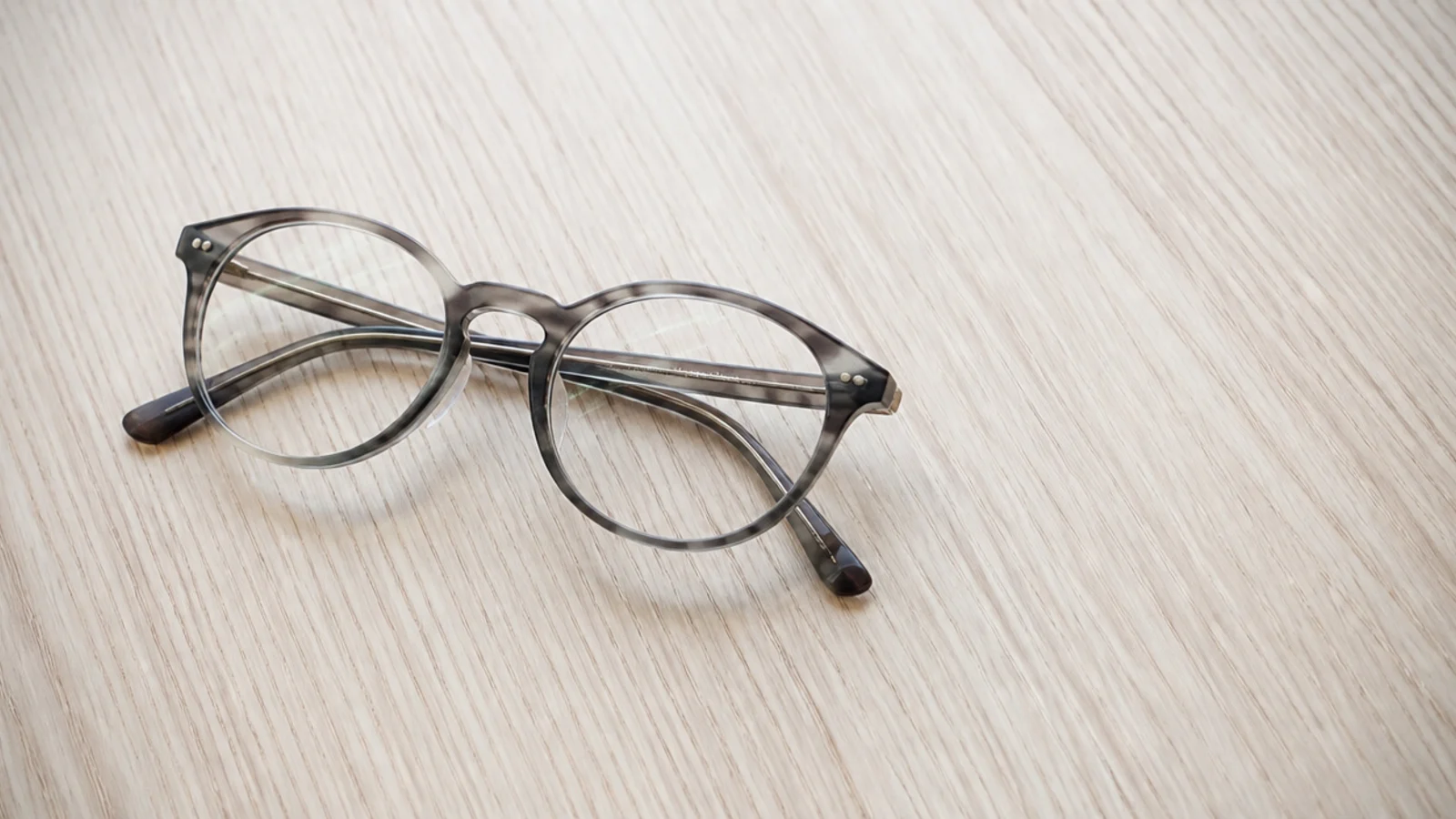
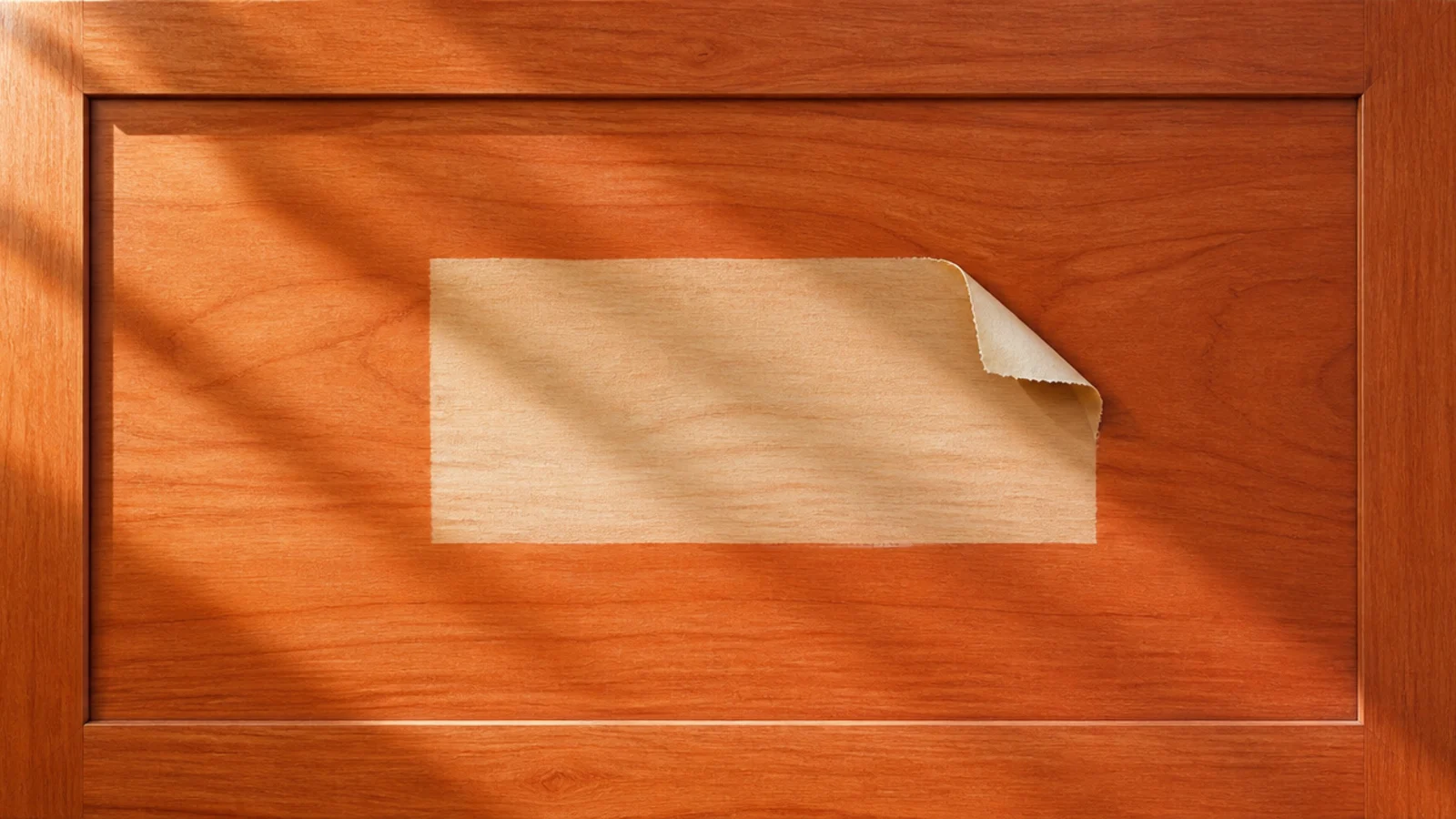
Cherry is the one timber that visibly changes on you. Fresh-machined it is pale pinkish-tan; after twelve months of ambient light it is a deep reddish-brown. That means anything left sitting in one spot on the top — a tray, a book, a lamp base — leaves a pale rectangle behind. Move objects around for the first six months and the top ages evenly.
5. Beech: hard, plain and cheap
Beech is dense at about 1300 Janka, takes a crisp edge, and has almost no figure — a fine even grain with small darker flecks. That plainness is the reason it is cheap and also the reason it works in a busy room. It is the least stable of the common hardwoods in changing humidity, so keep a beech table away from a radiator or a single-glazed window.
6. Rubberwood, and what flat-pack solid wood means
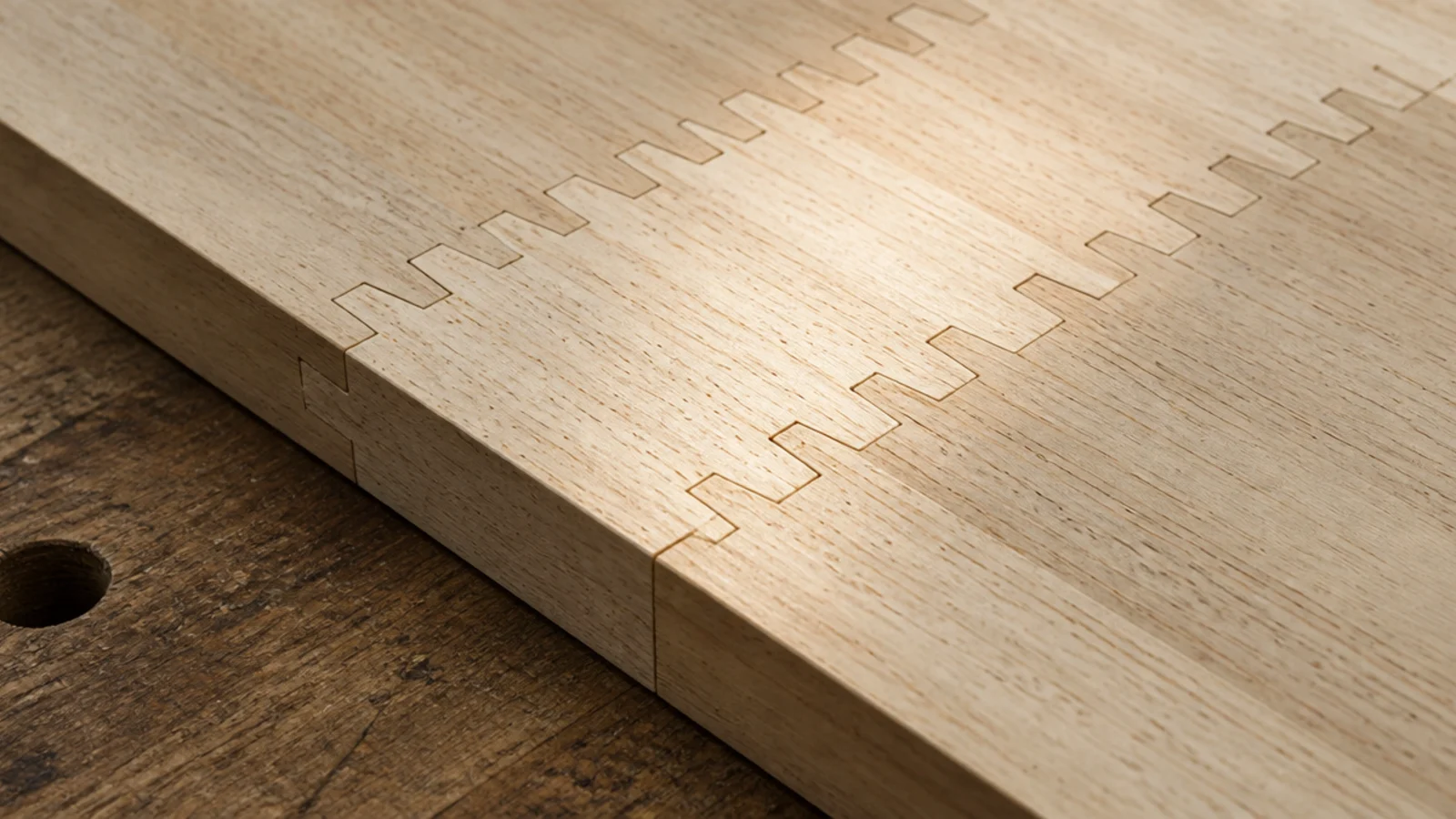
Most furniture labelled solid wood at 80 to 150 dollars is rubberwood, a plantation by-product harvested once latex production ends. It is legitimate hardwood, pale and stable, and it is almost always finger-jointed from short lengths — look for the repeating zigzag pattern on the surface. At 980 Janka it dents more easily than oak, so keep it out of a child's room where it will take knocks.
7. Mango wood and its price-to-hardness ratio
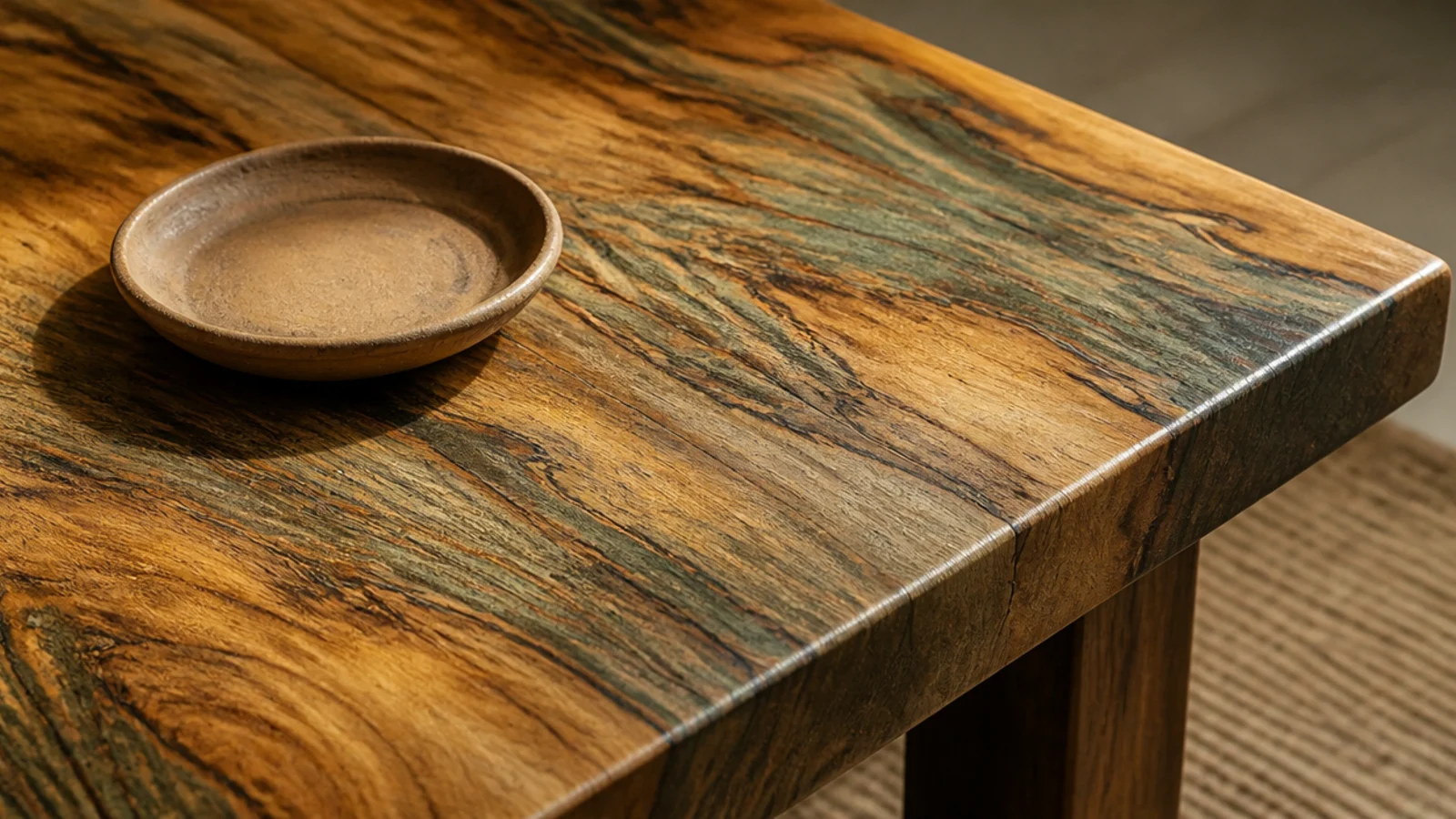
Mango is the best value character timber sold at the moment. It carries streaked golden-brown and grey-green figure closer to walnut than to pine, at roughly a third of walnut money and around 1070 Janka. It is usually finished with a thin lacquer, which is worth stripping and re-oiling because factory lacquer flattens the very figure you bought it for.
8. Reclaimed pitch pine with the nail holes left
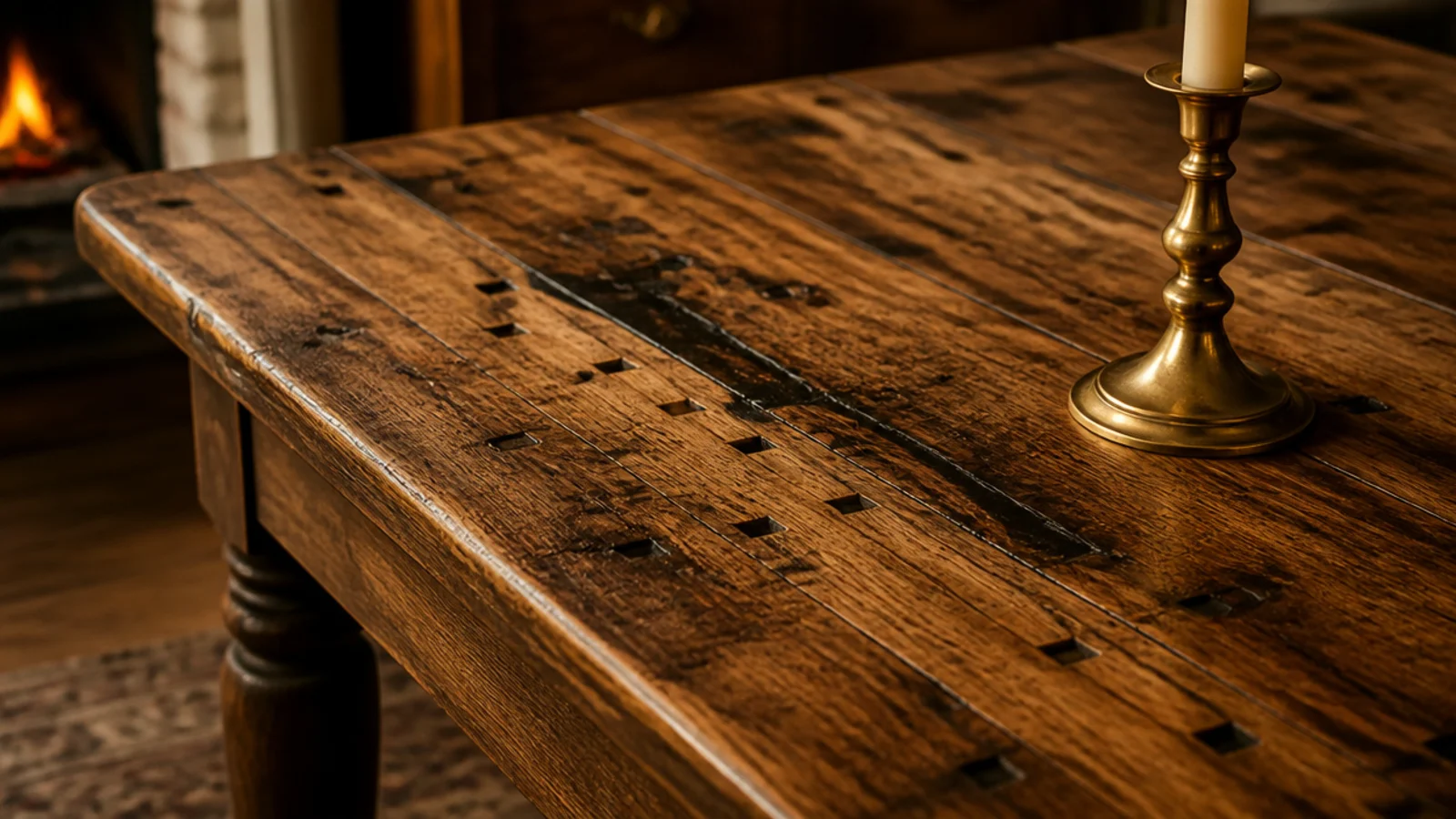
Reclaimed pitch pine from old floorboards and church pews is denser and far more resinous than modern pine, with a deep amber colour that takes decades to develop. Leave the old square nail holes and the darkened resin streaks — filling them removes the reason to buy it. Check with a metal detector before cutting, because a hidden nail destroys a saw blade instantly.
9. Elm and its interlocked figure
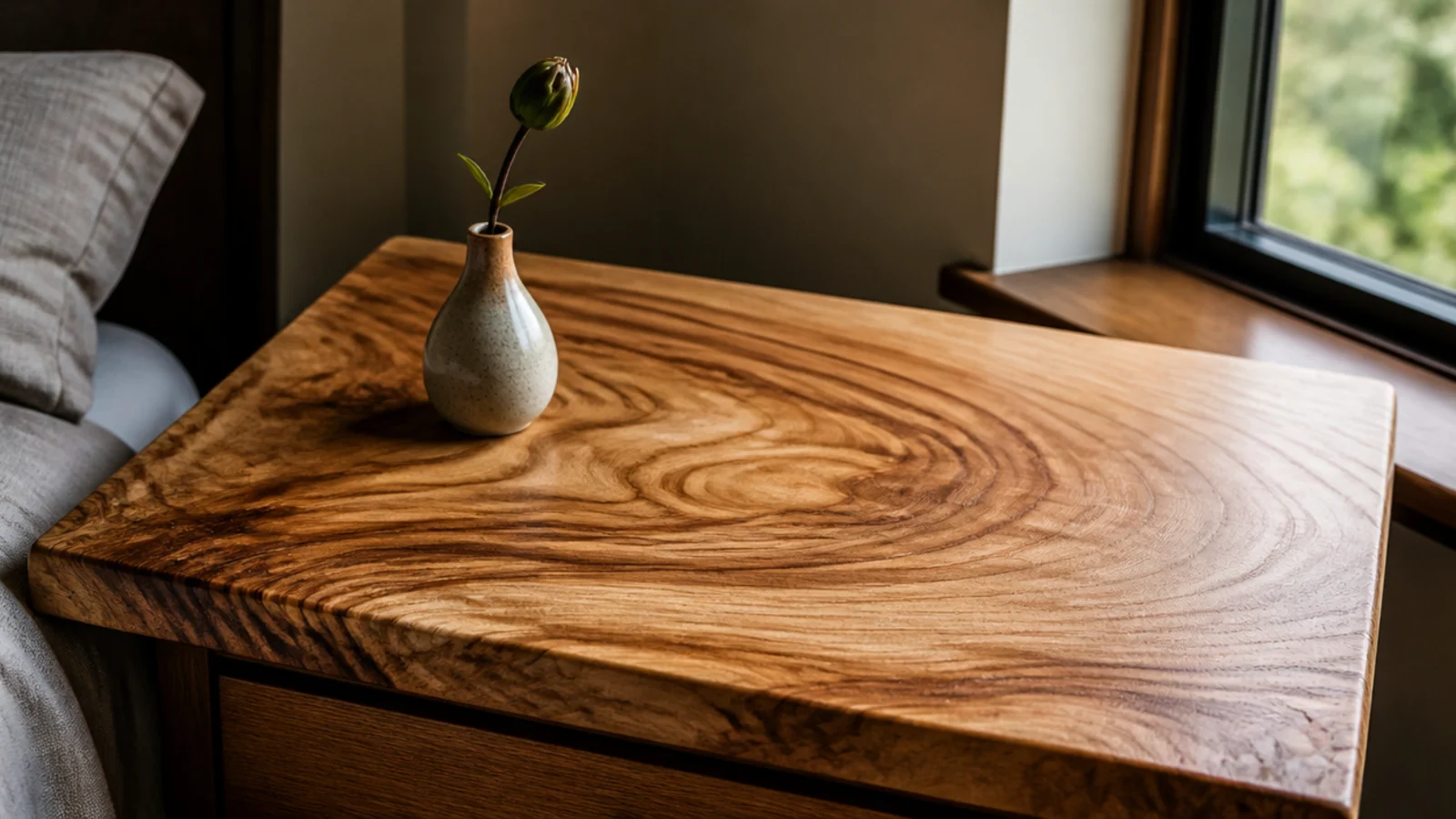
Elm grows with interlocked fibres, so the grain swirls and doubles back where oak runs straight. On a small top that produces genuinely dramatic figure at a table size that can carry it. It is also naturally water-resistant, which is why it was used for water pipes and wheel hubs. Supply is patchy and mostly reclaimed, so buy the board when you see it.
10. Match the floor by undertone, not species
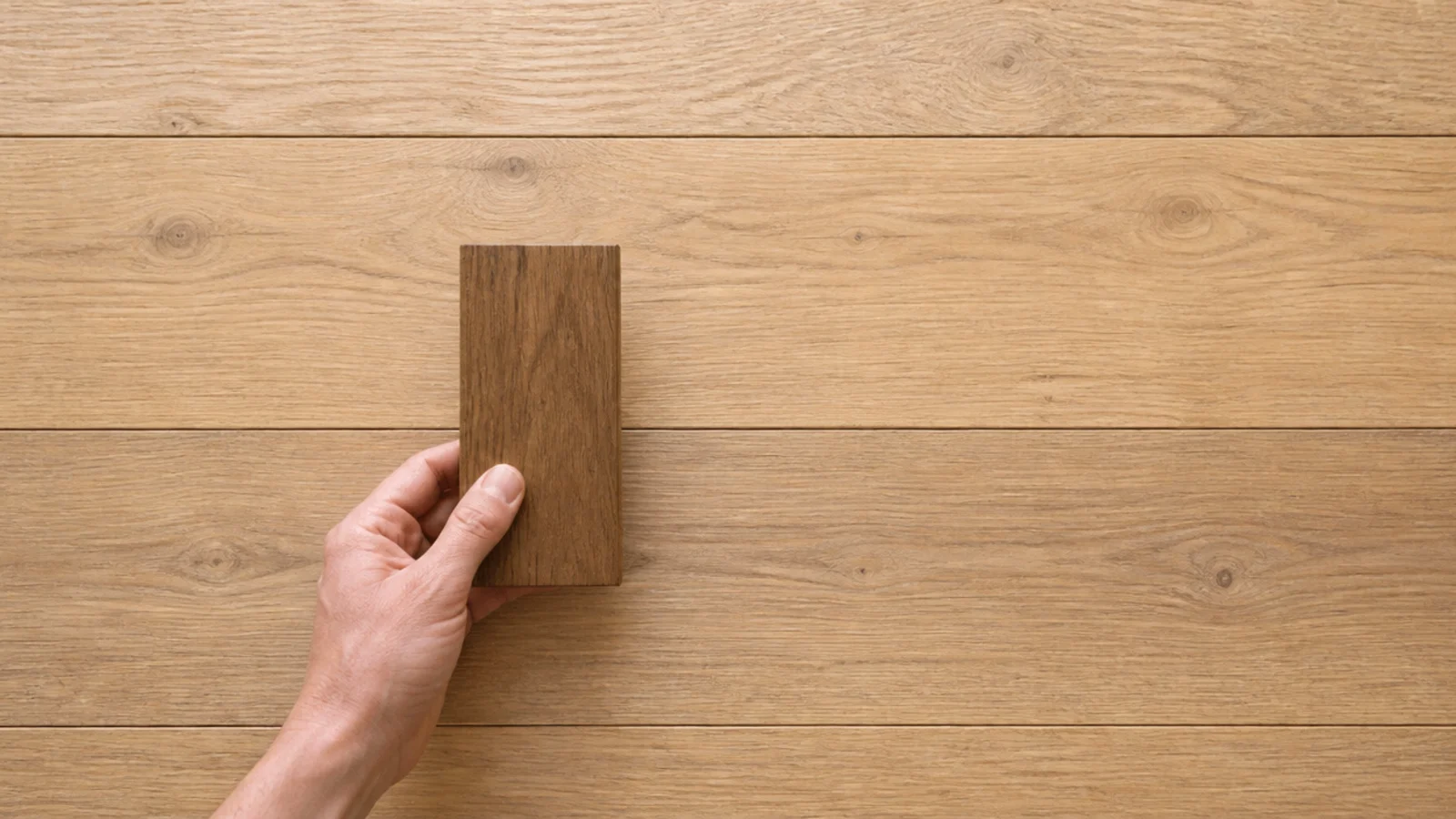
Trying to match a table to a floor exactly almost always misses, and a near-match reads as a mistake in a way a clear difference never does. Match the undertone — warm to warm, cool to cool — then put two or three shades between them. A grey-washed oak floor takes an ash or pale oak table; a warm orange-toned pine floor takes cherry or mango.
11. Quarter-sawn oak and the ray fleck
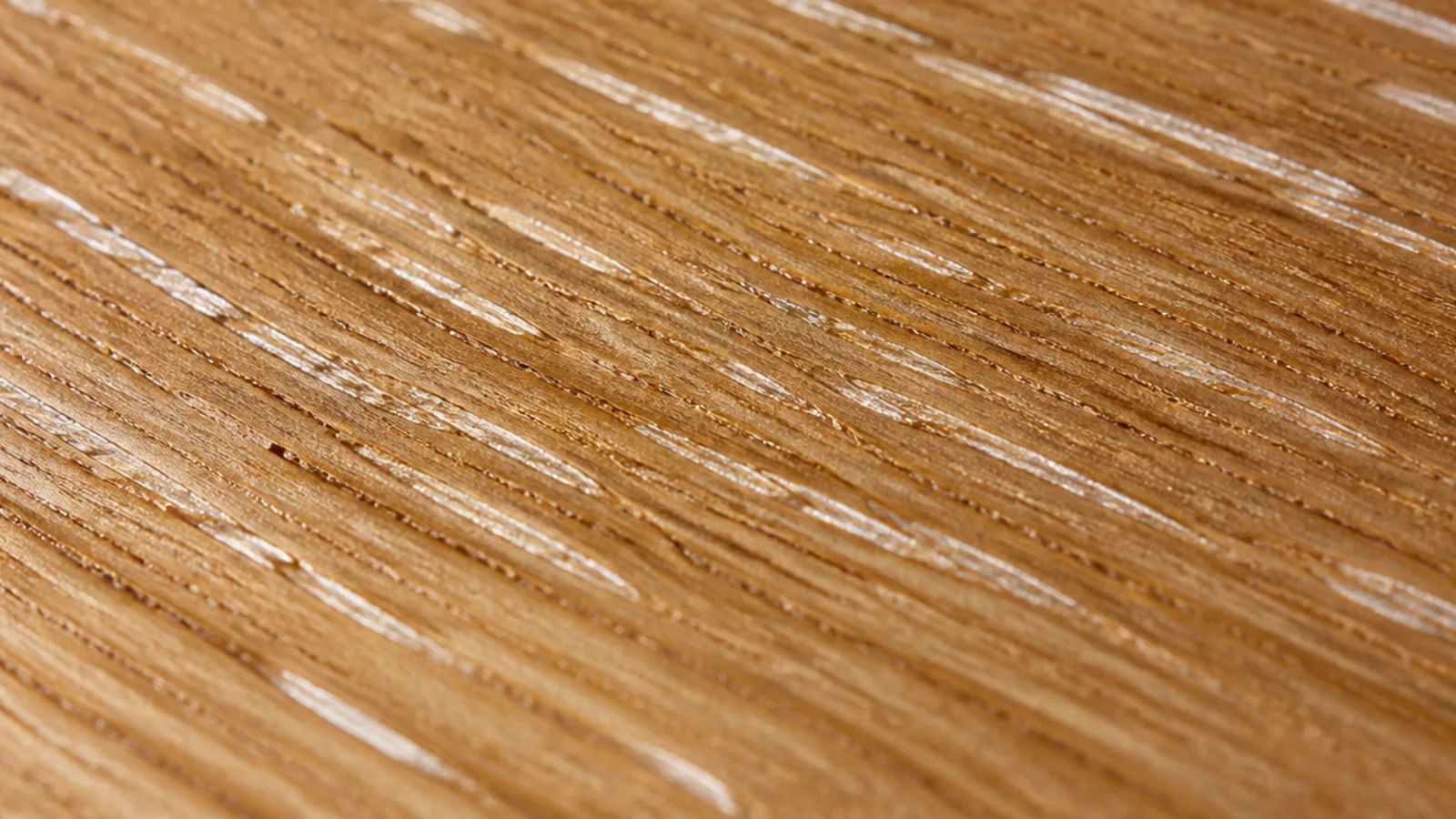
Quarter-sawing cuts the log radially rather than straight through, which produces straight grain and exposes the medullary rays as broad silvery flecks across the surface. It costs 20 to 40 percent more because it wastes more of the log, and it is also considerably more stable in humidity — it moves about half as much across its width as a plain-sawn board of the same size.
12. A live-edge slab and how much sapwood to keep
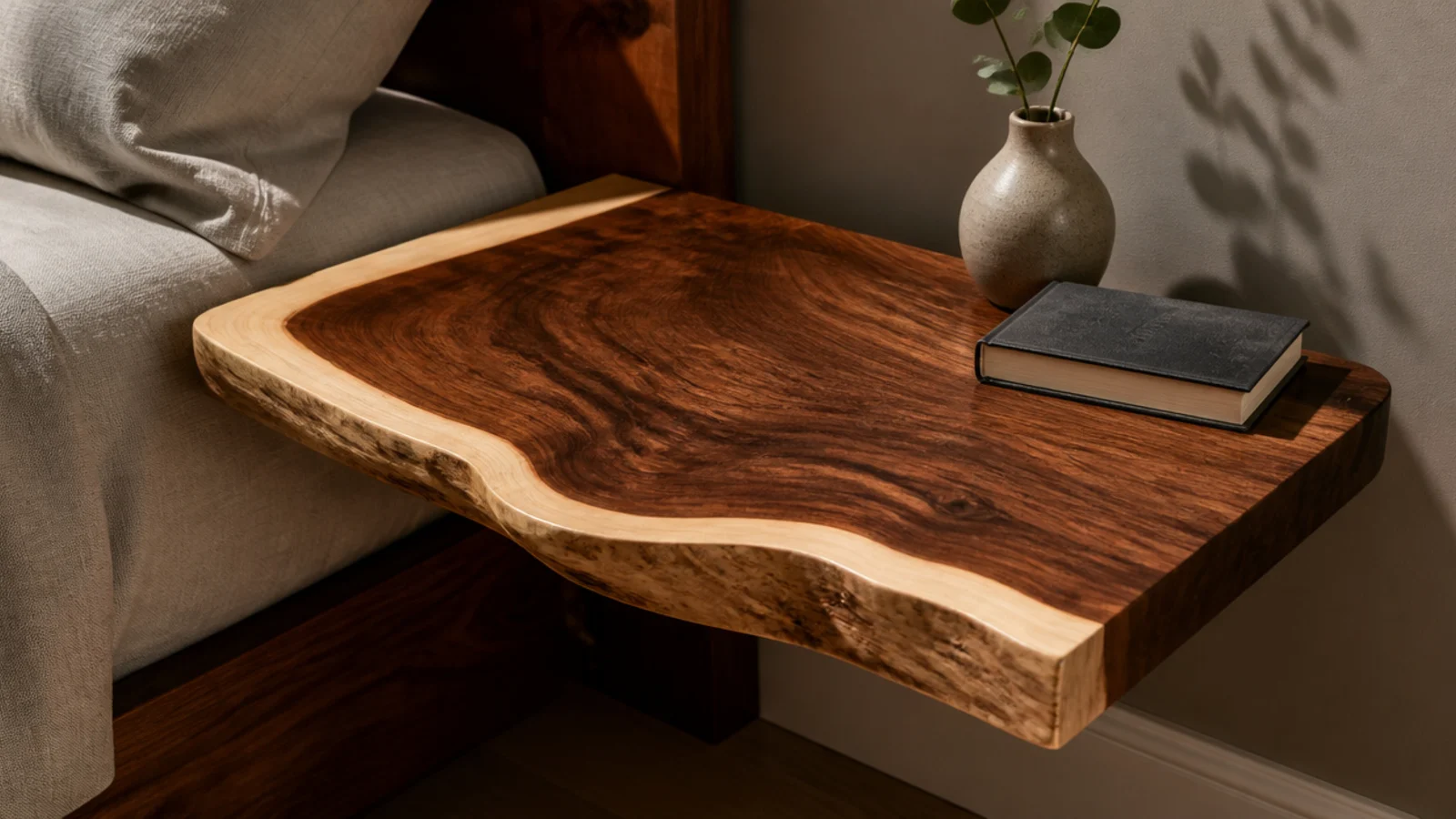
A live edge only works if the bark is off. Bark drops, harbours insects and leaves a ragged line. Keep the pale sapwood band beneath it, though — that contrast against the darker heartwood is the whole point of the cut. Check the slab has been kiln-dried to 6 to 8 percent moisture, since an air-dried slab will cup once it meets a heated bedroom.
13. A butterfly key across a check
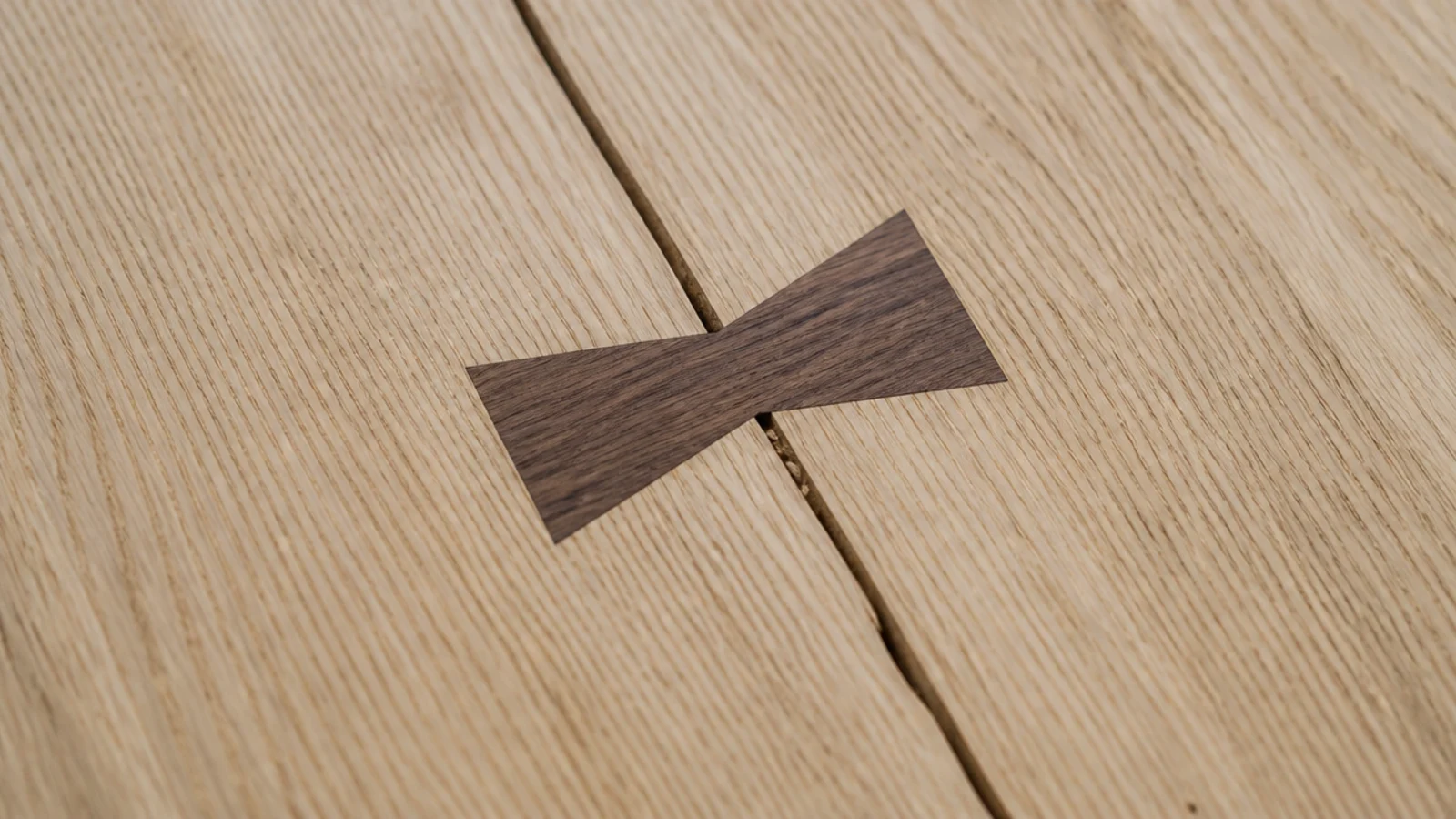
A butterfly or bowtie key is a double-dovetail inlay set flush across a natural split to stop it travelling. Cut it in a contrasting timber — walnut into oak, oak into walnut — and a repair becomes the best detail on the piece. It has to cross the split at right angles and sit at least half the thickness deep to actually do the structural job.
14. Through-tenons left visible as decoration
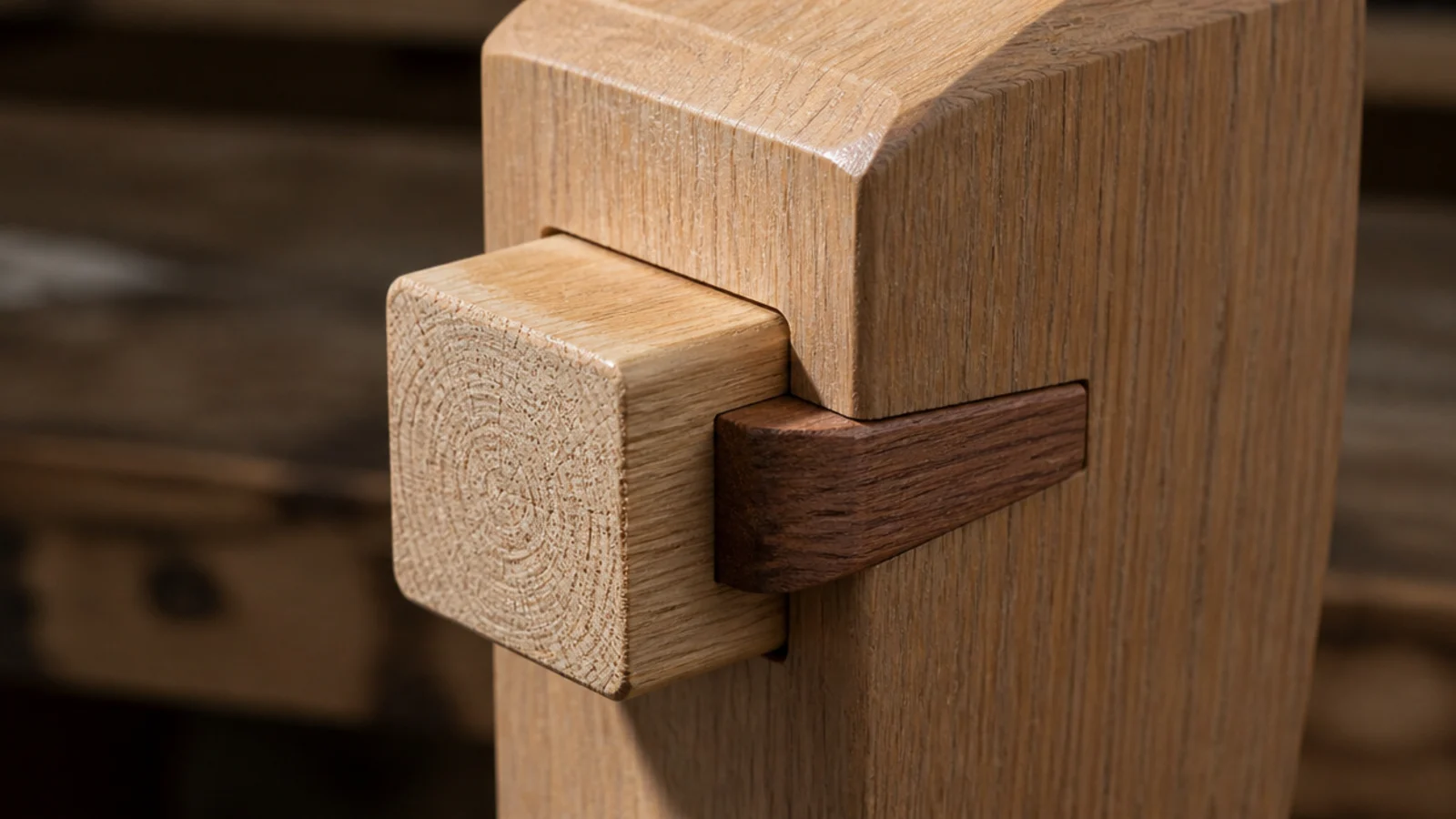
A through-tenon passes right through the leg and shows its end grain on the outside face, often wedged. It is stronger than a blind joint and it announces that the piece is genuinely joined rather than screwed. Chamfer the projecting end by a millimetre or two so it does not catch a sleeve, and expect it on handmade pieces rather than factory ones.
15. Finger-jointed panels and how to spot them
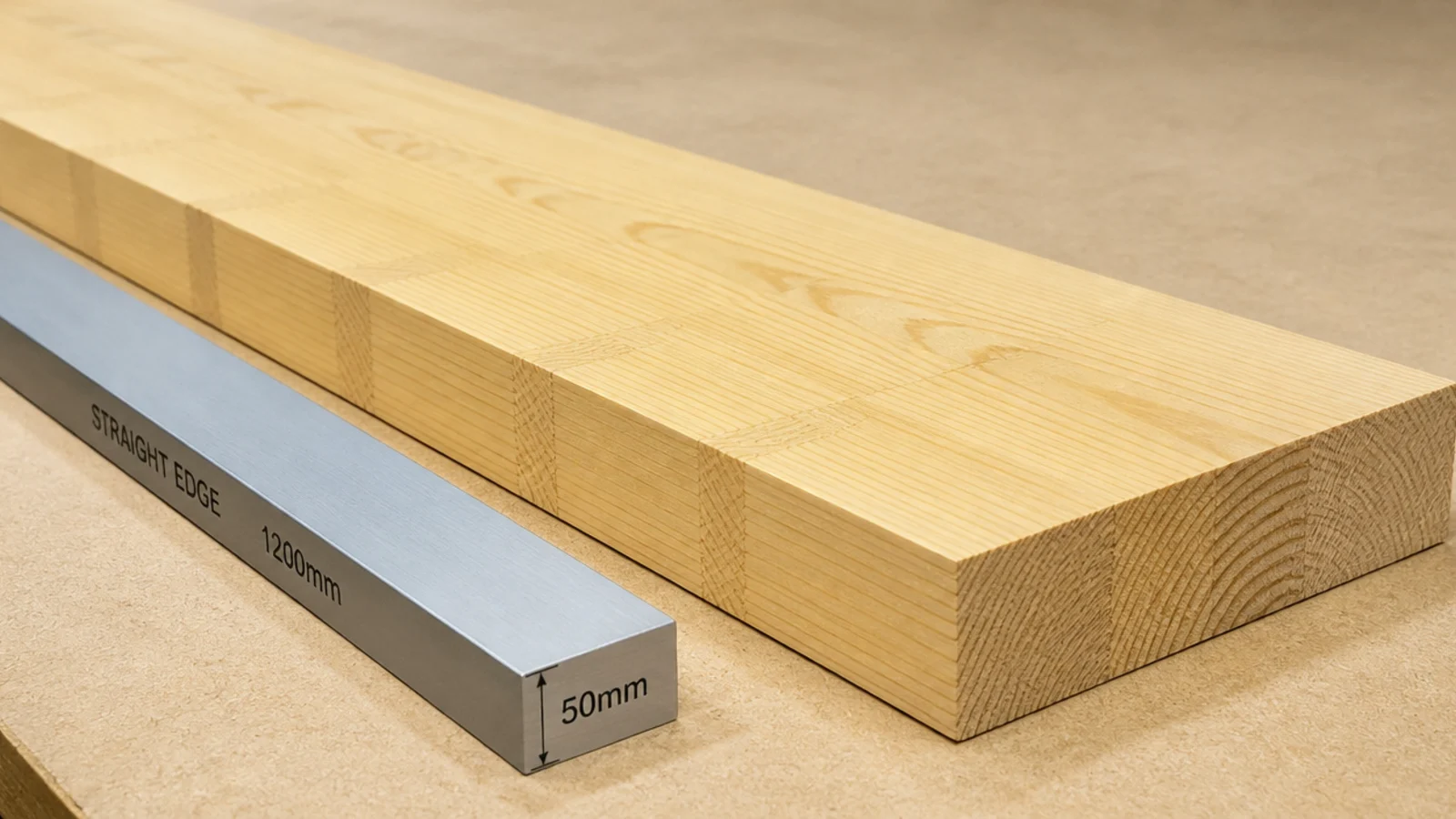
Look along the surface at a shallow angle in raking light and repeated butt lines appear at intervals of six to twelve inches. That is a finger-jointed panel — short offcuts glued into a wide board. It is stable, cheap and completely legitimate, but it is not the same product as a wide solid board, and it should not be priced as one.
16. End grain used as the top surface
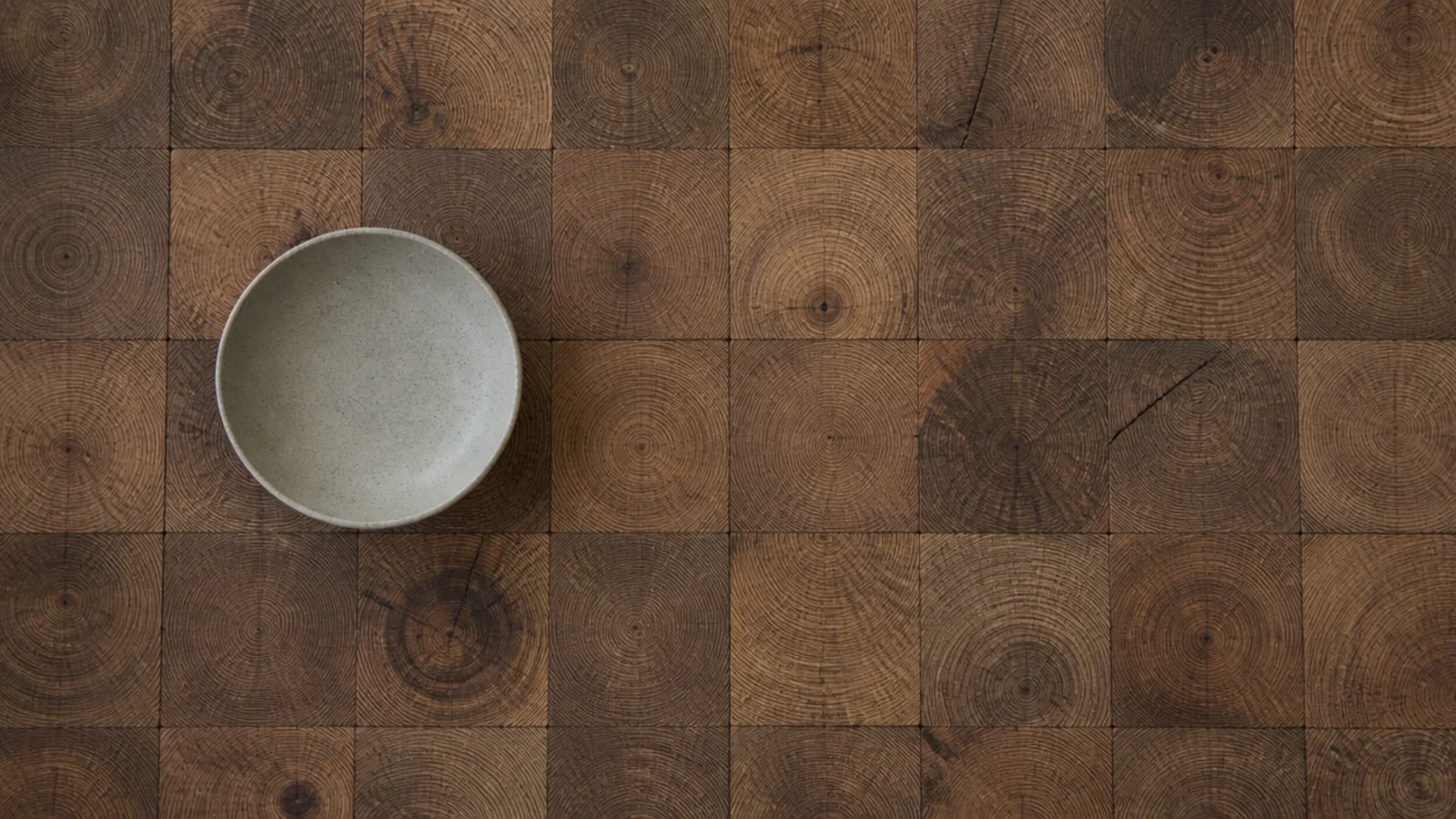
Turn the timber so you look into the ends of the fibres and every square shows a small map of growth rings. End grain is harder-wearing than face grain, which is why butcher blocks are made this way, but it also drinks finish — expect to apply two or three times as much oil before it stops absorbing. Visually it suits a small top far better than a large one.
17. Slotted fixings so a solid top can move
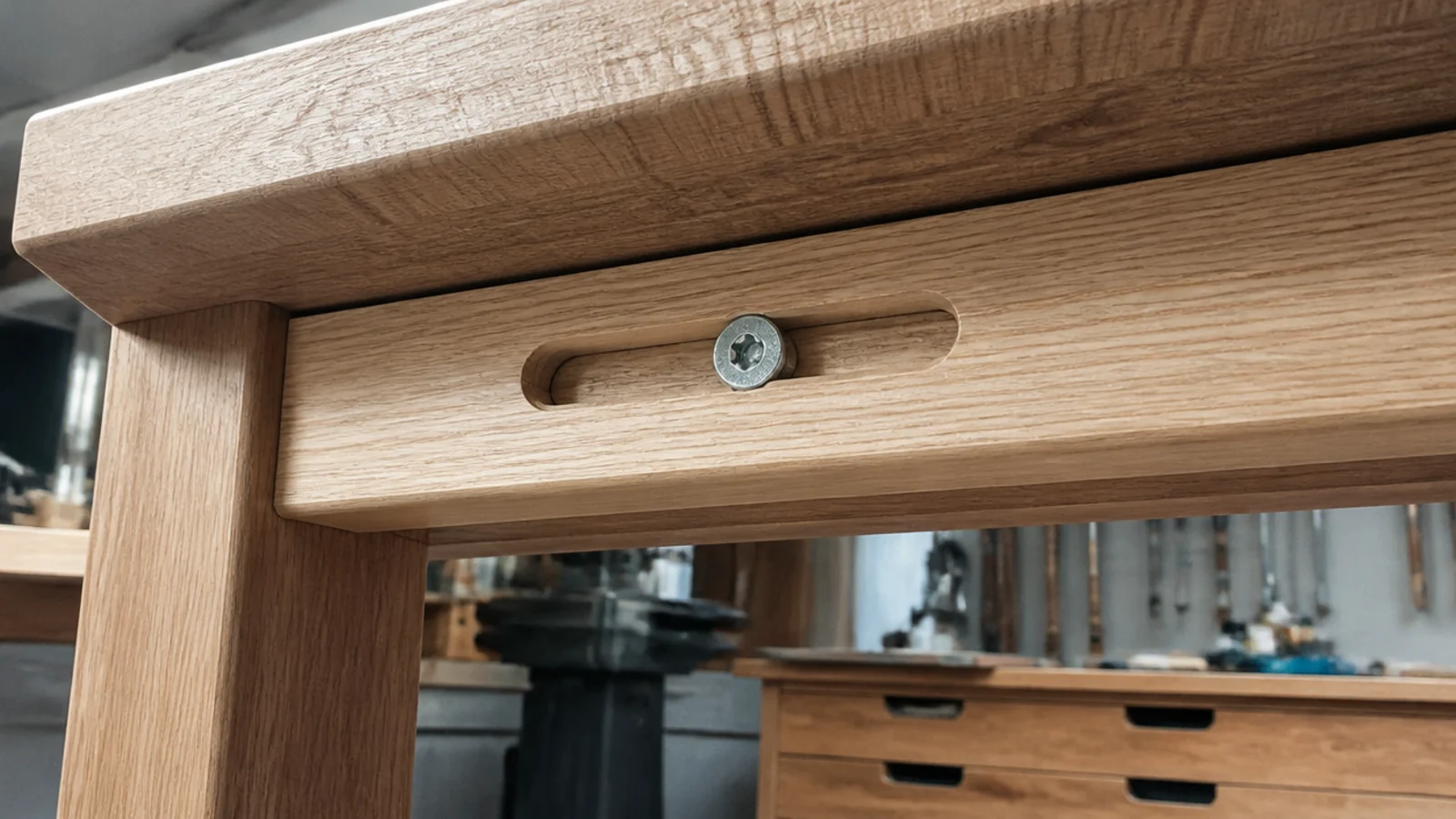
This is the single detail that decides whether a solid wood table survives ten winters. The top must be able to expand and contract across its width, so it is fixed with screws through elongated slots or with figure-of-eight clips that rotate. A top screwed rigidly through round holes into a frame will split along the grain within a couple of heating seasons.
18. Hardwax oil against polyurethane
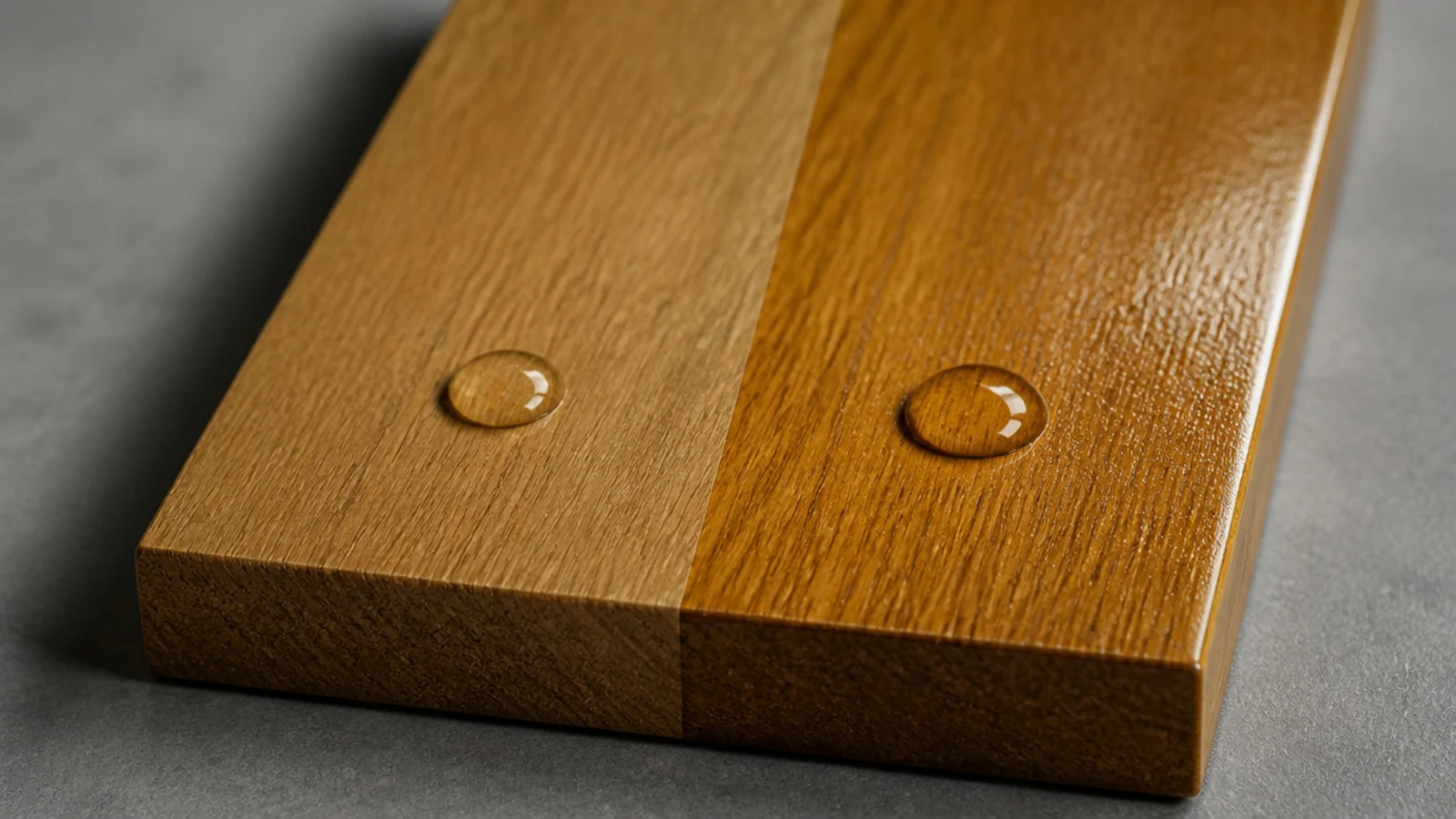
Hardwax oil penetrates and leaves a matte surface that feels like timber; a scratch sands out locally and blends invisibly. It needs refreshing every two to three years and it will mark from standing water. Polyurethane sits on top as a film, resists water far better, and cannot be repaired locally — a deep scratch means sanding and recoating the whole top. Choose by how the room is actually used.
19. Ebonising oak with iron and vinegar
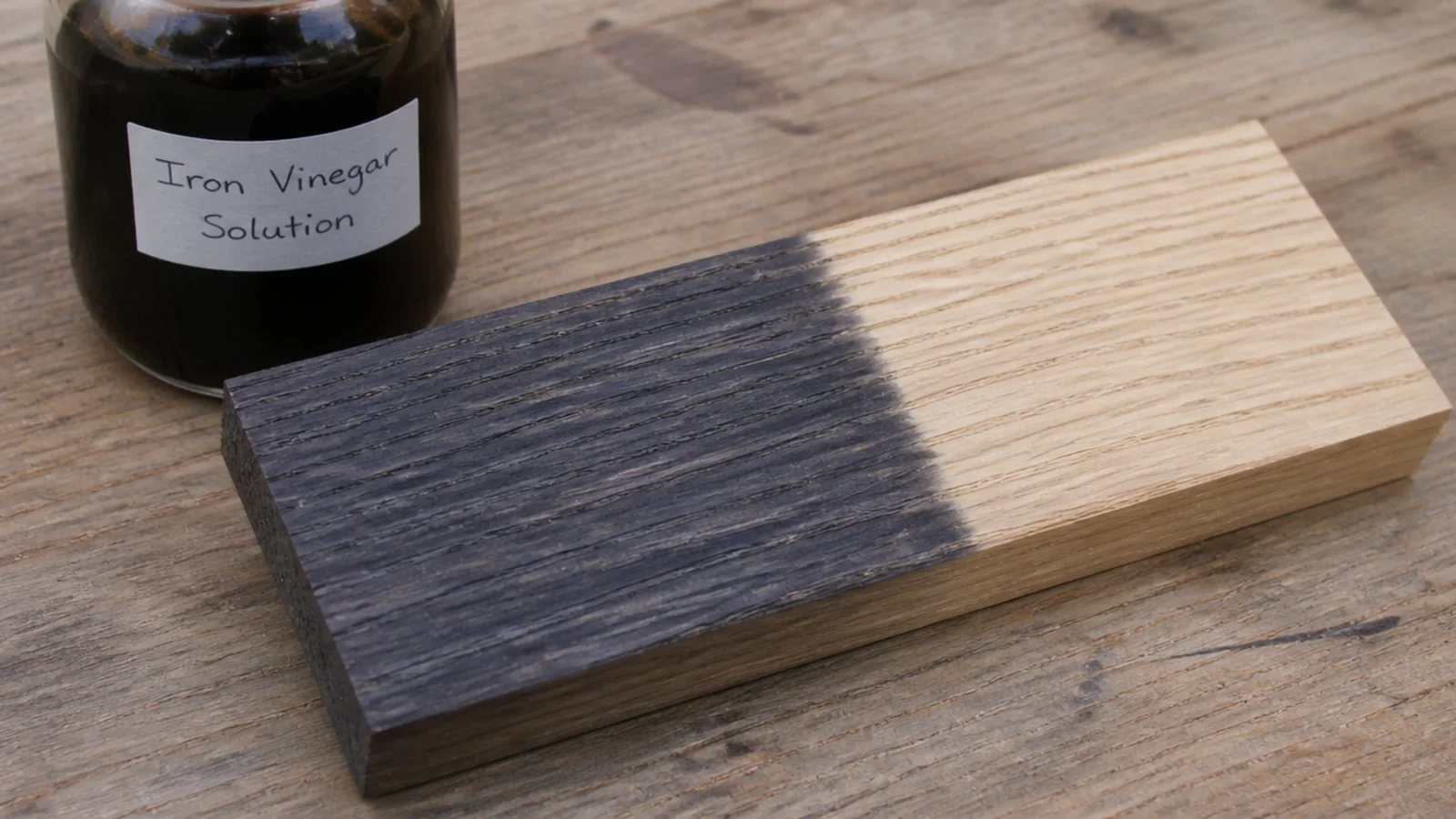
Steel wool dissolved in vinegar for a few days makes an iron acetate solution that reacts with the tannin in oak and turns it grey-black in minutes. It is a chemical reaction rather than a coating, so the grain stays completely visible and nothing sits on the surface to chip. Test on an offcut, because tannin levels vary and the same solution gives different results on different boards.
20. Lime wax in open-grain oak
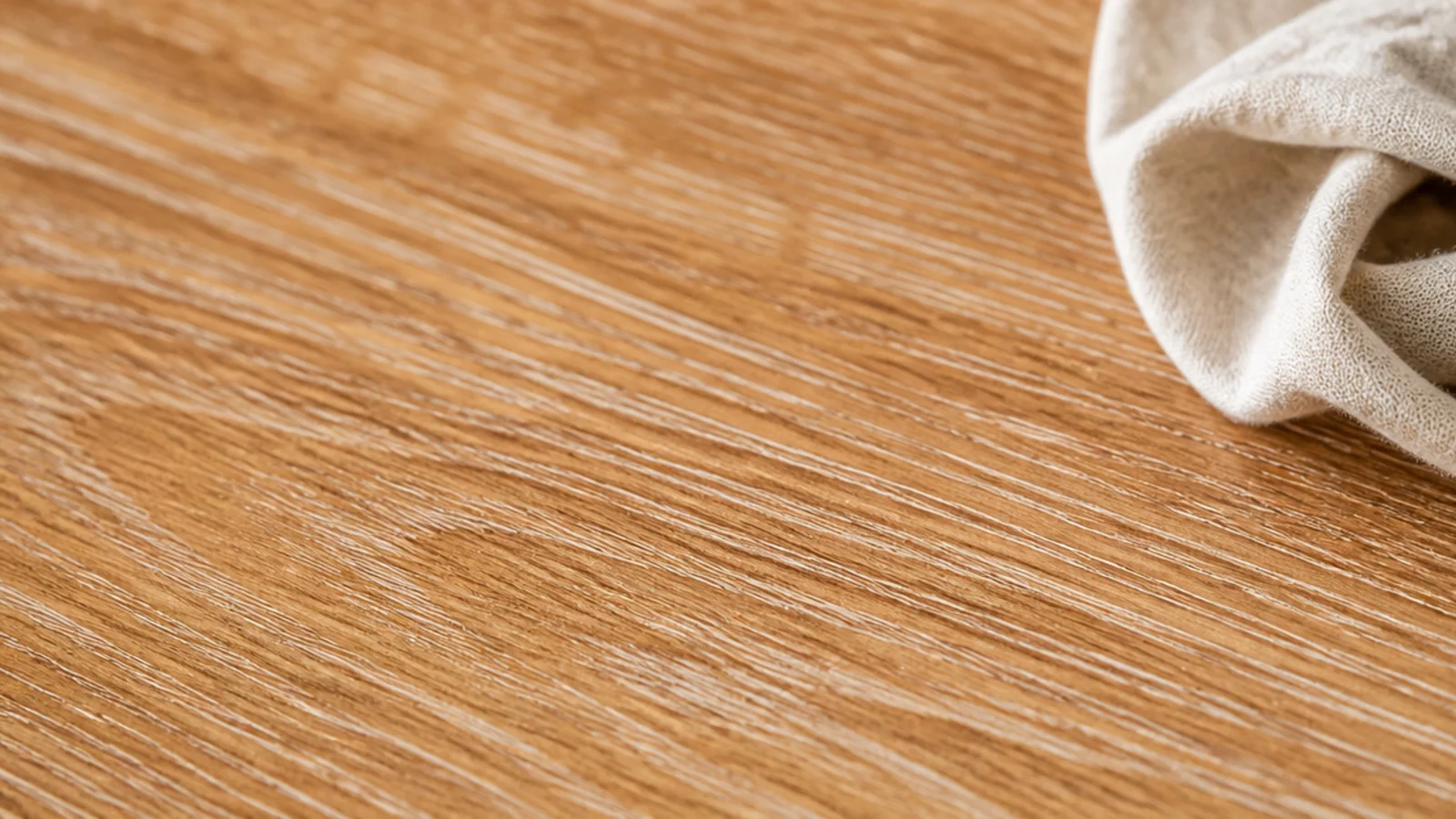
Lime wax is a white pigmented wax pushed into the open pores of oak or ash and then buffed off the surface. The pores hold white, the surface stays warm timber, and the grain pattern becomes the decoration. It suits a room with a lot of pale linen. It needs re-waxing roughly annually and does not belong on a surface that gets wiped down often.
21. A two-tone table: dark top, pale base
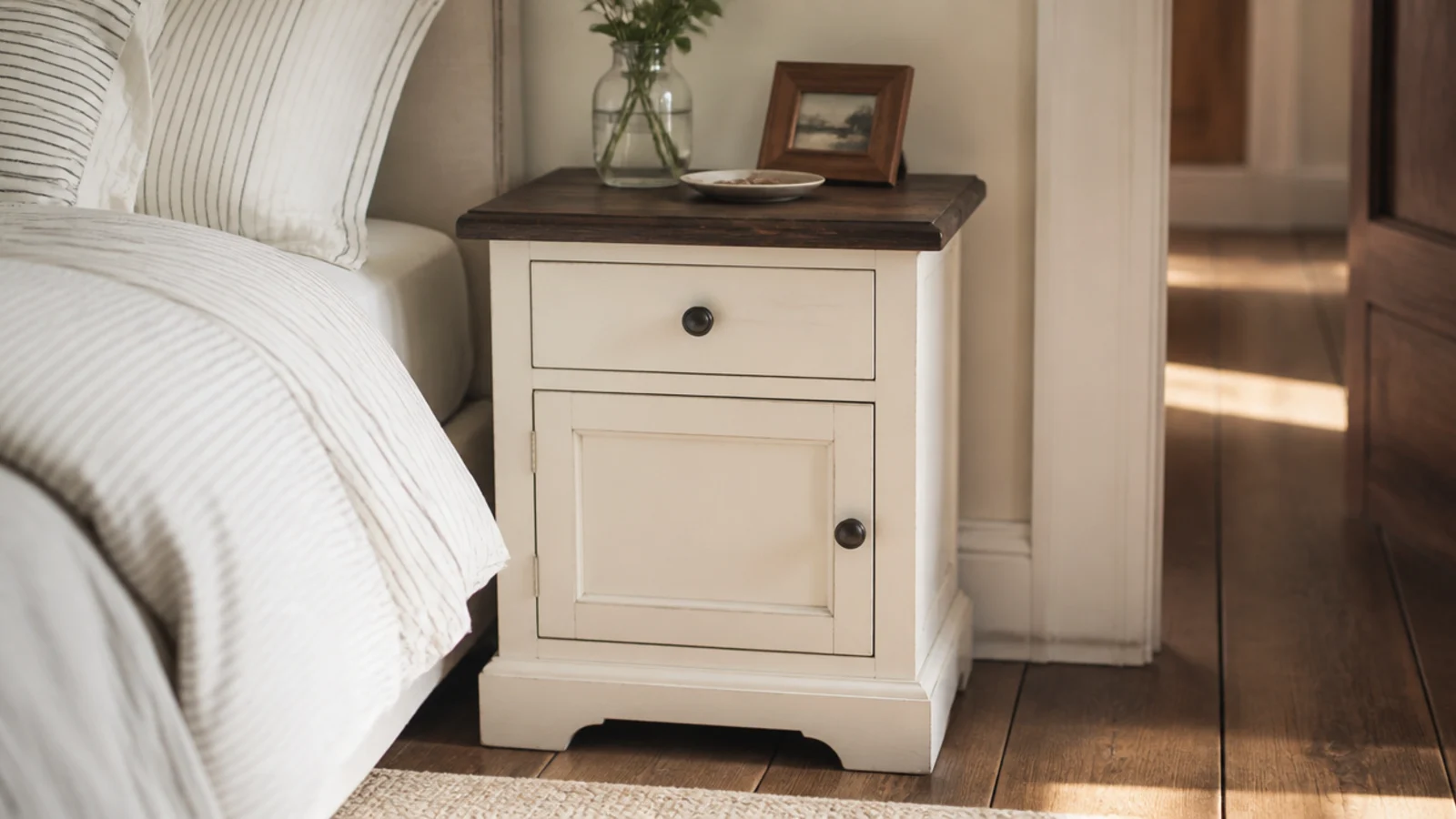
Stain or oil the top dark and paint the base a soft chalk white, and the table reads taller and lighter than a single-tone piece of the same size. It is also the practical answer for a piece with a good solid top and a cheap or mismatched base. Keep the division at a horizontal joint in the construction rather than partway down a leg.
22. Burn and brush the base
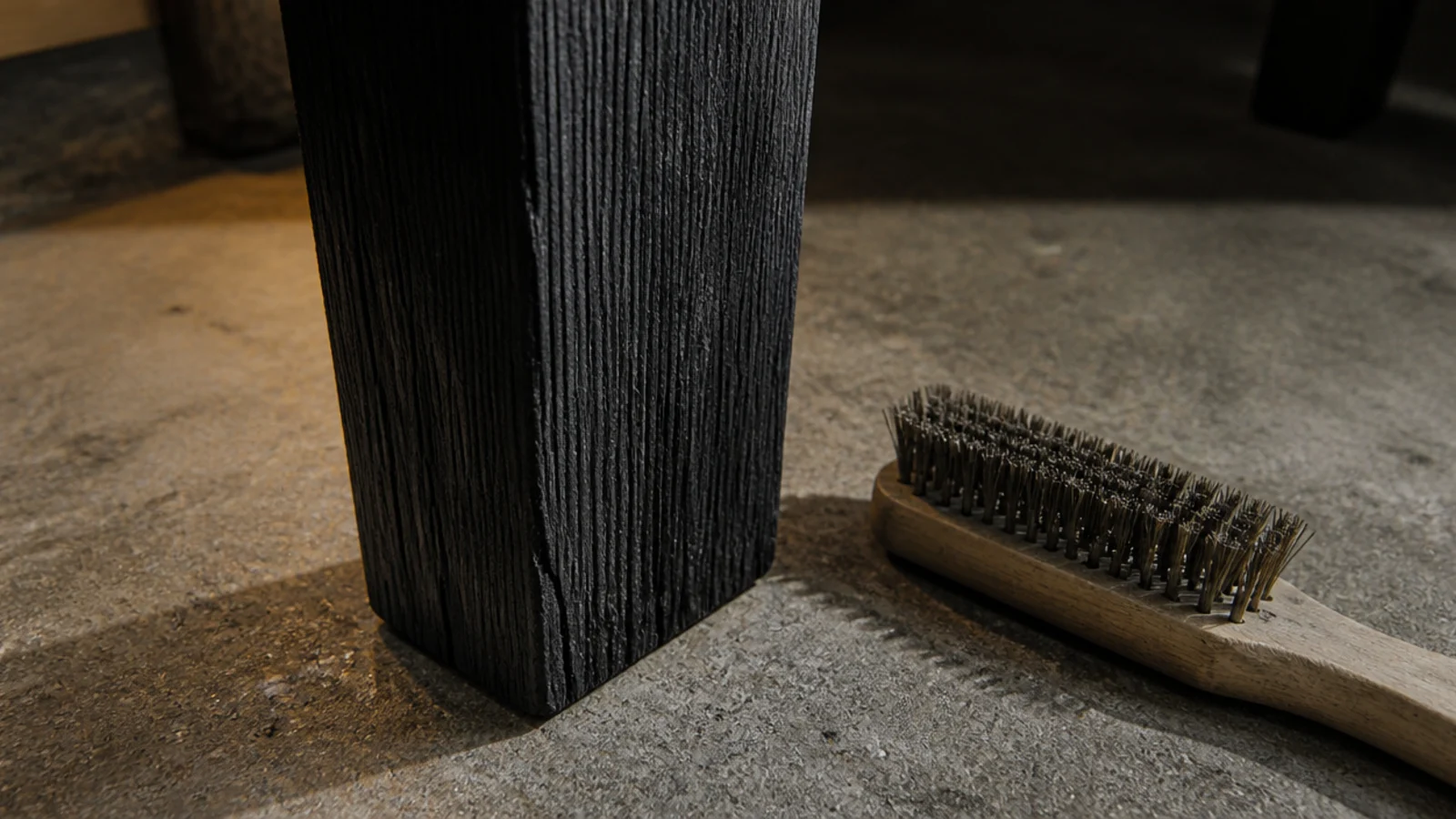
Charring softwood with a torch and then brushing back the loose carbon with a wire brush erodes the soft spring growth and leaves the hard grain proud as a ridged, blackened texture. It is genuinely durable and needs no stain. Do it outdoors on bare untreated timber only, keep water to hand, and seal with a clear oil once cool or it will mark everything it touches.
23. Sand to 180 and stop there
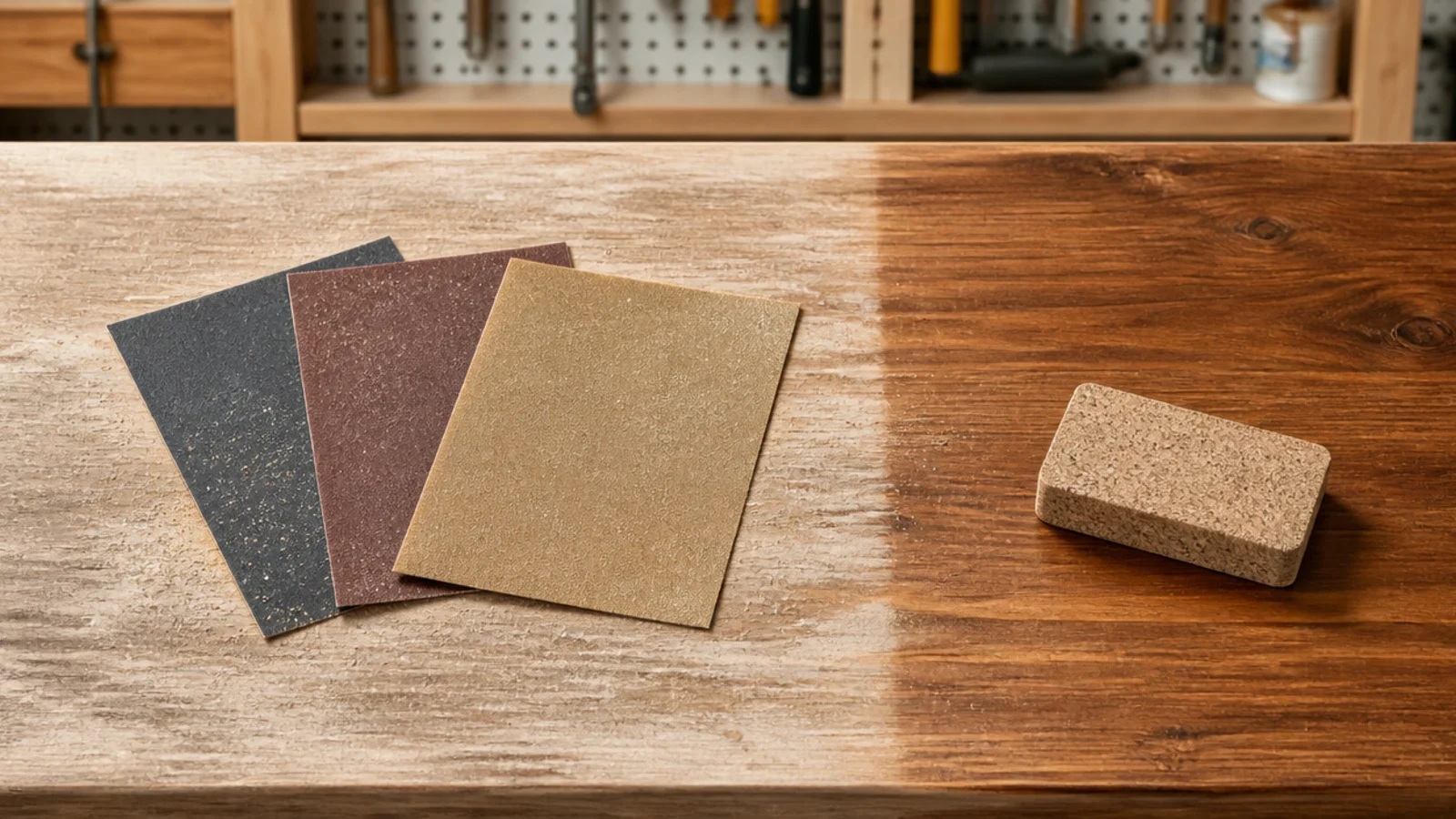
For an oil finish, sanding beyond 180 grit burnishes the surface closed so it absorbs less and the colour comes out patchy and thin. For a film finish, 150 to 180 is also the sensible stopping point. Work up through the grits without skipping more than one step, and always finish the last pass along the grain rather than across it.
24. Keep solid wood off the radiator side
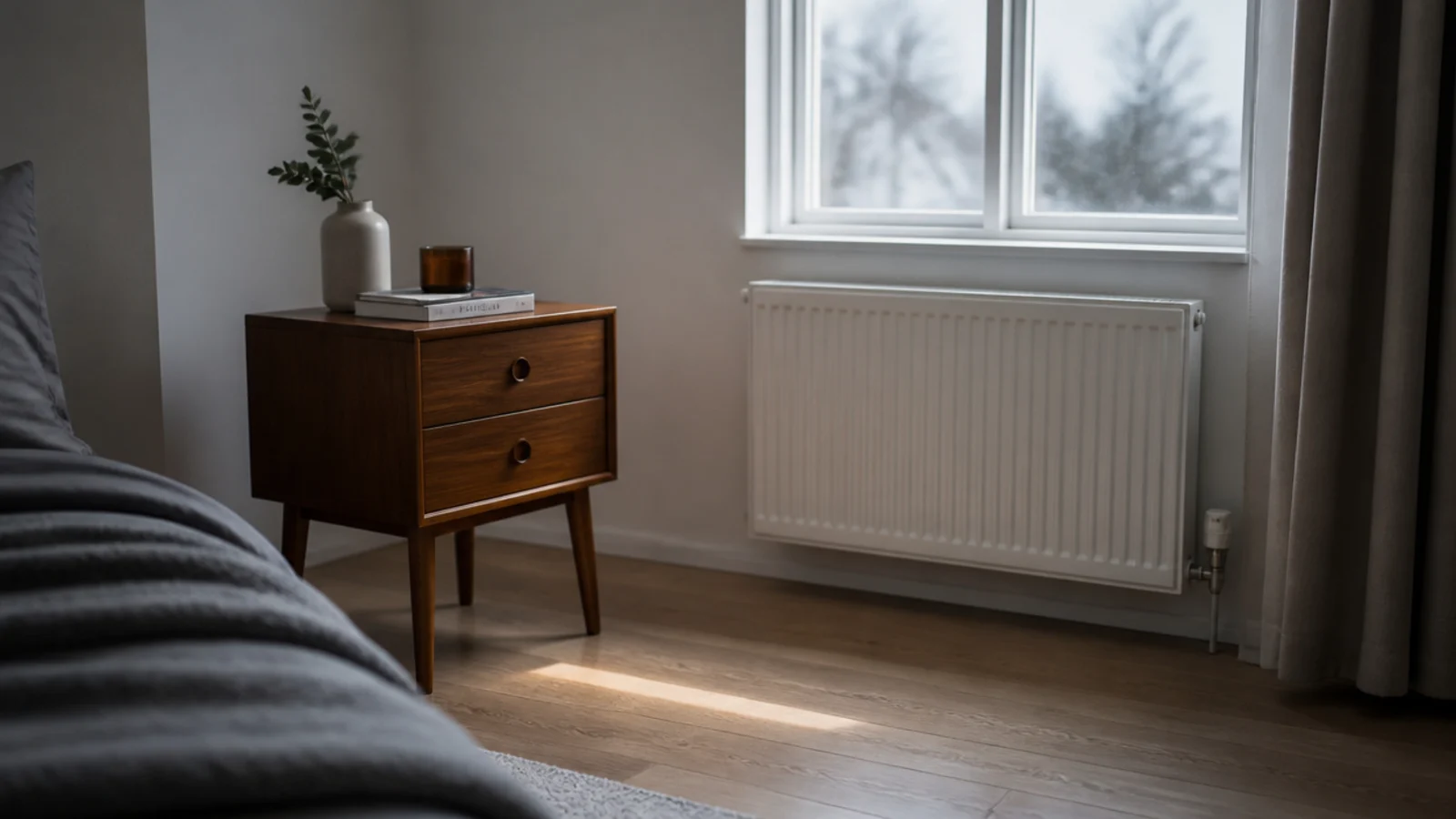
A bedside table directly above or beside a radiator sits in air that can drop to 25 percent relative humidity in a heated winter, against 55 percent in summer. That swing is what opens joints and cracks tops. If the only spot is beside a radiator, choose a veneered or finger-jointed piece rather than a wide solid top, since both are far more stable.
25. Buy secondhand teak and refinish it
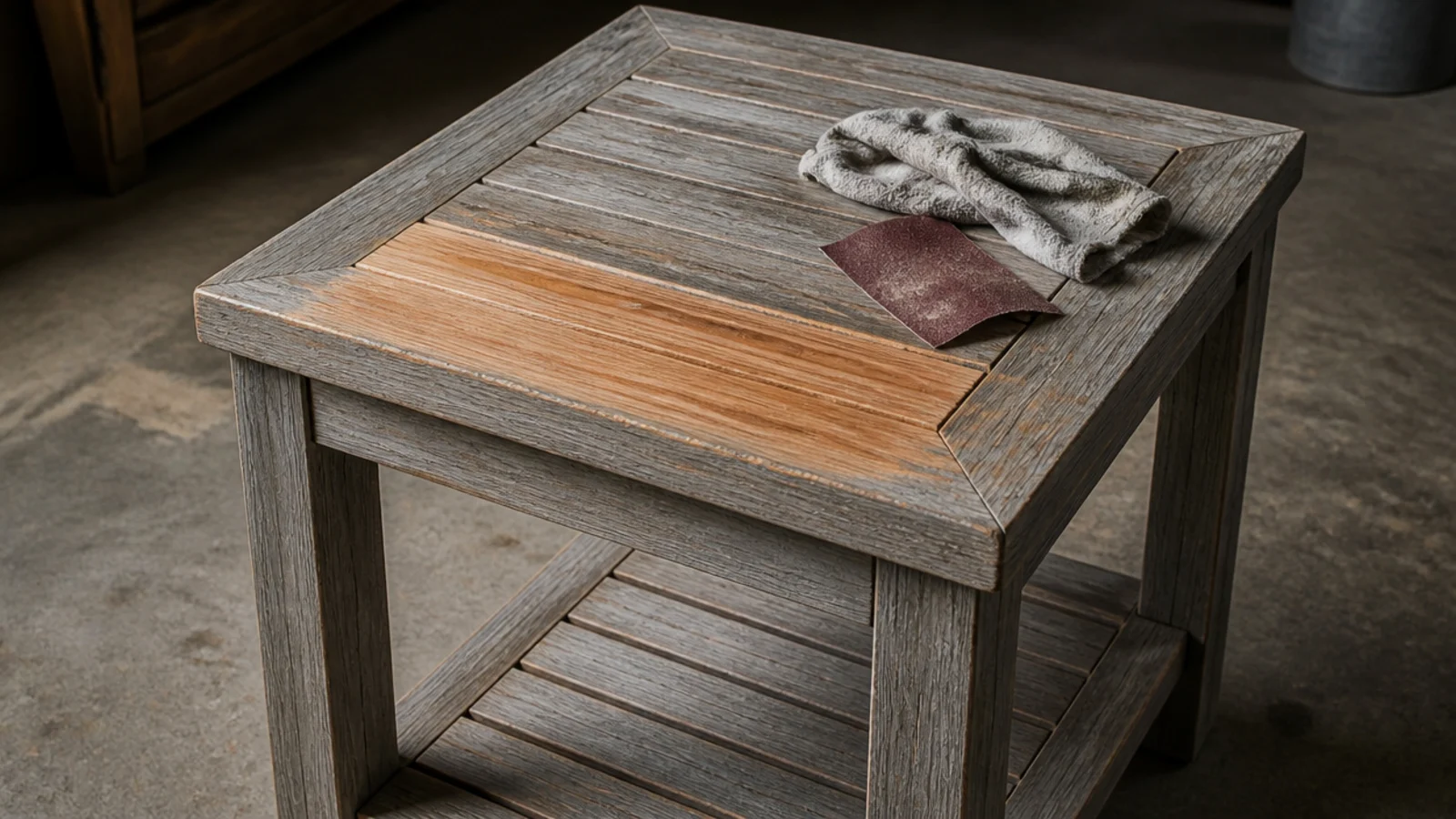
Mid-century teak side tables turn up at 30 to 90 dollars looking grey and tired, and the grey is usually less than a millimetre deep. Sand back to 150 grit, wipe with white spirit to check for remaining marks, then two coats of teak or Danish oil. The colour underneath is a warm honey that no modern factory finish reproduces, and the joinery is generally better than anything at that price today.
For the joinery details that separate a good hardwood cabinet from a merely expensive one, the luxury construction guide covers drawer boxes and hardware. The same timber logic scales up in these living room built-ins, and hanging light options explain which bulb temperatures flatter warm wood.
Mistakes to Skip
- Screwing a solid top down through round holes. The panel cannot move with the seasons, so it splits along the grain instead.
- Trying to match the floor exactly. A near miss looks like a failed match, where a clear two or three shade difference looks deliberate.
- Buying cherry and expecting it to stay that colour. It will be two shades darker within a year, and anything left in one spot leaves a pale patch.
- Sanding to 320 before oiling. The surface burnishes closed, absorbs unevenly, and the finish ends up thin and blotchy.
- Standing a solid timber table hard against a radiator. Dry winter air at 25 percent humidity opens joints that were tight in July.
Frequently asked questions
Which wood is best for a bedside table?
White oak for most rooms. It sits at about 1360 on the Janka hardness scale, has closed pores that resist water rings better than red oak, and takes almost any finish from pale to ebonised. Walnut is the choice where you want depth without darkness, and ash is the cheapest convincing stand-in for oak.
Do wooden bedside tables need to match the floor?
No, and matching exactly usually looks worse. Match the undertone instead — a warm orange-toned floor sits happily under a warm cherry or mango table but fights a cool grey-washed oak. Aim for a clear two or three shade difference so the furniture reads as a separate object rather than a failed attempt at a match.
Why has my wooden table developed a gap or a crack?
Wood moves across its width with humidity, roughly an eighth of an inch on a sixteen-inch solid top between a damp winter and a dry heated one. If the top is screwed rigidly to the frame it cannot move, so it splits instead. Slotted fixings or figure-of-eight clips let the panel breathe.
What finish should I use on a wooden bedside table?
Hardwax oil for a natural matte surface that repairs invisibly, or water-based polyurethane where the table takes constant water glasses. Oil needs refreshing every two to three years and any scratch sands out locally. Polyurethane is tougher but a deep scratch means sanding and recoating the whole top.
Is mango or rubberwood real solid wood?
Both are genuine hardwoods, usually sold as finger-jointed panels rather than wide boards. Rubberwood sits around 980 Janka and mango around 1070, so both are softer than oak and dent more easily, but they are stable, sustainably harvested as plantation by-products and considerably cheaper than oak or walnut.
Want more like this? Browse all 15 bedside table ideas guides — they all use the same measurements and budget tiers.
Pin it for later
Save this to your Bedside Table Ideas board
Pin it now so it is waiting for you when the tape measure comes out — and so the next person hunting for this idea can find it too.
Save this pinKeep going
More ideas worth saving while you have the tape measure out.