Toddler Girl Bedroom · Review
15 Bedroom Ideas For Toddler Girl Beds Compared

Some links on this page may become affiliate links in future. I only recommend pieces I would put in my own home — see the affiliate disclosure.
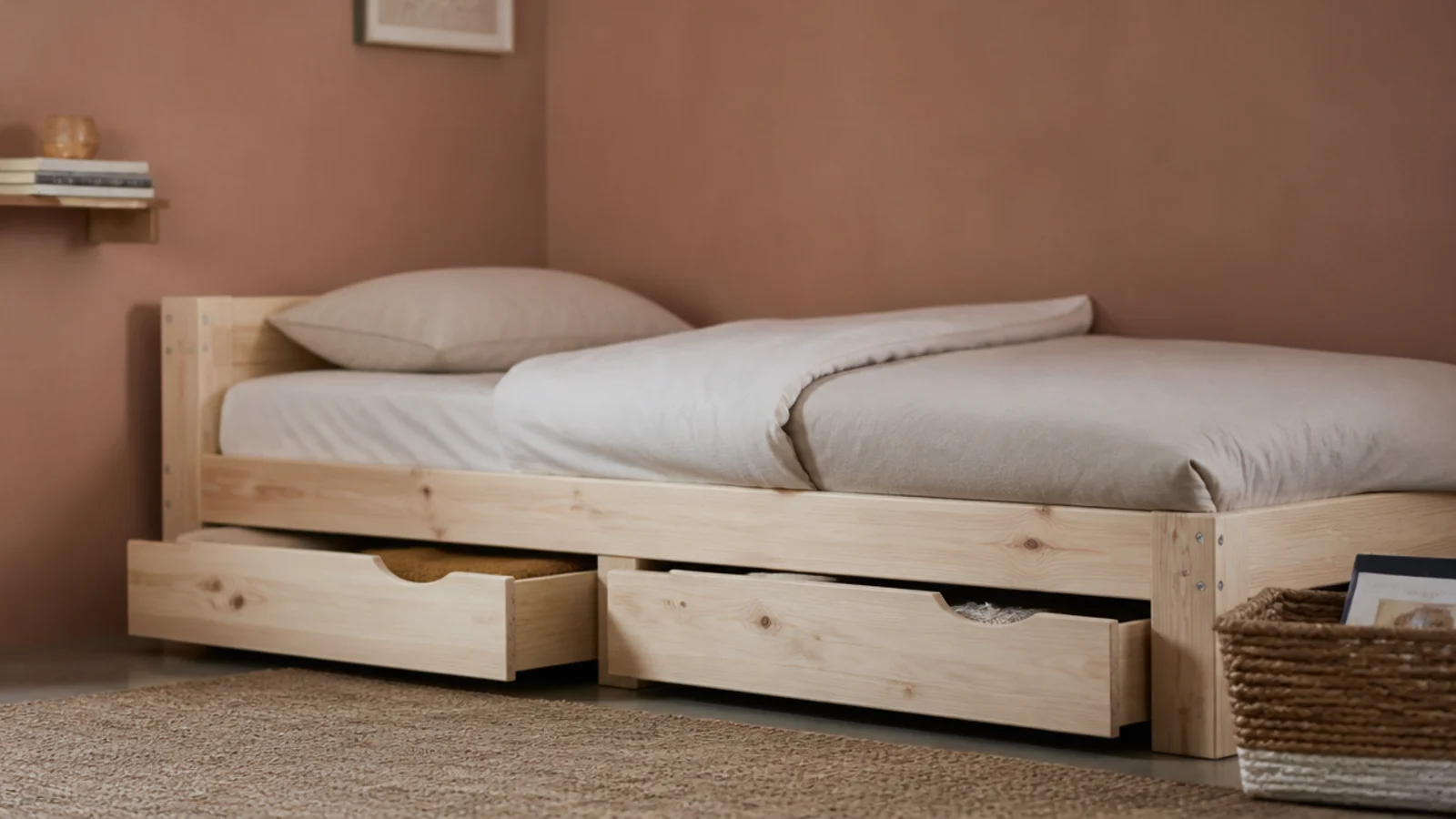
Choosing the bed is the one decision in a child's room that costs real money and sets everything else — the storage, the floor space, the rail question and the year you have to buy again. Most bedroom ideas for toddler girl rooms assume the bed is already there. This one starts with it. Across eleven rooms I have bought, converted, returned and given away most of what follows, and the ranking is on the numbers that decide whether a bed lasts: mattress size, deck height, rail gap and the age it stops fitting.
In this guide11 sections — tap to openHide
- 1.How I Chose These Bedroom Ideas For Toddler Girl Beds
- 2.The Full Comparison: 15 Toddler Bed Options
- 3.The twin mattress straight on the floor
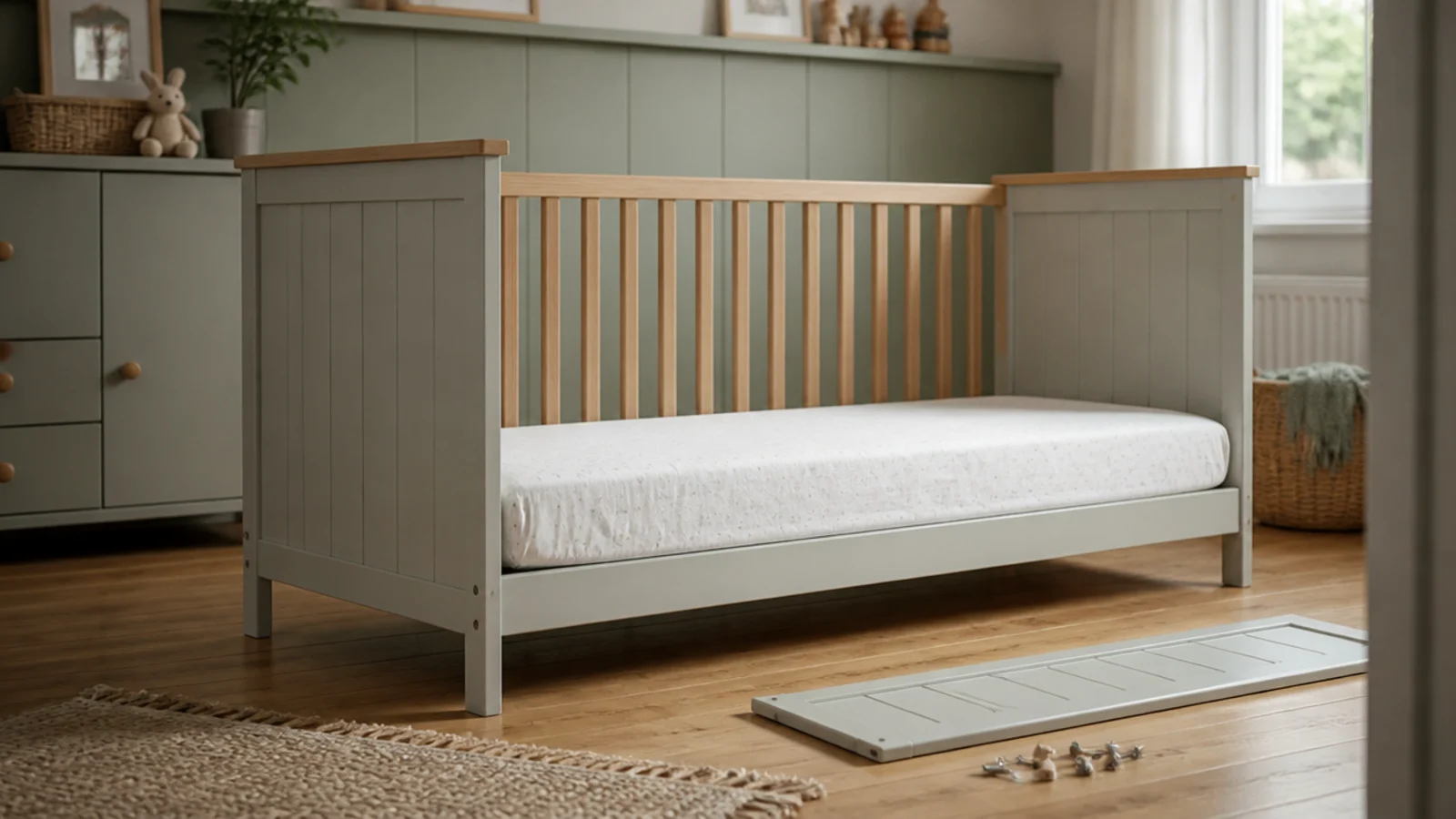
- 4.The convertible cot with a toddler rail
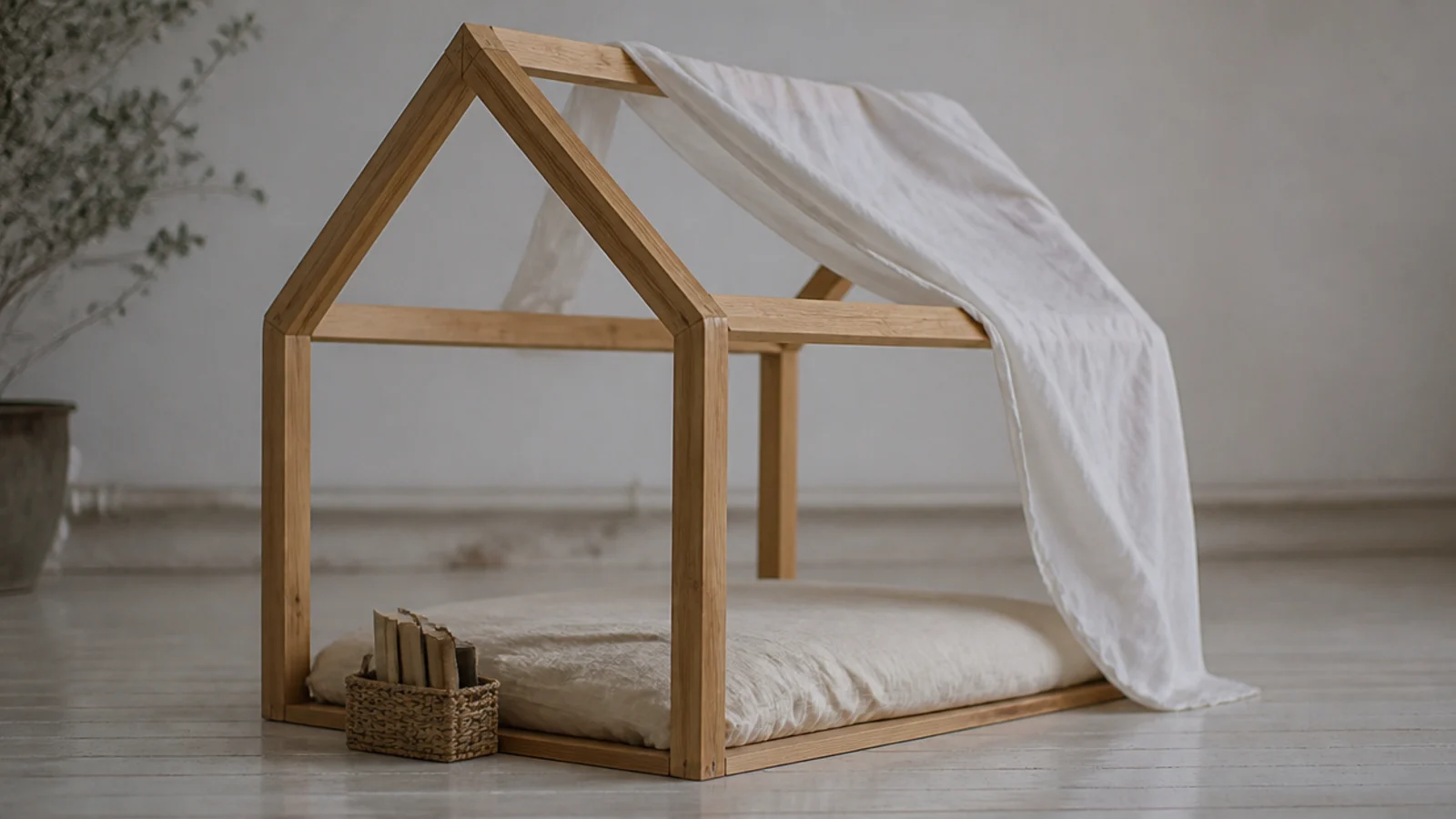
- 5.The low house-frame floor bed
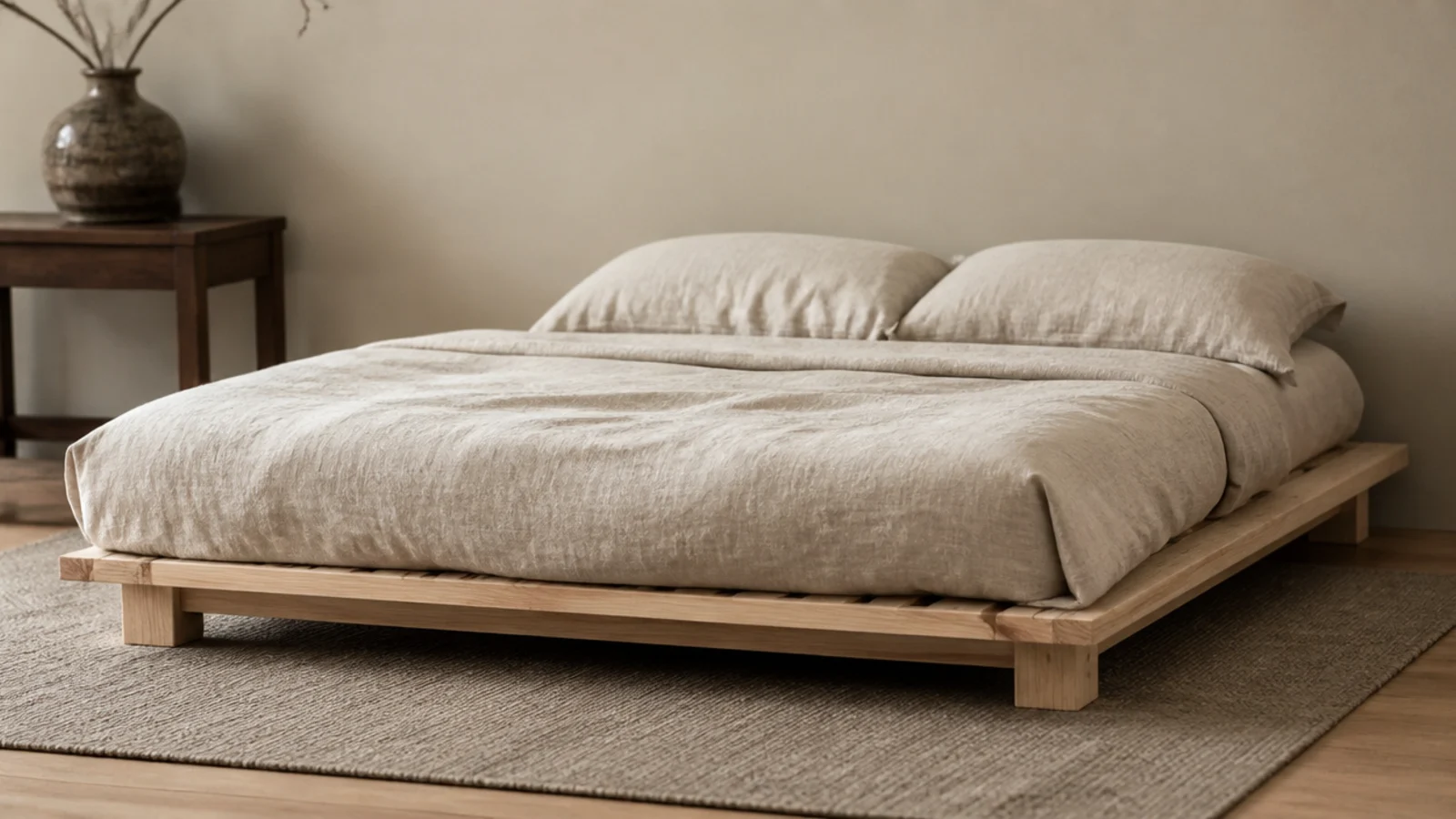
- 6.The low-profile twin platform bed
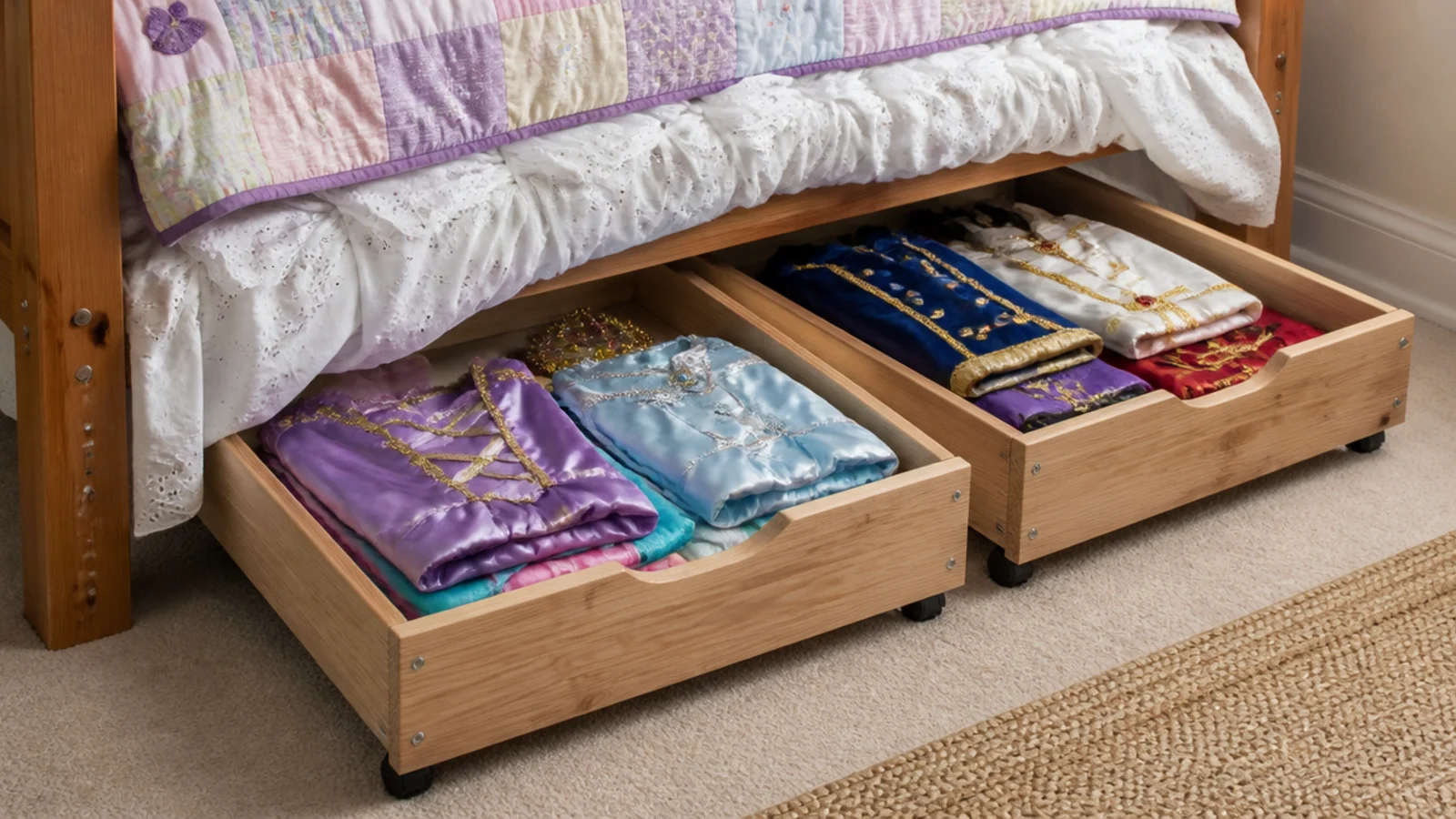
- 7.The twin with under-bed drawers
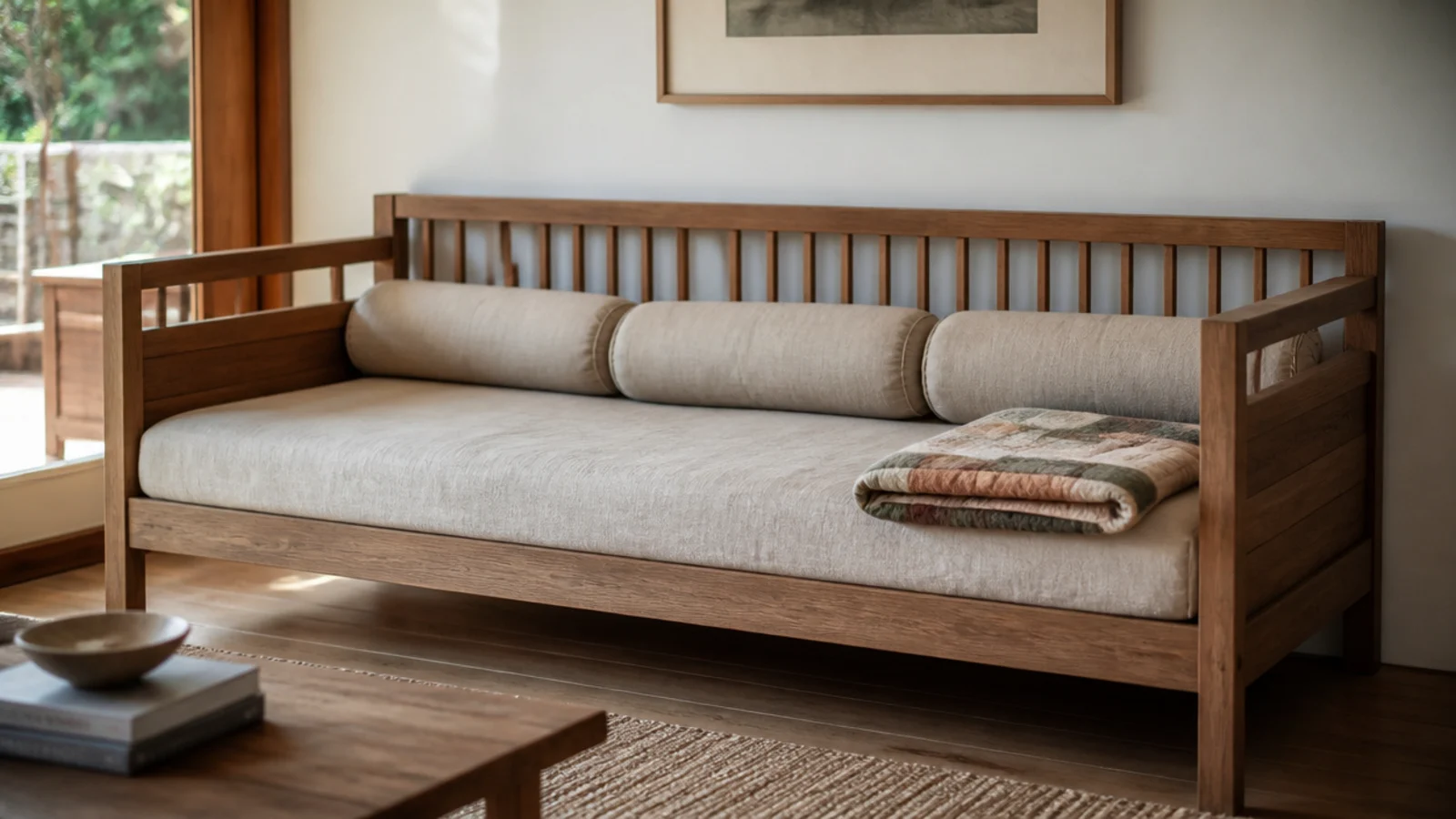
- 8.The daybed with a back and two ends
- 9.The cot bed that converts to a small single
- 10.The secondhand solid pine twin
- 11.What to Check Before You Buy
How I Chose These Bedroom Ideas For Toddler Girl Beds
Five things, weighted in this order.
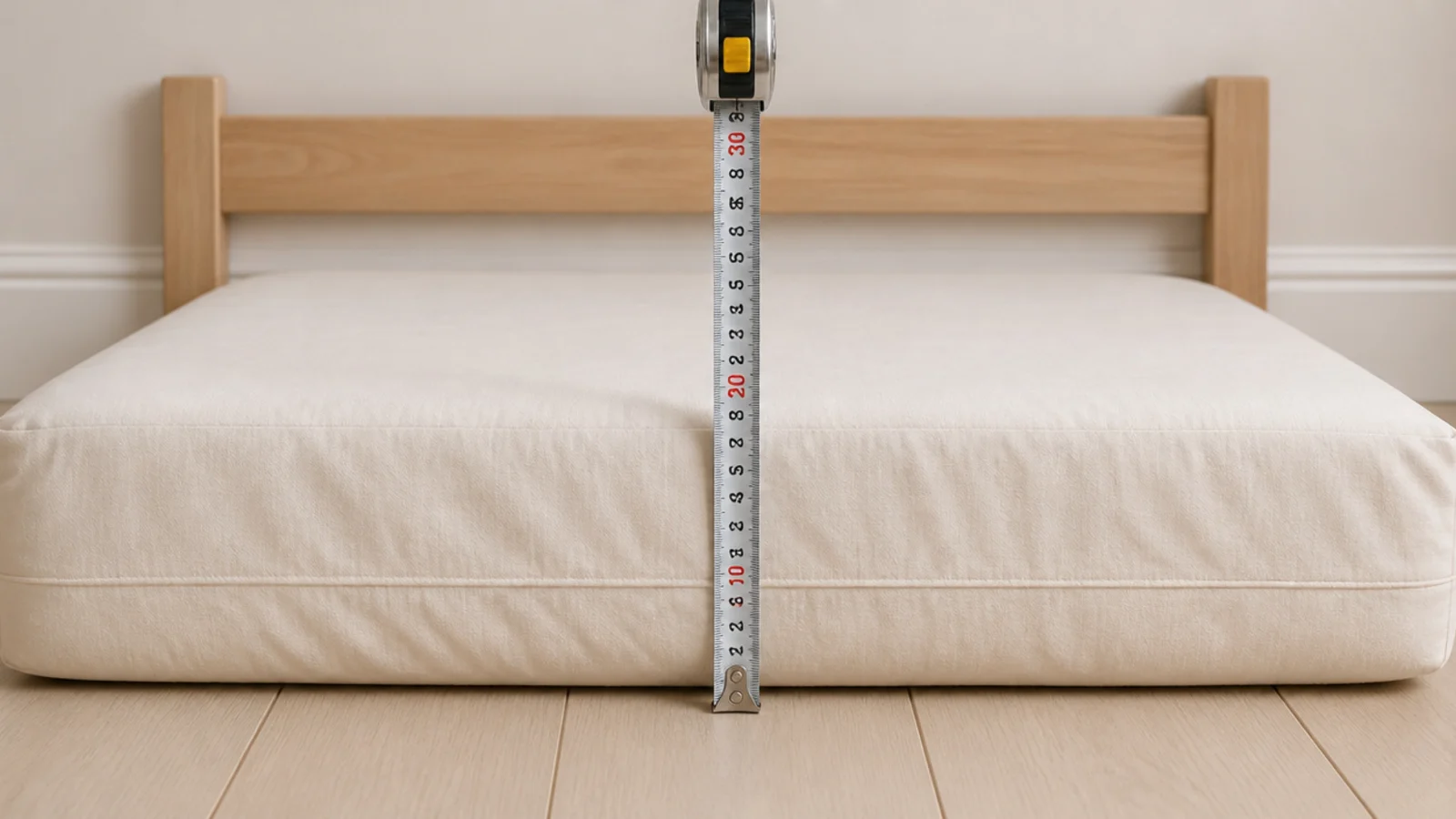
- Deck height. The distance from floor to mattress top decides whether she gets in and out unaided and how far a fall is. Between 8 and 20 inches she manages alone. Over 24 inches you are relying entirely on a rail, and over 30 you have built an adult bed for a three-year-old.
- Mattress size and lifespan. A cot mattress is 28 by 52 inches and outgrown around four. A twin is 38 by 75 and lasts into the teens. That single difference is usually the whole argument, because the frame is rarely the expensive part — the second purchase is.
- The rail question. If a rail is needed, it must rise at least 5 inches above the mattress with under 3.5 inches of gap between rail and mattress, and rails are not intended for children under two. Options that avoid the rail entirely score higher for that reason alone.
- Storage recovered. A bed 10 to 14 inches off the floor takes two shallow drawers, which in a small room can replace a chest and free 3 square feet. A bed at 6 inches takes nothing.
- What it costs to be wrong. How well it resells, how easily it converts, and whether an unwanted one can be given away. Shaped and character frames fail this badly; plain solid timber passes.
I did not weight styling, colour or how a frame photographs empty. Everything below is described by construction and type rather than a product name, because the same frame appears under a dozen labels and construction is what you are actually paying for. Price tiers: $ under $150 · $$ $150 to $400 · $$$ over $400.
The Full Comparison: 15 Toddler Bed Options
Every option here assumes the room itself has already been made safe — anchors, cordless blinds, 36 inches of clearance from the sill. The safety planning sequence runs through that first.
| Option | Mattress | Deck height | Price | Best for |
|---|---|---|---|---|
| Twin mattress on the floor | Twin 38x75 | 6–8 in | $ | The shortest possible fall |
| Convertible cot with toddler rail | Cot 28x52 | 10–14 in | $ | Keeping the same footprint |
| House-frame floor bed | Twin 38x75 | 6–10 in | $$ | A den and a bed at once |
| Low-profile twin platform | Twin 38x75 | 10–14 in | $$ | One purchase that lasts |
| Twin with under-bed drawers | Twin 38x75 | 12–16 in | $$ | Rooms with no dresser space |
| Daybed with back and ends | Twin 38x75 | 16–20 in | $$ | Guarding on three sides |
| Cot bed converting to single | Cot to 35x75 | 12–18 in | $$ | Buying once for seven years |
| Secondhand solid pine twin | Twin 38x75 | 14–20 in | $ | Solid timber on a budget |
| Standard toddler bed frame | Cot 28x52 | 8–12 in | $ | Very small rooms only |
| Moulded toddler bed with rails | Cot 28x52 | 8–10 in | $ | Built-in guards, no fitting |
| Divan base with drawers | Twin 38x75 | 18–24 in | $$ | Maximum storage volume |
| Upholstered twin with headboard | Twin 38x75 | 16–22 in | $$$ | A soft surface to lean on |
| Twin with a pull-out trundle | Twin 38x75 | 14–18 in | $$ | Cousins and sleepovers |
| Slatted twin with a low headboard | Twin 38x75 | 12–18 in | $$ | Plain frames that age well |
| Bunk or loft bed | Twin 38x75 | 50 in and up | $$ | Age six and over only |
Eight of those are the ones I keep recommending, and they are written up below.
1. The twin mattress straight on the floor
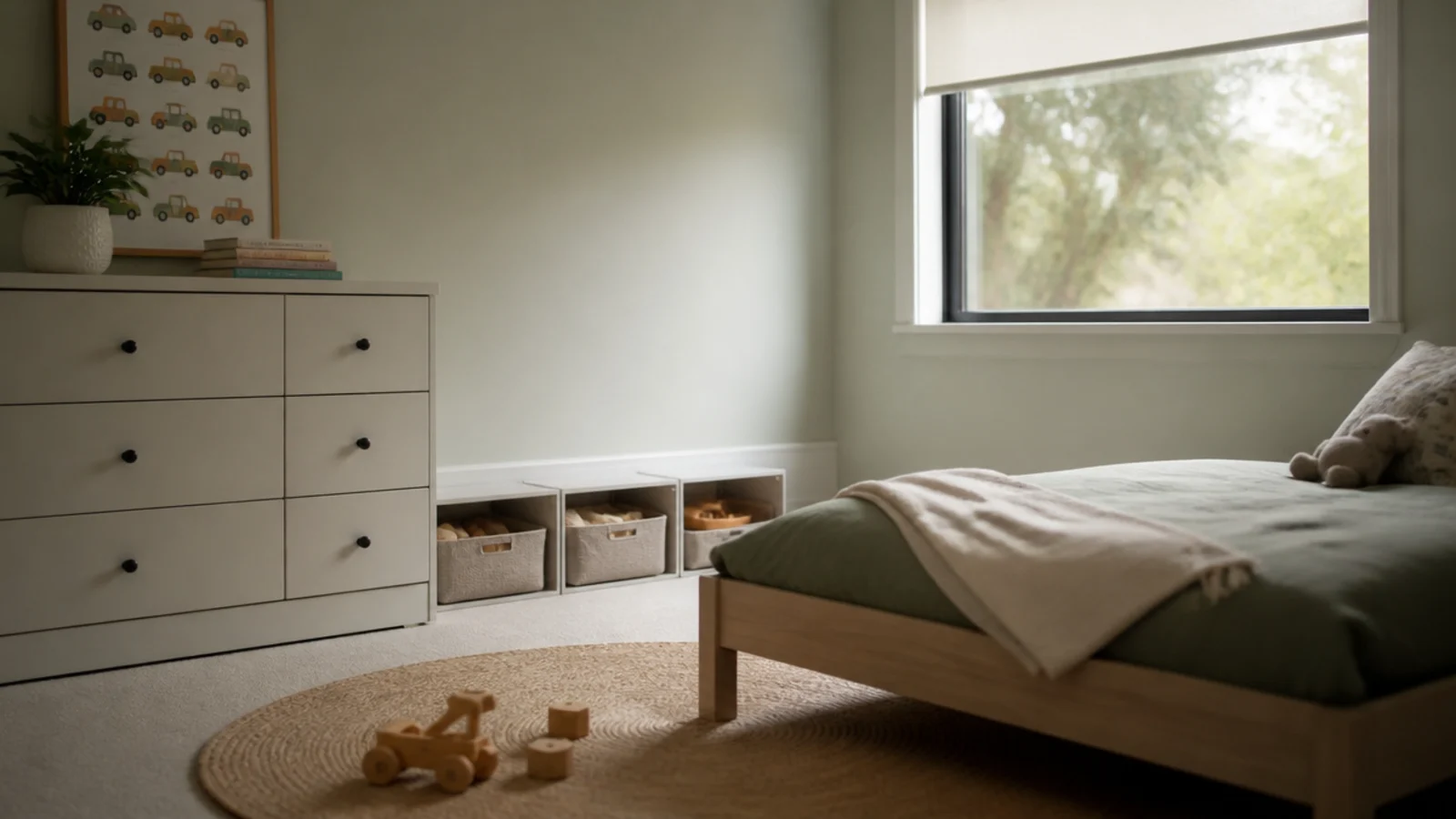
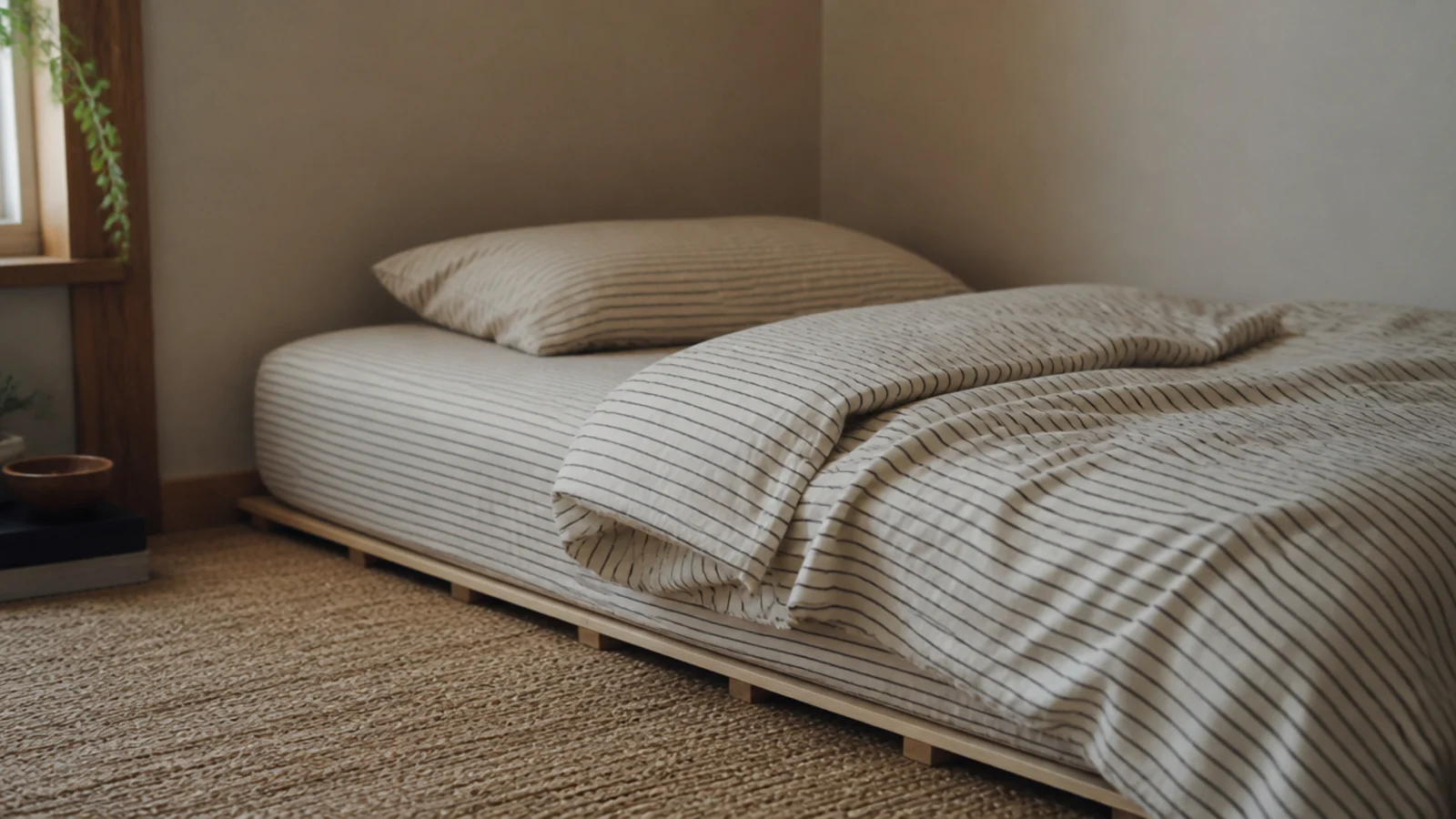
The option most families reach after one bad night with a rail. A twin mattress laid directly on the floor has a deck height of 6 to 8 inches, which removes the fall rather than guarding it, and it needs no hardware at all.
Two things to manage. Airflow, because a mattress on a solid floor cannot dry underneath — use a slatted base, a breathable pad or roll it back weekly, and check the underside monthly for damp. And the room itself, because she can get up freely, which means every anchor, cord and window fixing has to already be right. Cost is the mattress alone at $120 to $200 ($).
2. The convertible cot with a toddler rail
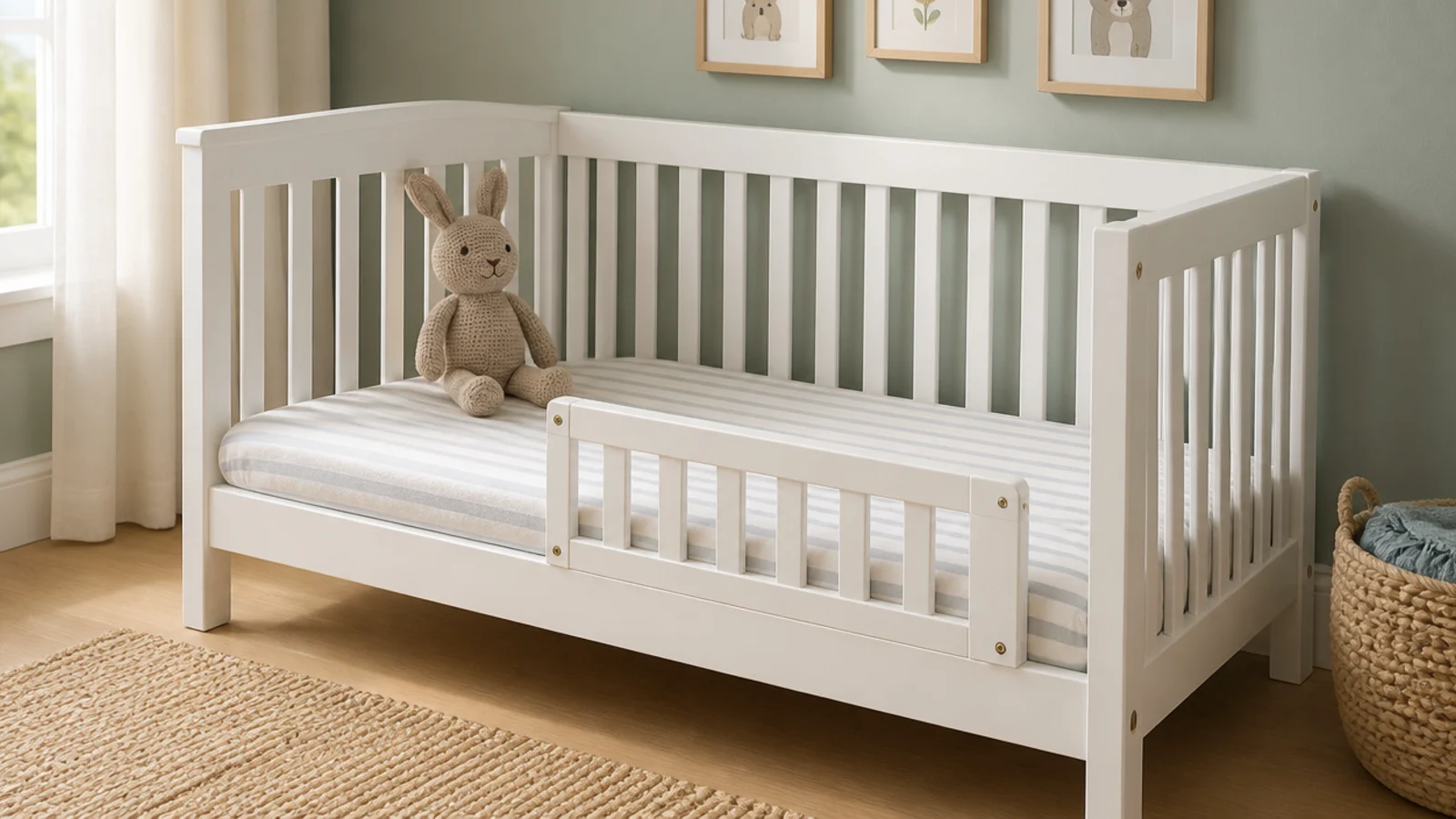
If the cot converts, this is almost always the cheapest correct answer for the first year after the transition. One side panel comes off, a short guard rail replaces it, and the same 28 by 52 inch mattress carries over. Kits run $20 to $50 ($).
Check the model number before assuming, because not every cot has a kit. Fit the rail so it rises at least 5 inches above the mattress and confirm the gap between rail and mattress stays under 3.5 inches. The limit is the mattress: at around four she will be too long for it, and you will be buying a twin anyway.
3. The low house-frame floor bed
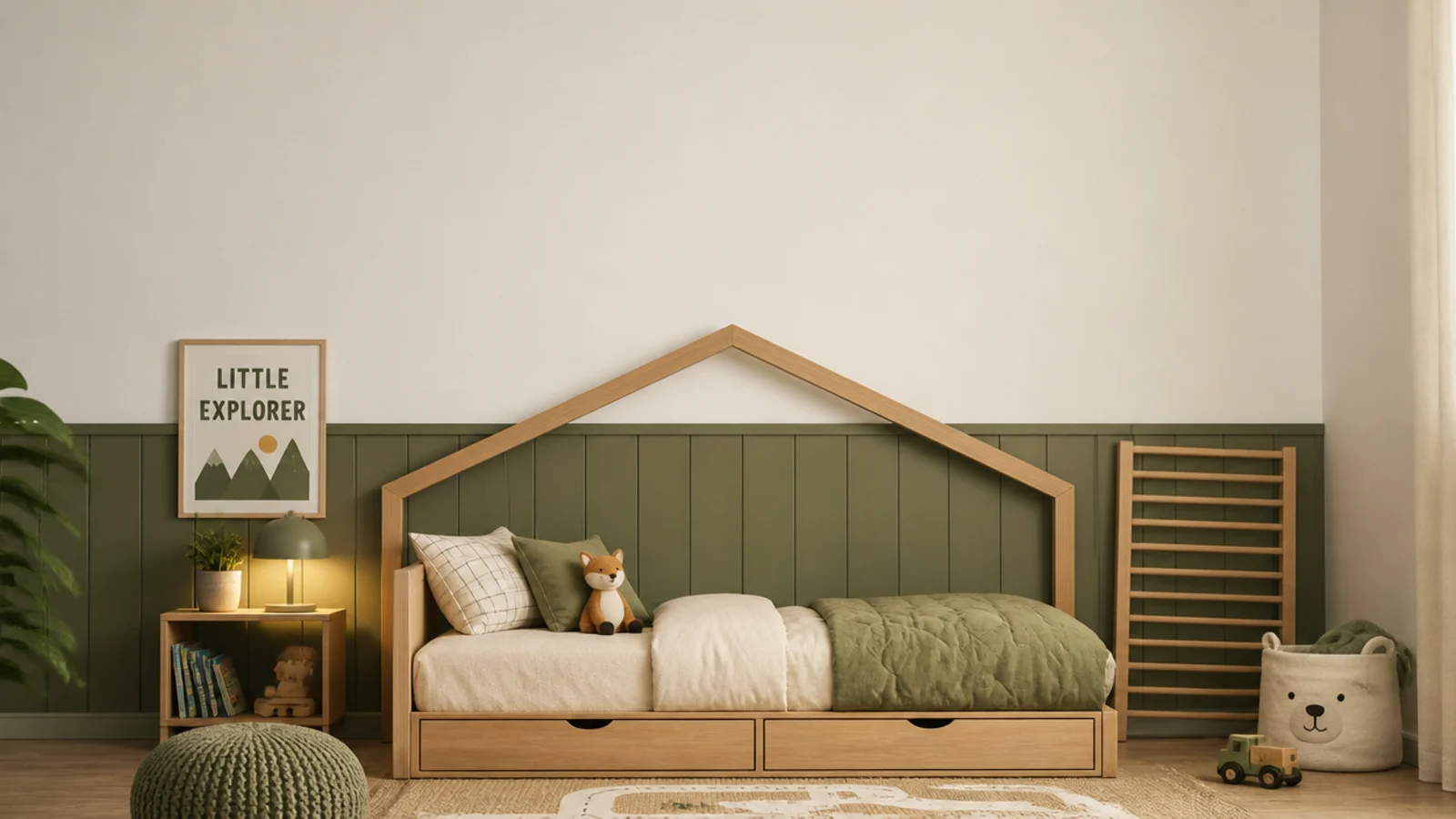
A pitched timber frame standing over a floor-level mattress. It gives the enclosure children like without the fall risk of a raised bed, and it doubles as somewhere to drape muslin from at the foot end rather than over the pillow.
Look for a frame that is genuinely independent of the mattress, with rounded rails and every joint bolted rather than pinned. Check the roof rails are thin enough not to be climbed and that the whole thing is stable against a sideways push, since a child will lean on it. Expect $150 to $300 ($$) for solid timber, and sand any rough edge before it goes in.
4. The low-profile twin platform bed
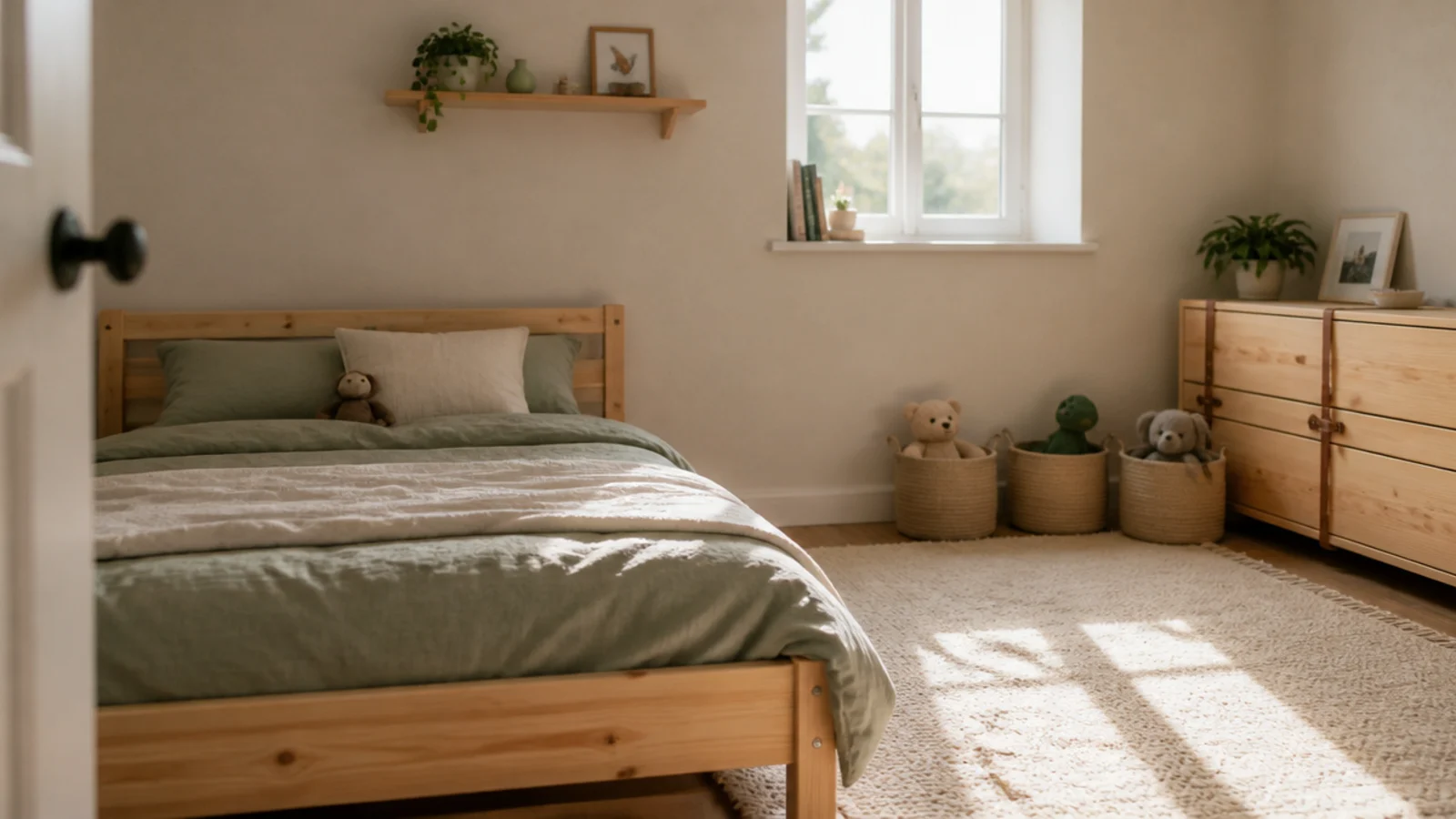
The best single purchase on this list for most rooms. Twin mattress, deck height of 10 to 14 inches, slatted base, no headboard needed. She can get in and out alone, a fall is short, and the frame will still be doing its job at twelve.
Look for solid timber slats no more than 3 inches apart, a centre rail with a leg if the frame is over 36 inches wide, and bolted joints rather than cam locks, which loosen over a few years of being bounced on. Around $150 to $350 ($$). Skip the matching headboard and paint an arch on the wall instead.
5. The twin with under-bed drawers
In a room under 90 square feet this is the option that removes a piece of furniture. Two shallow rolling drawers under a 12 to 16 inch deck hold a full toddler wardrobe and free the 3 square feet a chest would take.
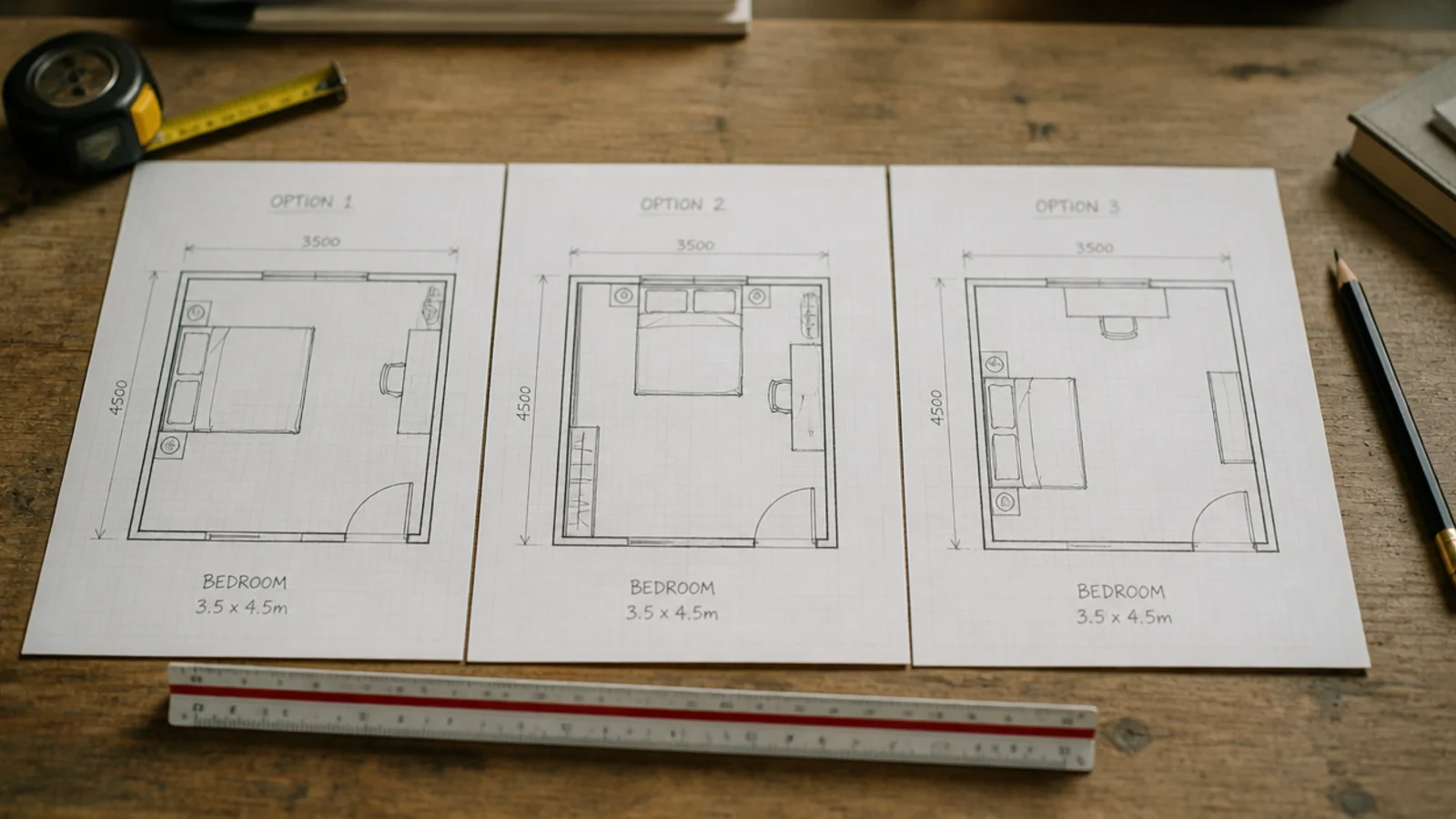
Keep drawers no deeper than 8 inches, or the bottom layer becomes an archive nobody revisits. Rubber castors run quietly on boards; plastic ones do not. Check the drawers pull clear without hitting the rug, and leave 24 inches of walkway on the drawer side. Budget $200 to $400 ($$), and the small room layouts show where it fits.
6. The daybed with a back and two ends
Three sides of guarding built into the frame, which means no portable rail and no gap to measure. Pushed long side to the wall it reads as seating during the day and recovers roughly 18 square feet compared with the same bed placed crossways.
The trade is deck height, usually 16 to 20 inches, which is fine from around three but high for a new walker. Check the back is slatted rather than solid so air moves, and that the ends are at least 8 inches above the mattress to be useful. Expect $200 to $400 ($$).
7. The cot bed that converts to a small single
Bought at birth, it runs cot to toddler bed to a small single at roughly 35 by 75 inches, which covers about seven years from one purchase. On paper it is the best value here.
In practice, check three things before you count on it. That the conversion parts are included rather than sold separately and still stocked. That the small single mattress size is one you can actually buy locally, since 35 inch widths are less common than 38. And that the timber is solid rather than veneered particle board, because a frame doing seven years of service needs joints that can be re-tightened. Around $250 to $450 ($$).
8. The secondhand solid pine twin
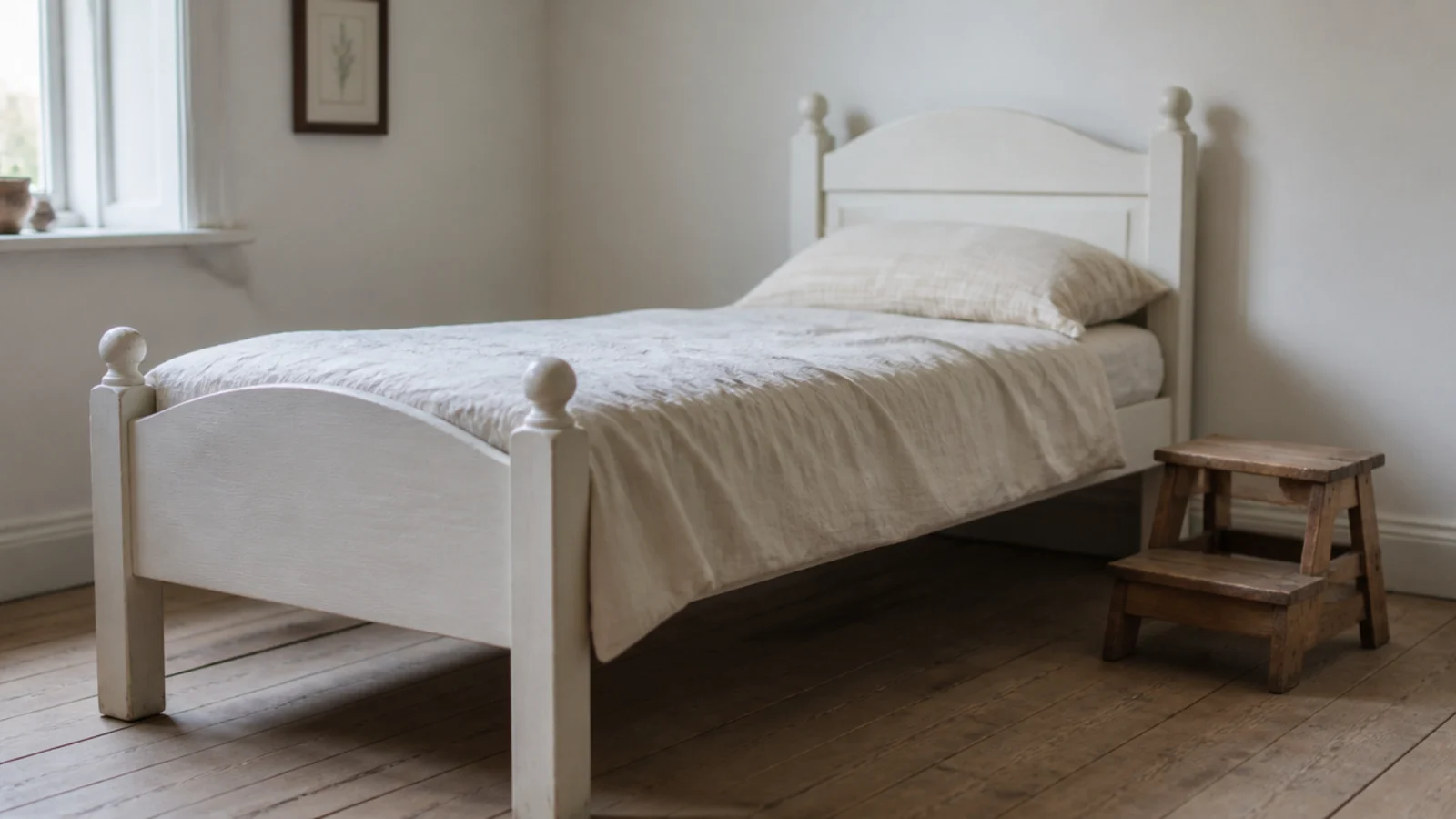
A solid pine single turns up constantly at $30 to $80 ($), and the frame is the part least likely to be worn out. Sand, prime and repaint in a water-based low-VOC eggshell and it looks new for about $25 in materials.
Check the joints are tight and the slats are unbroken, replace any slat that flexes more than about half an inch under hand pressure, and add a centre support leg if there is not one. Reject anything with a finish that might predate 1978 unless you are prepared to test for lead before sanding. If you want a soft surface to lean on, the DIY headboard guide covers padded panels fixed to the wall rather than the frame.
What to Check Before You Buy
Measure the deck height, not the frame height. Manufacturers quote the height of the headboard or the frame rail. What matters is the floor-to-mattress-top figure with your actual mattress on it, since a 10 inch mattress on a 12 inch deck gives you 22 inches, not 12.
Check the rail geometry if a rail is involved. At least 5 inches above the mattress surface, under 3.5 inches of gap between rail and mattress. Measure it with the bedding on, because a thick mattress protector and a fitted sheet change the number.
Confirm the mattress size you are committing to. Twin at 38 by 75 inches and cot at 28 by 52 are both easy to buy for. Small singles at 35 inches and continental sizes are not, and a frame that needs an unusual mattress will cost you every time you replace one.
Look at the slats. Solid timber, no more than 3 inches apart, with a centre rail and a supporting leg on anything over 36 inches wide. Flexible bent-ply slats look sophisticated and crack under a jumping four-year-old.
Press every joint. Bolted joints can be re-tightened for a decade; cam-lock fittings in particle board cannot, and they are the first thing to go loose on a bed that gets bounced on daily.
Plan the walkway before the frame arrives. Twenty-four inches of clear floor beside the bed, 36 inches where a door swings, and enough room for under-bed drawers to pull fully clear of the rug if you are choosing those.
Rule out bunks and lofts for now. No child under six should sleep on an upper bunk or a loft bed, so the vertical answer to a small room is not available yet. A lengthways twin with drawers recovers more usable floor in practice anyway.
Budget for the mattress separately, and buy it new. Frames thrift beautifully; mattresses do not, because damp in the core and dust mite load are impossible to inspect. Expect $120 to $200 for a decent twin, and add a waterproof protector at $20 to $40 while you are there.
Frequently asked questions
Should I buy a toddler bed or go straight to a twin?
Go straight to a twin unless the room is genuinely too small. A toddler bed takes the 28 by 52 inch cot mattress and is outgrown around four, so it is two purchases where one would do. A twin at 38 by 75 inches lasts into the teenage years for the same or less money.
How high off the floor should a toddler bed sit?
Aim for a mattress top between 8 and 20 inches. Under 20 inches a child can get in and out unaided and a fall is short. Above 24 inches you are relying on a rail, and above 30 inches you have effectively built an adult bed she will need help with every night.
What is the correct gap for a bed rail?
The rail should rise at least 5 inches above the mattress surface, and the gap between rail and mattress must stay under 3.5 inches. Anything wider is a space a torso can slip into. Portable rails are not recommended for children under two, whatever bed they are fitted to.
Are bunk beds an option for a toddler?
No. Standard guidance is that no child under six should sleep on an upper bunk or a loft bed, which rules them out for this age entirely. If you need the floor space, a lengthways twin with under-bed drawers recovers more usable room than a bunk does in practice.
Is a floor bed safe for a two-year-old?
Yes, and it is the option with the shortest possible fall. The two things to manage are airflow and the room itself. Use a slatted base or breathable pad so the mattress underside can dry, check monthly for damp, and make sure the whole room is toddler safe, since she can leave the bed freely.
Buy for the mattress size she will need at six rather than the frame that fits today, keep the deck between 8 and 20 inches, and the bed stops being a decision you have to make twice. Once the frame is settled, the main bedroom guide covers the storage and lighting that go around it, and for where the same plain-frame logic ends up a decade later, teen bedroom ideas is the next stop. Save the pin for the next furniture trip.
Want more like this? Browse all 15 toddler girl bedroom guides — they all use the same measurements and budget tiers.
Pin it for later
Save this to your Toddler Girl Bedroom board
Pin it now so it is waiting for you when the tape measure comes out — and so the next person hunting for this idea can find it too.
Save this pinKeep going
More ideas worth saving while you have the tape measure out.