
Headboard Ideas · UGC
15 Headboard Mistakes I Made and Fixed


The headboard mistakes in this article are all mine, made across five bedrooms and about eleven years of thinking I had finally worked it out.
The first one I ever built came off the wall at four in the morning in a rented flat. Not dramatically — a slow lean, then a slide, then a very heavy padded panel landing on my legs. I had hung 40 pounds of plywood and foam on the plastic plugs that came in the bracket packet, because the packet said they held 20 pounds each and there were four of them.
What the packet did not say is that a headboard is not a picture frame. Someone sits back against it every night, and that sideways push is a completely different load to something hanging quietly on a wall.
Here are fifteen headboard mistakes I actually made, roughly in the order I made them, with what I did to fix each one. Two of them cost me a security deposit.
In this guide16 sections — tap to openHide
- 1.Mistake 1: I measured the height from the floor
- 2.Mistake 2: I sized the panel to the bed frame
- 3.Mistake 3: I hung a padded panel on drywall anchors
- 4.Mistake 4: I used one inch of foam
- 5.Mistake 5: I chose a dry-clean-only fabric
- 6.Mistake 6: I fixed the panel to the wall and the frame
- 7.Mistake 7: I set the bottom edge flush with the mattress
- 8.Mistake 8: I hung the sconces at forty-eight inches
- 9.Mistake 9: I built a panel from bare board on an exterior wall
- 10.Mistake 10: I skipped the batting layer
- 11.Mistake 11: I hung art above a fifty-inch panel
- 12.Mistake 12: I leaned a full-length mirror behind the bed
- 13.Mistake 13: I used cheap tape on a painted arch
- 14.Mistake 14: I let three charging cables run down the wall
- 15.Mistake 15: I never checked the cleat again
- 16.Headboard Mistakes: What I'd Do Differently Now
Mistake 1: I measured the height from the floor
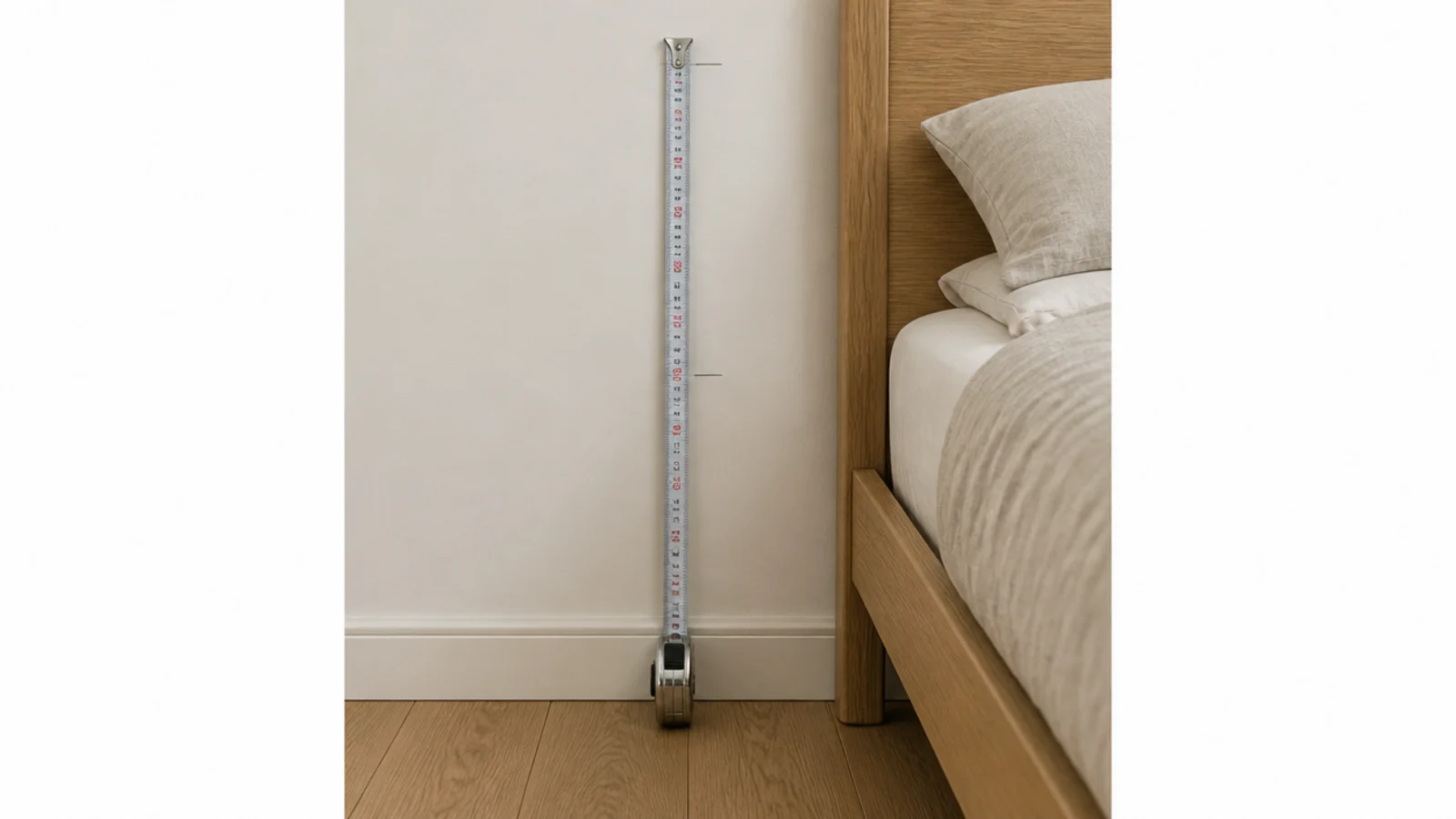
I marked 44 inches up from the floorboards, drilled, hung the panel, then made the bed. The mattress swallowed nearly a foot of it and what was meant to be a statement panel finished 14 inches above the pillows.
The problem is that bed frames are not standard. A low platform sits 10 inches off the floor; a divan with a thick mattress can put the sleeping surface at 28.
The fix: measure from the mattress top, always. Low profile finishes 24 to 28 inches above it. A statement panel runs 40 to 50. Re-hanging cost me twenty minutes and two filled holes.
Mistake 2: I sized the panel to the bed frame
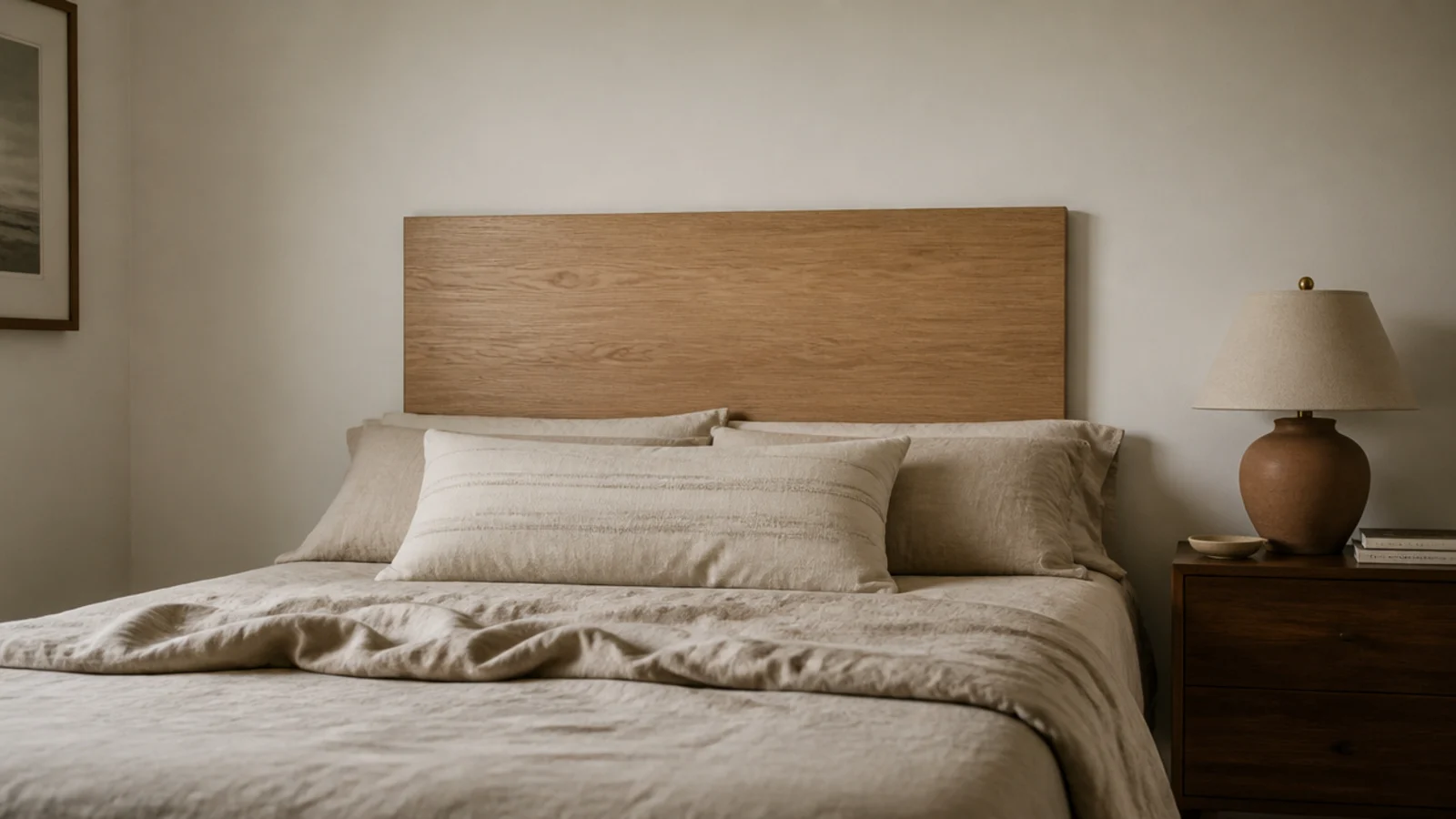
The frame measured 63 inches across the outside rails, so I cut the panel to 63 inches. Then I put a queen mattress on it, which is 60 inches, and the two edges did not line up with anything.
Worse, in the next apartment I inherited a frame that measured 56 inches and cut to match. Behind a 60-inch mattress it left a visible step at both corners that I saw every single time I walked in.
The fix: cut to the mattress. Twin 38 inches, full 54, queen 60, king 76 — or up to 4 inches wider on each side, never narrower.
Mistake 3: I hung a padded panel on drywall anchors
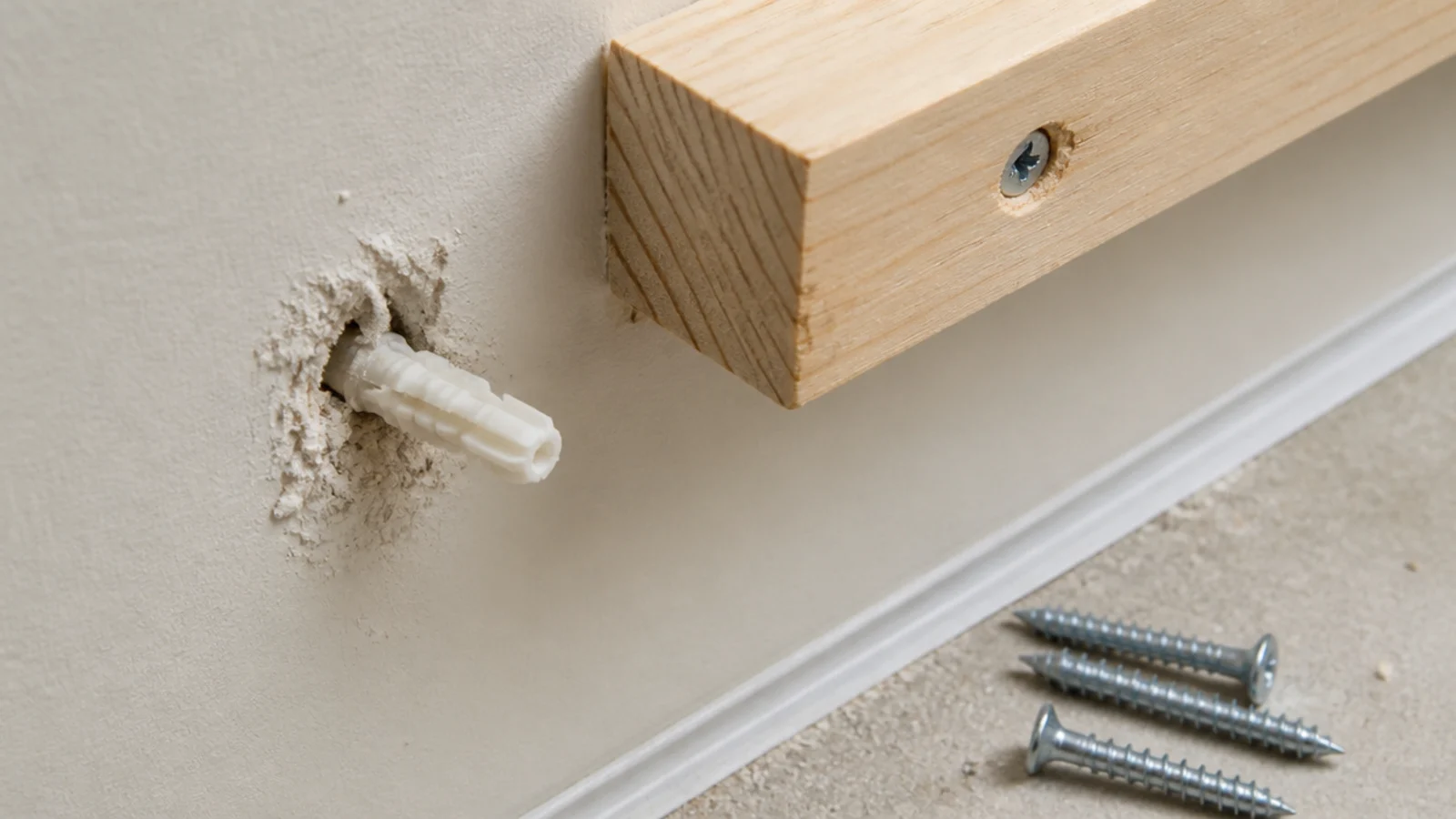
This is the one that came down at four in the morning. The anchors were rated well above the panel weight and they still failed, because static rating and repeated lateral load are different problems.
A headboard gets leaned on, pushed against, and knocked by pillows every night. That motion crushes the drywall around an anchor and the anchor creeps out over weeks.
The fix: a french cleat with at least two structural screws into studs. I now find the studs before I cut anything, and I let stud positions decide the panel width if it comes to it.
Mistake 4: I used one inch of foam
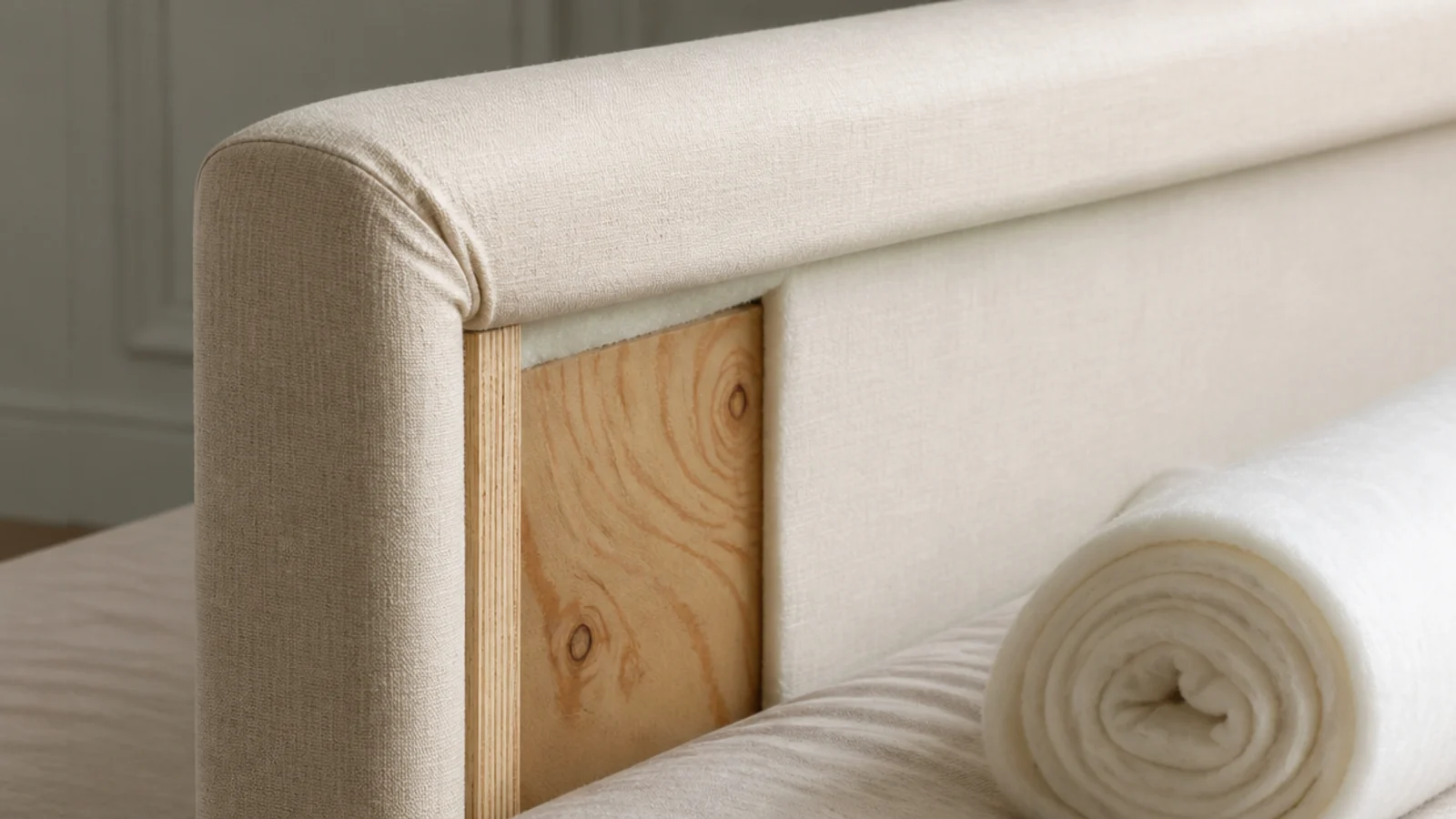
One-inch foam looked plenty on the roll. Compressed under a shoulder it is perhaps a quarter of an inch, which is the same as leaning on painted plywood with a sheet over it.
I noticed within a week and lived with it for a year, because rebuilding meant unpicking 200 staples.
The fix: 2 inches of high-density foam, not the soft upholstery foam sold in craft aisles. Density matters more than thickness — a dense 2-inch sheet holds its shape for years where a soft one flattens by spring. The extra foam added about $22 to the build.
Mistake 5: I chose a dry-clean-only fabric
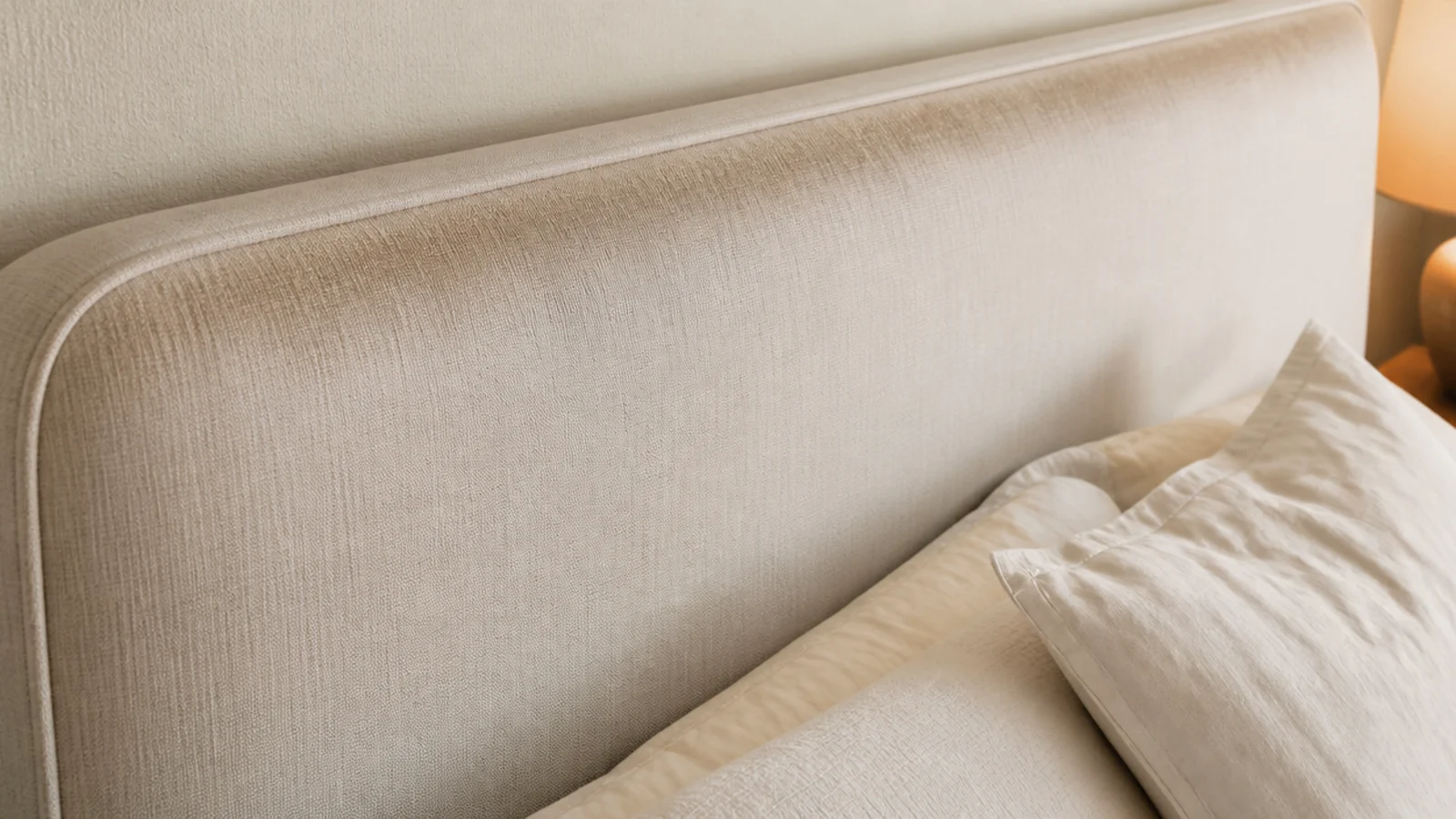
A beautiful heavy woven in a soft clay tone, which I chose from a swatch under shop lighting and never once considered washing.
Within four months there was a faint darker band along the top third where heads had rested. It was not dirt exactly — hair oil and moisturiser, invisible from three feet and obvious from one.
The fix: a washable linen or a performance weave, every time. On the panel I could not replace, I had a loose slipcover made for $110, which now goes in the machine twice a year. There is more on fabric in upholstered headboard ideas.
Mistake 6: I fixed the panel to the wall and the frame
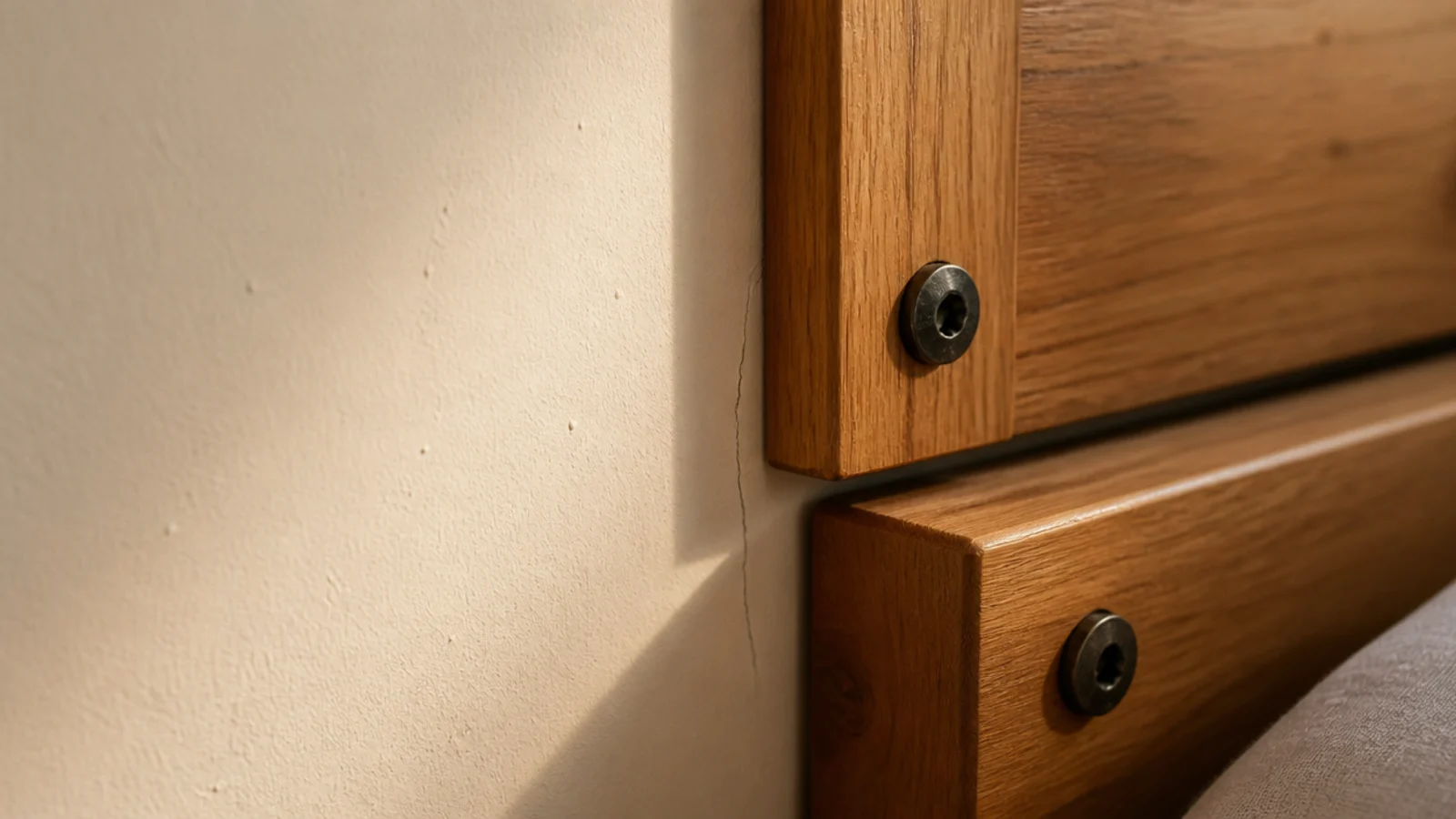
It felt like belt and braces: cleat it to the wall, and bolt the legs to the bed frame. Twice as secure, surely.
What actually happened is that the bed moved slightly, as beds do, and the panel could not. Within two months there was a fine crack in the paint beside the top of the cleat where the wall was absorbing every shift.
The fix: pick one. Either the panel hangs on the wall and stays clear of the frame entirely, or it bolts to the frame and never touches the wall. Both together puts the whole load into the plaster.
Mistake 7: I set the bottom edge flush with the mattress
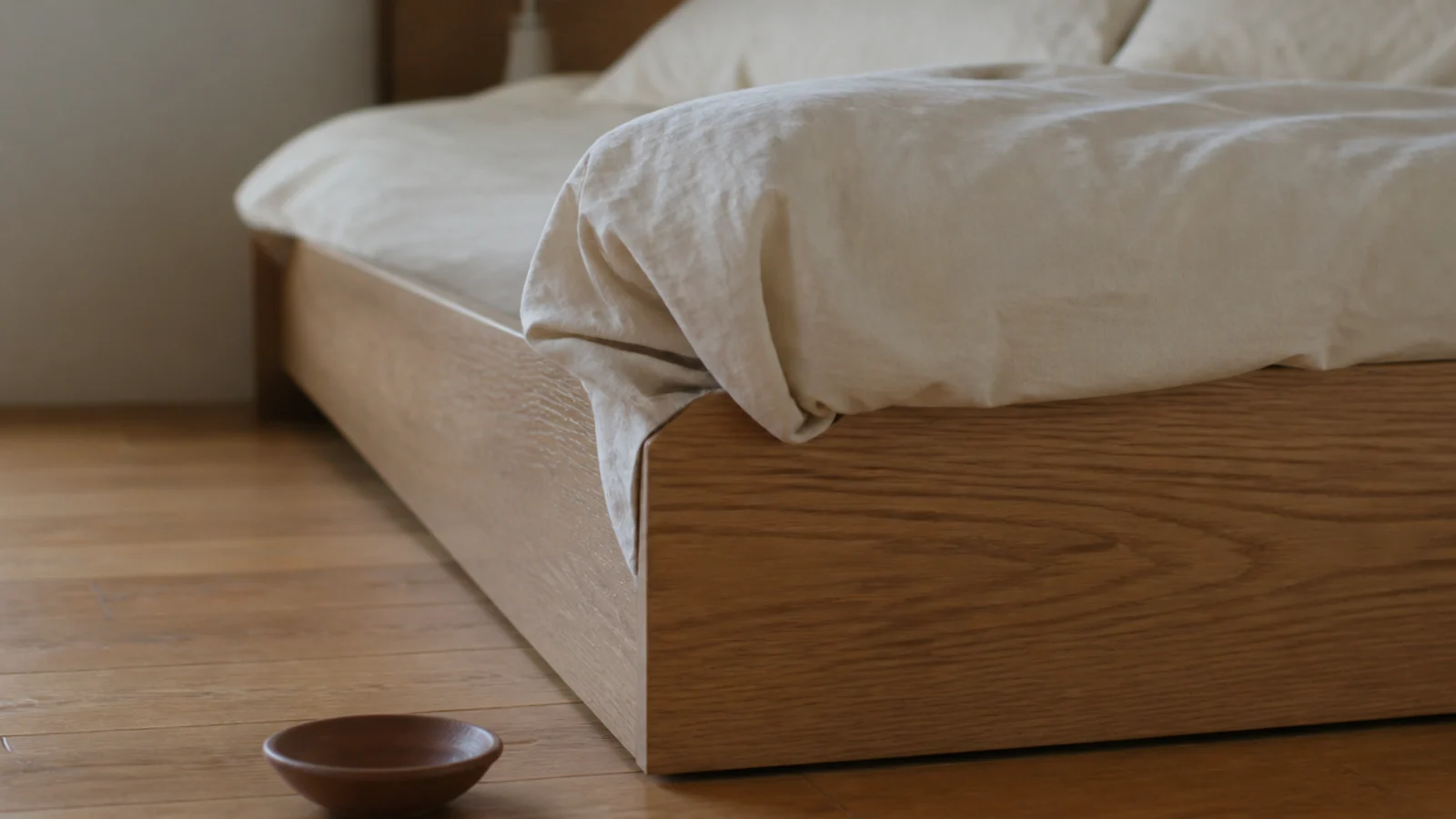
Flush looked neat on the drawing. In practice the duvet had nowhere to go, so every morning the top corner bunched up in front of the panel instead of tucking behind it.
I spent a year straightening bedding that was never going to sit right.
The fix: leave 2 to 4 inches between the mattress top and the panel bottom edge. The bedding disappears into that gap, the pillows stop sliding into the void behind, and the panel reads as floating rather than propped. It is a two-inch decision that changes how the bed looks made.
Mistake 8: I hung the sconces at forty-eight inches
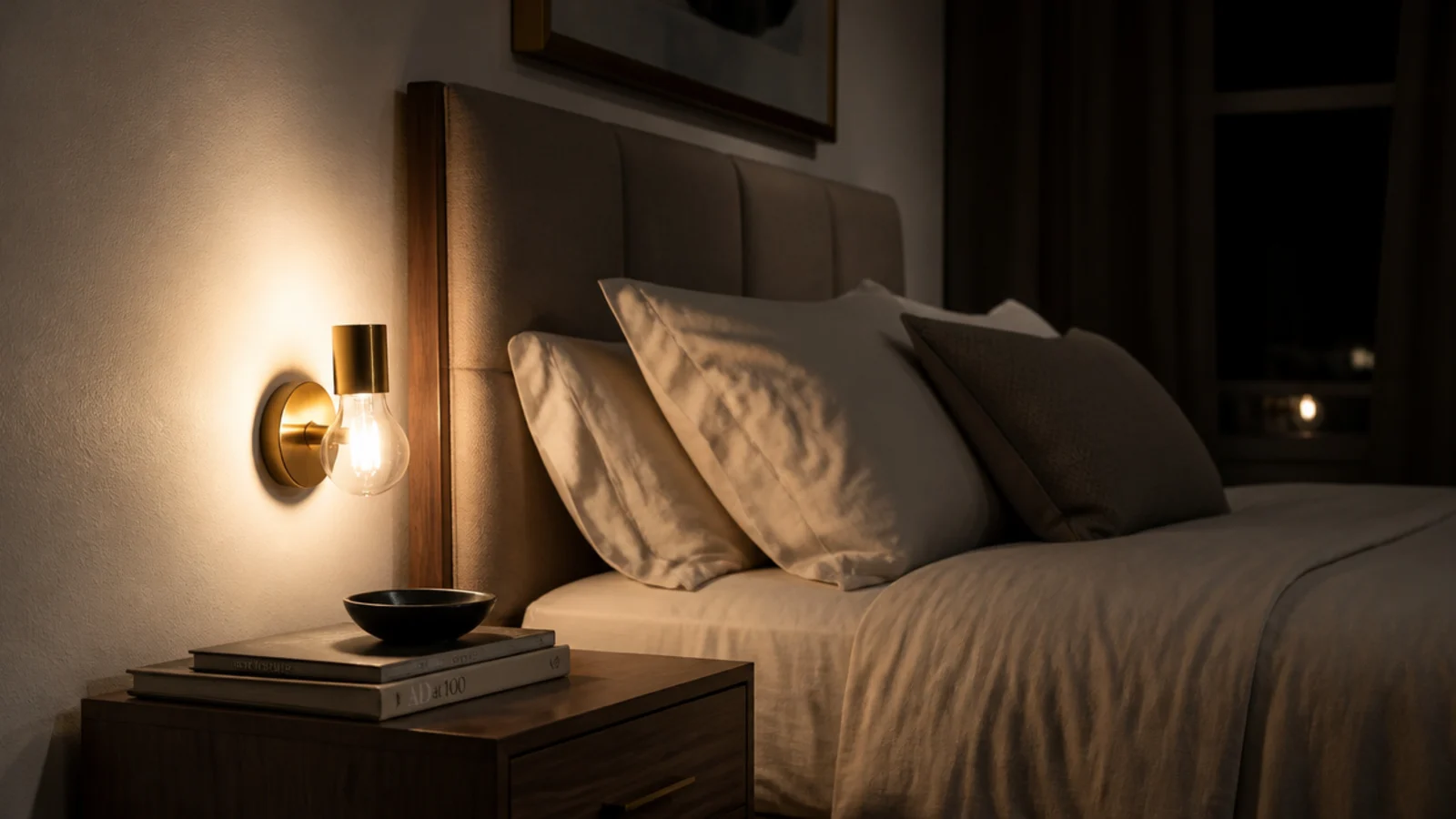
Forty-eight inches is a lovely height for a hallway sconce. Beside a bed it puts the bulb almost exactly at the eyeline of someone sitting up reading.
Both of us squinted for six months and blamed the bulbs.
The fix: 60 inches from the floor, 8 to 10 inches outside the mattress edge. That puts the source above a seated shoulder so the light lands on the page rather than in your face. Moving them cost four holes and a small tub of filler, and it was worth doing the same evening I realised.
Mistake 9: I built a panel from bare board on an exterior wall
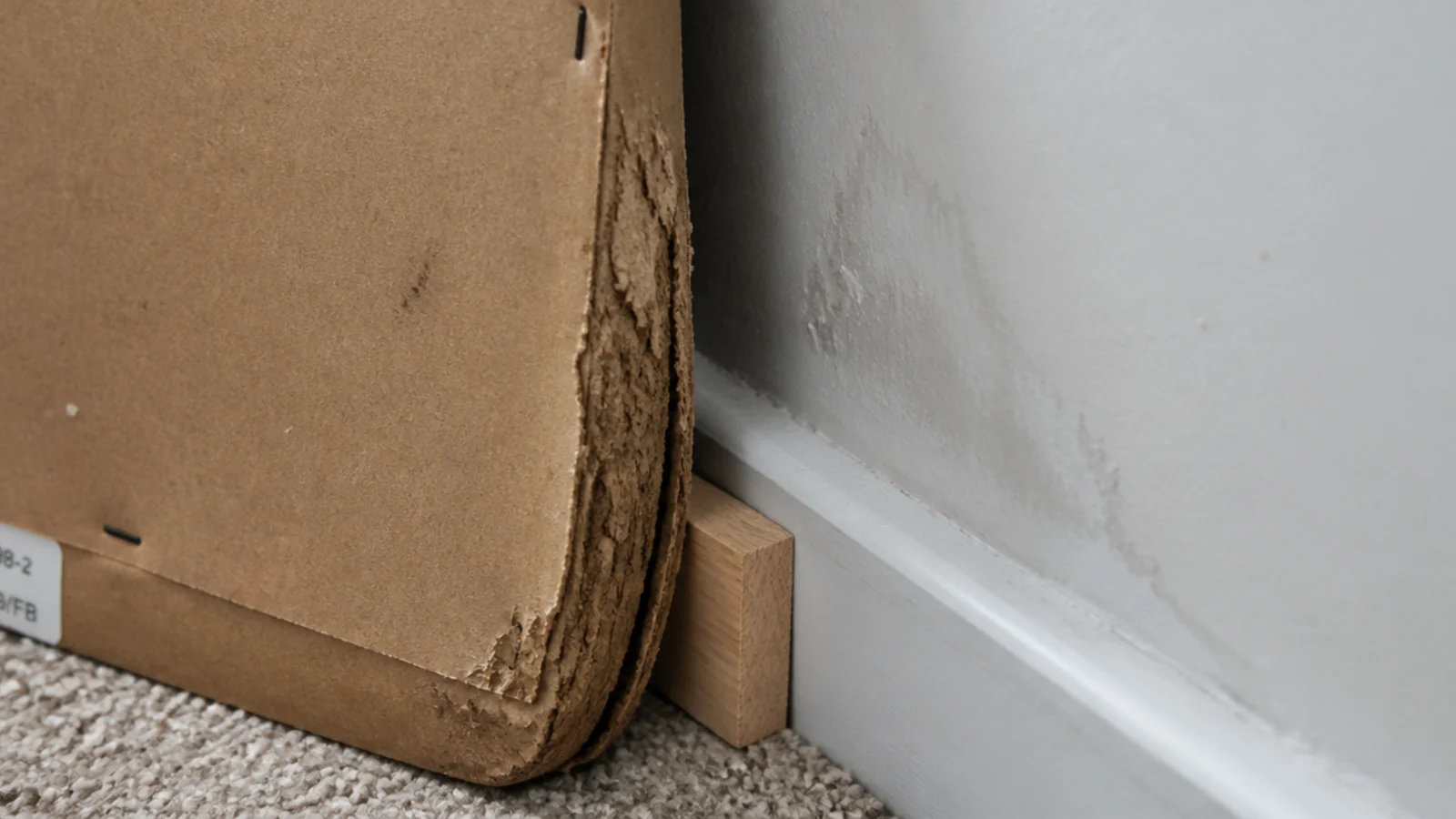
A north-facing exterior wall in an old building, a fully backed panel pressed flat against it, and no airflow between the two.
By February the bottom back corner of the unsealed board had swollen and lifted, and the wall behind it was cool and damp to the touch.
The fix: seal every face and edge of any board that meets a wall, and hold the panel a half inch off an exterior wall with spacer blocks on the cleat. Air needs somewhere to move. On solid wood the same rule applies, though wood tolerates it far better than sheet board.
Mistake 10: I skipped the batting layer
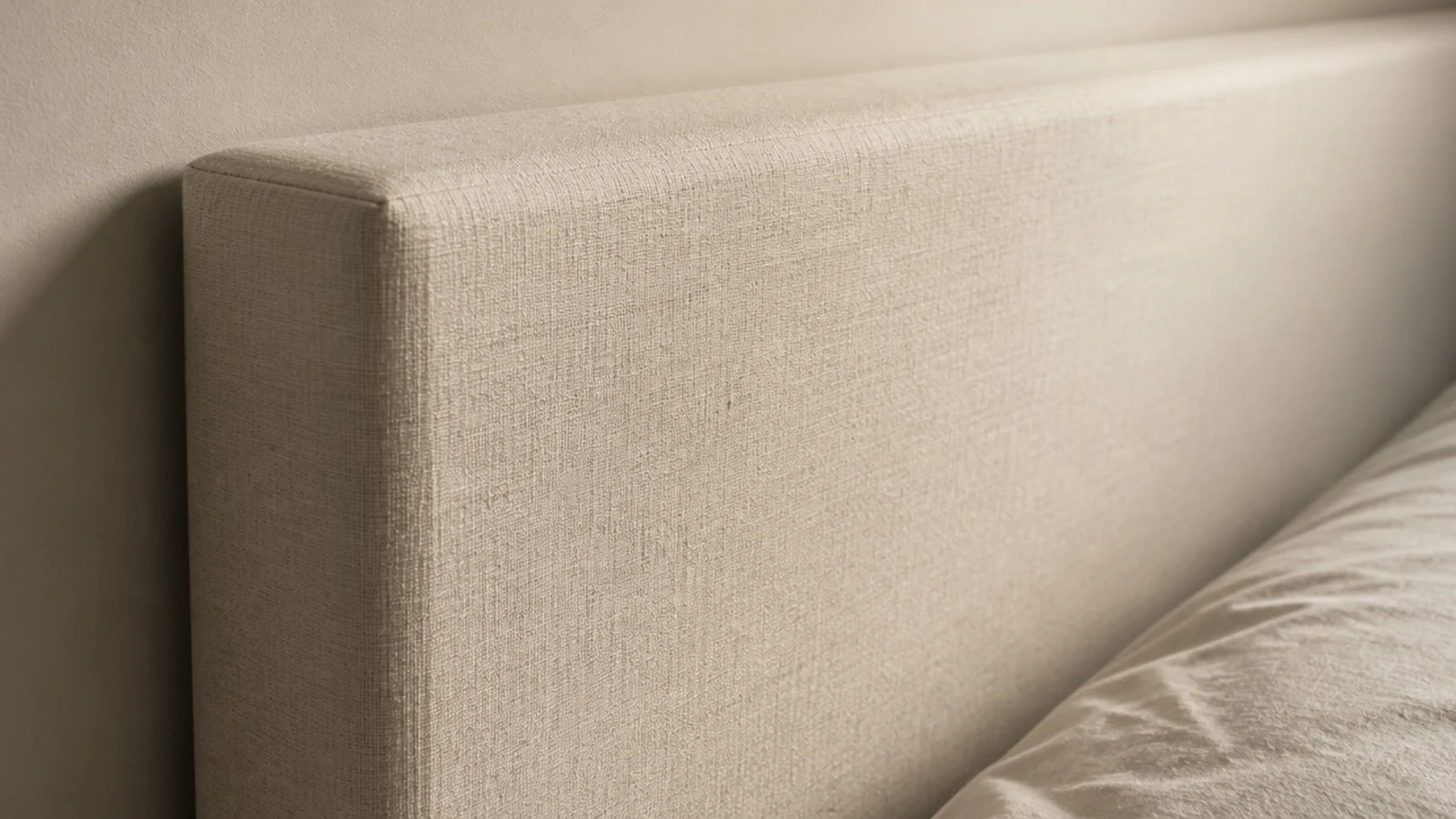
Foam straight under fabric seemed like a step I could skip to save $9 and twenty minutes.
The result is a panel where you can read the exact rectangular outline of the foam block through the linen, especially in raking afternoon light. It looks cheap in a way that is hard to name and impossible to unsee.
The fix: one layer of polyester batting wrapped over the foam and around the edges before the fabric goes on. It rounds the corners, softens the outline and takes ten minutes. It is the highest-value step in the whole build.
Mistake 11: I hung art above a fifty-inch panel
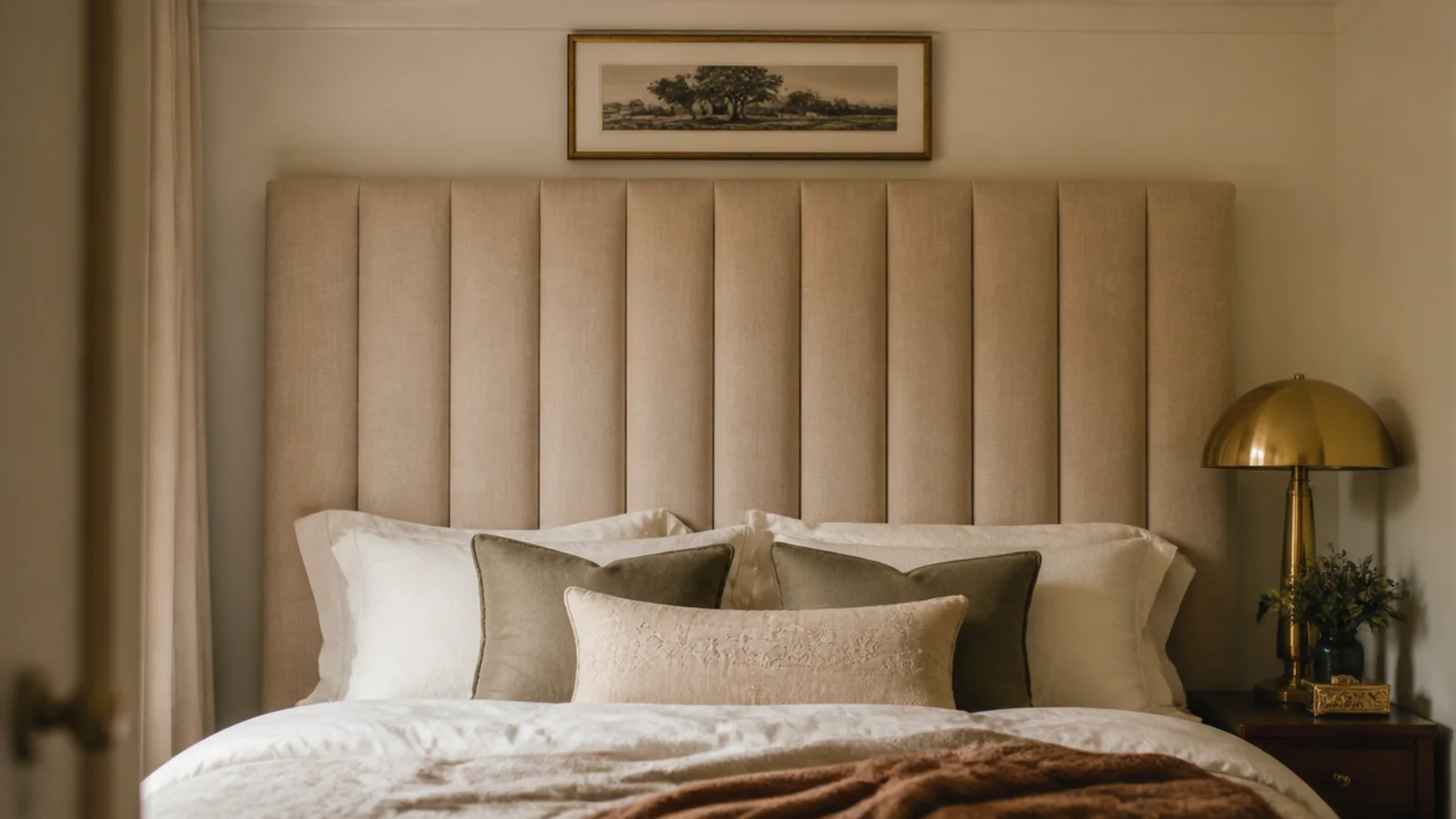
I built the statement panel I wanted, then hung a favourite print in the 20 inches of wall left above it, because the wall looked bare.
It did not look bare. It looked finished, and I crowded it. The print sat almost at the ceiling line and the two elements competed for the same job.
The fix: one focal point per bed wall. With a 40 to 50 inch panel, the panel is it. Save art for a low 24 to 28 inch headboard, where there is genuinely 18 inches or more of clear wall to work with.
Mistake 12: I leaned a full-length mirror behind the bed
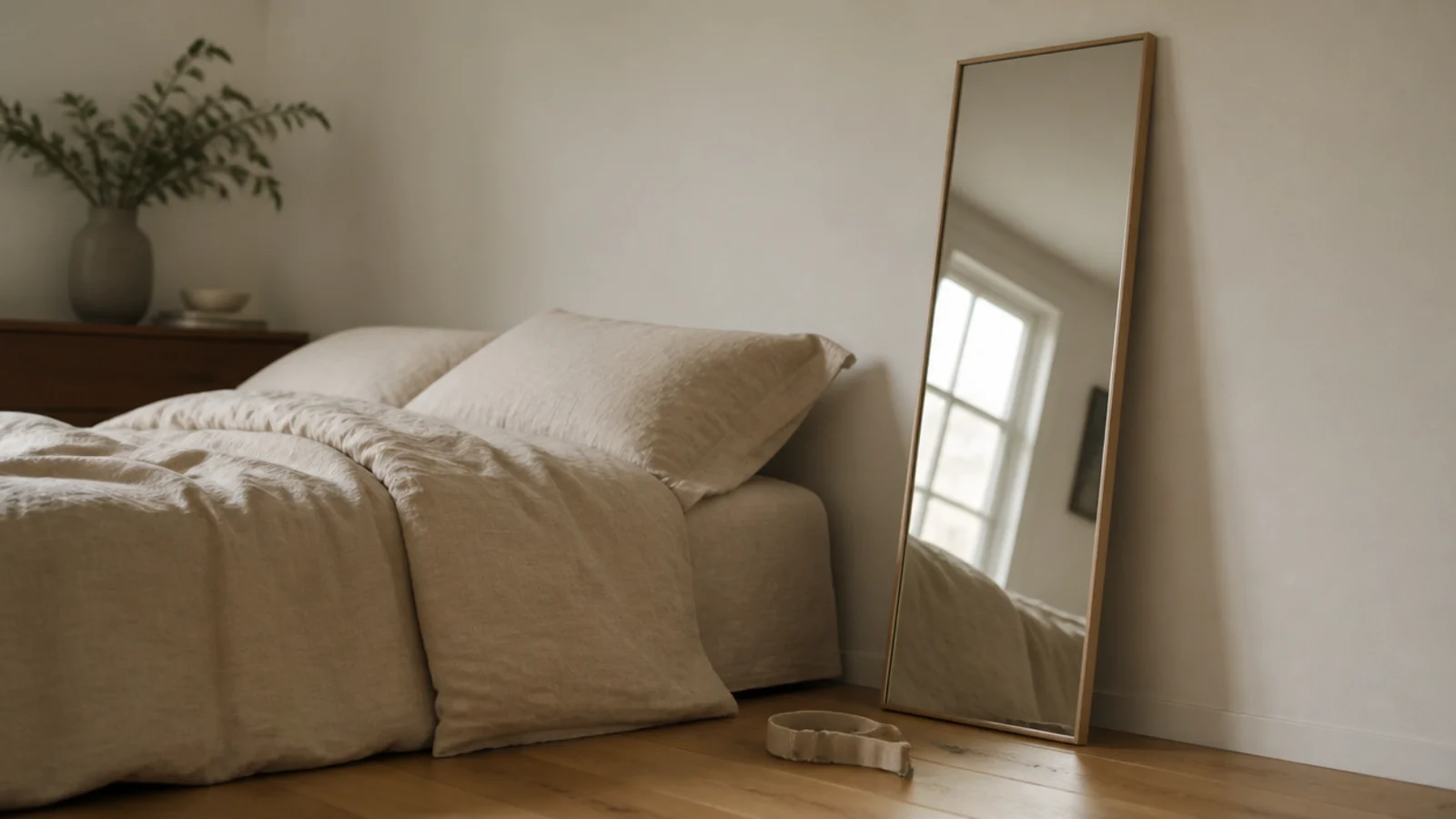
It photographed beautifully. A tall mirror leaning against the wall behind a low bed, catching the window light, doing the job of a headboard.
Then a cat jumped onto the bed at speed one night and I stopped sleeping properly for a week.
The fix: any leaning object behind a bed gets strapped to the wall — one D-ring, one screw, one safety strap. If drilling is genuinely impossible, put the mirror somewhere else entirely. There is no version of this where the single small hole is the bigger problem.
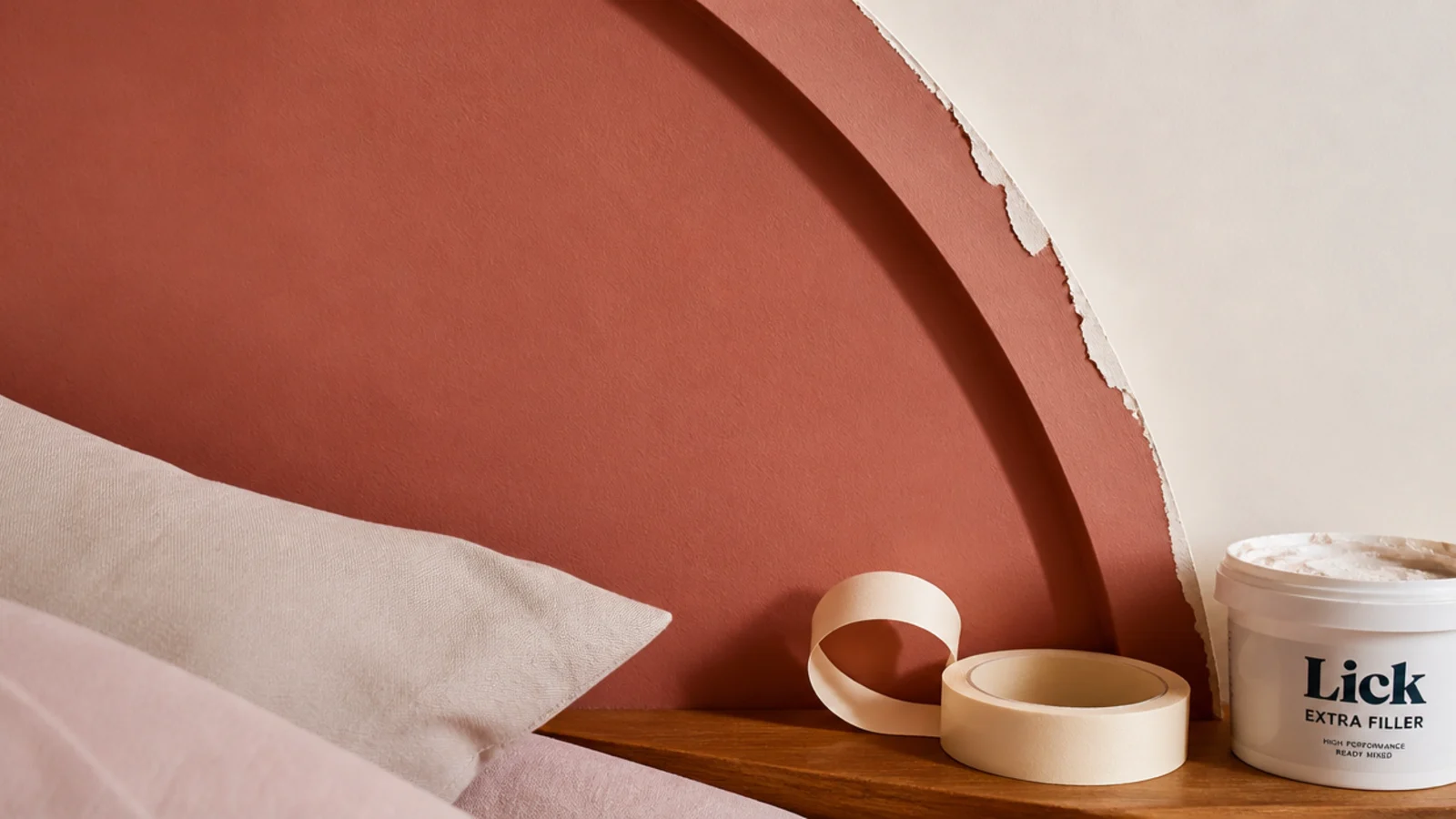
Mistake 13: I used cheap tape on a painted arch
The painted arch is the cheapest headboard idea there is, and I ruined my first one at the final step by masking with the cheapest tape in the shop and leaving it on overnight.
Pulling it off took a ragged strip of the cream wall paint with it, and the repair was more work than the arch.
The fix: low-tack painter tape, burnished down with a card, and pulled while the paint is still slightly tacky at about 45 degrees. Two coats of clay-colored sample pot, one careful hour, and the arch costs under $20.
Mistake 14: I let three charging cables run down the wall
A cane panel, good linen, a warm bulb, a clay vessel on the nightstand — and three white cables hanging down the wall to a floor outlet, cancelling all of it.
I looked at that wall for two years and never once identified the cables as the problem.
The fix: an adhesive cable channel painted the wall color, run down behind the nightstand. It costs about $12 and takes twenty minutes. If you are building the panel, route a shallow channel in the back before you upholster and the problem never exists.

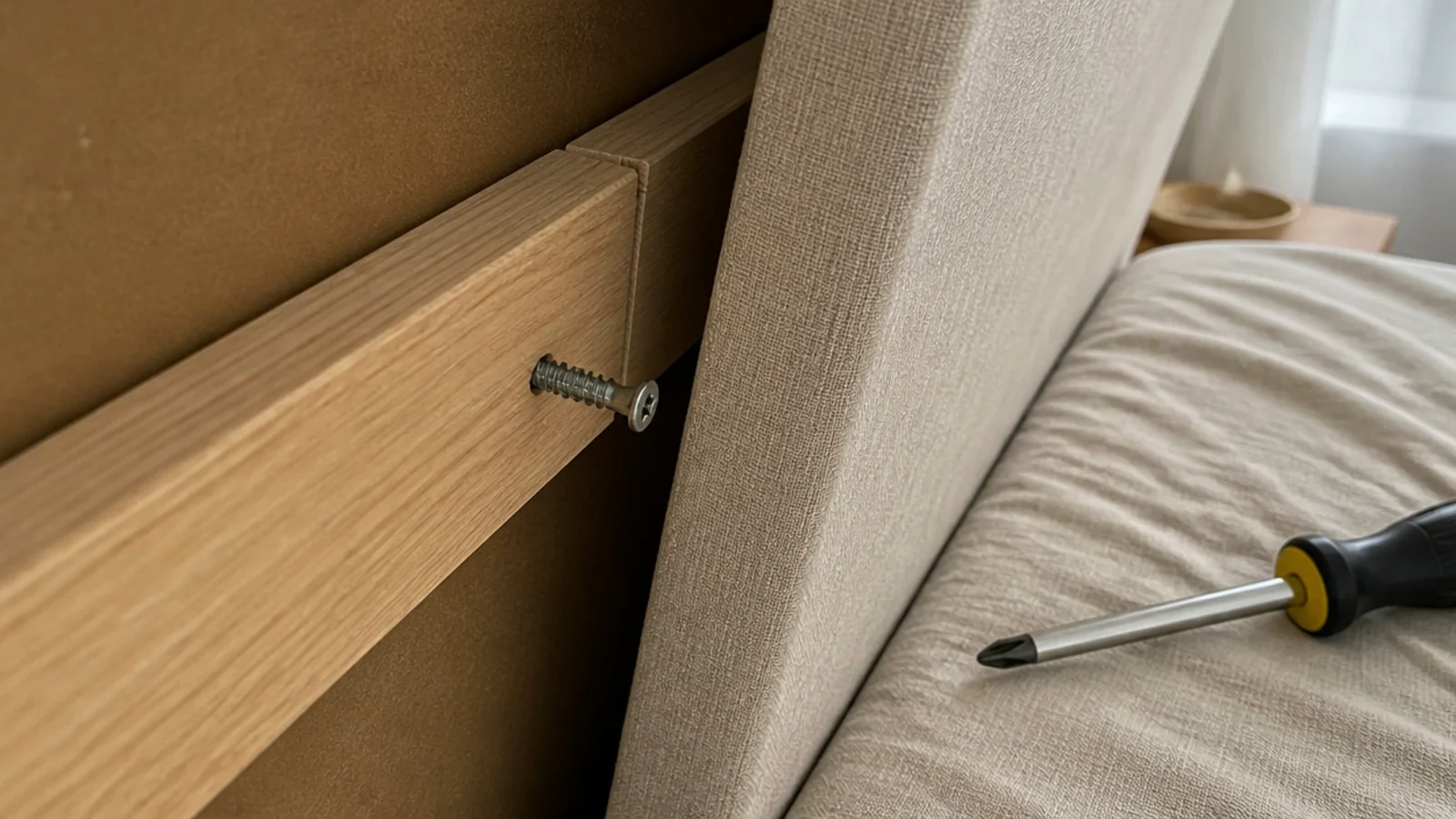
Mistake 15: I never checked the cleat again
I hung a heavy oak panel properly — studs, structural screws, level — and then did not look at it for four years.
When I finally moved the bed to paint, one screw had backed most of the way out of the cleat and the panel was carrying its load on three fixings instead of four.
The fix: push both top corners firmly once a year and after any house move, and watch for movement or a hairline crack in the paint beside the cleat. Tighten anything that has crept. Two minutes, annually, on the most-leaned-on object in the room.
Headboard Mistakes: What I'd Do Differently Now
If I could hand my younger self a single page, it would be four lines long.
Measure from the mattress, not the floor. Cut to the mattress width, not the frame. Cleat into studs, because a headboard takes lateral load every night and nothing else in the room does. And leave a 2 to 4 inch gap at the bottom so the bedding has somewhere to tuck.
Everything after that is comfort and finish: 2 inches of high-density foam, a layer of batting over it, and a fabric you can actually put in a washing machine. I have never regretted spending more on the foam and less on the fabric, and I have regretted the opposite twice.
The thing I genuinely got wrong for years, though, is subtler than any of that. I kept treating the headboard as the last decision in a bedroom, so it had to fit around a frame I already owned, sconces I had already hung and a wall I had already painted. Now it is the first thing I plan, because it sets the height of everything else on that wall.
The panel I have now cost less than the one that fell on me. It is the fourth one I have built, and the first one I have not wanted to change.

Frequently asked questions
Why does my headboard keep pulling away from the wall?
Almost always the anchors rather than the panel. A headboard absorbs lateral load every night as people sit back against it, and that repeated push walks plastic plugs and light drywall anchors loose over a few months. Reposition the cleat so at least two structural screws land in studs. If the panel is also bolted to the bed frame, remove one of the two fixings.
What height is a headboard supposed to be?
Measure from the mattress top, not the floor. Low profile panels finish 24 to 28 inches above the mattress; statement panels run 40 to 50 inches. Bed frame heights vary by as much as six inches between a platform and a divan, so a height taken from the floor almost guarantees a panel that sits wrong once the bed is made.
How much foam does an upholstered headboard need?
Two inches of high-density foam, plus a layer of batting over it. One inch compresses to nothing against the plywood back within weeks and feels like leaning on a board. The batting is what stops the hard rectangular outline of the foam telegraphing through the fabric, and it costs a few dollars for a whole panel.
Can I fix a headboard panel that has gone grubby along the top?
Sometimes. Spot clean with a fabric-safe upholstery cleaner and a soft brush, working the whole top band rather than the mark alone so you do not create a clean patch. If the fabric is dry-clean only, the honest answer is a loose slipcover over the top. Next build, choose a washable linen or a performance weave.
How often should I check a wall-mounted headboard?
Once a year, and after any house move. Push the panel firmly at each top corner and watch the wall beside the cleat for movement or a hairline crack in the paint. Tighten the cleat screws a quarter turn if they have backed out. The whole check takes two minutes and it is the one I skipped for four years.
If you are about to hang one, spend your attention on the mattress measurement and the stud positions — those are the two decisions you cannot style your way out of afterwards. The step-by-step build covers the sequence properly, headboard alternatives has the versions that need no wall fixings at all, and for the styling around it, candle decor for the bedroom covers the nightstand. Save the pin so the numbers are with you at the hardware store.
Want more like this? Browse all 15 headboard ideas guides — they all use the same measurements and budget tiers.

Pin it for later
Save this to your Headboard Ideas board
Pin it now so it is waiting for you when the tape measure comes out — and so the next person hunting for this idea can find it too.
Save this pinKeep going
More ideas worth saving while you have the tape measure out.