Study Desk Decor · Listicle
30 Creative Study Desk Decor Ideas For Small Rooms

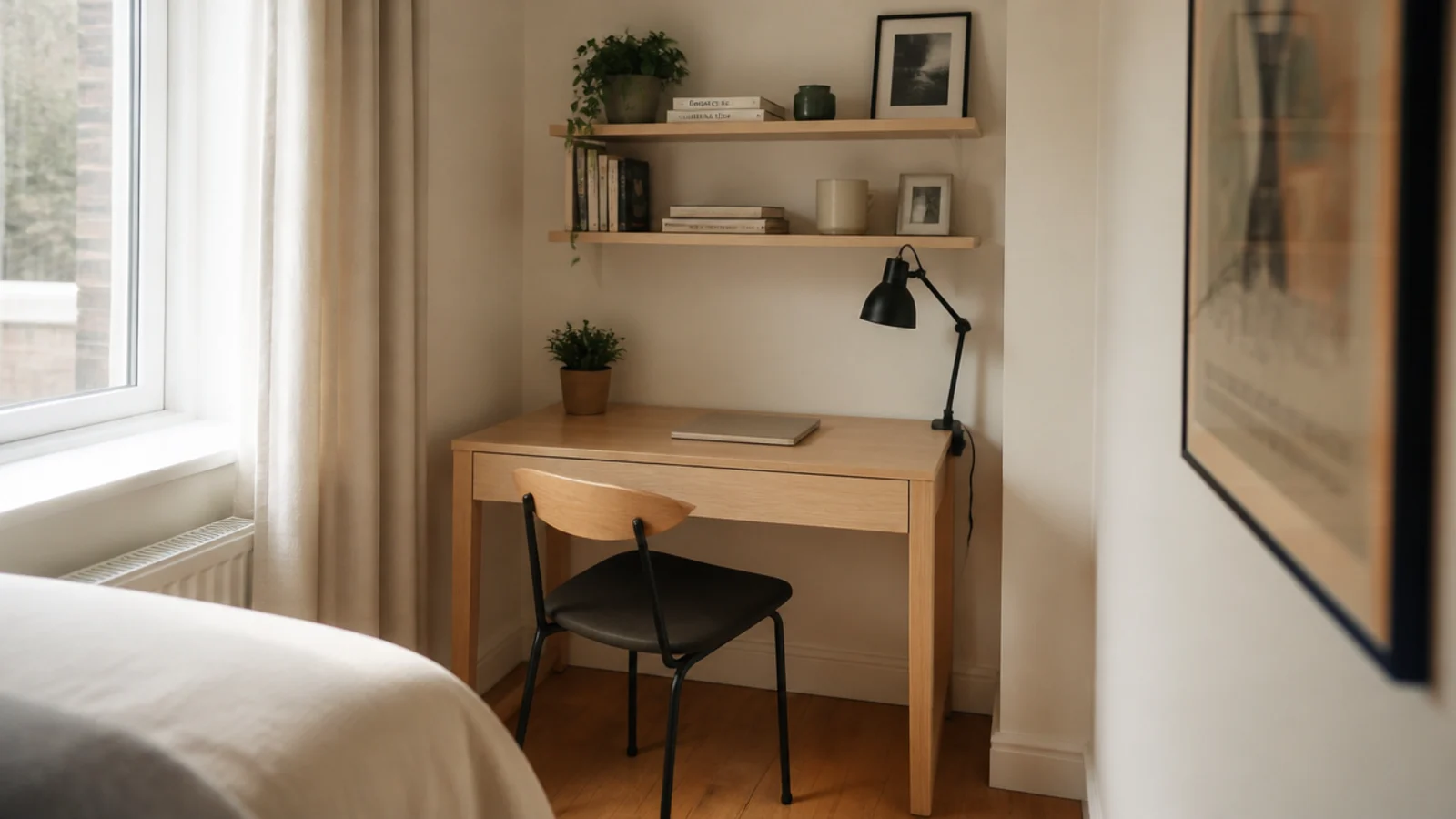
Study desk decor ideas written for a spare room fall apart in a bedroom that is ten feet across. The desk fits, but the chair cannot push back. The shelf fits, but you cannot open the wardrobe under it. Small rooms are decided by clearances rather than by furniture, and once you know the four that matter, a surprising amount becomes possible — including a proper monitor. I have squeezed desks into a box room, a landing and the corner of a shared bedroom. Thirty ideas below, each with the measurement that makes it fit.
In this guide32 sections — tap to openHide
- 1.What study desk decor ideas have to solve in a small room
- 2.Measure the chair pull-out before the desk
- 3.Choose a 36 by 20 inch top as the small-room default
- 4.Fit a monitor arm to survive a shallow desk
- 5.Hinge a fold-down leaf 30 by 18 inches
- 6.Take the dead ninety degrees of a corner
- 7.Build a ledge desk at the window sill
- 8.Make the desk double as a bedside table
- 9.Hang a shelf desk on a French cleat
- 10.Stack three shelves at twelve-inch spacing
- 11.Swap the drawer unit for a pegboard
- 12.Keep a rolling cart under fourteen inches wide
- 13.Get every cable off the floor
- 14.Clamp the lamp instead of standing it
- 15.Or mount a sconce and free the top entirely
- 16.Fit a three-inch drawer, not a pedestal
- 17.Check the chair tucks fully under
- 18.Hang a mirror opposite the window
- 19.Keep the desk wall pale and matt
- 20.Skip the hutch and use two open shelves
- 21.Put hooks on the side of the desk
- 22.Use the back of the door for paper
- 23.Build a box tower on a twelve-inch footprint
- 24.Claim the wall between window and corner
- 25.Add a twelve-inch return shelf at desk height
- 26.Choose a stool that tucks right under
- 27.Charge everything in one wall dock
- 28.Put the tall plant on the floor
- 29.Lay a two by three foot rug under the chair
- 30.Keep one clear surface rule for the whole room
- 31.Photograph the room from the doorway
- 32.Mistakes to Skip
What study desk decor ideas have to solve in a small room
Four numbers decide whether a desk works in a tight room.
Chair pull-out. Thirty to thirty-six inches from the desk edge to whatever sits behind you. Below 24 inches you are turning sideways to stand up. Measure this first — it eliminates more layouts than desk width ever does.
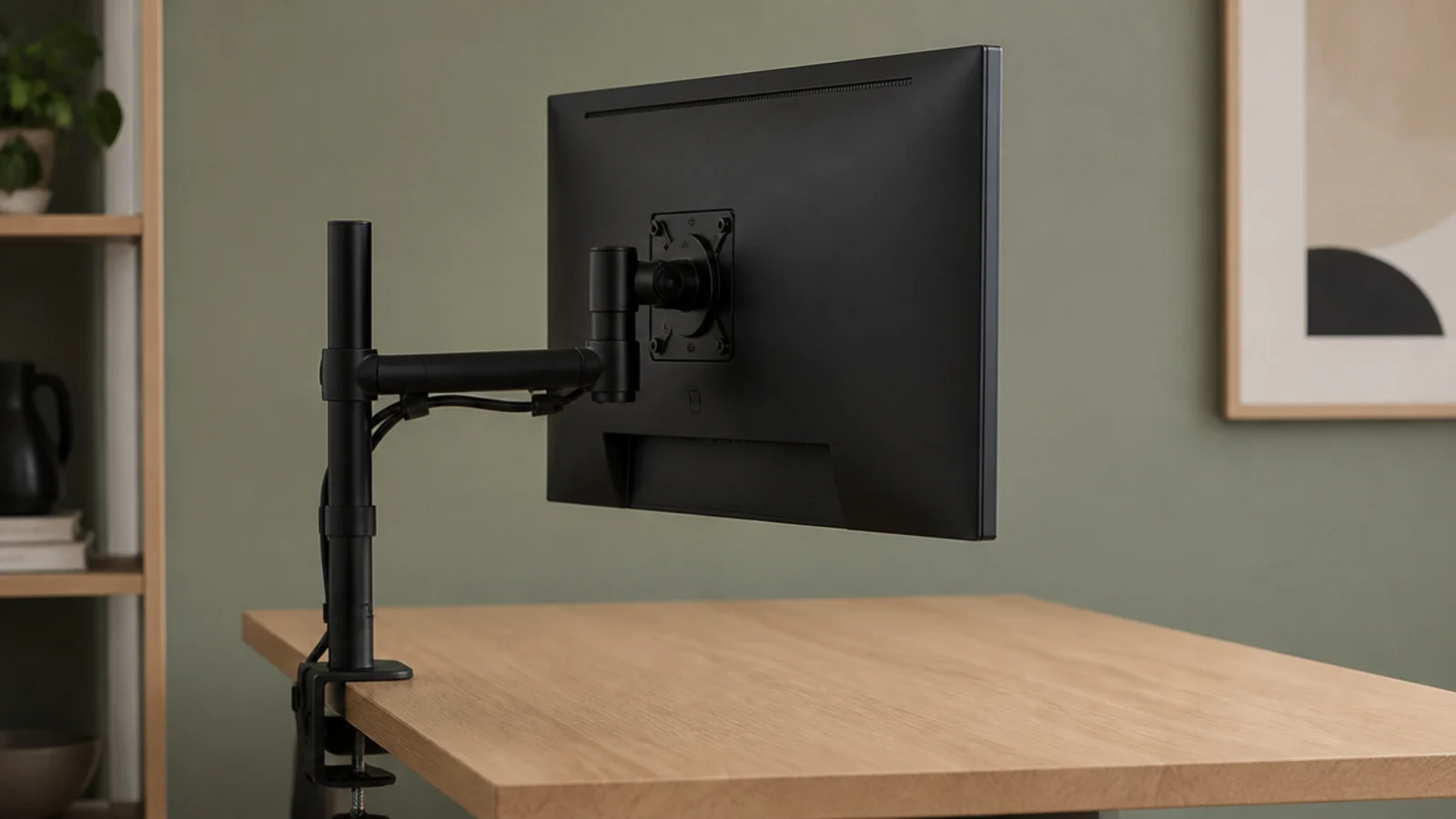
Depth versus screen distance. A monitor stand eats 8 or 9 inches, which is why a 20 inch deep desk puts the screen far too close. A clamped arm floats the panel back over the rear edge and makes a shallow top behave like a deep one.
Wall clearance. First shelf 18 to 24 inches above the desk, 8 to 10 inches deep. Everything you cannot fit on the floor goes up there.
Light. One task lamp at 450 to 800 lumens on your non-writing side, plus something soft washing the wall so a small dark room is not a bright pool in a black box.
A compact desk runs $60 to $180, a monitor arm $30 to $120, a pegboard $12 to $25. If the room is genuinely tiny, the small study desk decor tricks go further on layouts under 40 inches.
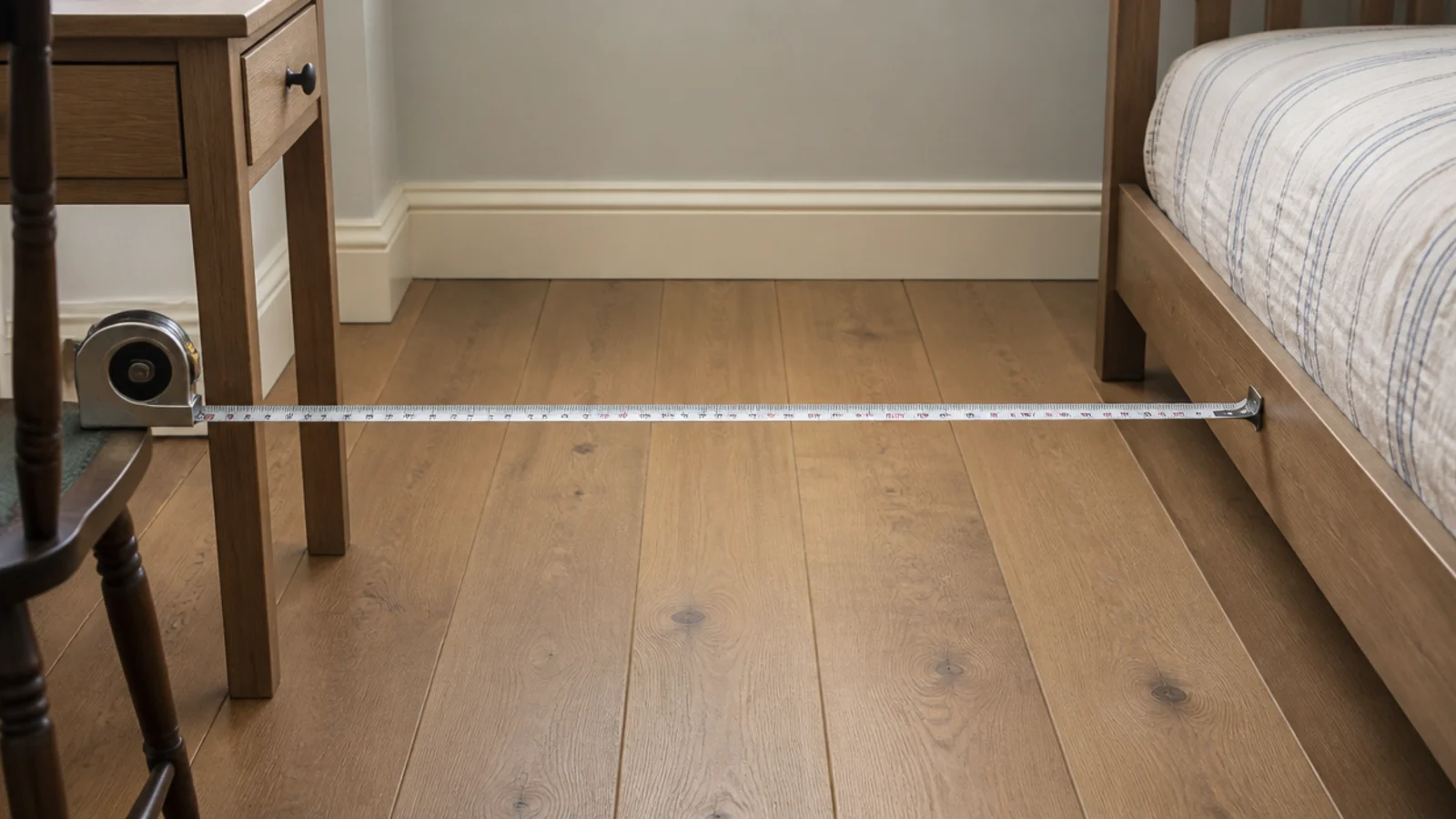
1. Measure the chair pull-out before the desk
Sit down, push back far enough to stand, and measure that gap. Thirty inches is comfortable, 36 is generous, 24 is the point where you shuffle sideways out of the chair every time. Whatever is behind you — a bed, a wardrobe door, a radiator — has to allow it.
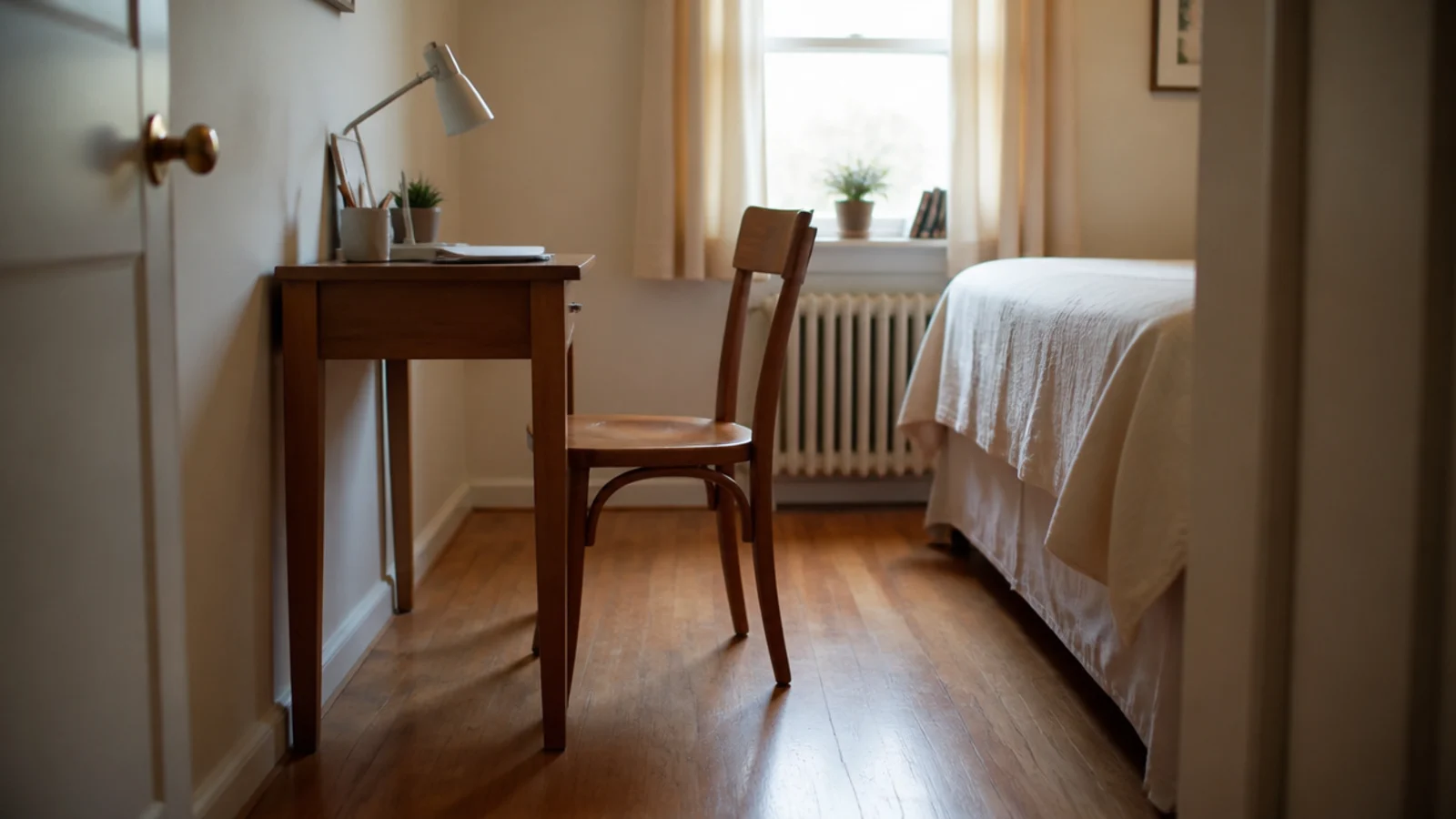
2. Choose a 36 by 20 inch top as the small-room default
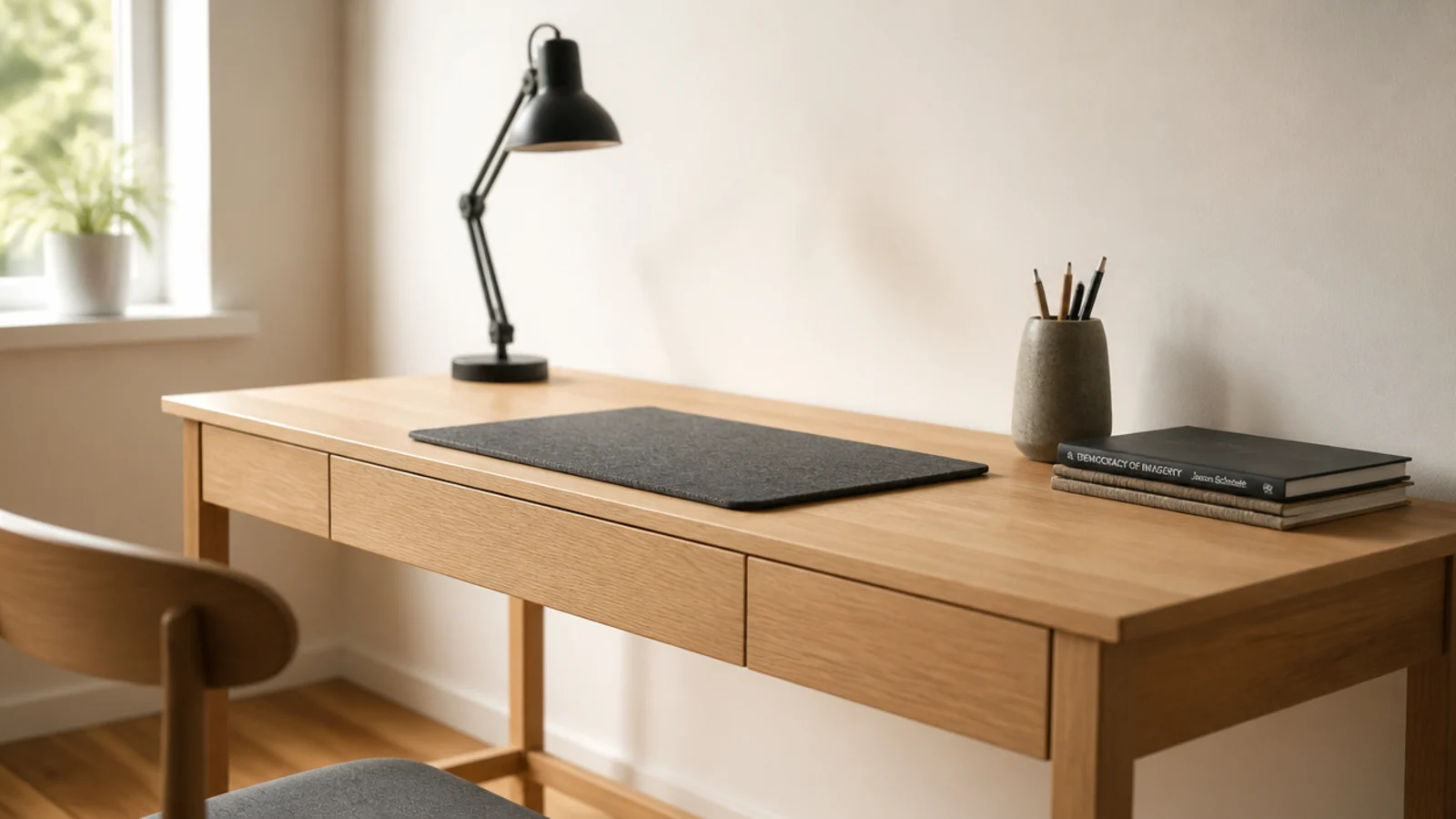
Thirty-six inches wide takes a laptop, a notebook and a mug without crowding. Twenty inches deep is workable only with a monitor arm or a laptop alone. If you can find 24 inches of depth, take it — that is the number that lets a screen sit at arm length.
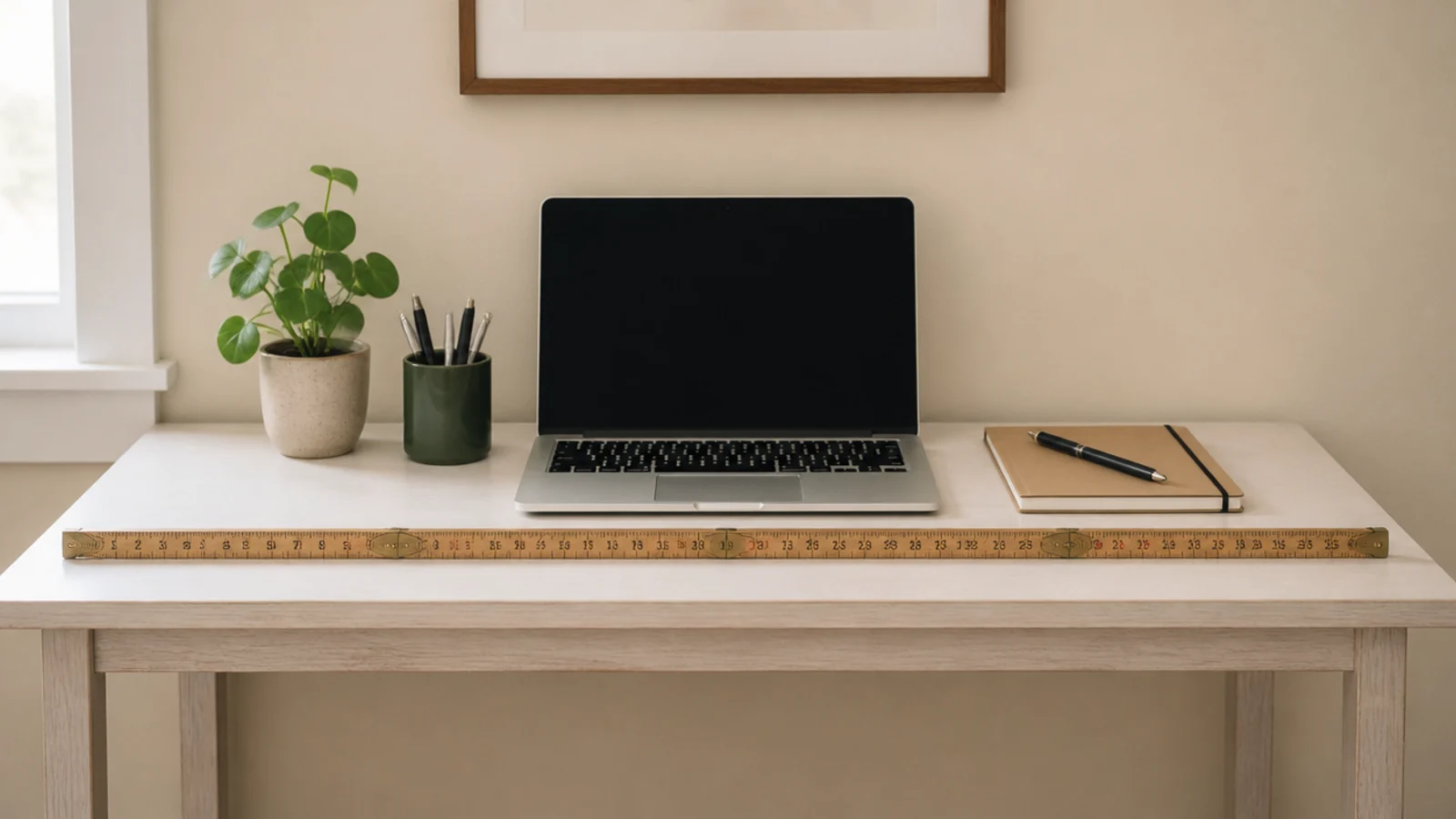
3. Fit a monitor arm to survive a shallow desk
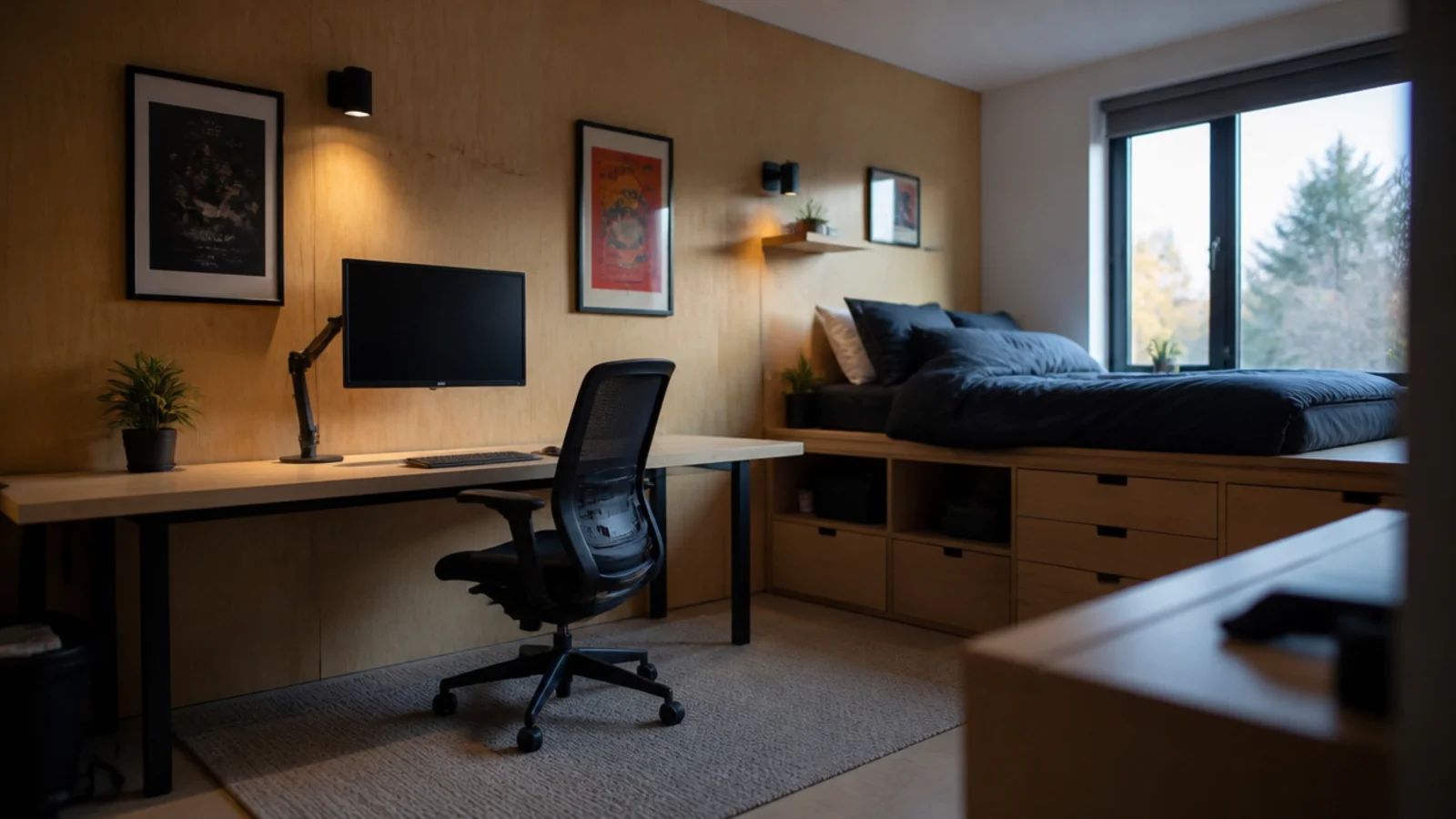
A clamp arm removes the stand and buys back 8 or 9 inches of usable depth for $30 to $120. Check the clamp range against your top thickness, usually 0.4 to 3.4 inches, and check the VESA pattern is 75mm or 100mm before ordering.
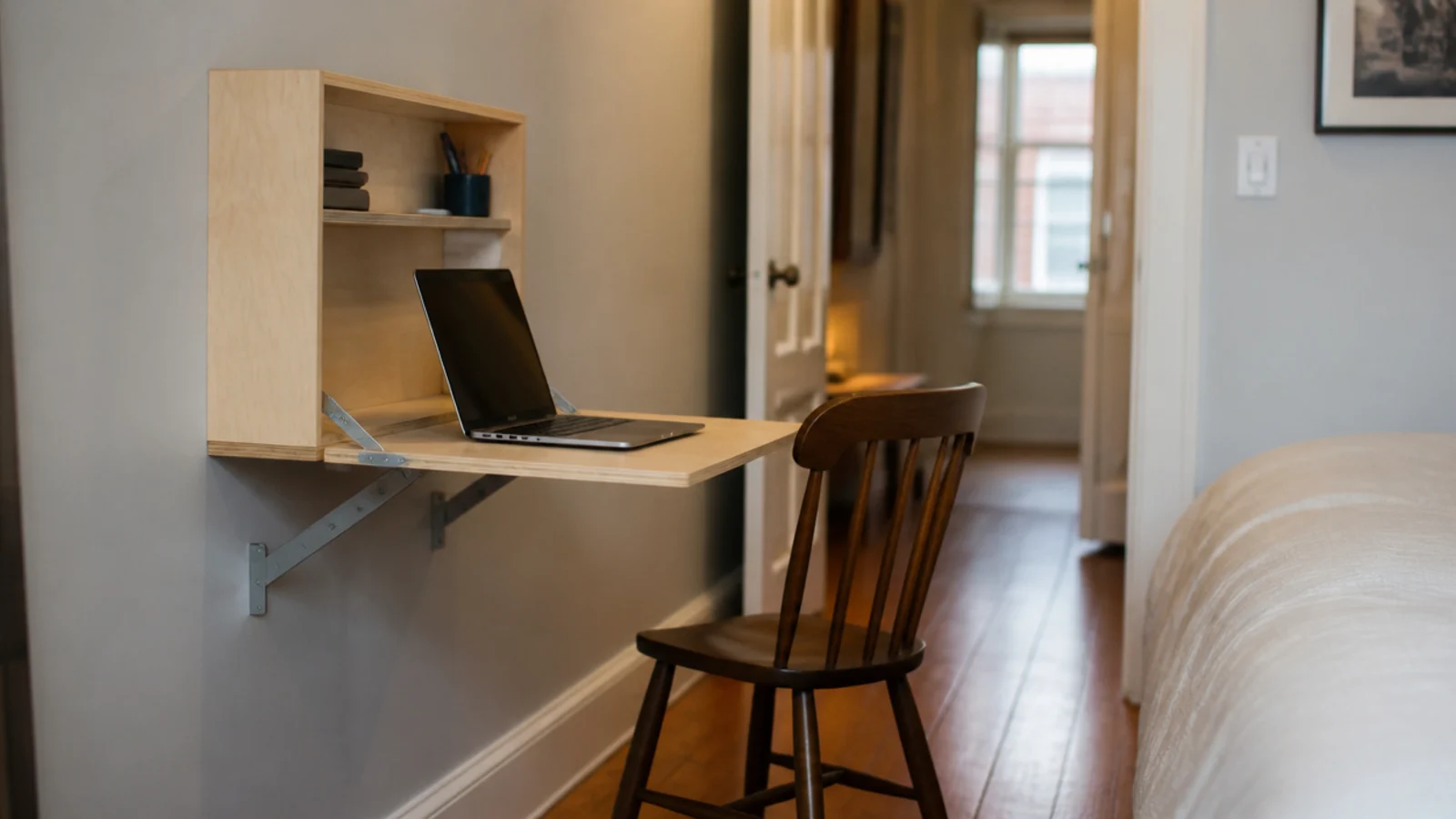
4. Hinge a fold-down leaf 30 by 18 inches
For a room with no floor to spare, a hinged leaf folds back to about 4 inches deep. Set the open height at 29 inches, fix the case into two studs, and use folding brackets rated well beyond the 30 pounds a laptop and books will load onto it.
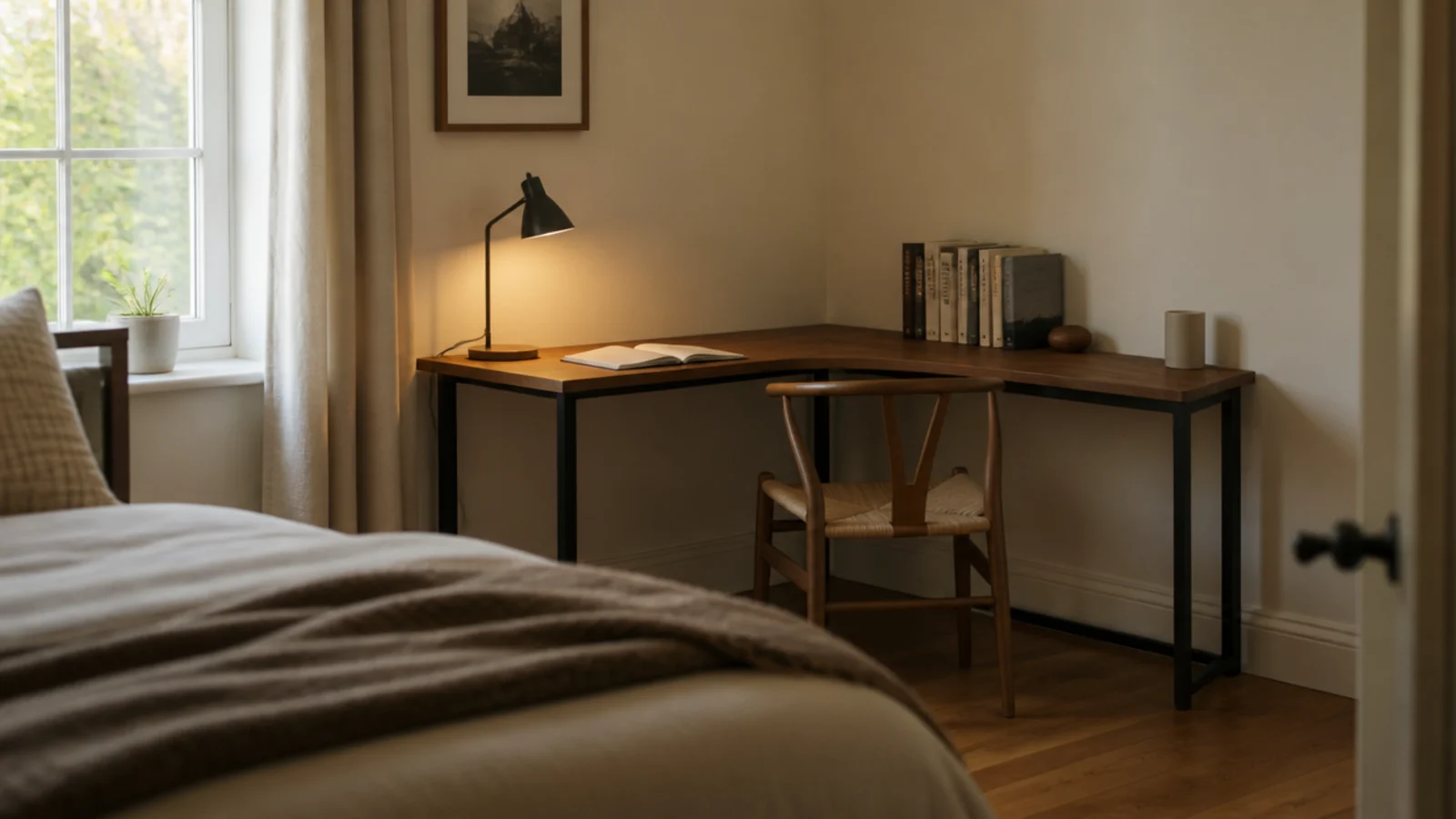
5. Take the dead ninety degrees of a corner
A corner desk uses floor that no other furniture can claim. It also gives you two walls for storage instead of one. Keep the return leg under 30 inches so you can still reach across it, and put the screen on the long leg rather than in the angle.
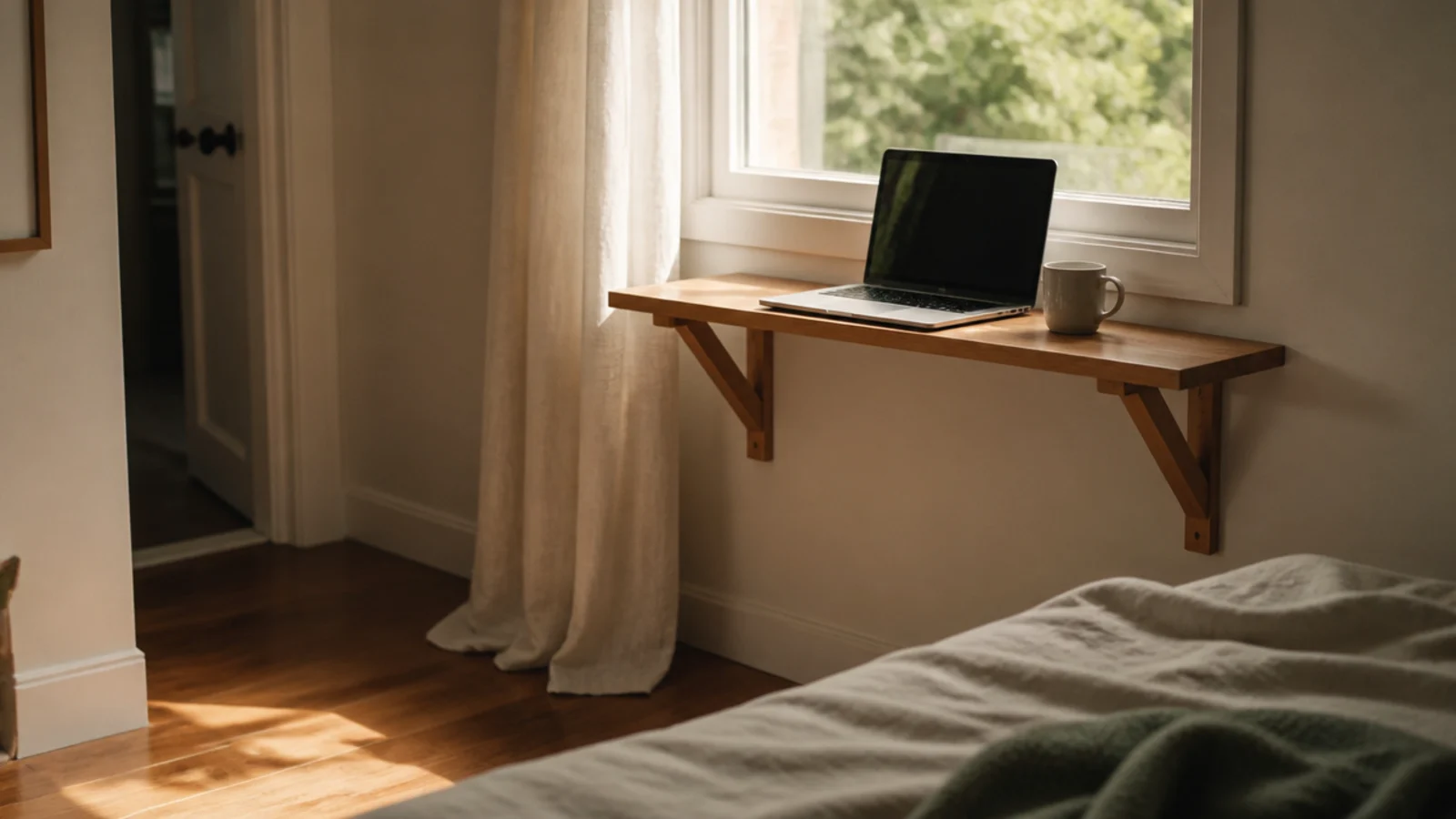
6. Build a ledge desk at the window sill
Two brackets and a timber board fixed under the window at 29 inches gives you a desk with no legs at all. Sit side-on rather than facing out, or you will squint at the sky all afternoon. Check the radiator position before committing to the height.
7. Make the desk double as a bedside table
In a bedroom under 100 square feet, one surface doing two jobs saves an entire footprint. Set the desk top within a couple of inches of the mattress height if you can, and keep the end nearest the bed clear so it can hold a glass and a book at night.
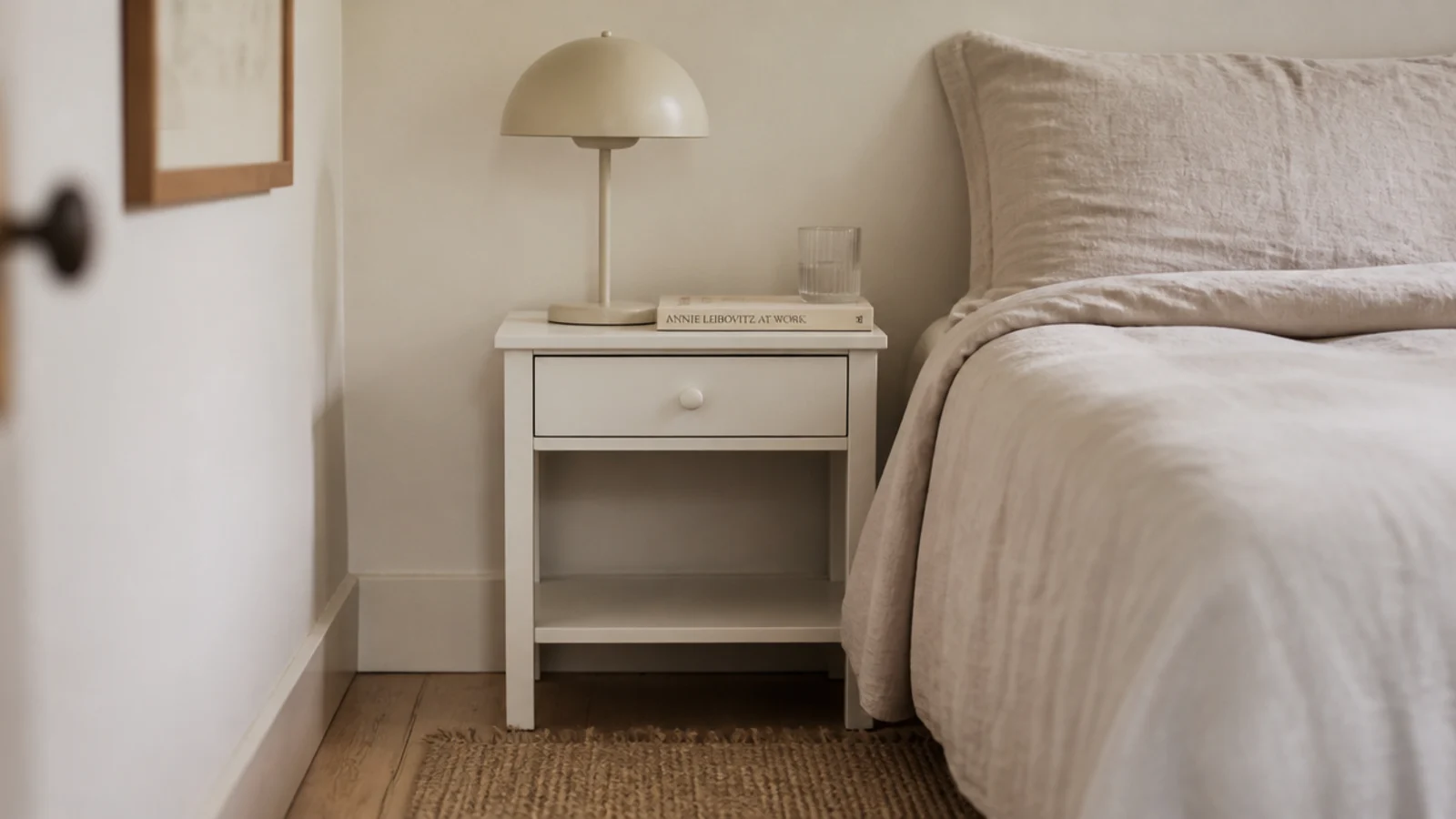
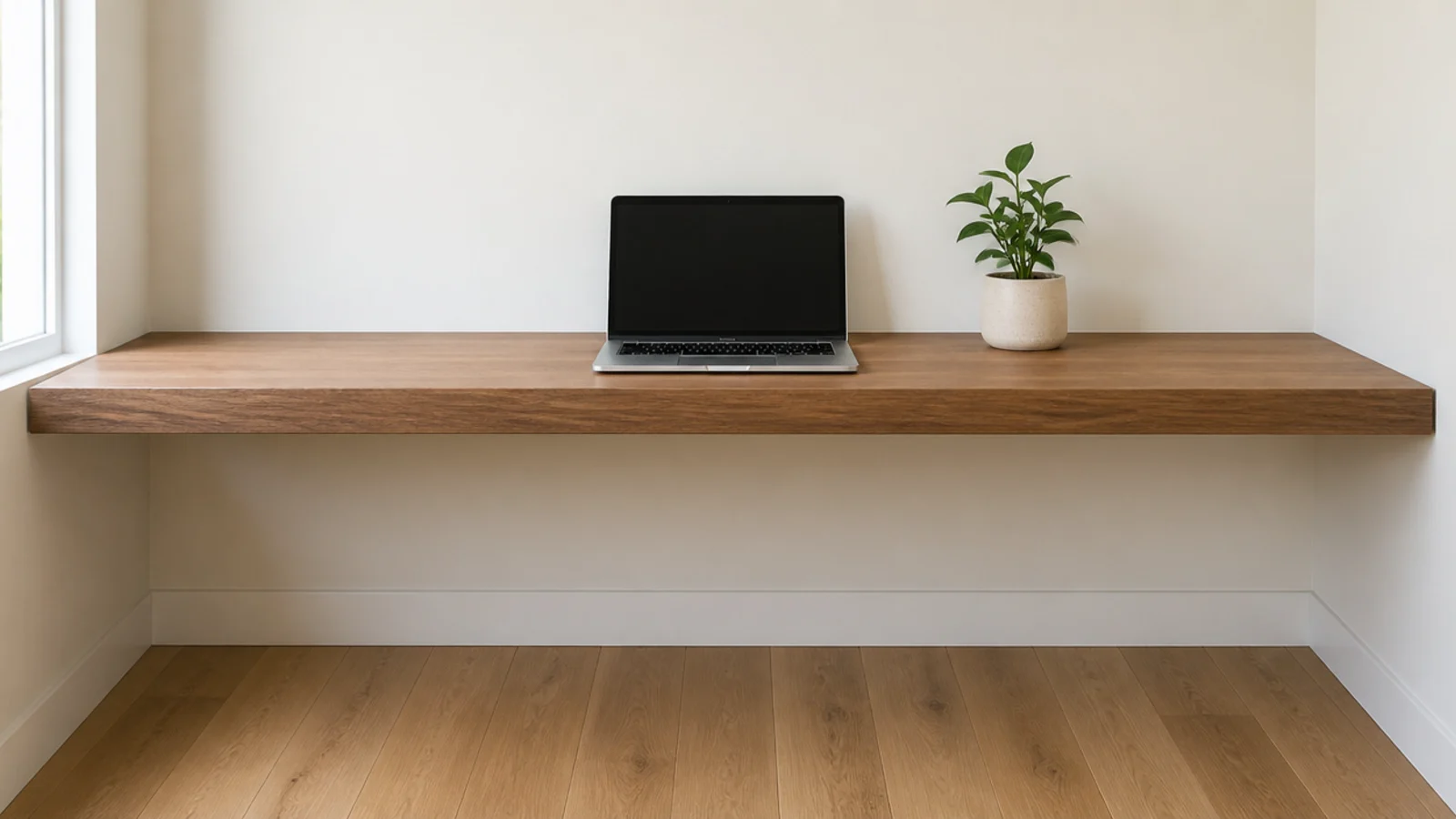
8. Hang a shelf desk on a French cleat
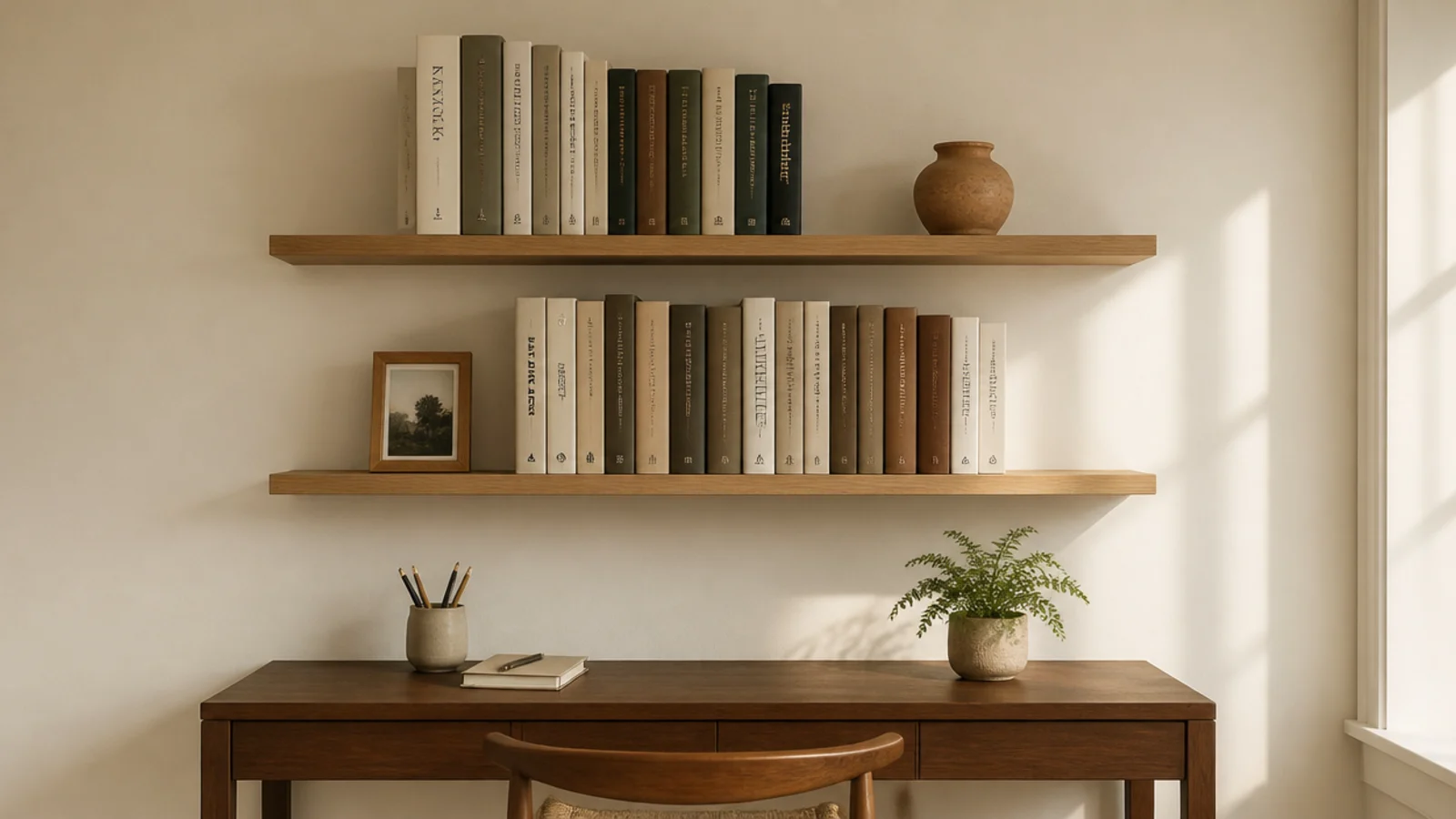
A solid board on a French cleat into two studs carries far more than a laptop and a stack of books, and it leaves the floor completely clear underneath. Clear floor is the single biggest thing that makes a small room read larger.
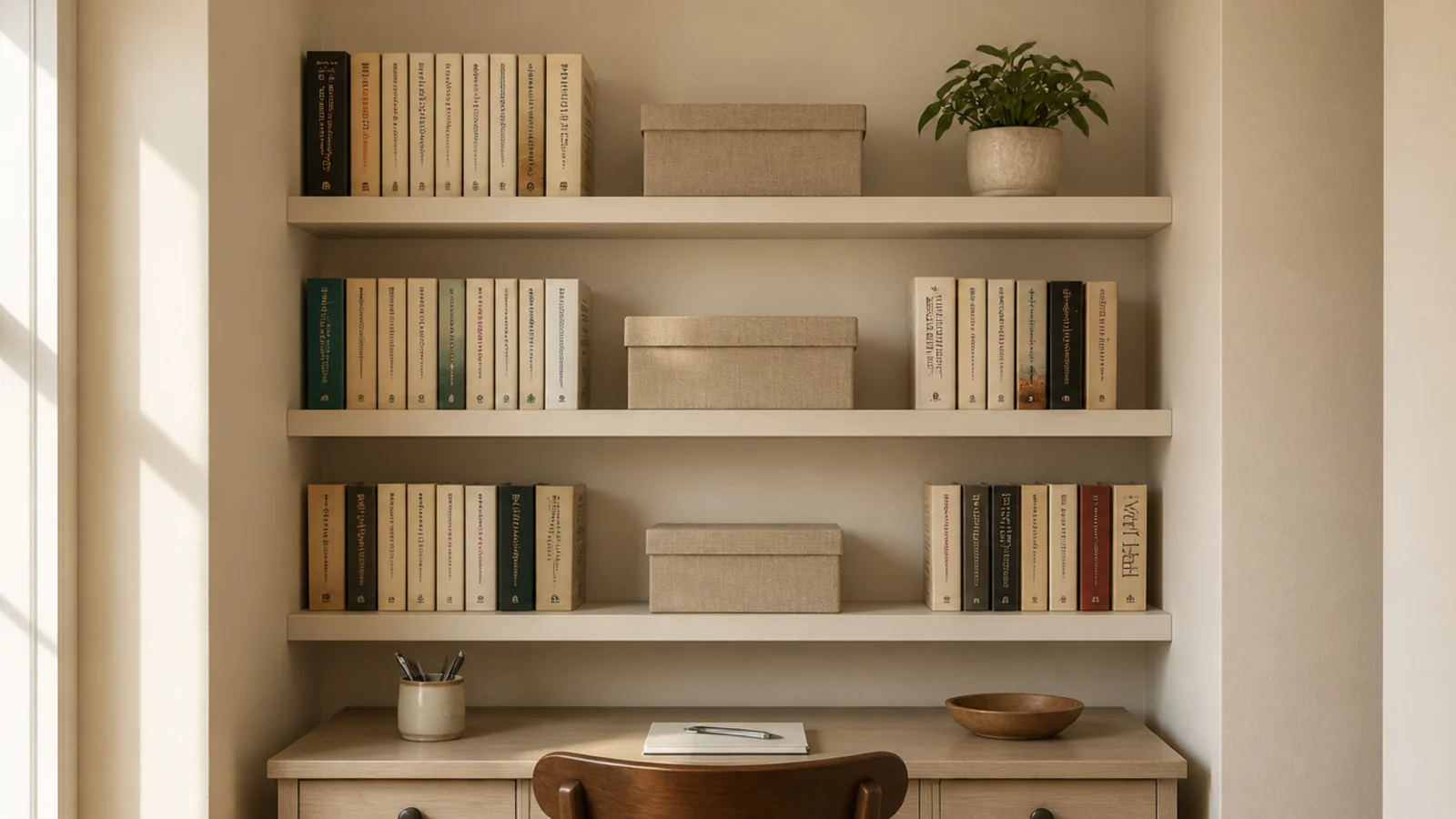
9. Stack three shelves at twelve-inch spacing
Twelve inches of clear height takes paperbacks, storage boxes and files upright. Three shelves in a 36 inch wide alcove hold more than a pedestal unit and take no floor. Keep the run under 32 inches per bay or 3/4 inch board will sag under books.
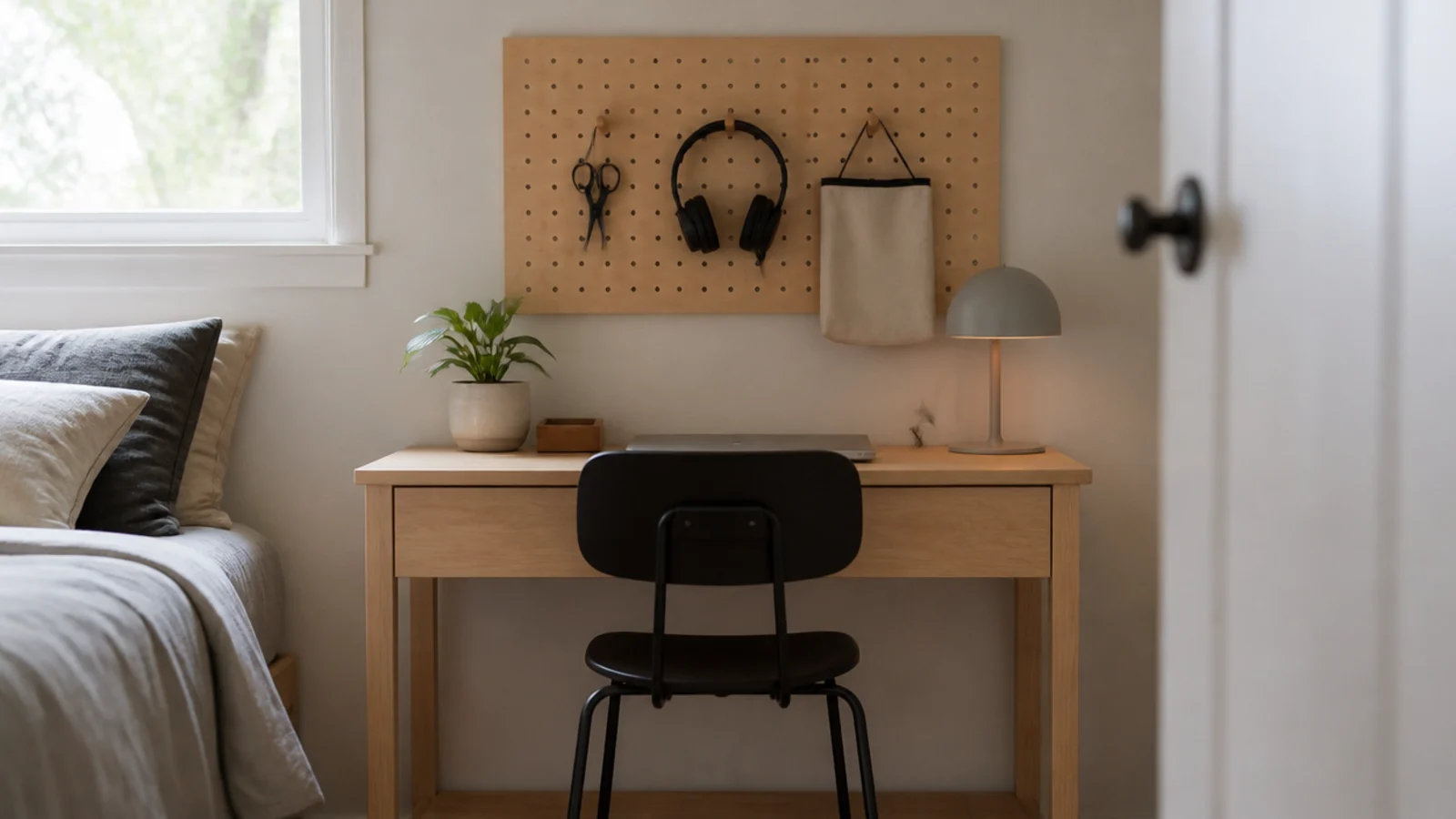
10. Swap the drawer unit for a pegboard
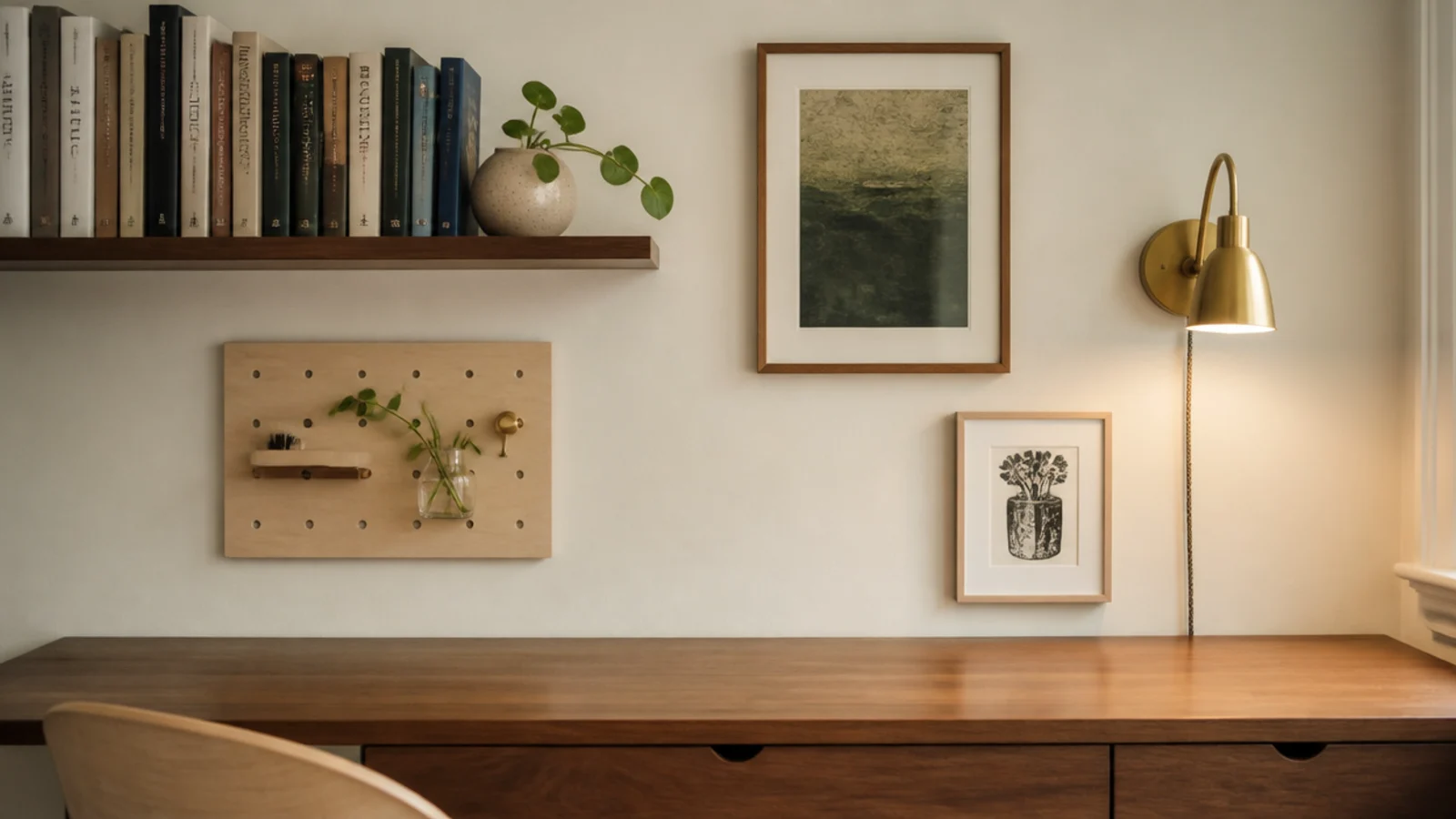
A 2 by 4 foot pegboard holds scissors, headphones, cables, tape and pouches for $12 to $25 and takes zero floor. In a small room this trade is almost always worth making. Leave 12 to 16 inches of clear wall between the desk and the bottom edge.
11. Keep a rolling cart under fourteen inches wide
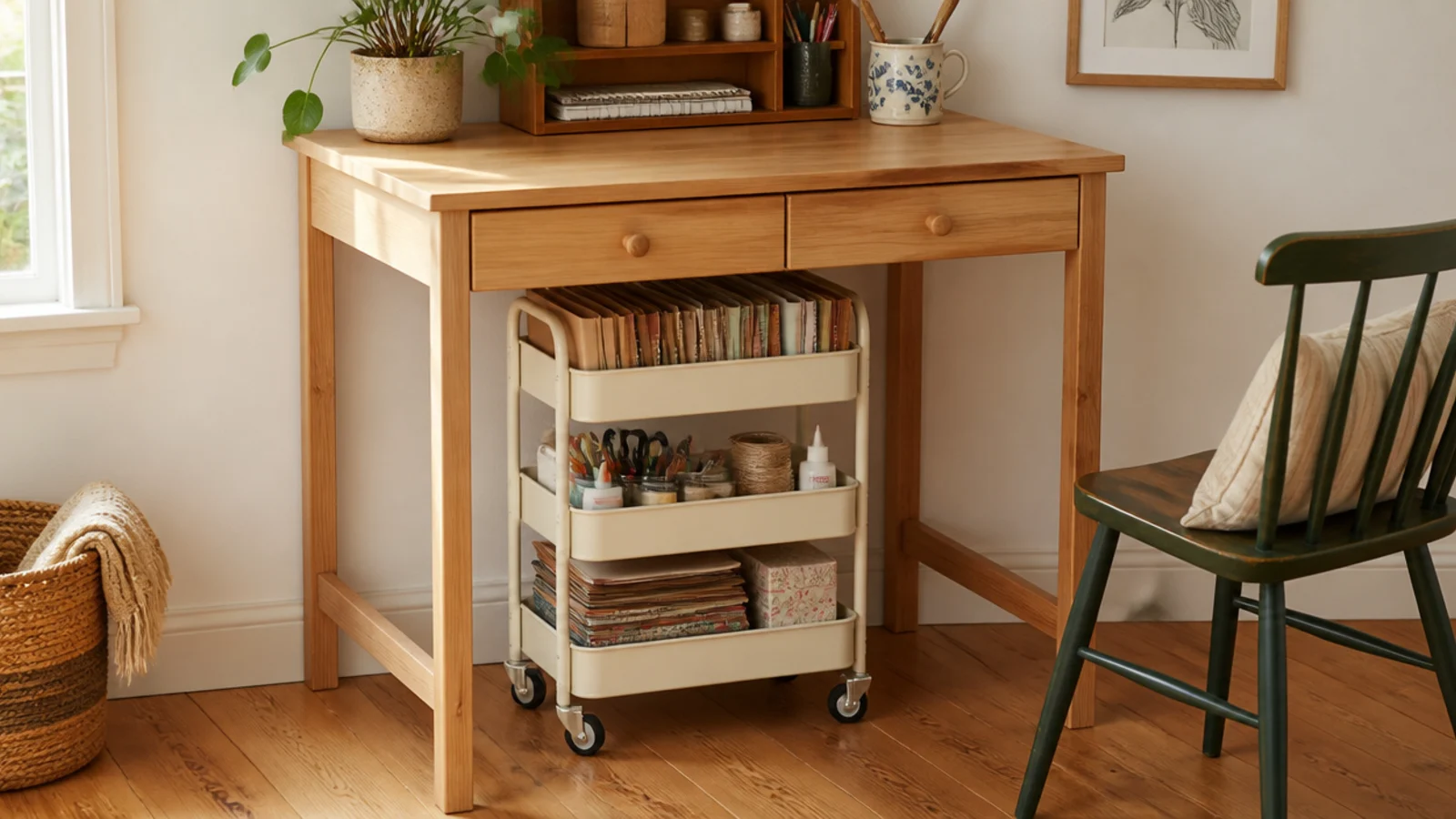
A narrow three-tier cart tucks fully under a desk between uses and rolls out when you need it. Fourteen inches is the width that disappears; anything wider blocks a knee. Check the cart height against your under-desk clearance of 25 inches before buying.
12. Get every cable off the floor
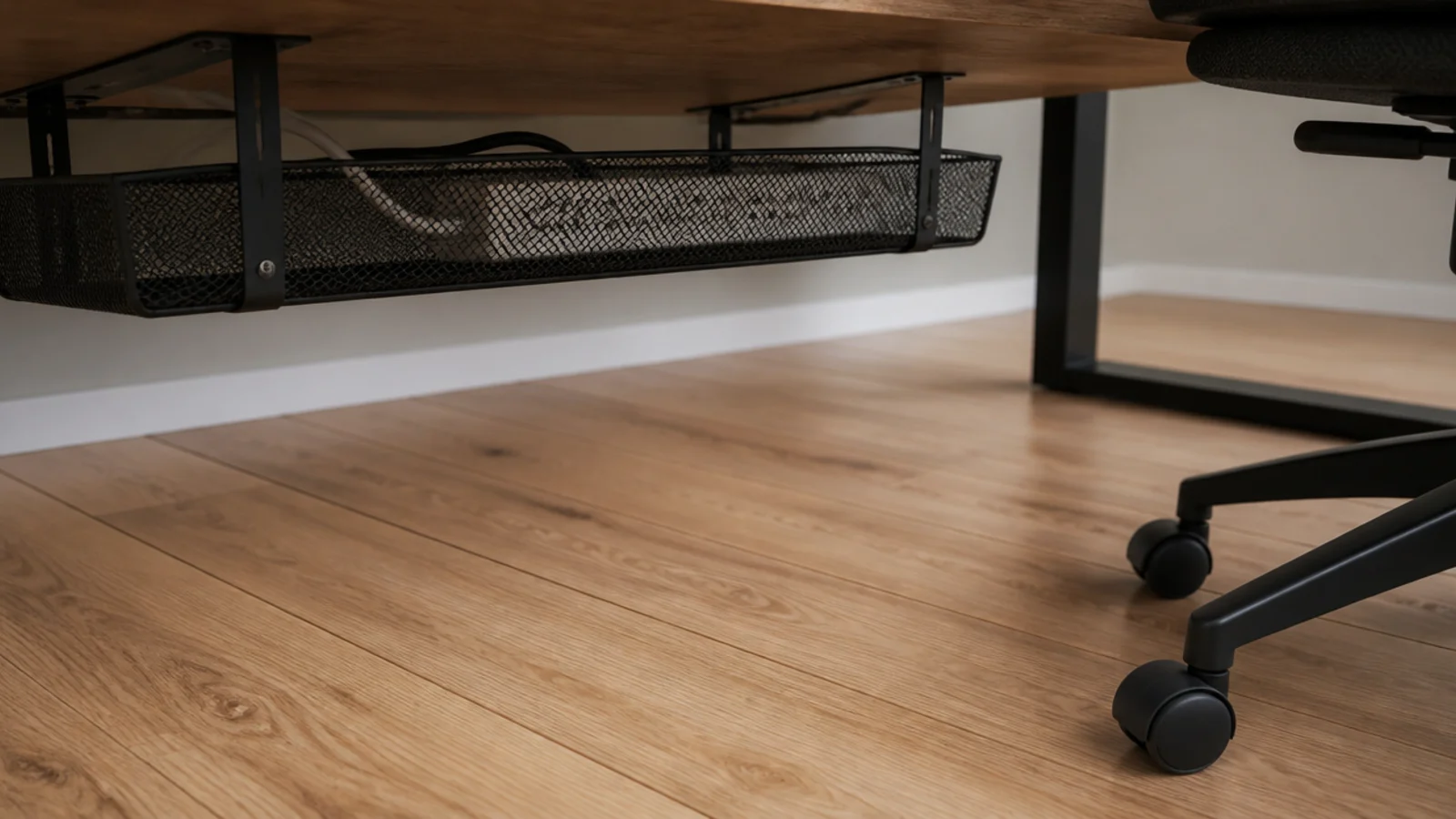
A mesh tray under the back edge takes the power strip and every lead for $12 to $18. Visible floor is what makes a small room feel bigger, and a coiled nest of cable under a desk is the most effective way to lose it.
13. Clamp the lamp instead of standing it
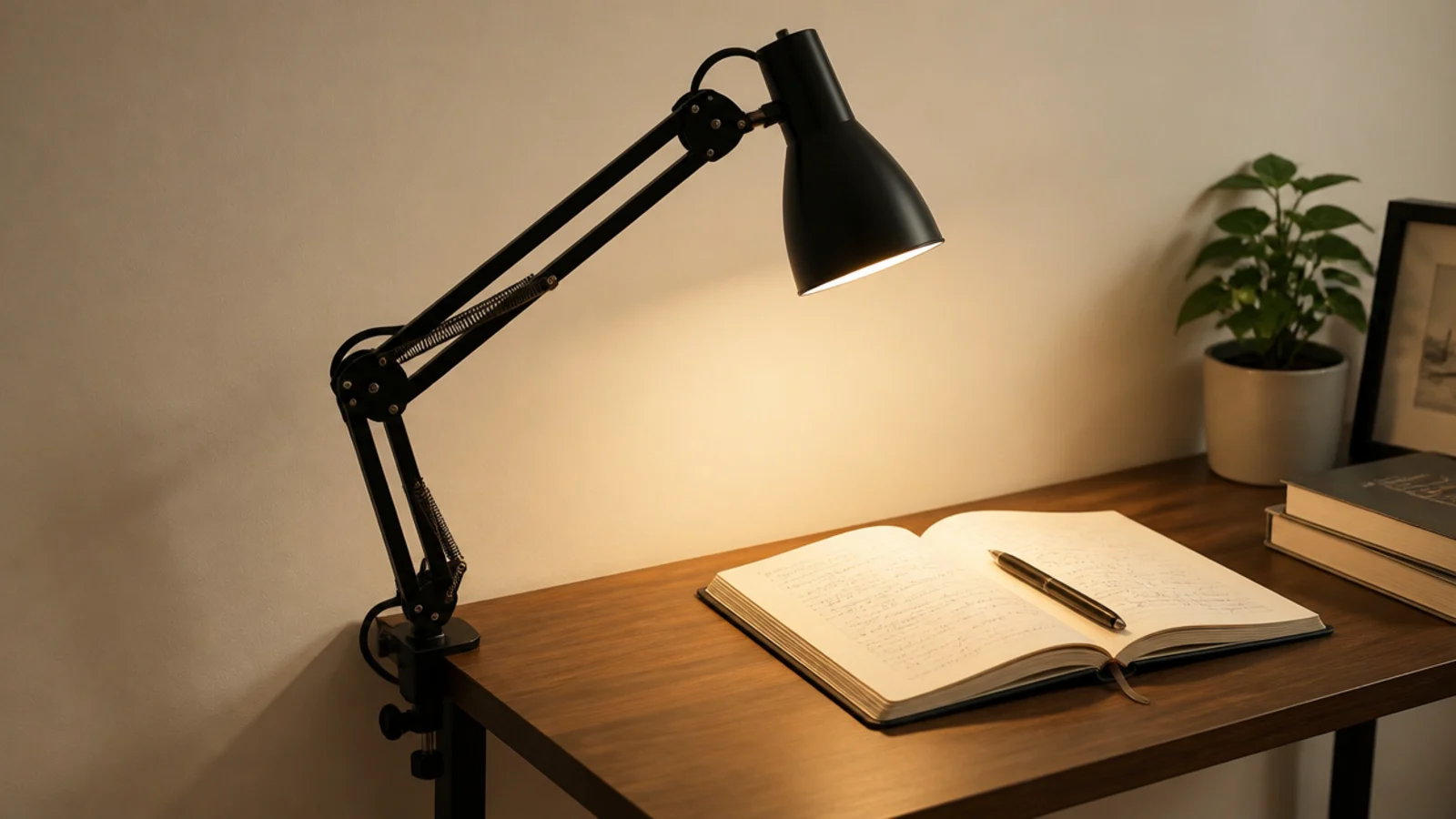
A clamp lamp takes no surface area at all, which on a 36 inch desk is worth more than the eight dollars it saves. Grip it on the side opposite your writing hand with the head 15 to 18 inches above the top.
14. Or mount a sconce and free the top entirely
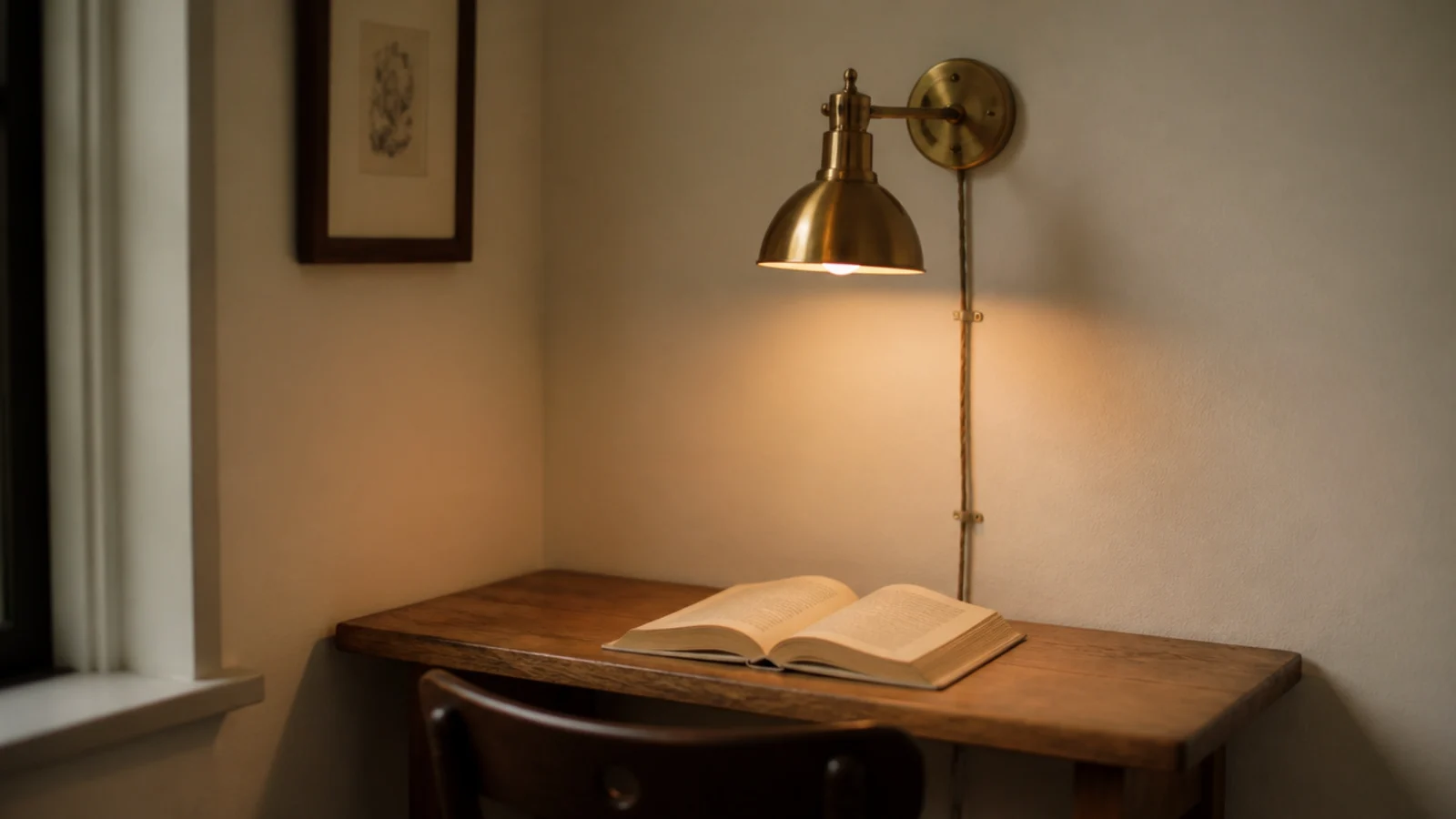
A plug-in sconce 15 to 20 inches above the desk gives back every square inch a lamp base was using. Clip the cord down the wall in a straight run rather than letting it loop, and choose one with a shade that directs light down rather than out.
15. Fit a three-inch drawer, not a pedestal
A shallow drawer under the top holds pens and cables without stealing knee room. Keep the underside at 25 inches from the floor minimum and at least 20 inches of clear width for your knees. A full pedestal in a small room costs more space than it earns.
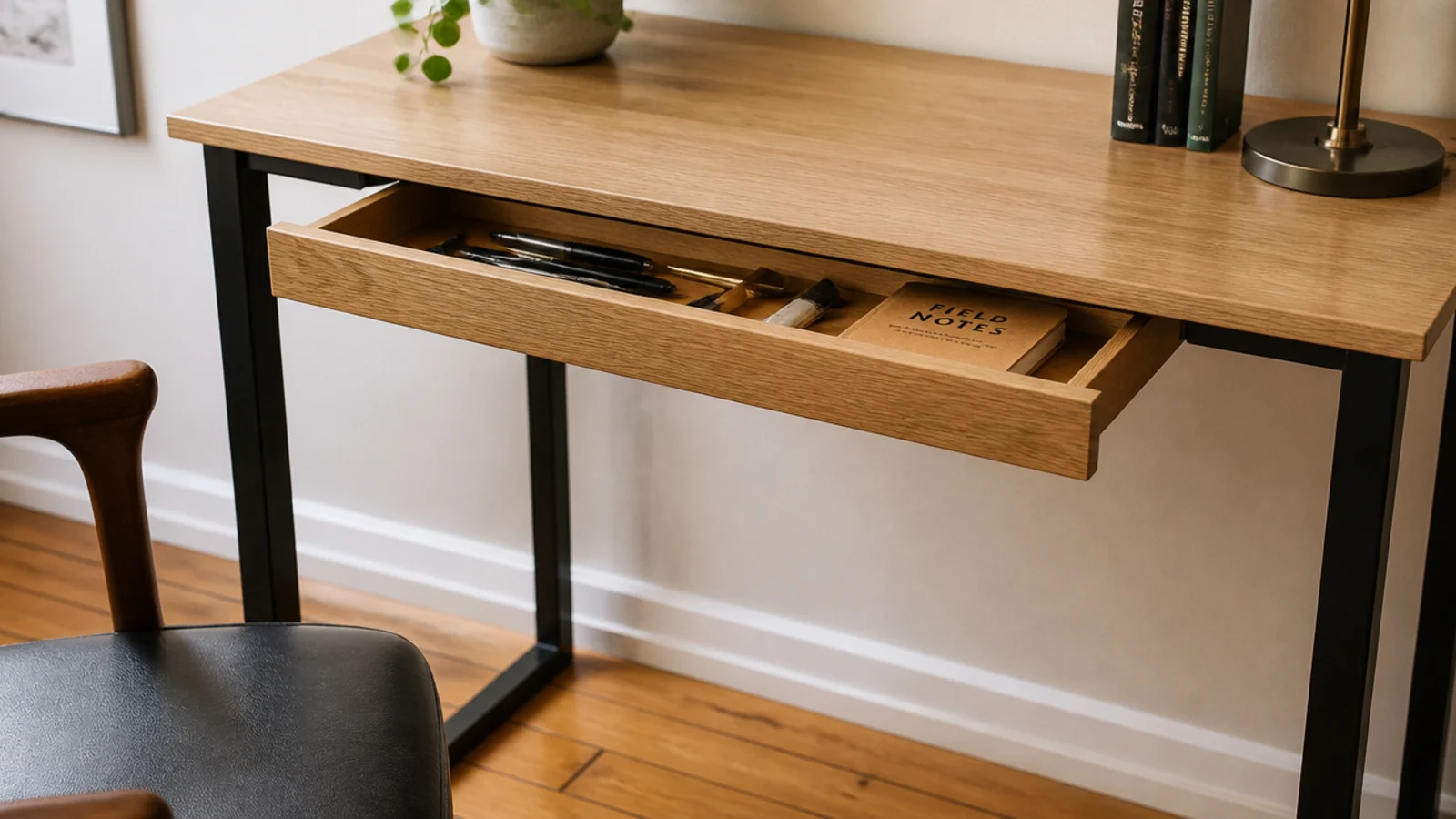
16. Check the chair tucks fully under
Measure the seat height against the desk apron before you buy. A chair whose back projects 6 inches into the room permanently narrows the walkway. A chair that pushes flush gives you those inches back every time you stand up.
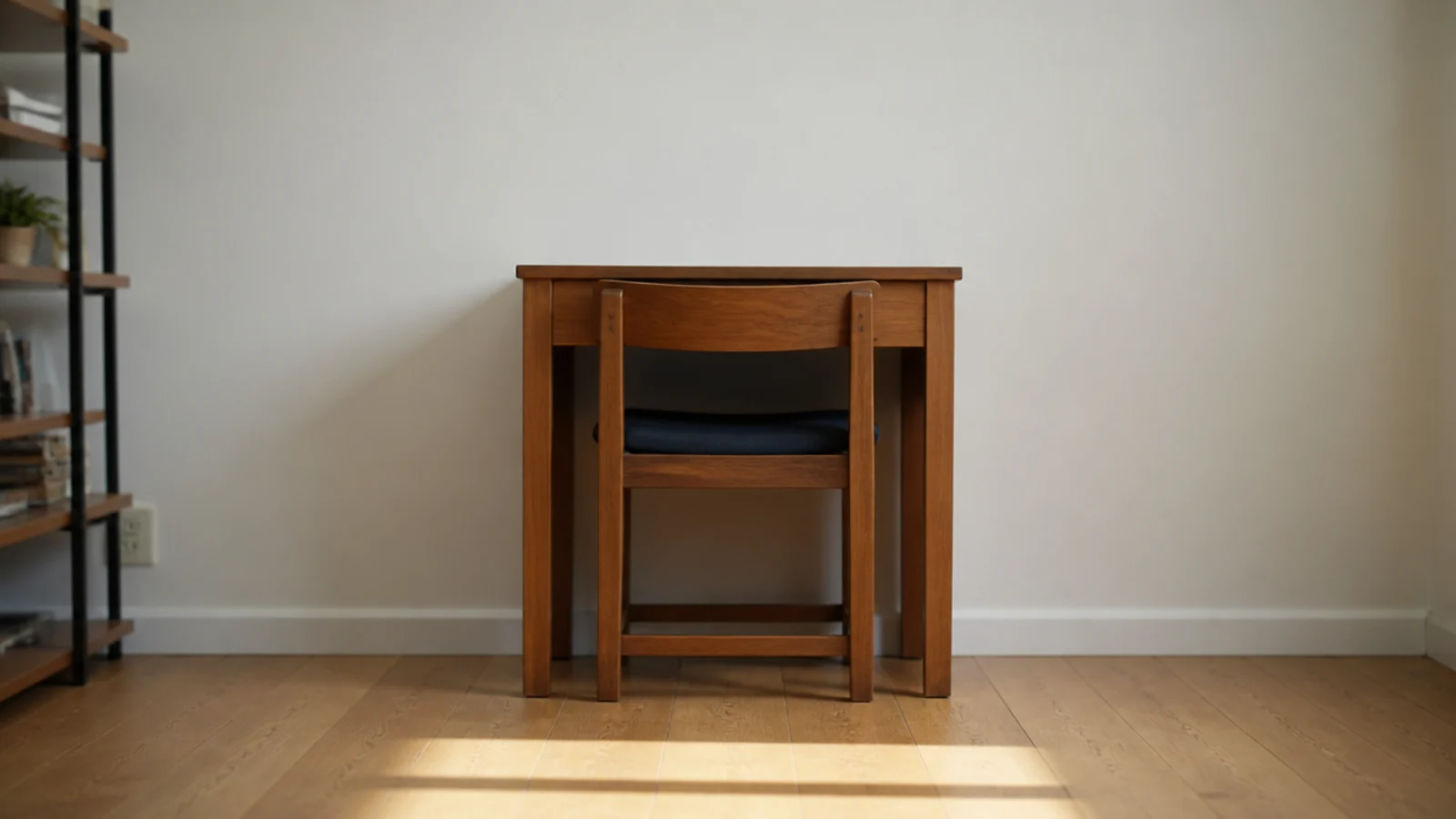
17. Hang a mirror opposite the window
A mirror on the wall facing the window puts daylight back into a corner that has none. Keep it above the shelf line so it reflects ceiling rather than screen, and check the reflection from the chair before you drill anything.
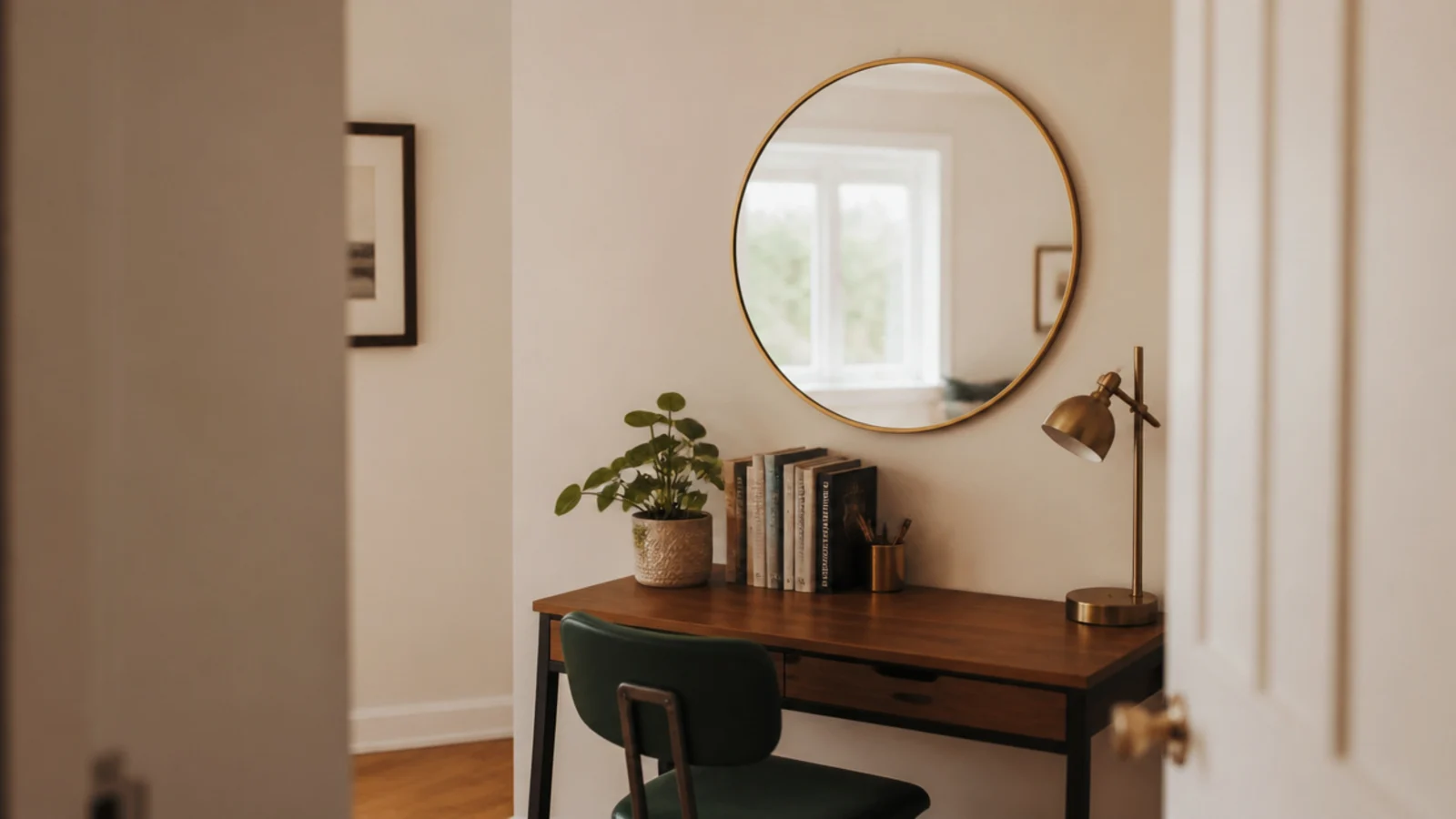
18. Keep the desk wall pale and matt
Pale walls bounce the little light a small room gets. Matt or dead flat only, because any sheen will throw the lamp straight back at you. Save the deeper colour for a panel behind the screen if you want contrast.
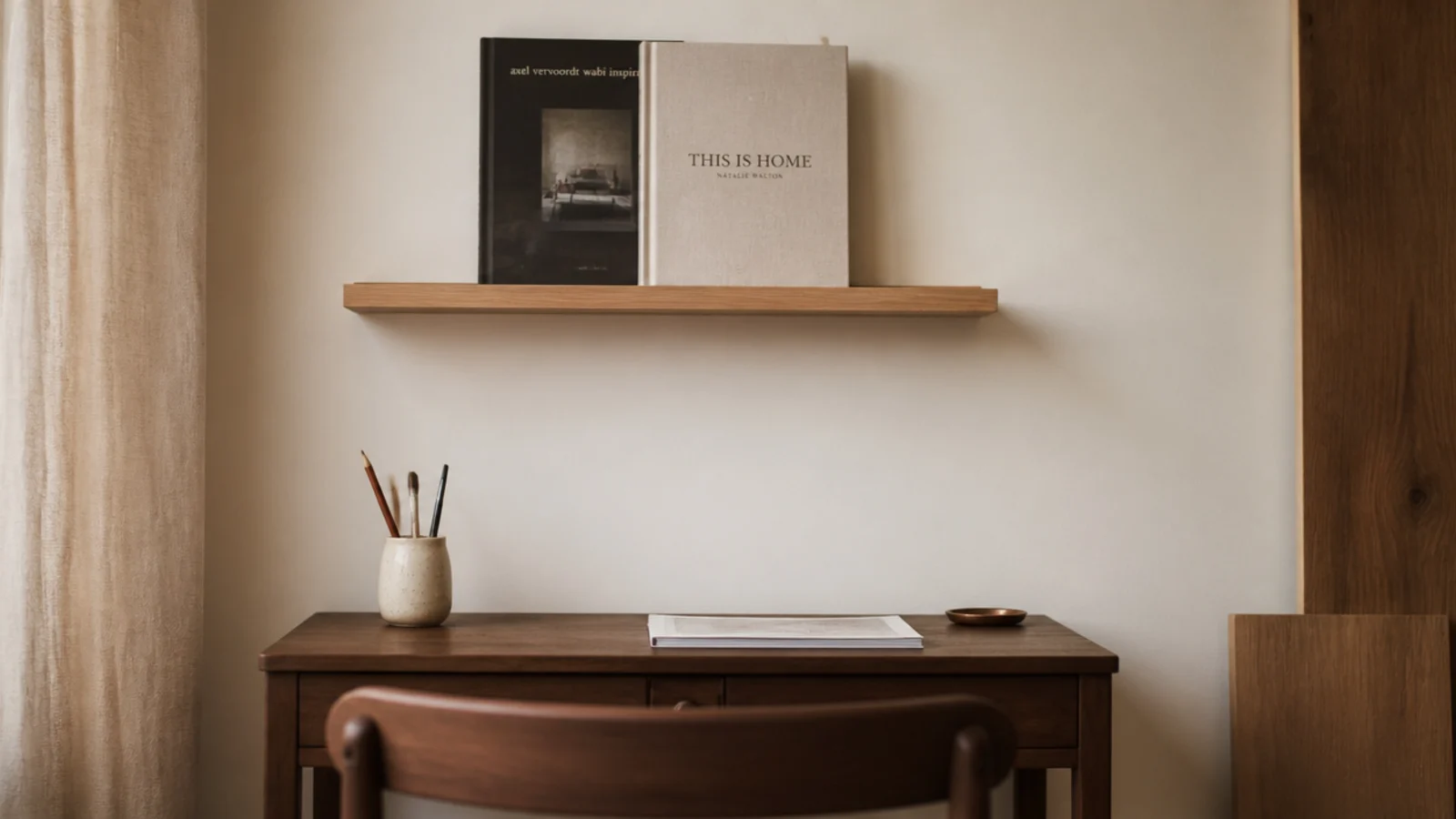
19. Skip the hutch and use two open shelves
A desk hutch closes the corner in and blocks the light. Two open shelves hold the same volume, cost half as much, and leave the wall visible behind them, which is what stops a small room feeling boxed.
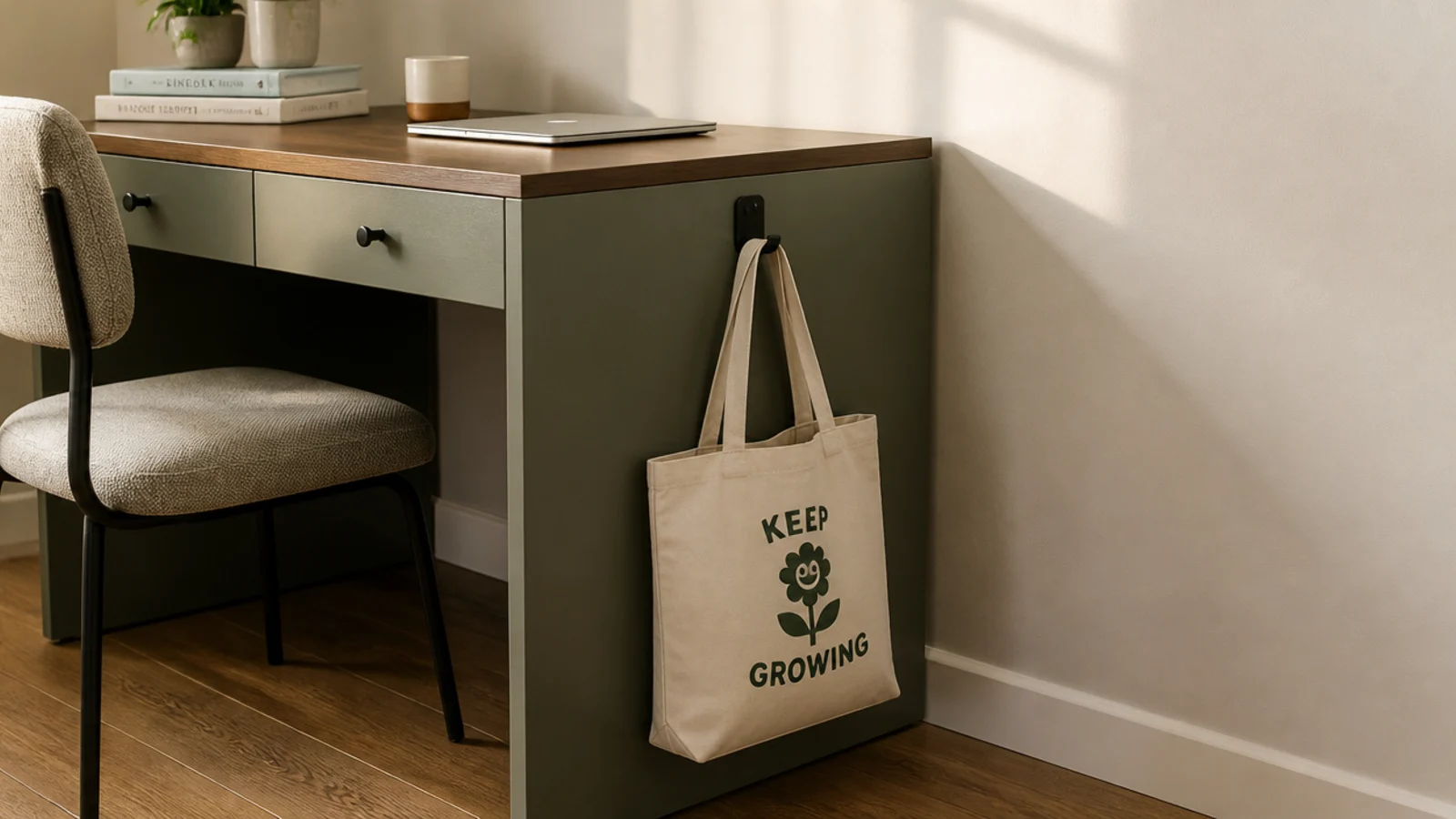
20. Put hooks on the side of the desk
The outer side panel is free storage. A hook for a bag, another for a jumper, and the chair back is suddenly usable again. Use short screws that will not punch through a 3/4 inch panel, and keep hanging items above the floor for vacuuming.
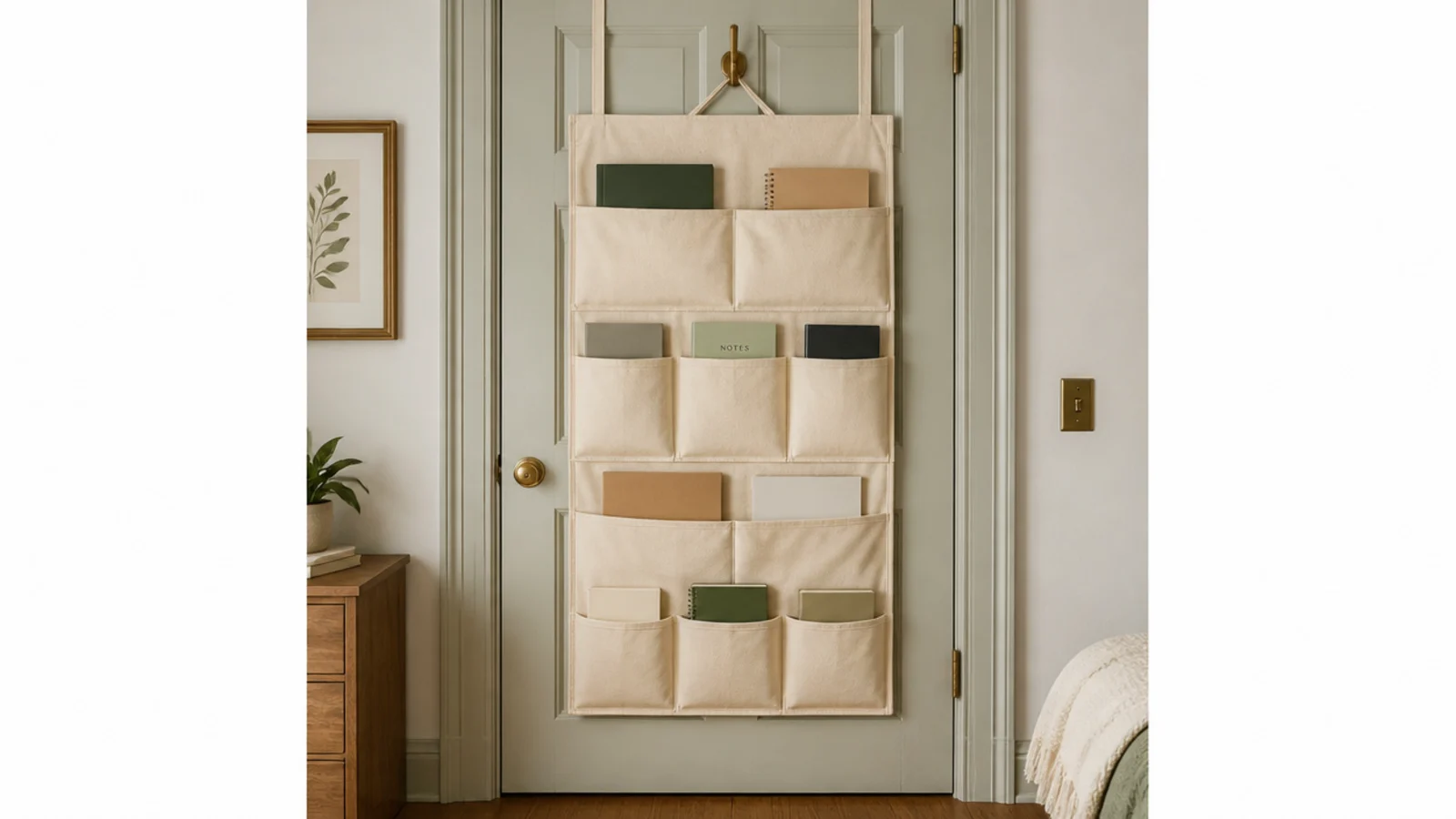
21. Use the back of the door for paper
A hanging organiser over the bedroom door holds a term of files on space that costs nothing. Check the door still closes with it loaded — most need about 2 inches of clearance — and hang it on the hinge side of the handle so it does not swing.
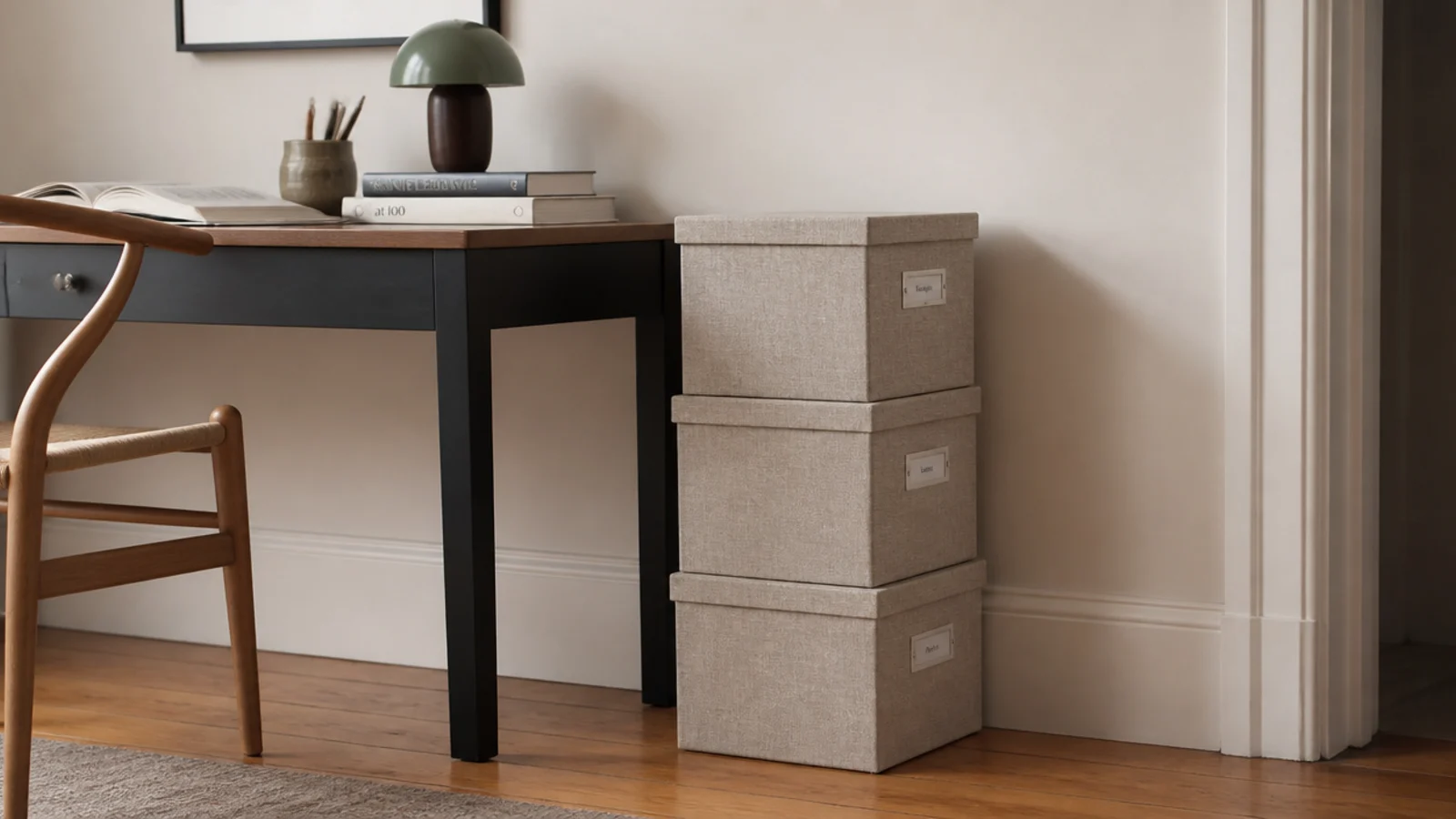
22. Build a box tower on a twelve-inch footprint
Three matching boxes stacked beside the desk hold as much as a small chest on a footprint of about a square foot. Label the short ends so you can read the stack from the chair, and keep the tower under shoulder height so the top box is reachable.
23. Claim the wall between window and corner
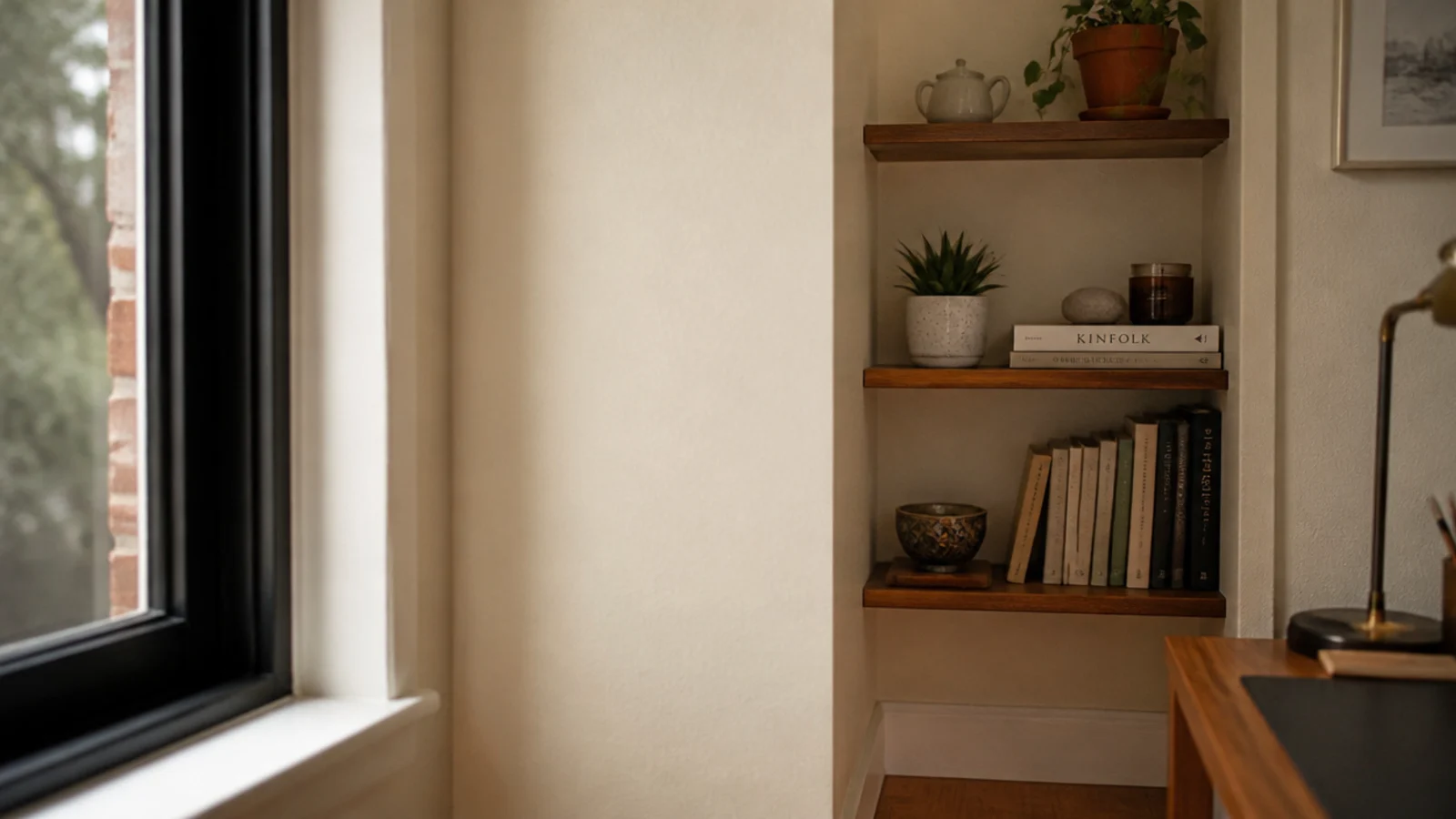
The narrow strip beside a window reveal is usually left blank. Three short shelves there hold pots, mugs and paperbacks on 10 inches of wall. It is often the only stretch in a small bedroom with nothing already in front of it.
24. Add a twelve-inch return shelf at desk height
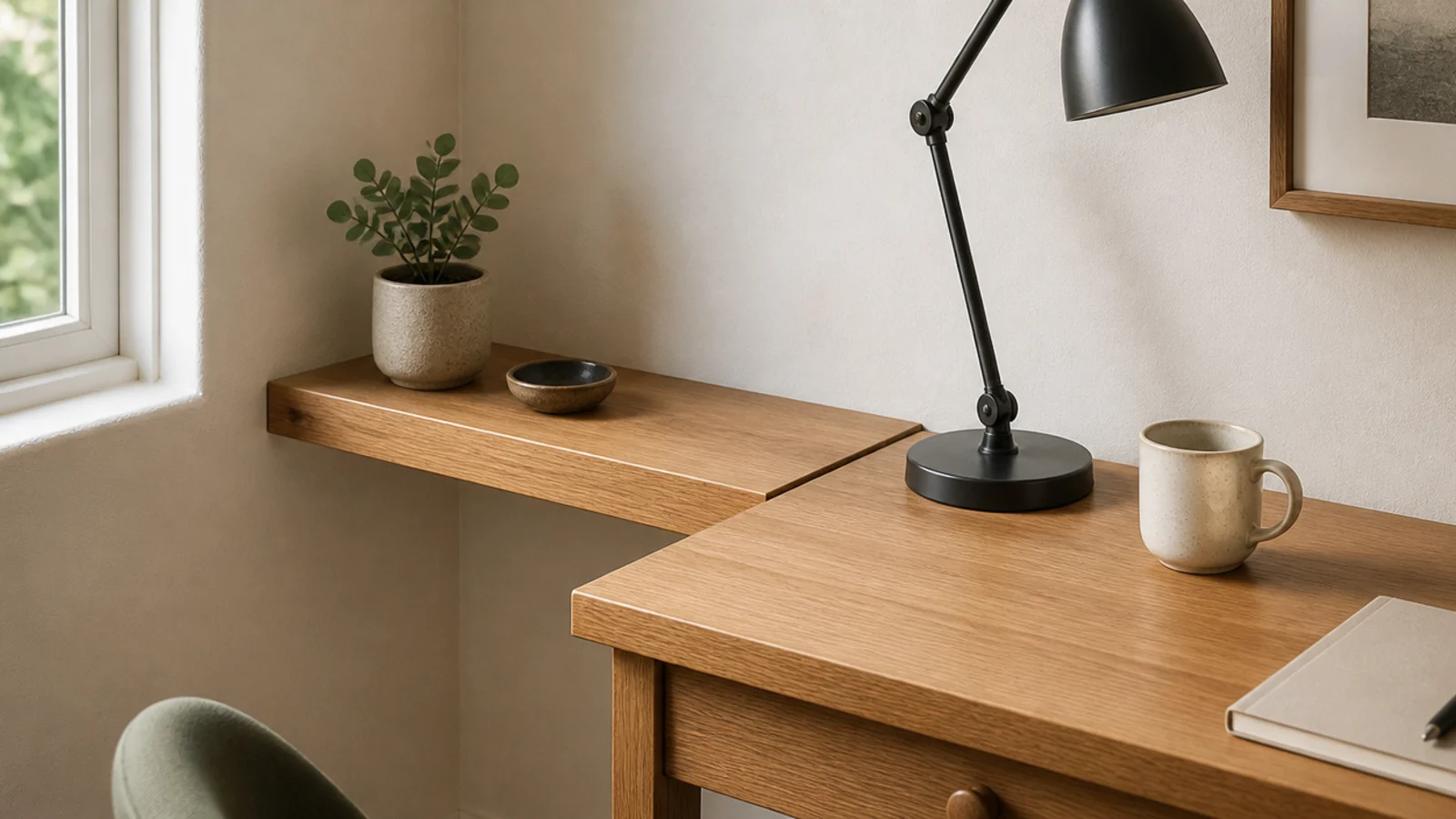
A short shelf on the side wall, level with the desk top, gives you somewhere to put the lamp and the mug without buying a bigger desk. Twelve inches is enough, and it keeps the main surface clear for whatever you are working on.
25. Choose a stool that tucks right under
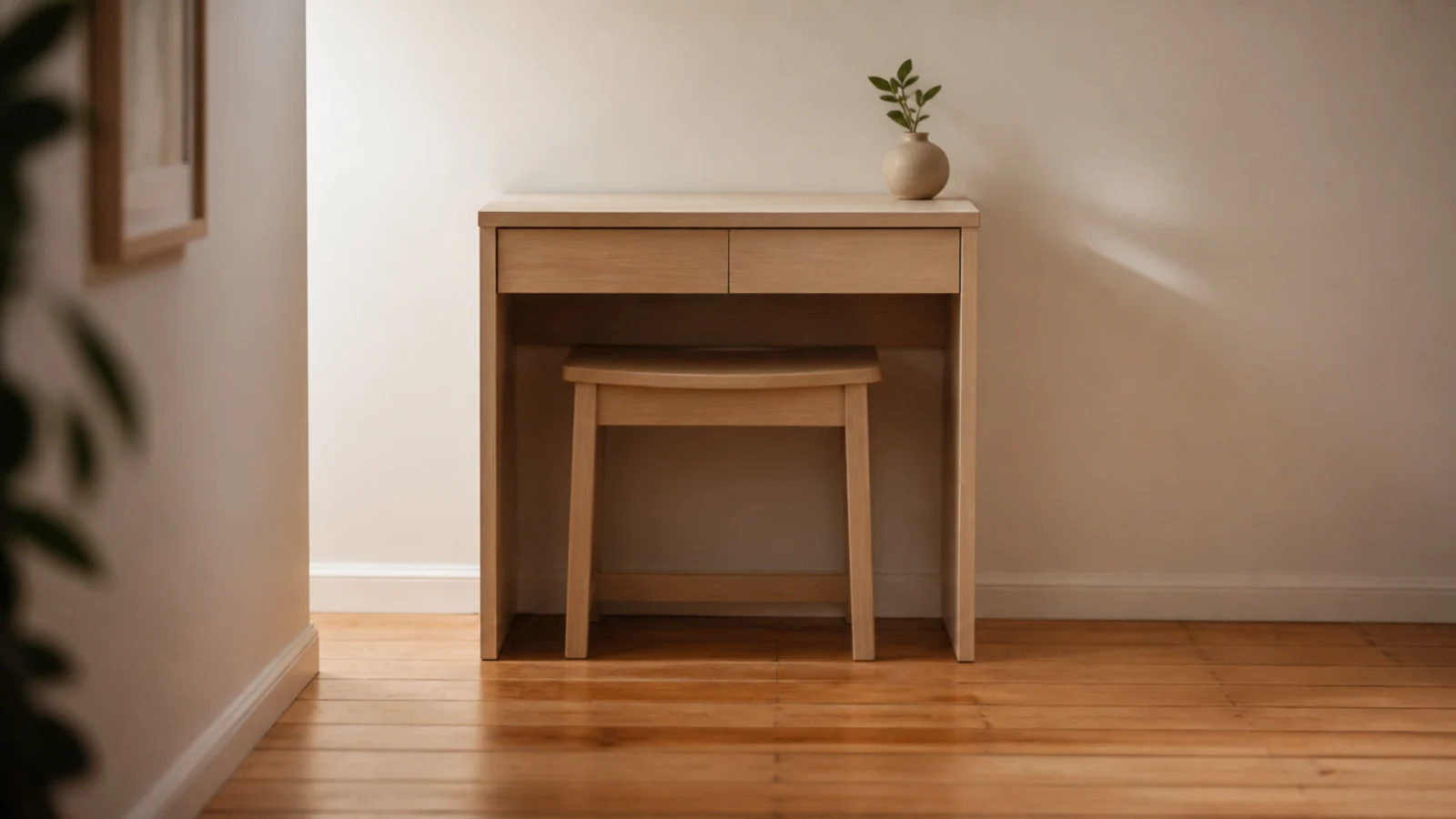
A stool with no back disappears completely under the desk and gives you the walkway back. It is not the right seat for a four hour session, but for a bedroom desk used in half hour bursts it usually wins on space.
26. Charge everything in one wall dock
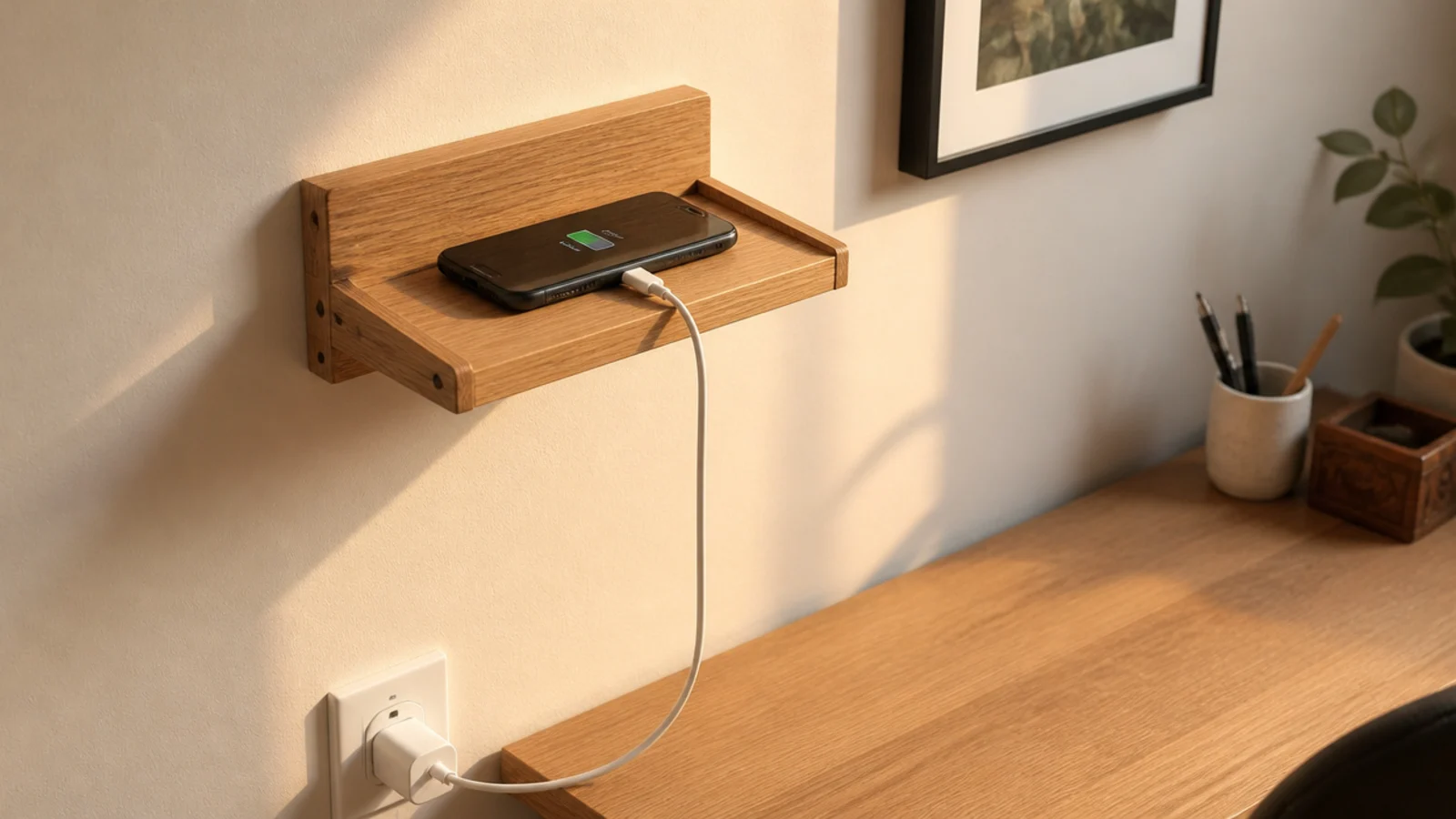
A small wall shelf beside the desk with one cable running to it stops four leads spreading across the surface. Keep the phone off the desk while you work and the dock does two jobs at once.
27. Put the tall plant on the floor
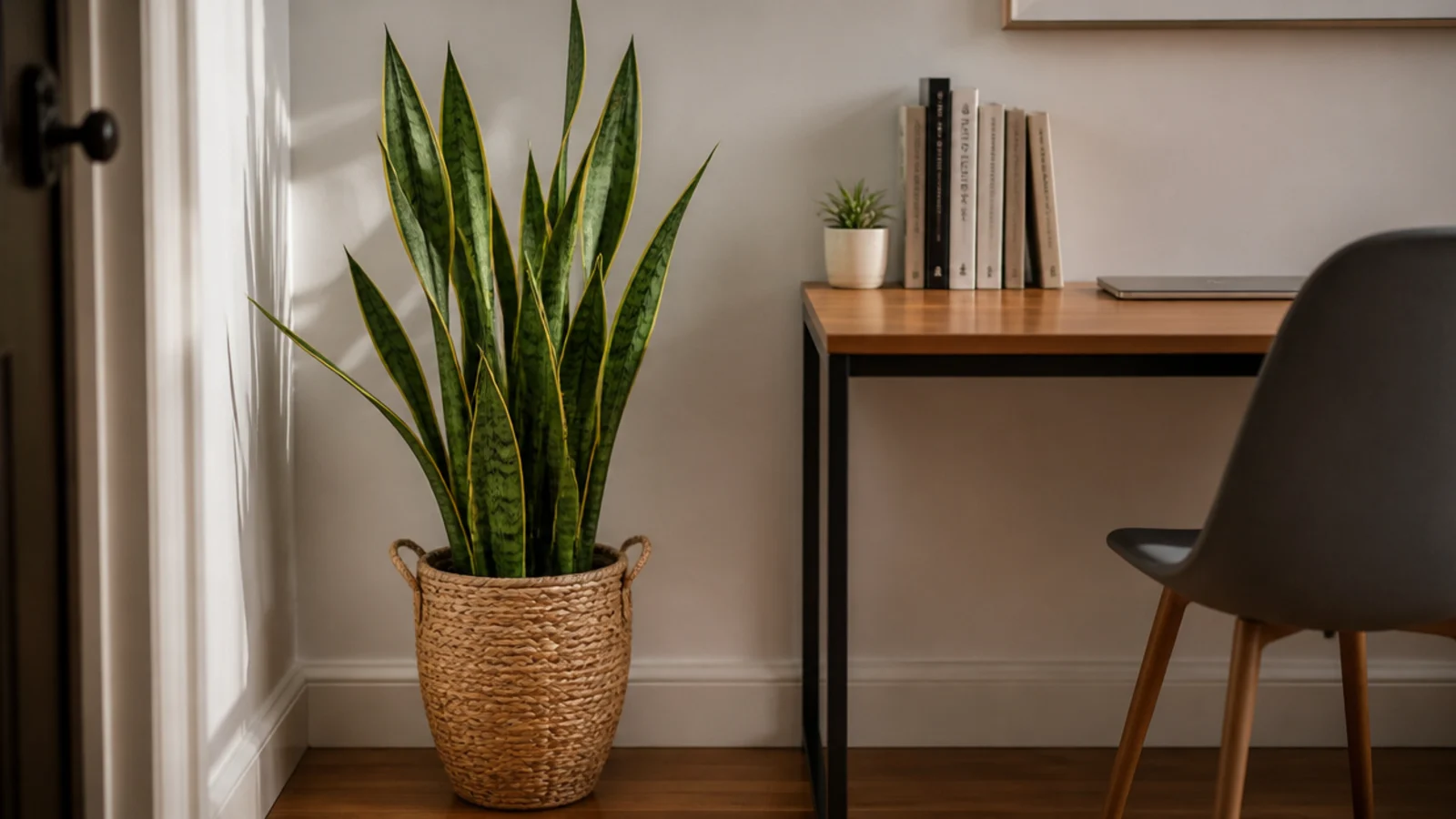
Height belongs on the floor in a small room, not on a 36 inch desk. A snake plant or a rubber plant in a basket beside the desk gives the corner a vertical line without costing you any working surface, and both cope with low light.
28. Lay a two by three foot rug under the chair
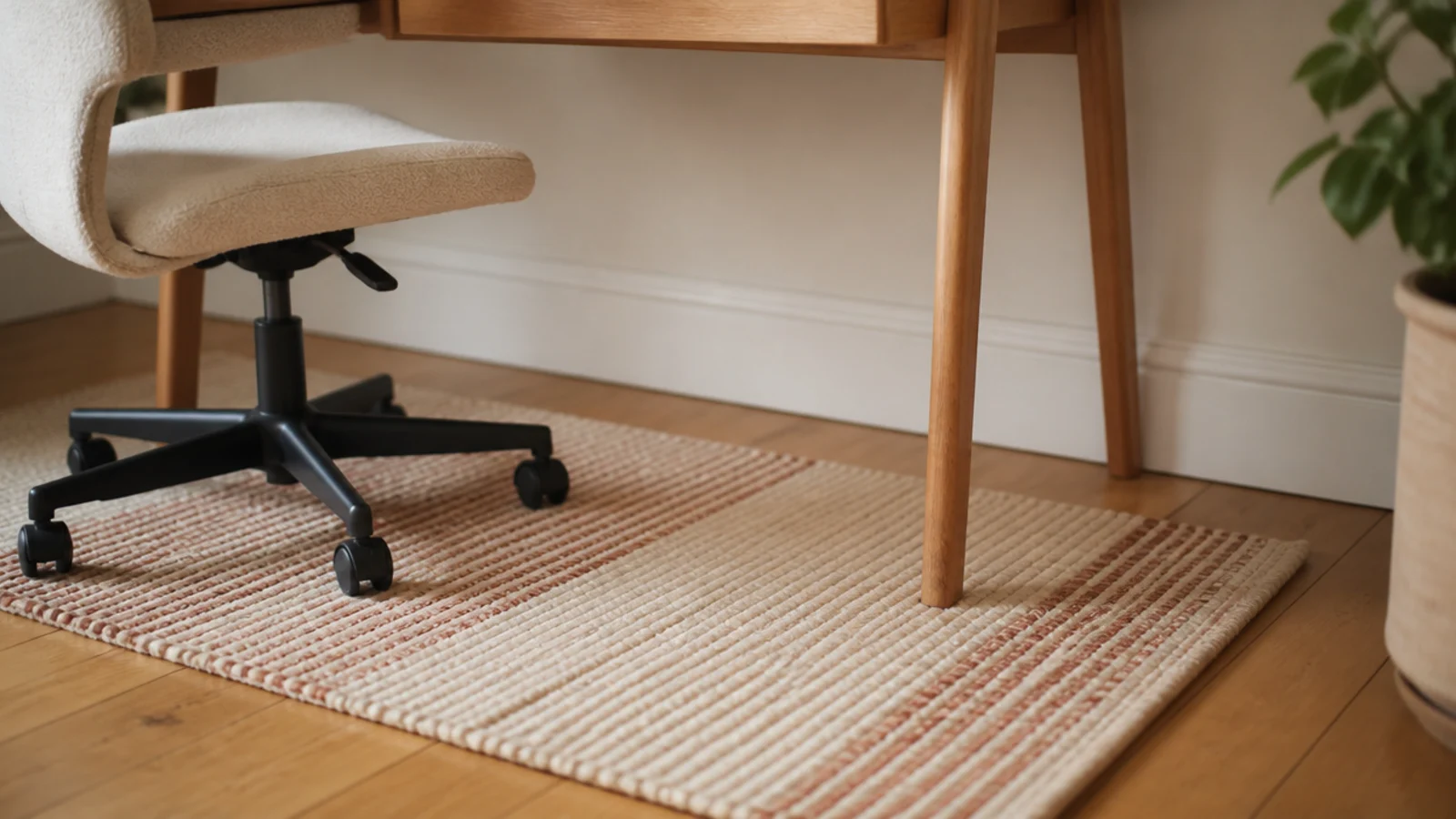
A small flat weave under the chair and front legs defines the corner as its own zone. Keep the pile under half an inch so castors still roll, and let the rug stop short of the walkway so the room does not read as chopped up.
29. Keep one clear surface rule for the whole room
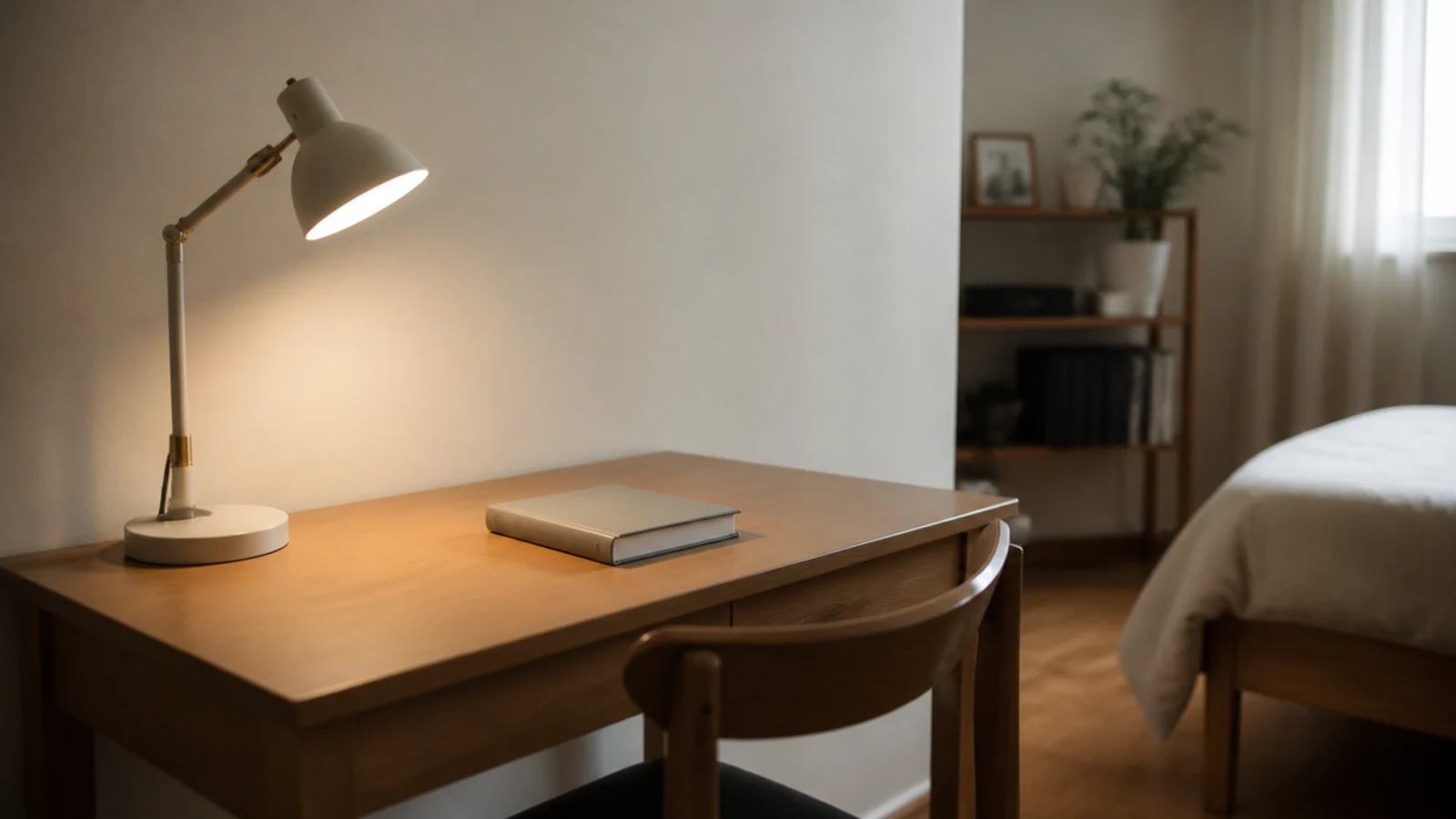
In a small bedroom, one clear surface changes how the whole space feels. Make it the desk. Everything that lands there in a day gets cleared in the last five minutes, and the room stops feeling like storage with a bed in it.
30. Photograph the room from the doorway
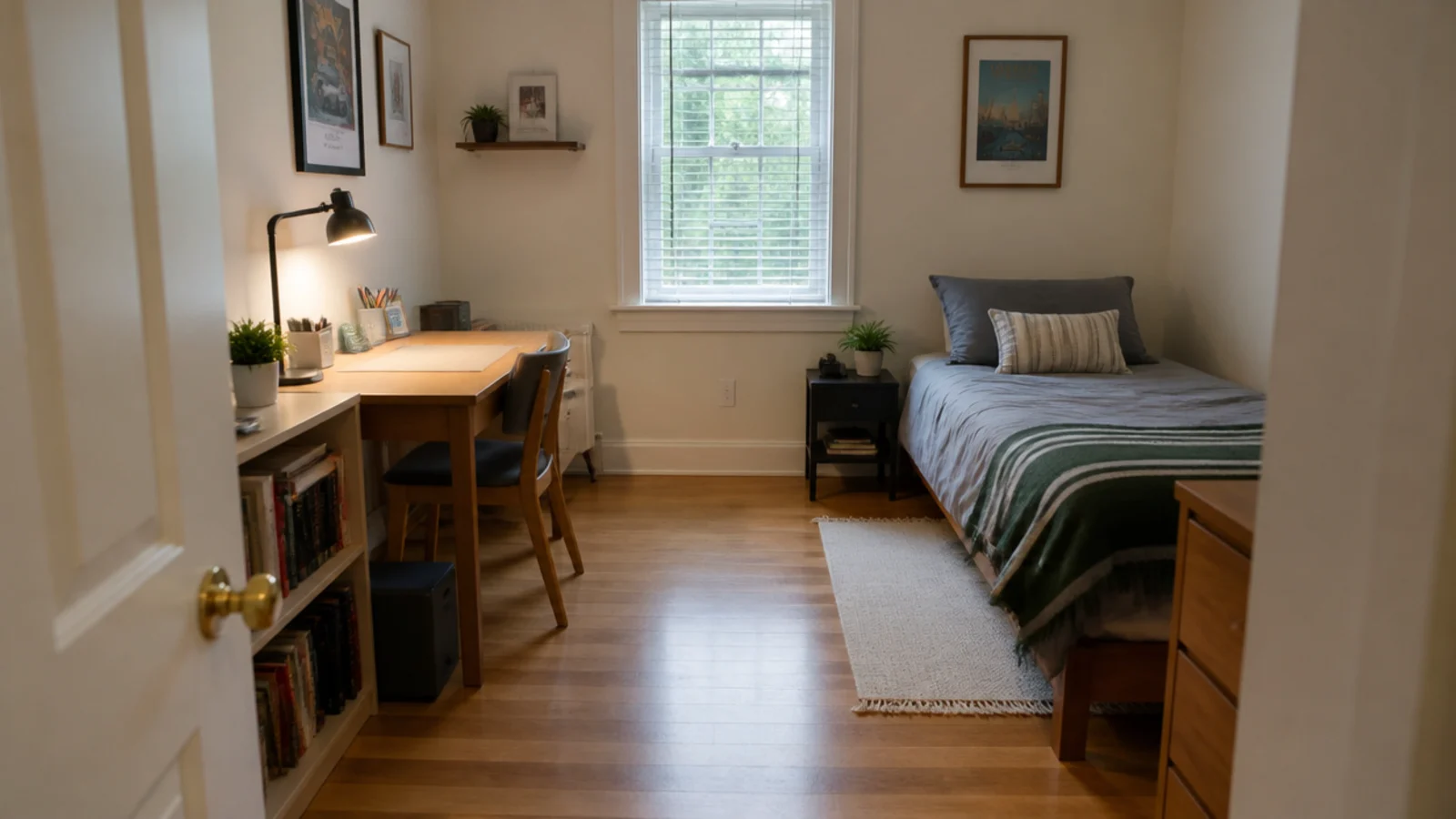
The doorway view is what you stop noticing after a week. A phone photo shows the blocked walkway, the cable across the floor and the chair that never tucks in. Fix what the picture shows and ignore everything else.
For the styled version of a small setup, the aesthetic study desk setups cover palette and wall layout. Small walk-in closet ideas use the same vertical logic on storage, and the modern teen boy bedroom guide handles a whole small room with a desk in it.
Mistakes to Skip
- Buying the widest desk that fits the wall. Width is rarely the constraint — the chair pull-out behind you is, and a 48 inch desk you cannot get out of is worse than a 36 inch one you can.
- Putting a monitor on its own stand on a 20 inch deep top. The screen ends up about 16 inches from your eyes, which is where headaches come from.
- Filling the floor with storage. Every box on the floor of a small room costs you more than it holds, and the wall above the desk is sitting empty.
- Pushing the desk against the window so you face out. The view is lovely for a week and the glare is there every afternoon after that.
Frequently asked questions
What is the smallest desk that still works with a monitor?
Around 36 inches wide by 20 inches deep, and only with a monitor arm. Without an arm the screen stand eats 8 or 9 inches of that depth and leaves you sitting far too close. On a clamped arm the screen floats back over the rear edge and a 20 inch top behaves like a 28 inch one.
How much space do I need behind a desk chair?
Thirty to thirty-six inches from the desk edge to whatever is behind you, so the chair can push back far enough to stand up. Twenty-four inches is the absolute floor and it means turning sideways to get out. Measure this before choosing a desk, because it decides the whole layout.
Can a desk go in front of a window in a small room?
Side-on to the window is far better than facing it or backing onto it. Facing means squinting into daylight all afternoon, backing onto it puts glare straight across the screen. Perpendicular gives you light across the page and a clear monitor, and it usually fits a small room better anyway.
Where does storage go when there is no room for drawers?
On the wall, starting 18 to 24 inches above the desk. Two shelves at 12 inch spacing plus a pegboard will hold more than a three drawer pedestal and take no floor at all. A narrow rolling cart 14 inches wide can then live fully under the desk between uses.
How do I light a desk in a room with no window nearby?
One task lamp at 450 to 800 lumens on the side opposite your writing hand, plus something washing the wall so the room is not a bright pool in a dark box. A warm strip behind the monitor or under a shelf does that for around fifteen dollars and stops the contrast headache.
Want more like this? Browse all 15 study desk decor guides — they all use the same measurements and budget tiers.
Pin it for later
Save this to your Study Desk Decor board
Pin it now so it is waiting for you when the tape measure comes out — and so the next person hunting for this idea can find it too.
Save this pinKeep going
More ideas worth saving while you have the tape measure out.