Headboard Ideas · Listicle
30 Beautiful Headboard Ideas to Steal Today

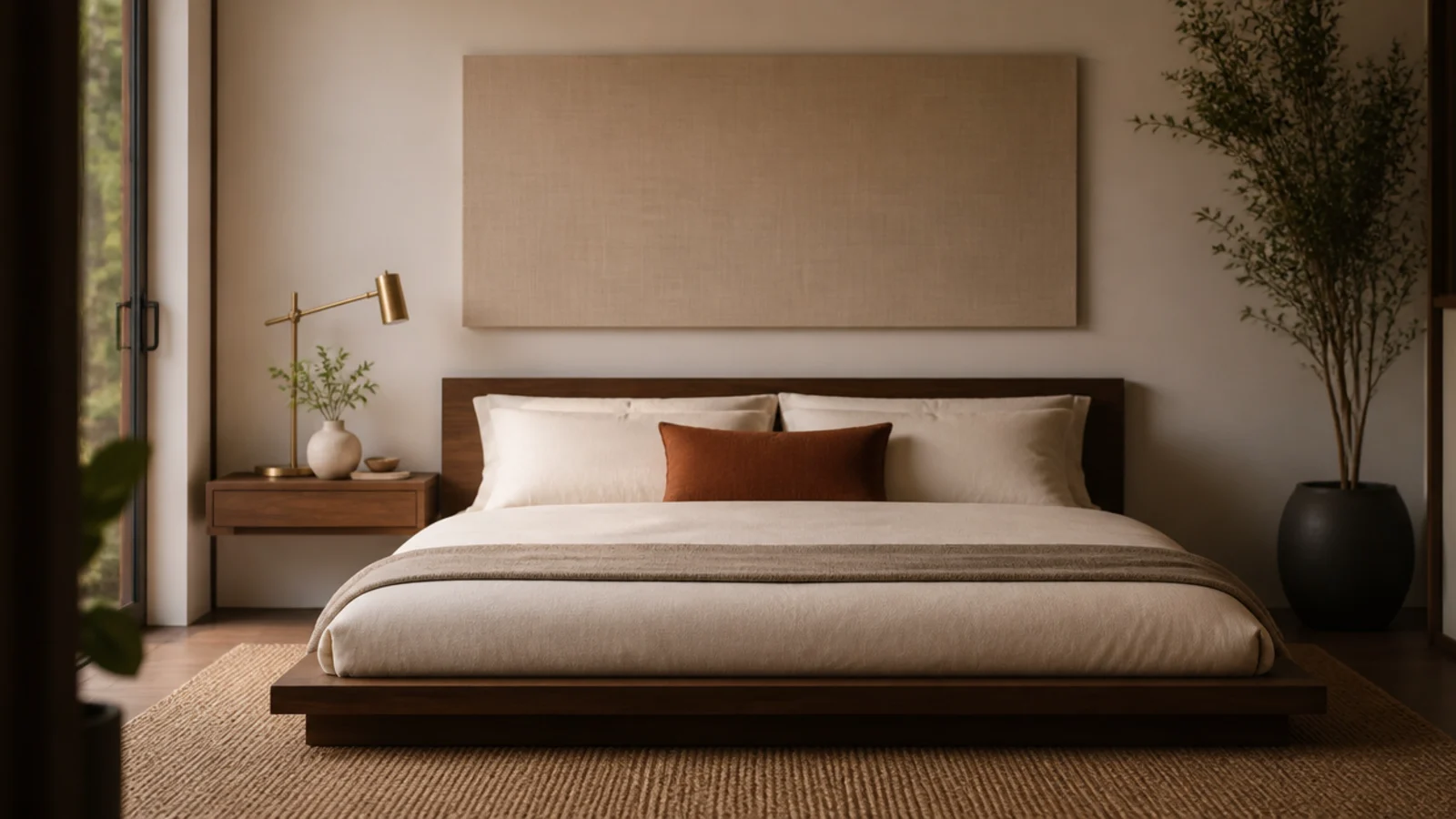
Modern headboard ideas succeed or fail on proportion, not on material. I have specified panels in oak, boucle, leather and plaster, and the ones that looked right all shared the same measurements while the ones that looked slightly off were usually only 3 inches wrong. Thirty versions below, each with the numbers that make them read as designed rather than bought.
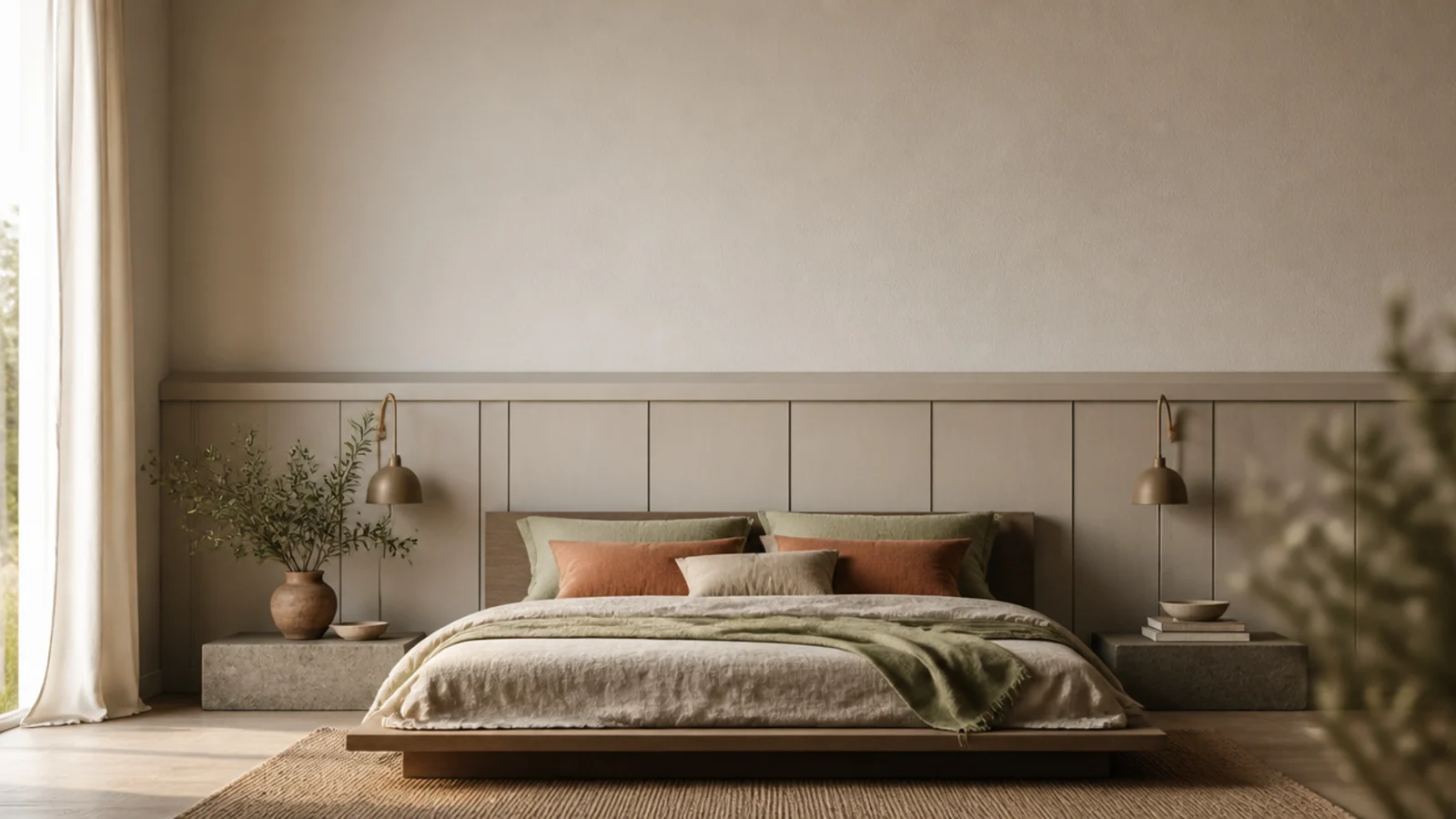
In this guide32 sections — tap to openHide
- 1.The proportions that make modern headboard ideas work
- 2.A flat panel with no detail at all
- 3.A floating panel with a shadow gap beneath
- 4.A low panel that runs wall to wall
- 5.Fluted oak
- 6.Vertical channel upholstery in a tight repeat
- 7.An arch in one flat color
- 8.A plaster or micro-cement finish
- 9.A two-tone split panel
- 10.Concealed lighting behind the panel
- 11.Nightstands cantilevered off the panel
- 12.Cream boucle
- 13.A leather or leather-look panel
- 14.A slatted oak wall floor to ceiling
- 15.A thin metal frame around fabric
- 16.Rounded ends instead of square corners
- 17.A low platform bed with a matching low panel
- 18.A recessed niche inside the panel
- 19.Full height to the ceiling
- 20.A monolithic painted block
- 21.Cane inside a minimal oak frame
- 22.An asymmetric panel offset to one side
- 23.A stone-look large-format panel
- 24.A brass reveal line along the top edge
- 25.A bolster on a slim steel rail
- 26.Two stacked panels with a shadow gap
- 27.An upholstered panel on exposed timber legs
- 28.Fine reeding at half-inch centers
- 29.A panel that continues into a floating shelf
- 30.A panel painted the exact wall color
- 31.A lit ledge with the source hidden
- 32.Mistakes to Skip
The proportions that make modern headboard ideas work
Width first, and here modern inverts the traditional rule. A panel that stops exactly at the mattress edge looks accidental. Extend it 4 inches past the mattress on each side — 68 inches for a queen, 62 for a full, 84 for a king — or run it the entire wall. Mattress widths are fixed at twin 38 inches, full 54, queen 60 and king 76.
Height second, and there are only two correct answers. Low, at 24 to 28 inches above the mattress. Or full, running to the ceiling. The 30 to 38 inch band reads as indecision in a modern room more obviously than anywhere else.
Then detail, or the absence of it. No visible hardware, no shaped edges, no pattern. Edges are square or fully rounded, never softened by a little. One texture and one color per panel.
Finally the fixing, because a floating look depends on it entirely. A French cleat into two studs holds the lateral load a headboard takes every night while leaving nothing visible underneath. Stop the bottom edge 2 to 3 inches clear of the bed frame and a shadow line does the rest.
Budget tiers: painted blocks and reeded panels run $40 to $110 ($). Fluted oak, slat walls and made-to-size upholstery land at $180 to $450 ($$). Plaster, leather and integrated lighting start near $600 ($$$).
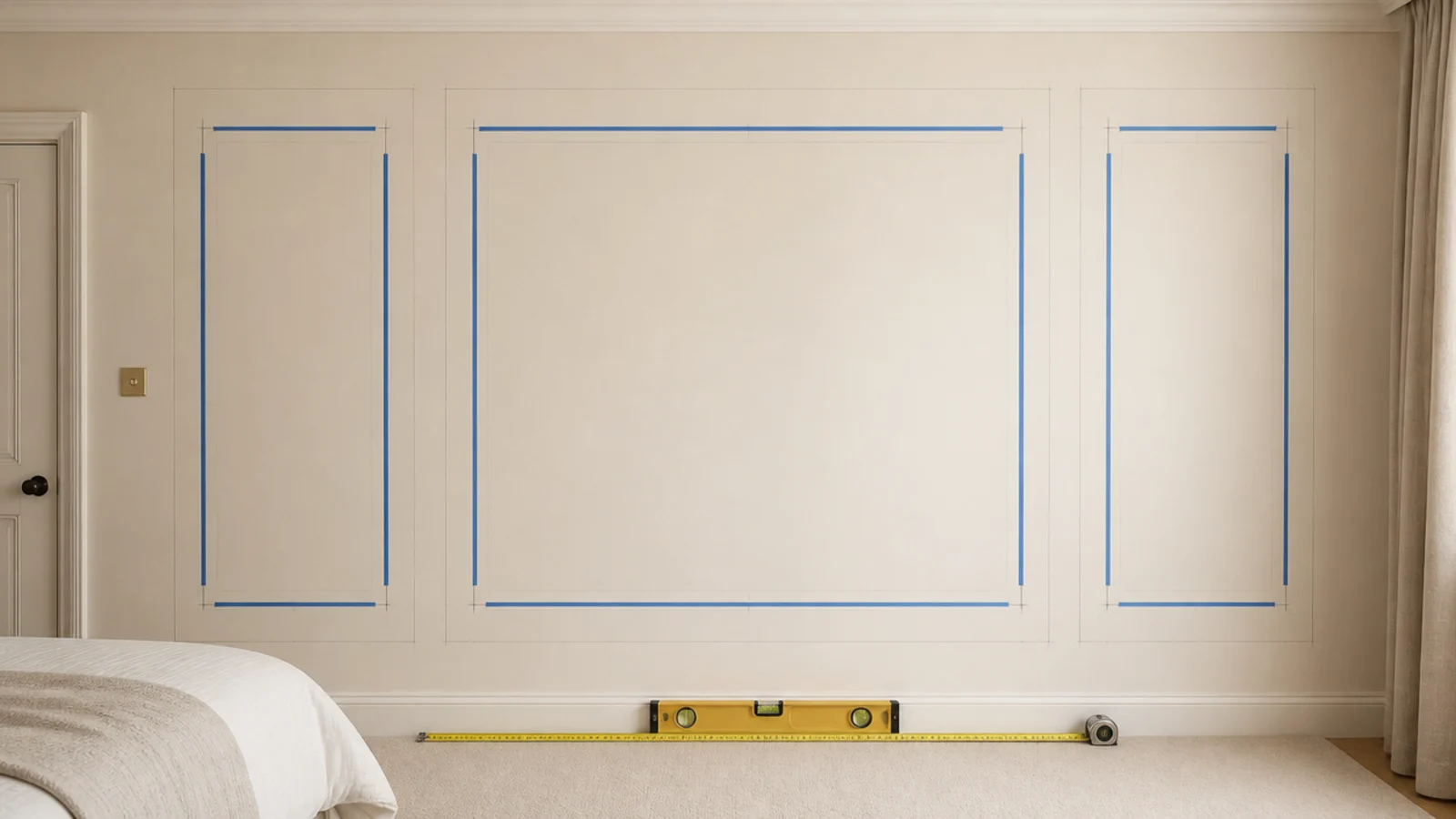
1. A flat panel with no detail at all
The purest version. A rectangle in oatmeal linen or cream boucle, 68 inches wide for a queen, 26 inches above the mattress, square edges, nothing else.
Restraint is the whole design, which means the dimensions have to be exactly right because nothing distracts from them.
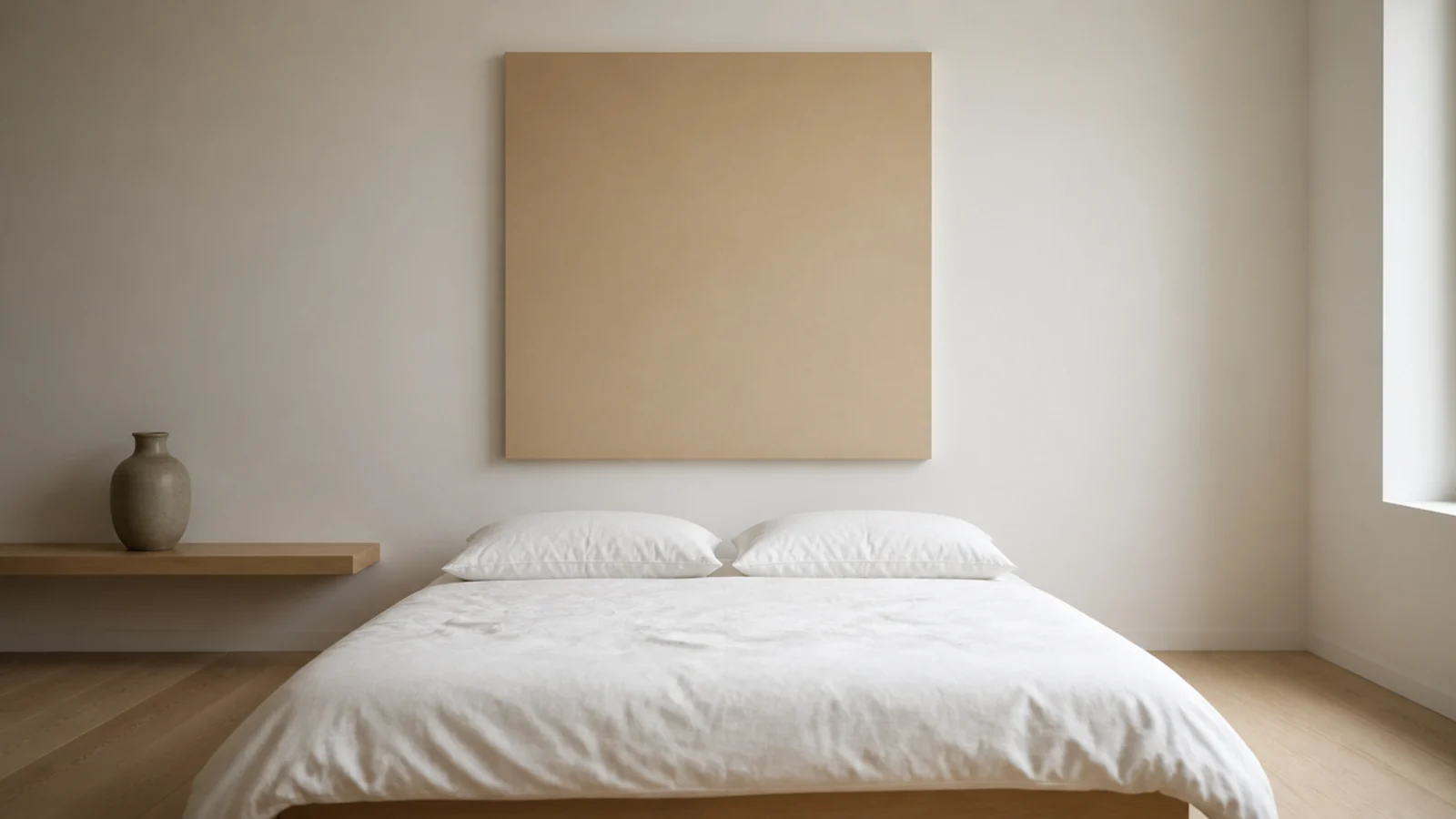
2. A floating panel with a shadow gap beneath
Hang the panel so a 2 to 3 inch gap runs between its lower edge and the top of the bed frame. Nothing touches the floor, so the panel appears to hover.
The gap needs to be consistent along its length, which means leveling the cleat properly rather than approximately.
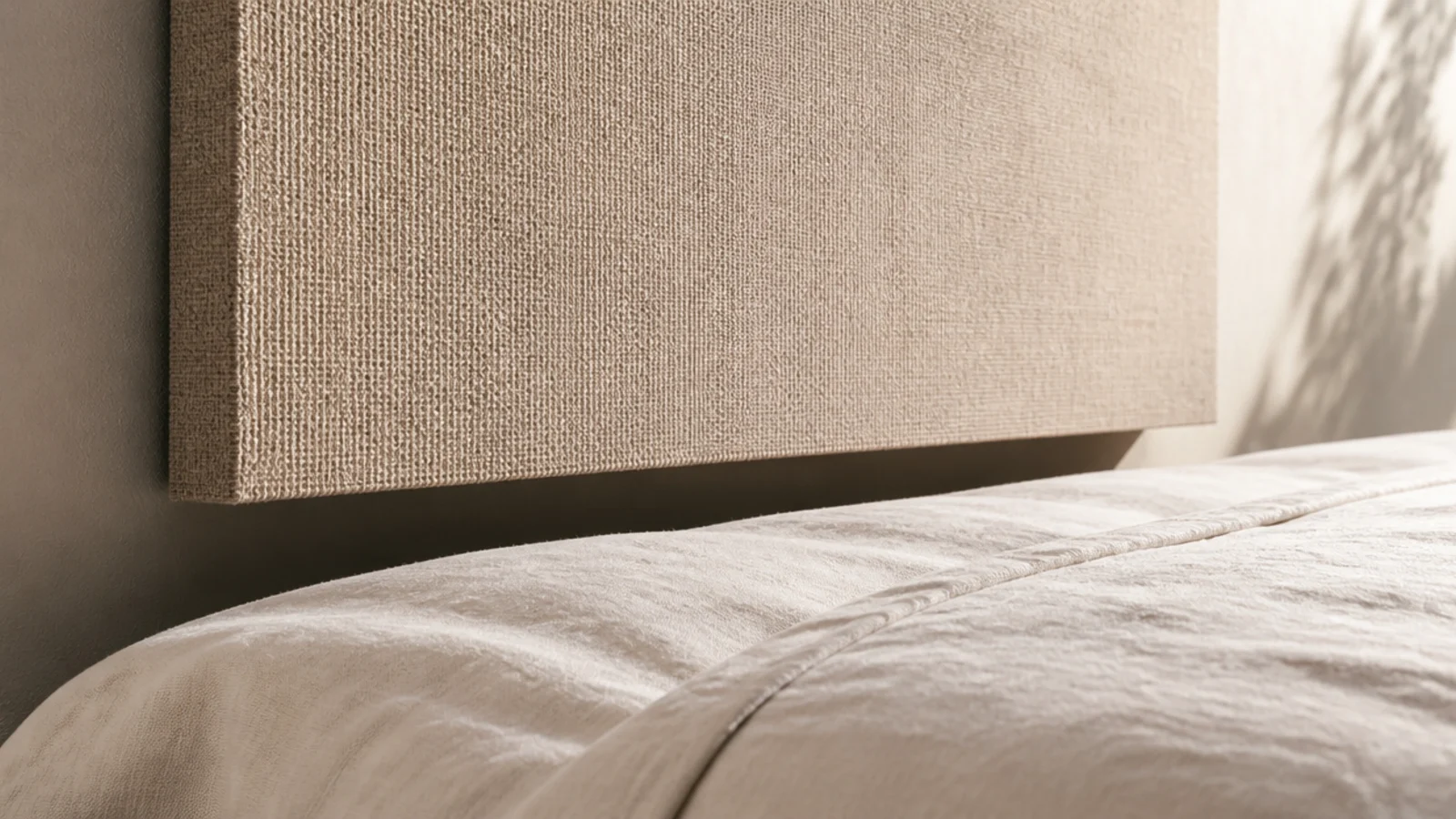
3. A low panel that runs wall to wall
Instead of sizing to the bed, run a 26-inch panel from corner to corner across the whole wall. The bed then sits inside a band rather than against a shape.
It costs less per square foot than most people assume, and it lets you mount floating nightstands directly onto it.
4. Fluted oak
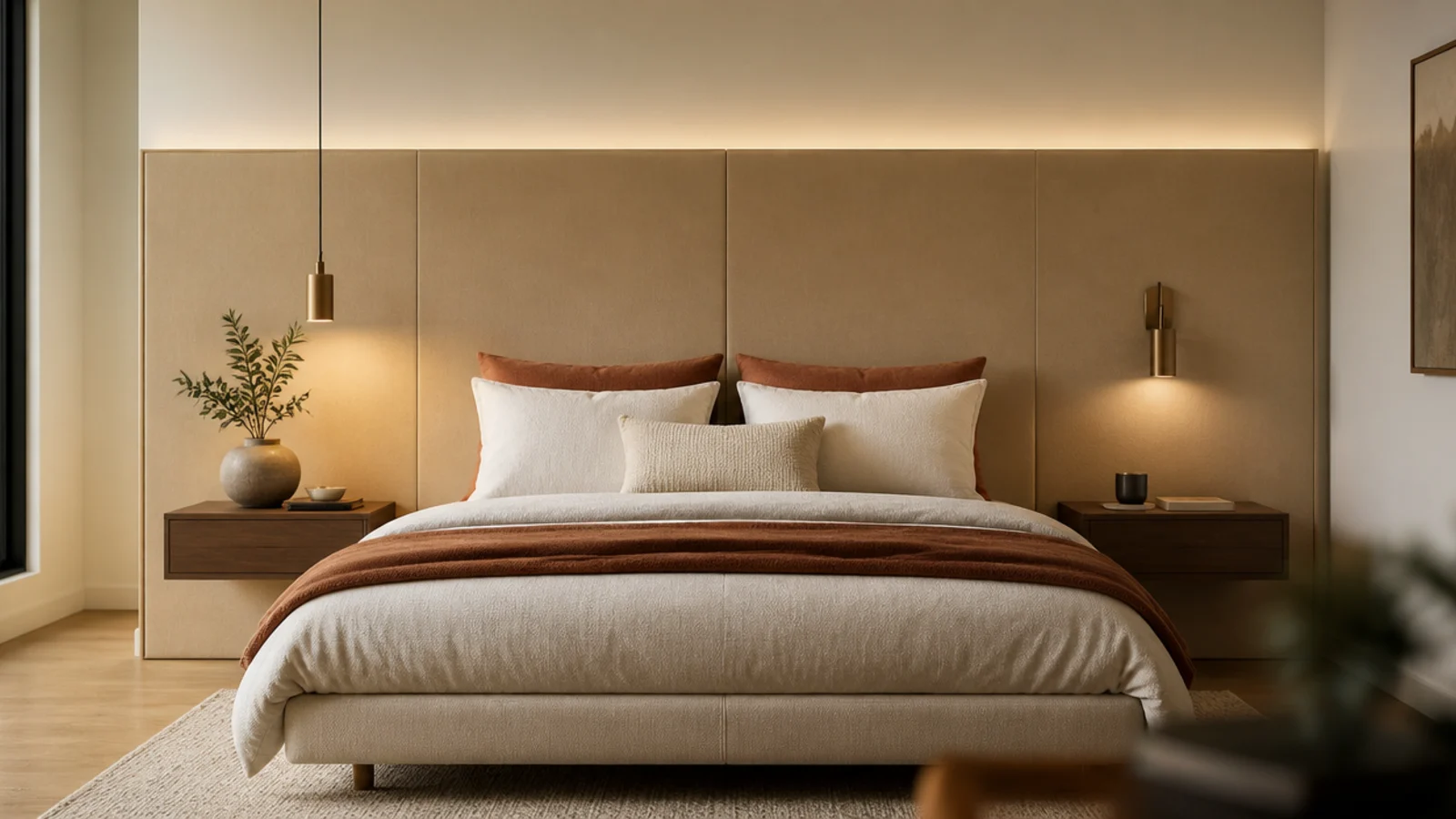
Half-inch round-nose grooves routed at 1-inch centers into oak-veneered plywood, running the full panel height.
Seal the grooves before staining or they take color darker than the flat faces. Around $110 for a queen panel in materials ($$), and it reads as expensive millwork from any distance.
5. Vertical channel upholstery in a tight repeat
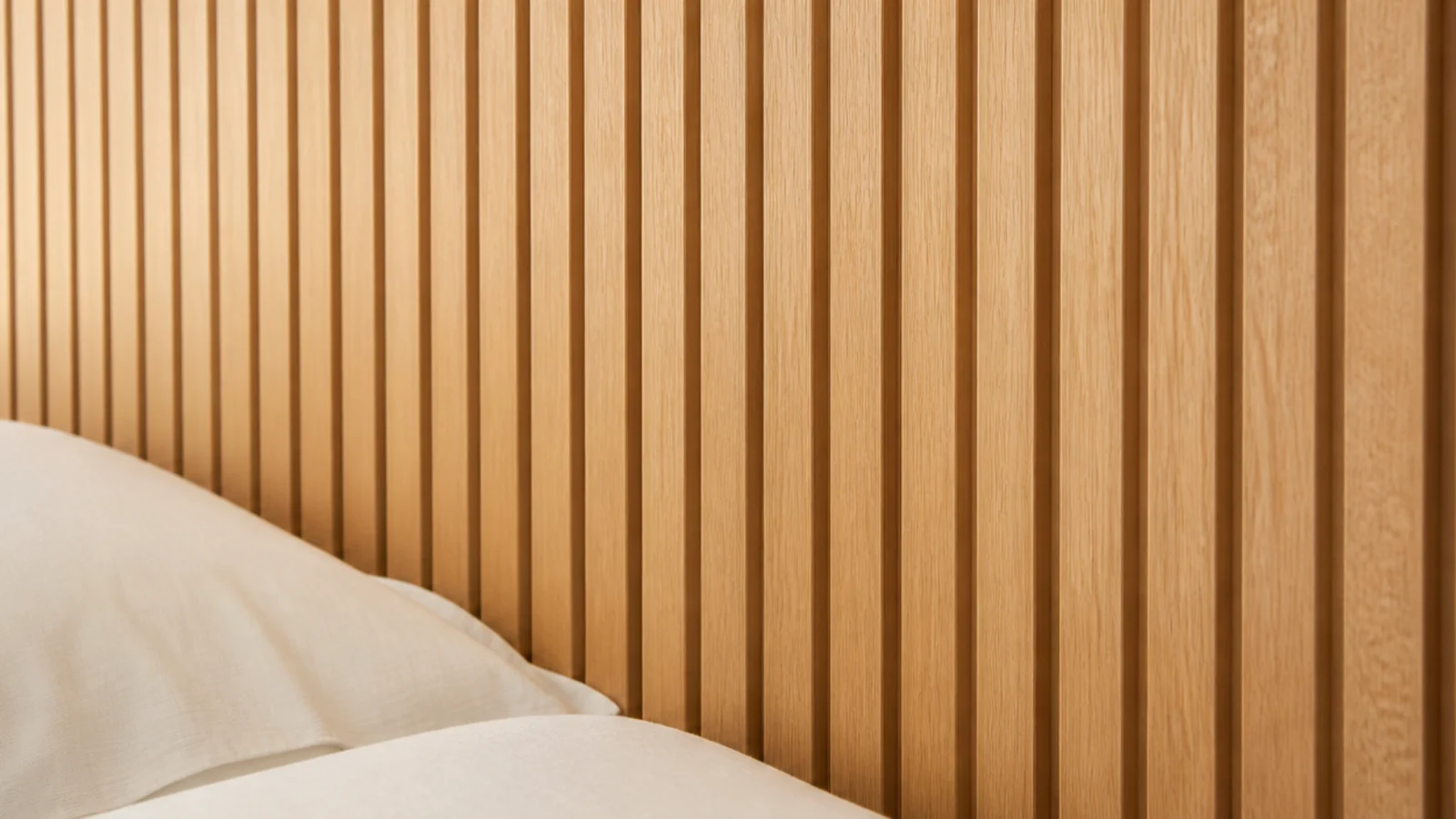
Channels are the modern tufting, because there are no buttons. What makes them read modern rather than traditional is the width.
Four to 5 inches per channel gives a tight contemporary rhythm; 8 inches reads soft and classic. Three-inch foam holds the valleys sharper than two.
6. An arch in one flat color
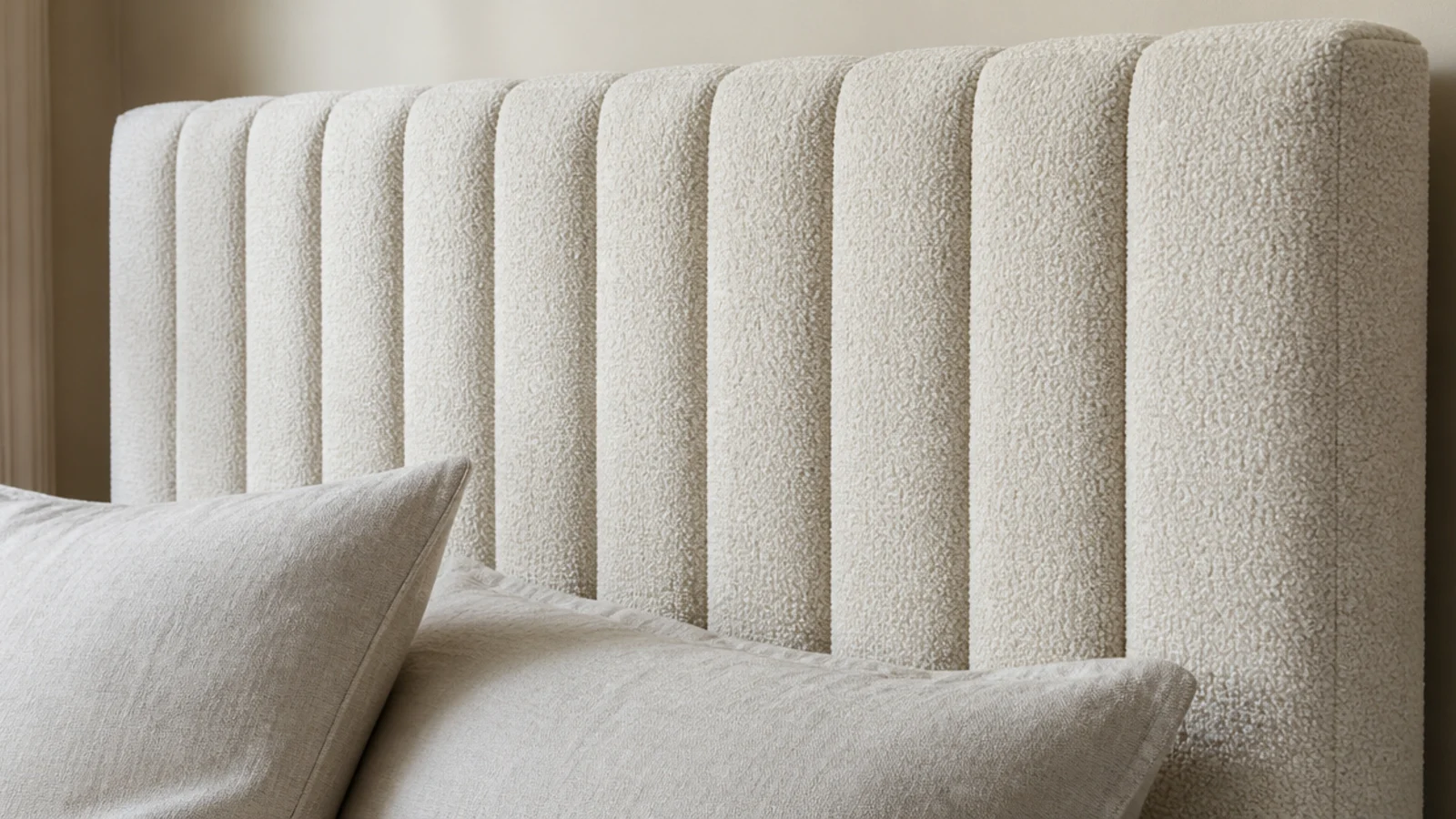
A smooth arch with no trim, no seam and no contrast. The curve itself is the only event.
Keep the radius generous — a shallow rise of 6 to 8 inches on a 68-inch panel — and take the top of the curve to about 50 inches above the mattress.
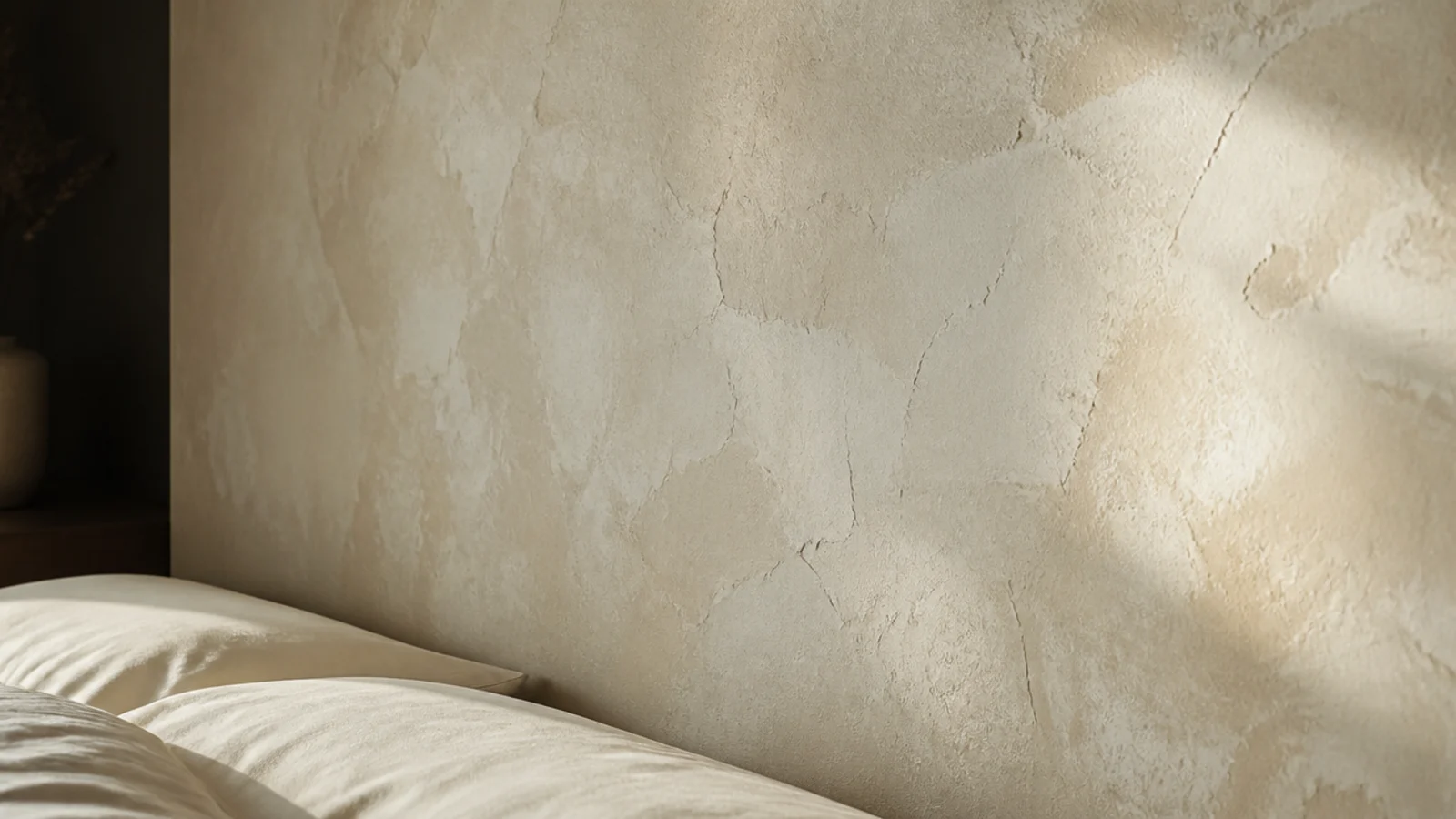
7. A plaster or micro-cement finish
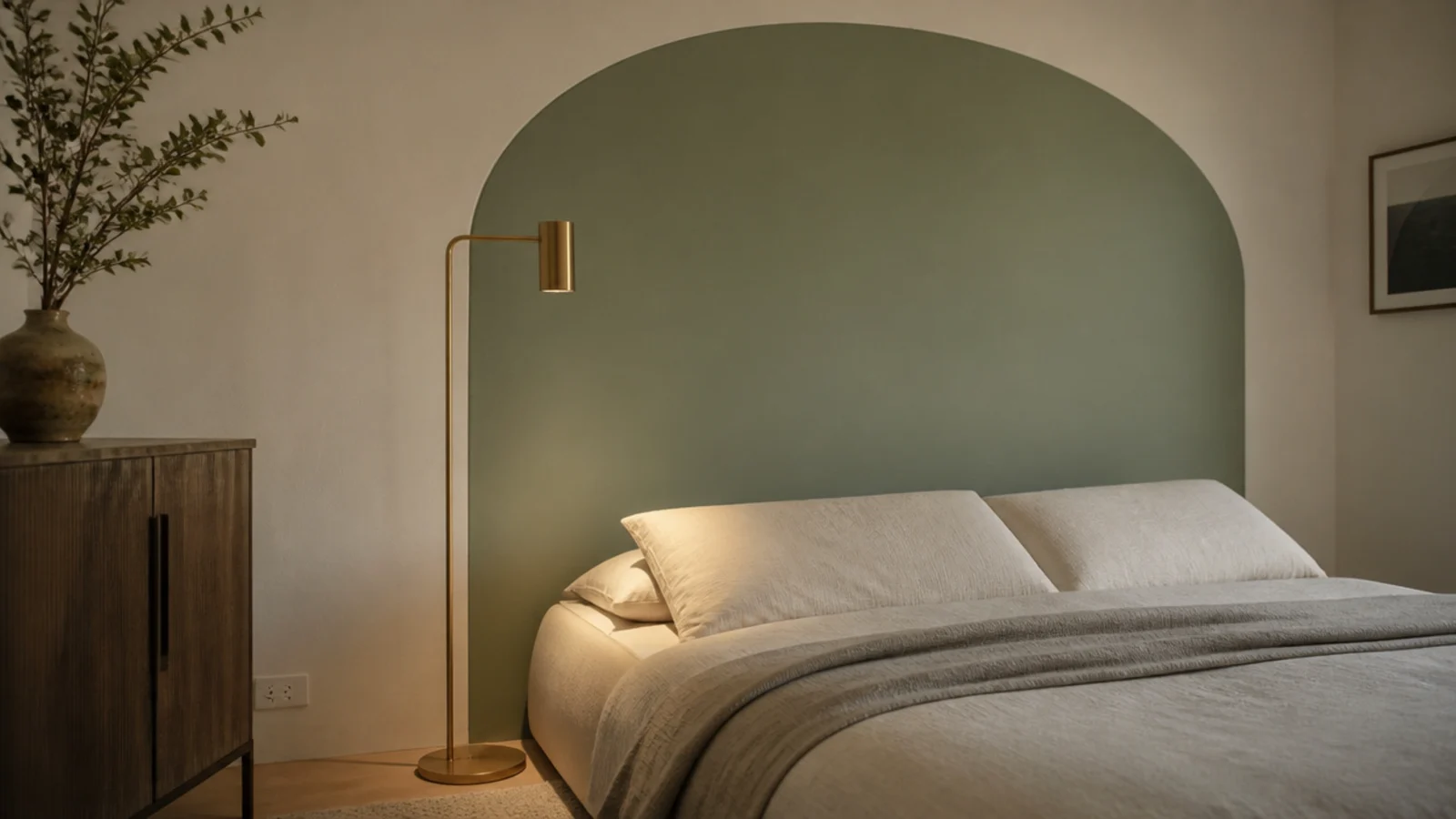
A hand-troweled plaster panel reads as a continuation of the wall, so the bed appears to sit inside the architecture rather than in front of it.
Apply over a rigid backer, not directly onto drywall behind a bed, so you can remove it later. Roughly $600 done professionally ($$$).
8. A two-tone split panel
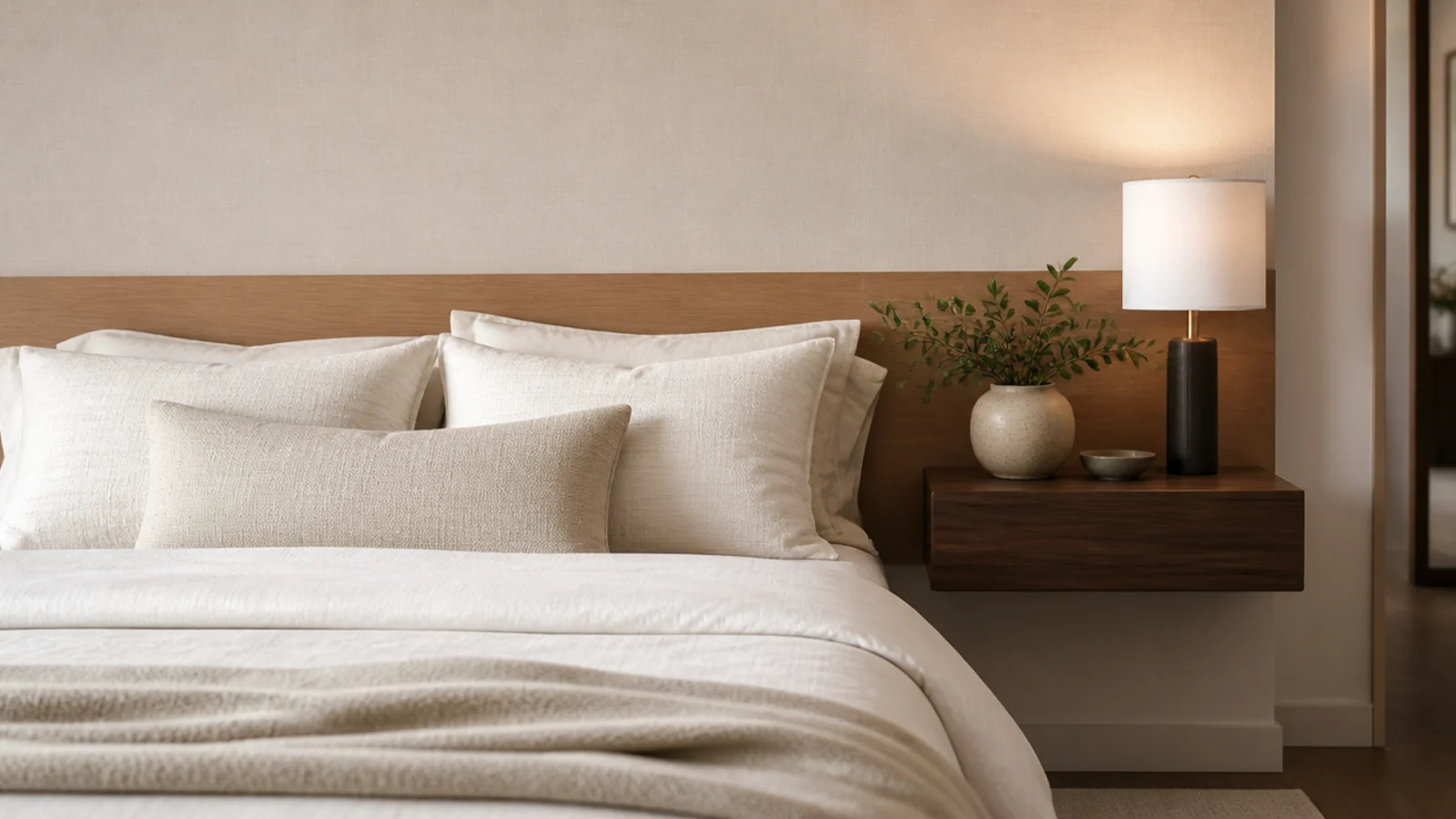
Split the panel horizontally: warm oak in the lower band where shoulders land, pale fabric above.
Split at one third, never at half. A panel divided in the middle looks unresolved, while a one-third division reads as a deliberate proportion. Keep the join line crisp and level.
9. Concealed lighting behind the panel
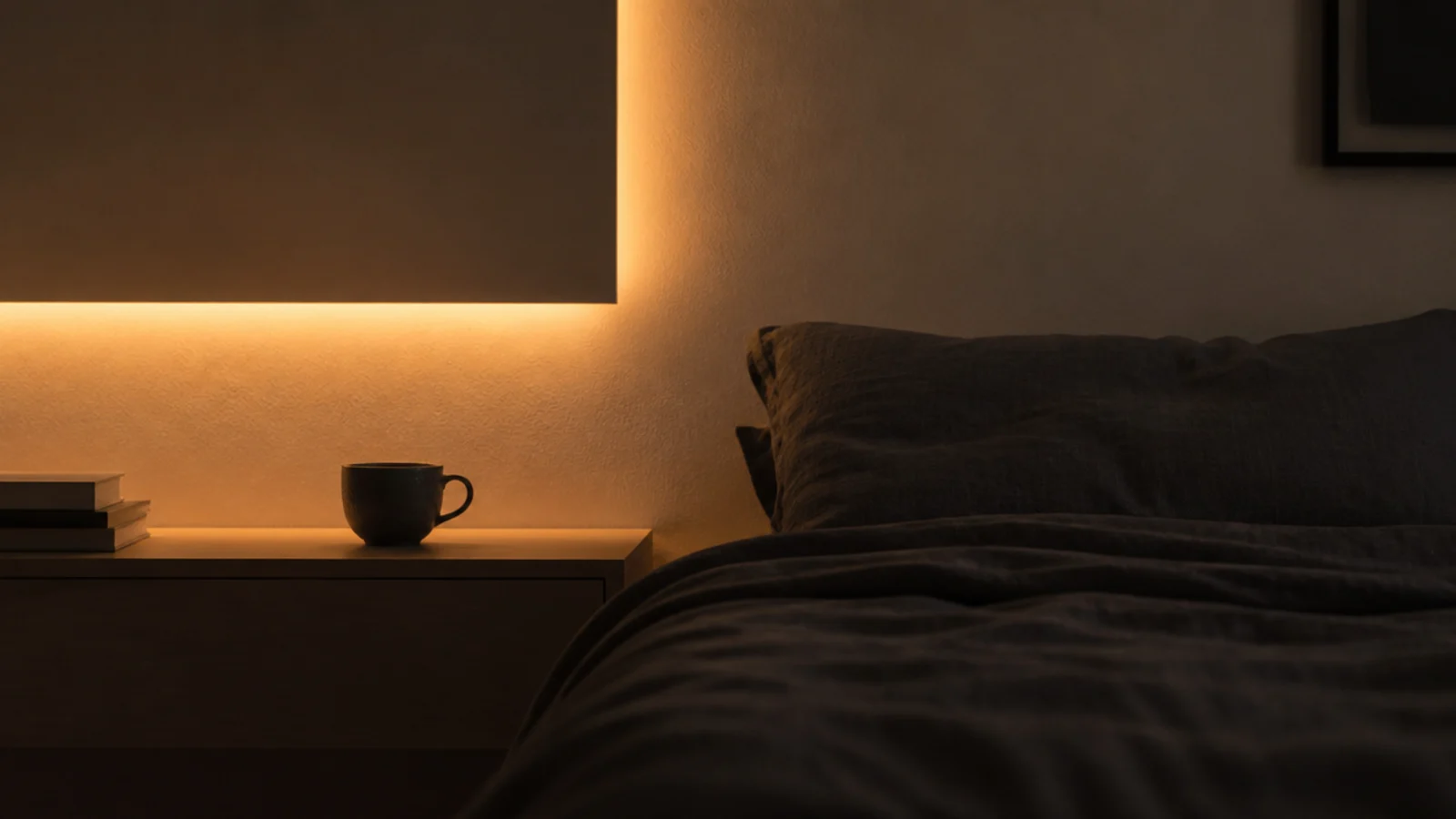
A warm-white LED strip fixed to the back edge of a floating panel washes the wall and makes the panel appear to lift off it.
Use 2700K, never anything cooler, and a dimmer. Tape the strip 2 inches in from the panel edge so no diode is ever visible from the bed.
10. Nightstands cantilevered off the panel
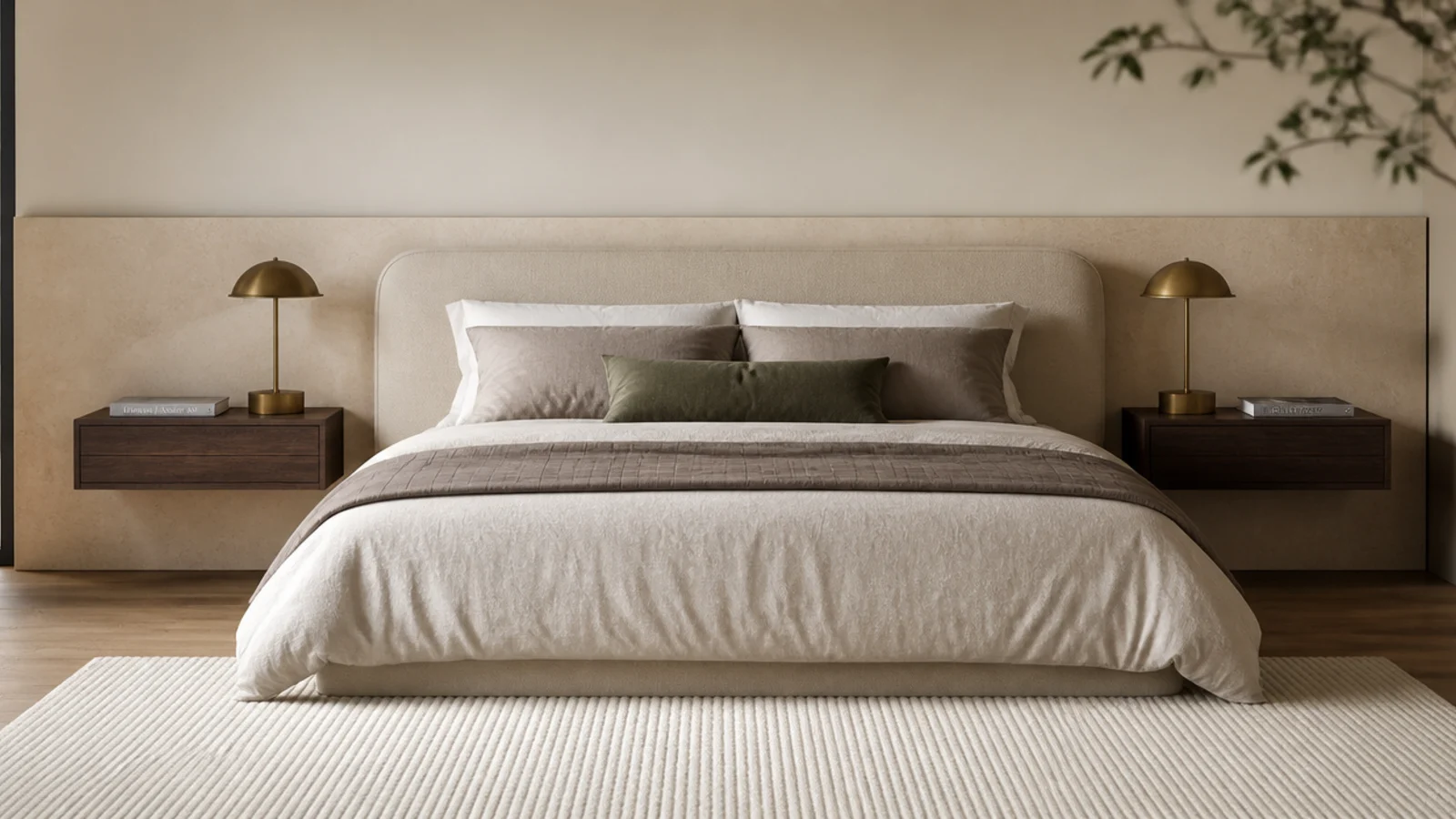
Build the bedside surfaces into the panel itself so nothing touches the floor. An unbroken floor is one of the clearest modern signals in a bedroom.
Each cantilever needs its own steel bracket into a stud. Keep them 12 inches deep and level with the mattress top.
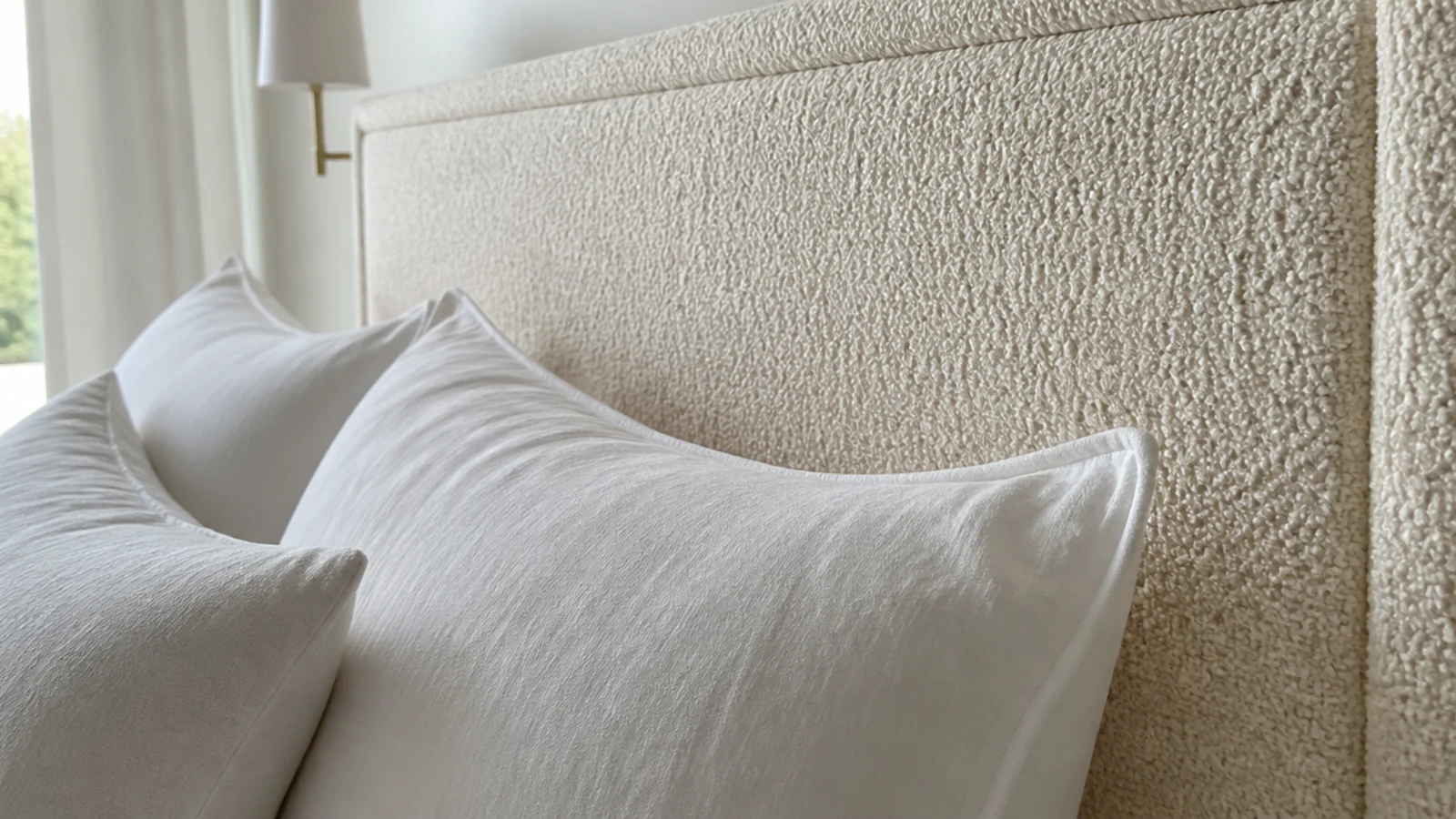
11. Cream boucle
Boucle gives a modern bedroom texture without pattern, which is precisely the trade this style makes everywhere.
Choose a tight loop rather than a shaggy one, since loose loops snag on jewelry and rings. Check the rub count is above 30,000 if anyone reads in bed nightly.
12. A leather or leather-look panel
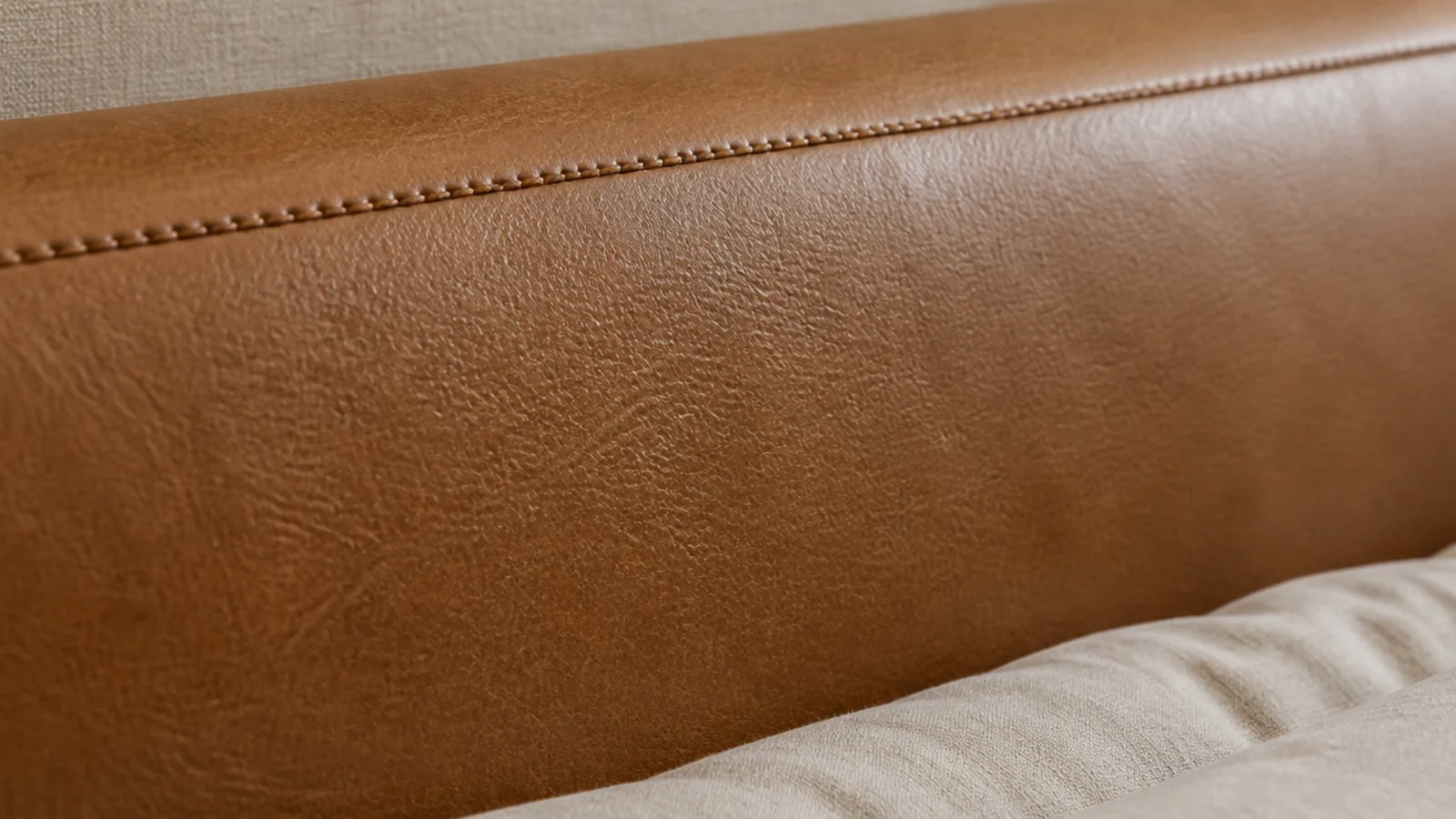
A tan or dark chocolate leather panel with one stitched seam along the top edge and nothing else.
Real hide costs $400 and up ($$$); good polyurethane alternatives run $120 and wear surprisingly well. Keep it away from direct sun, which dries and cracks both.
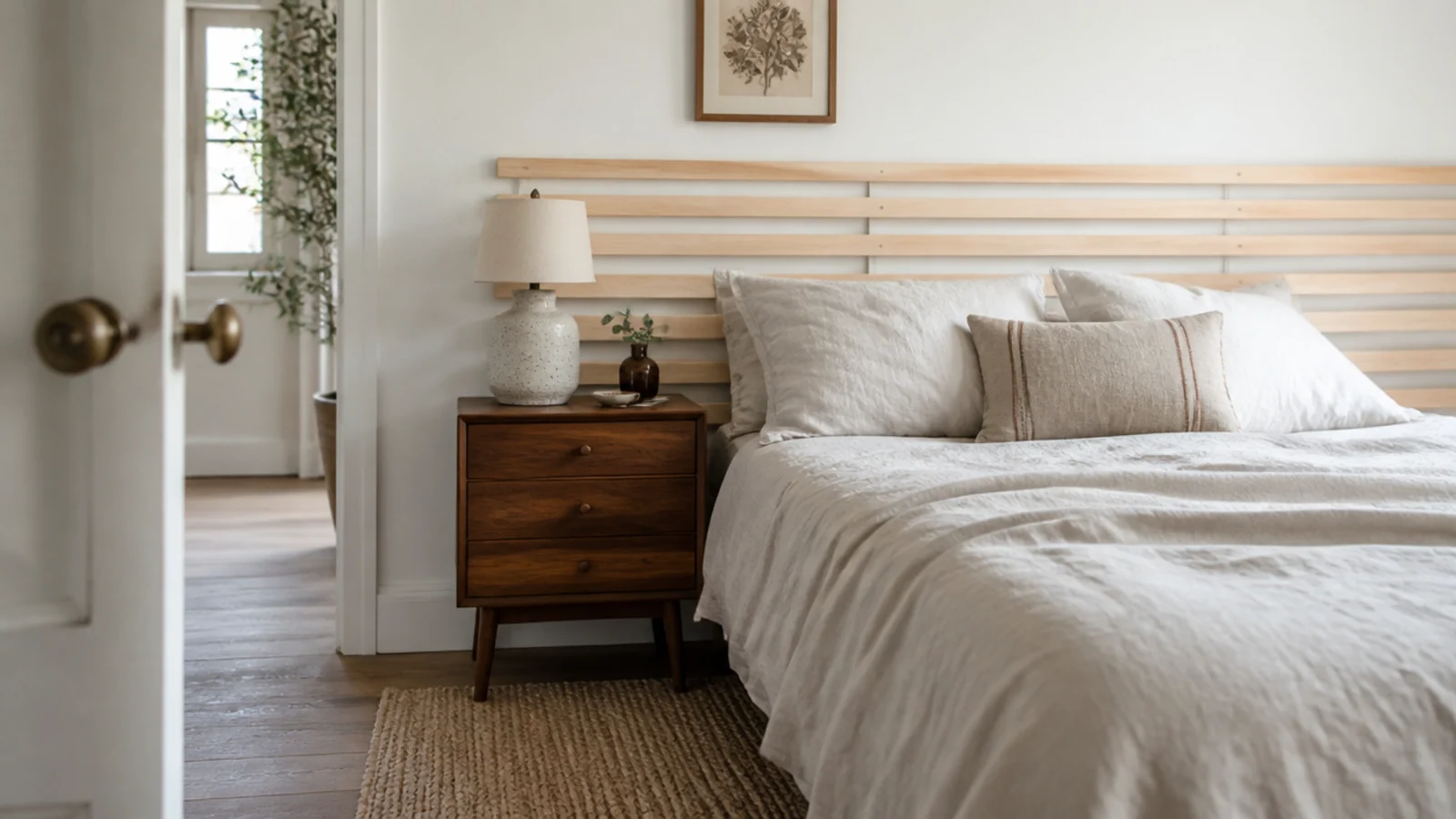
13. A slatted oak wall floor to ceiling
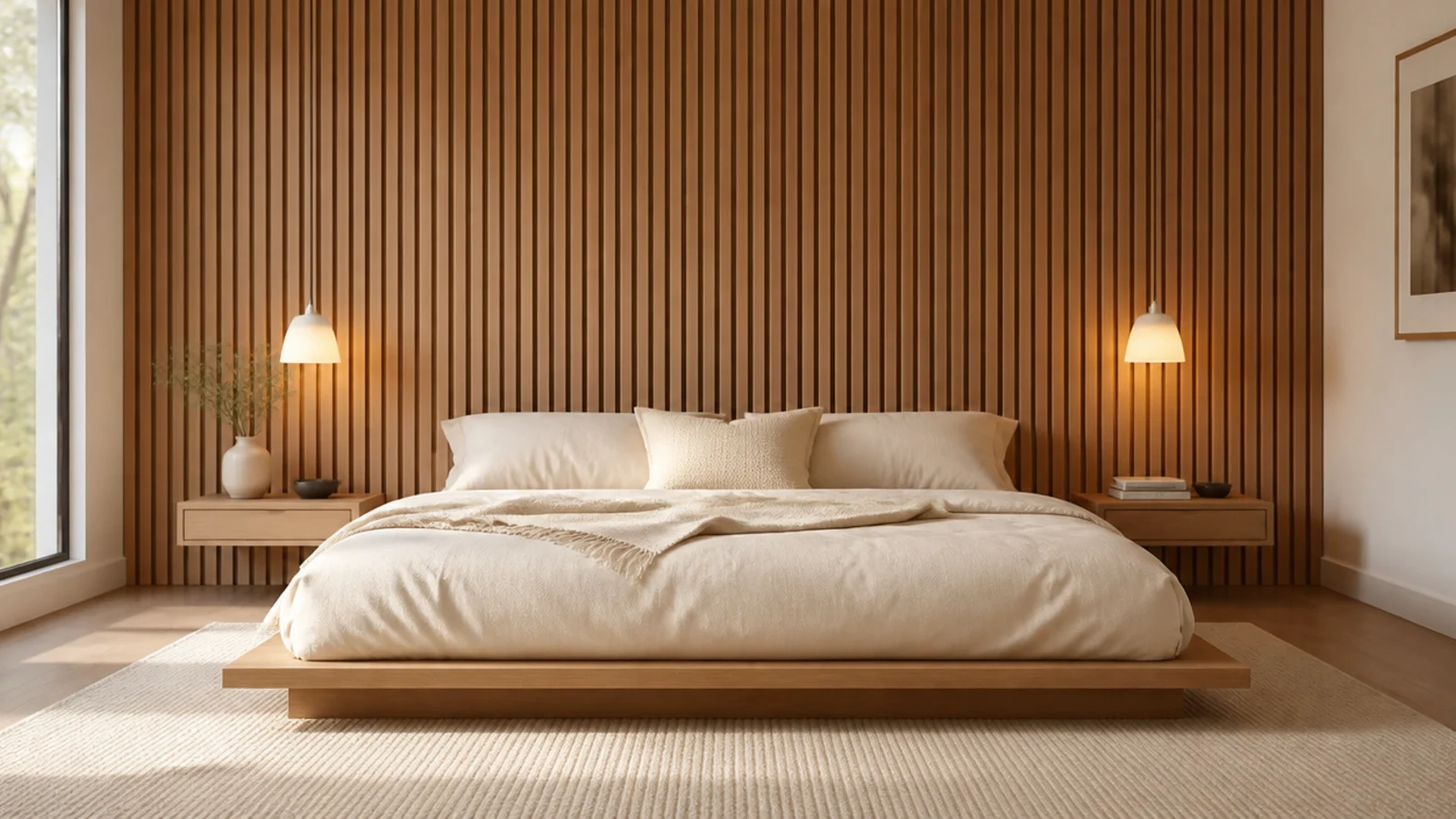
Take slats past headboard height and up to the ceiling, running the full bed wall. It stops reading as furniture and becomes architecture.
Keep the gaps at 1 inch and stop at the room corner rather than turning it. The wood headboard guide has the full spacing detail.
14. A thin metal frame around fabric
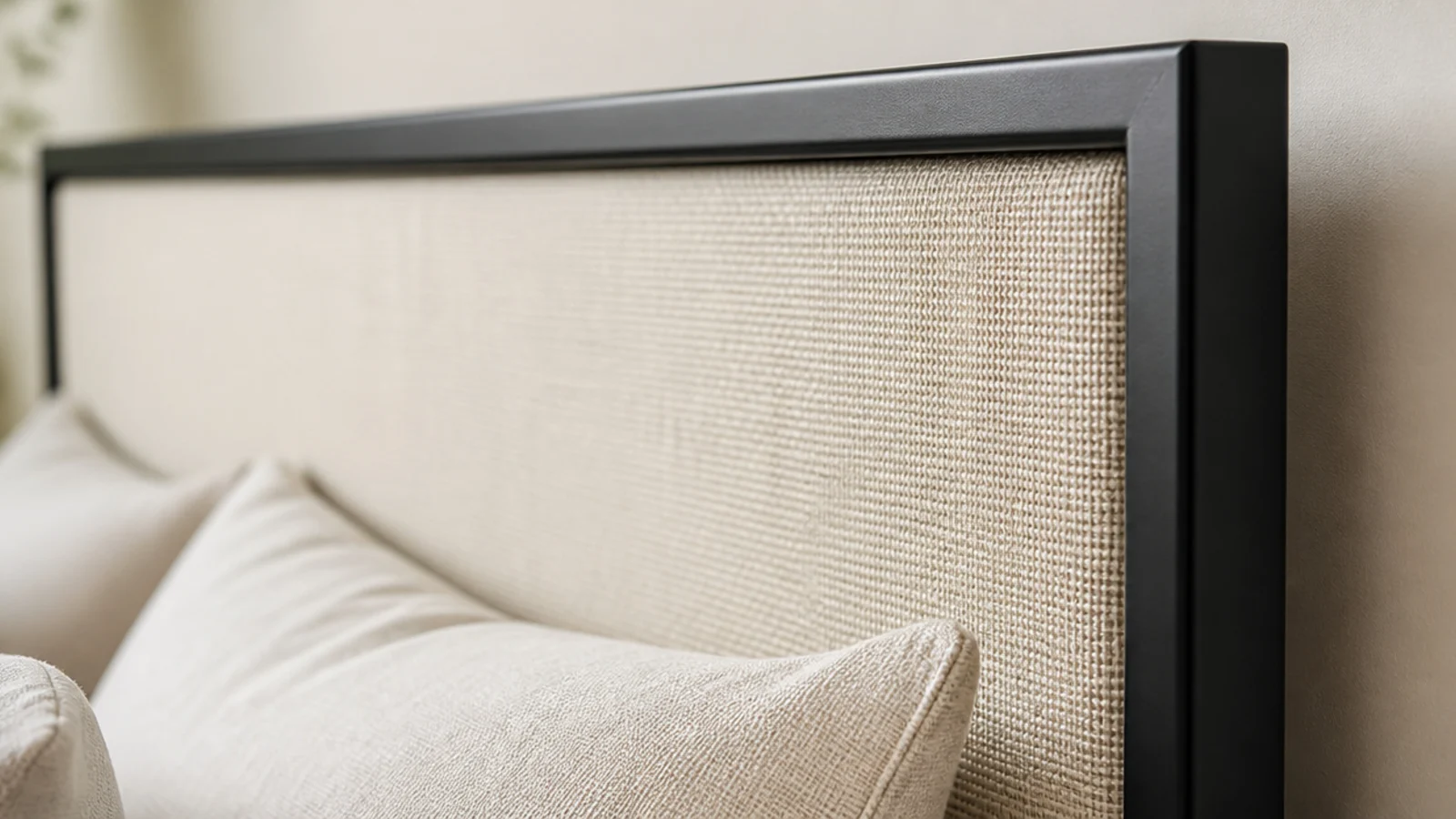
A quarter-inch blackened steel or brushed brass frame edging a fabric panel adds one crisp line and nothing more.
Any local fabricator makes a simple rectangular frame from flat bar for $80 to $150. Ask for two cleat tabs welded to the back while it is on the bench.
15. Rounded ends instead of square corners
Turn both ends of a low panel to a full semicircular radius while the top edge stays straight. It softens the piece without shaping it.
Commit to the full radius. A small softened corner looks like a manufacturing default rather than a decision.
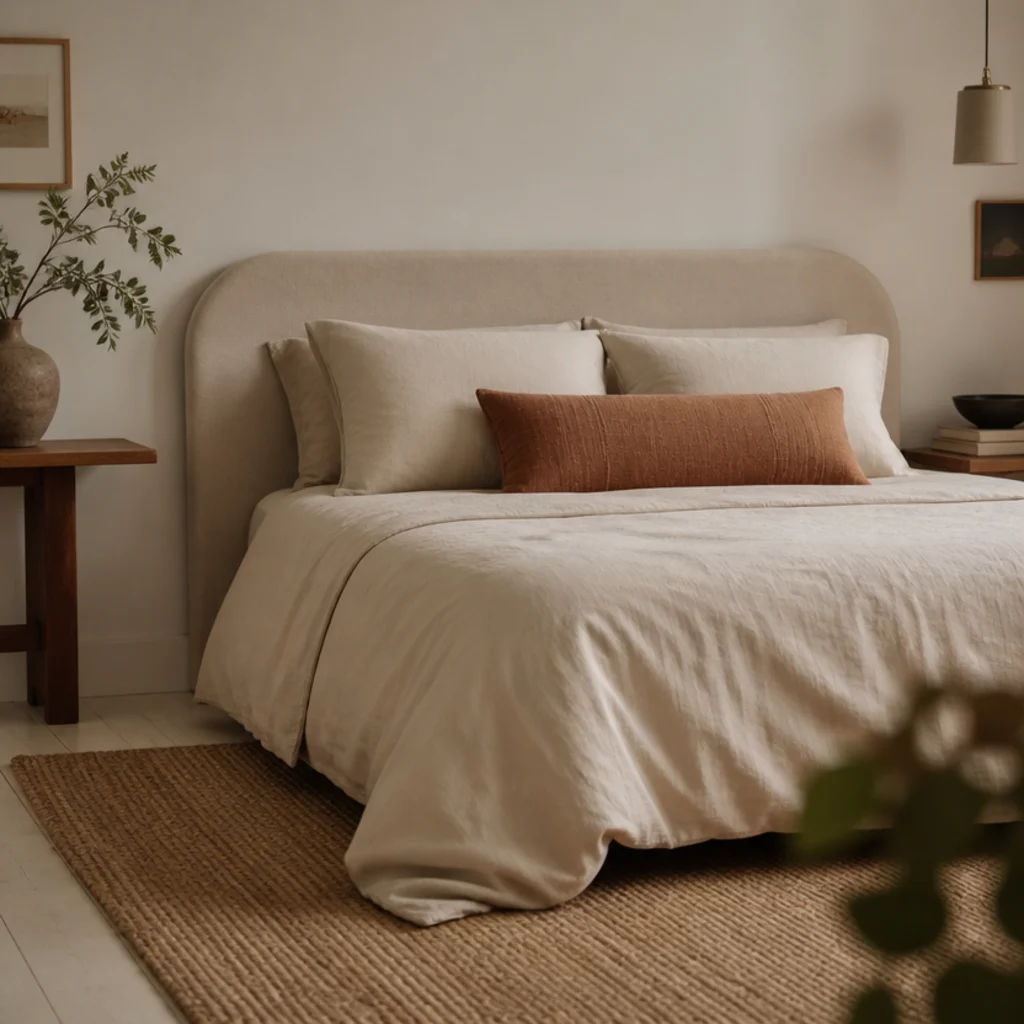
16. A low platform bed with a matching low panel
Modern bedrooms sit low, and a low frame with a matching low panel keeps the whole composition horizontal.
Match the panel tone to the frame timber exactly, then stop — no third wood tone anywhere in the room. Panel height 24 inches above the mattress.
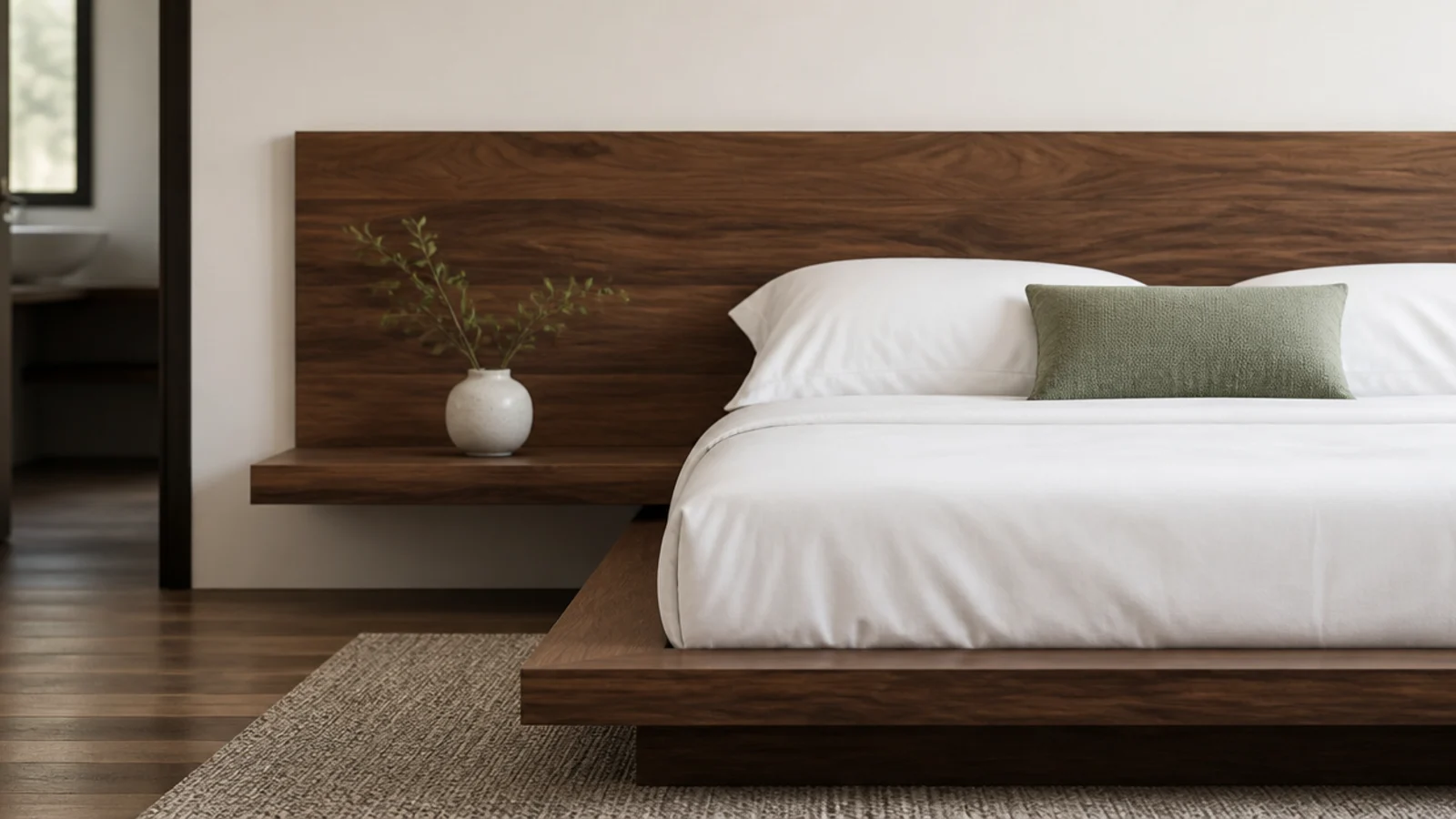
17. A recessed niche inside the panel
A shallow rectangular recess set into a wide panel, holding one small object. It gives a flat surface somewhere to look without adding anything to the wall.
One niche only. Two starts to read as shelving, and shelving is the opposite of what this style wants.
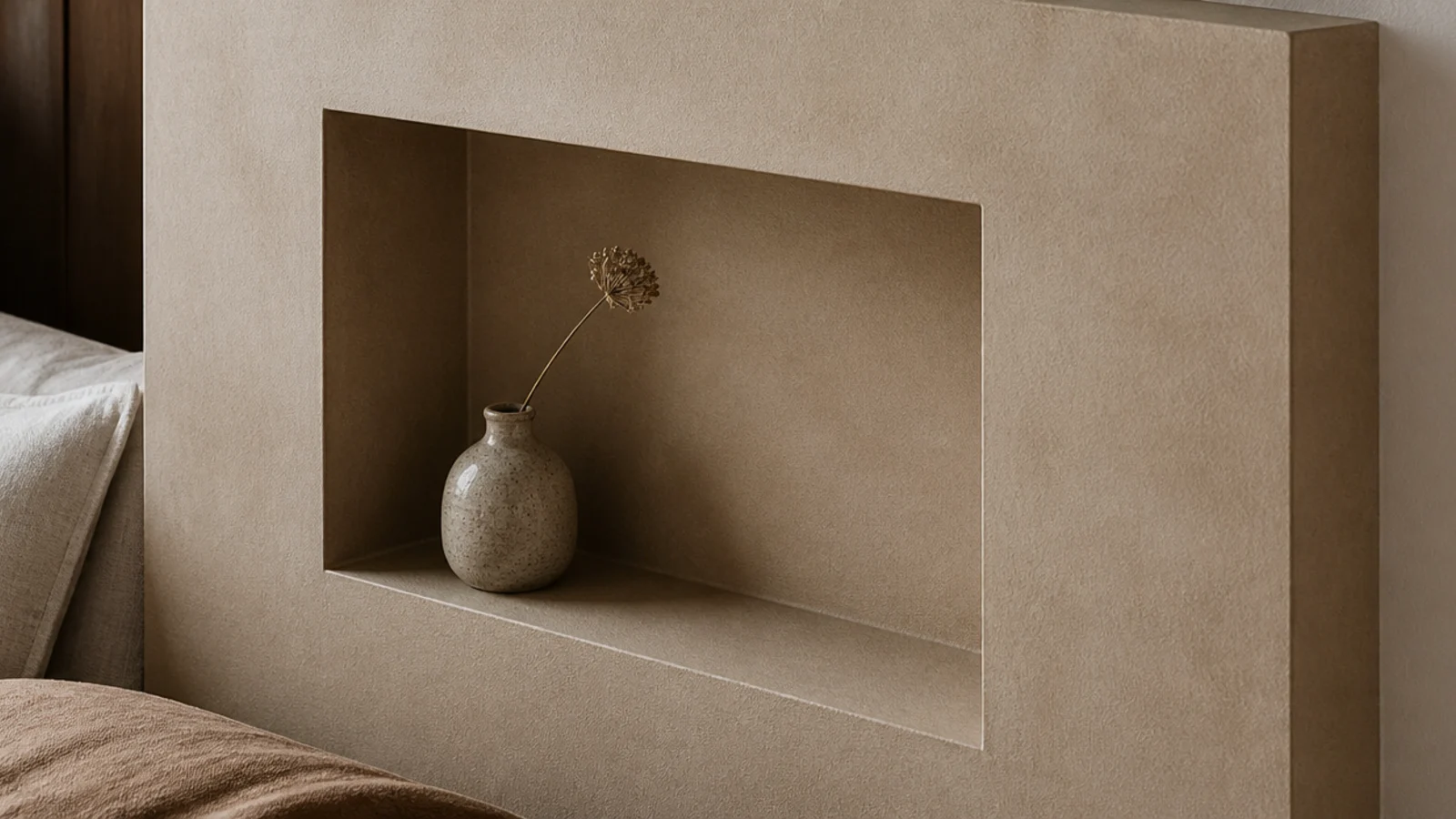
18. Full height to the ceiling
In a room with 9-foot ceilings, run the panel from skirting to ceiling line. The wall becomes one continuous surface behind the bed.
A full-height panel needs two cleats, top and bottom, or it bows away at the center. Keep the width to the mattress plus 4 inches each side so it reads as a column, not a wall.
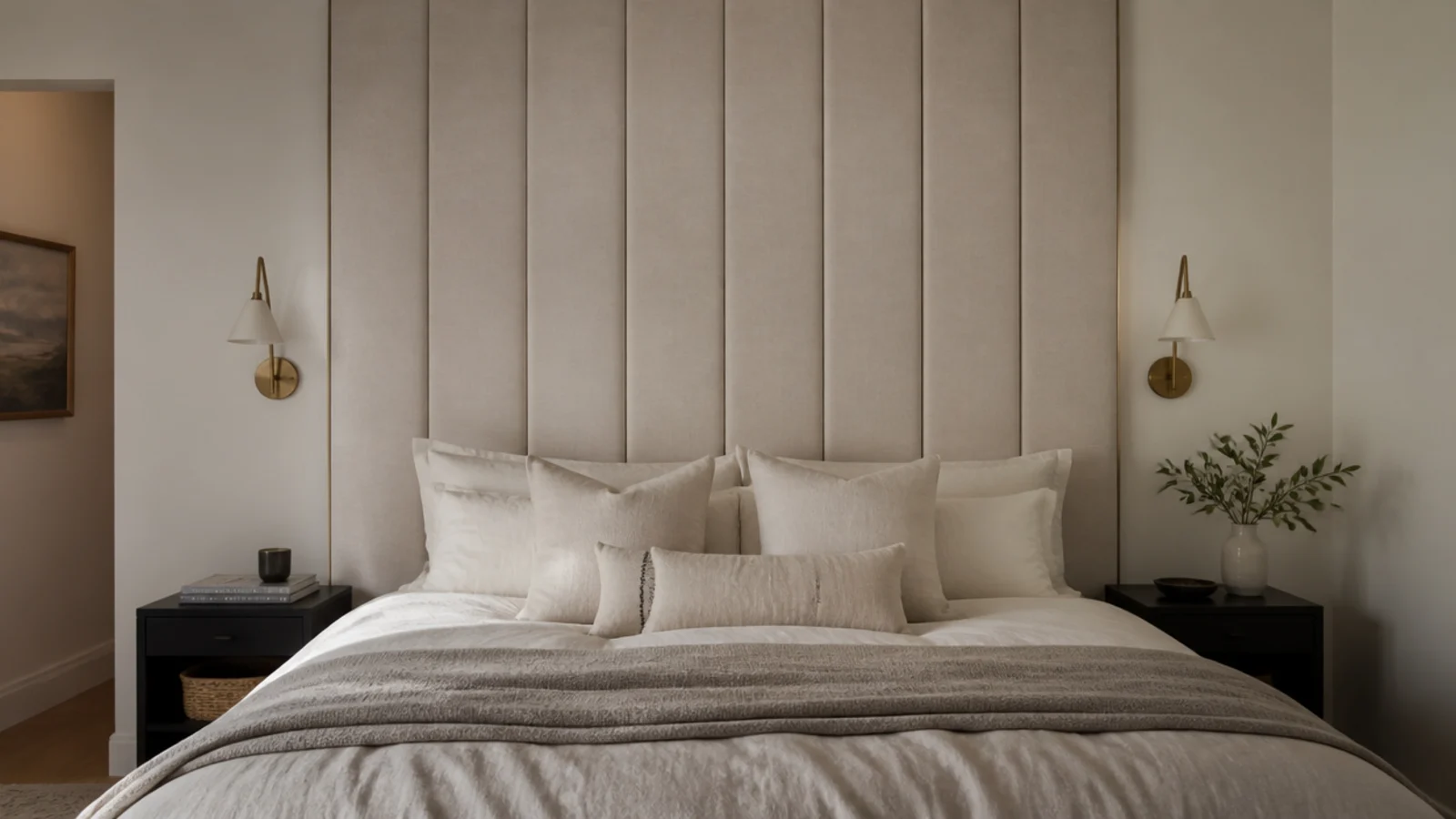
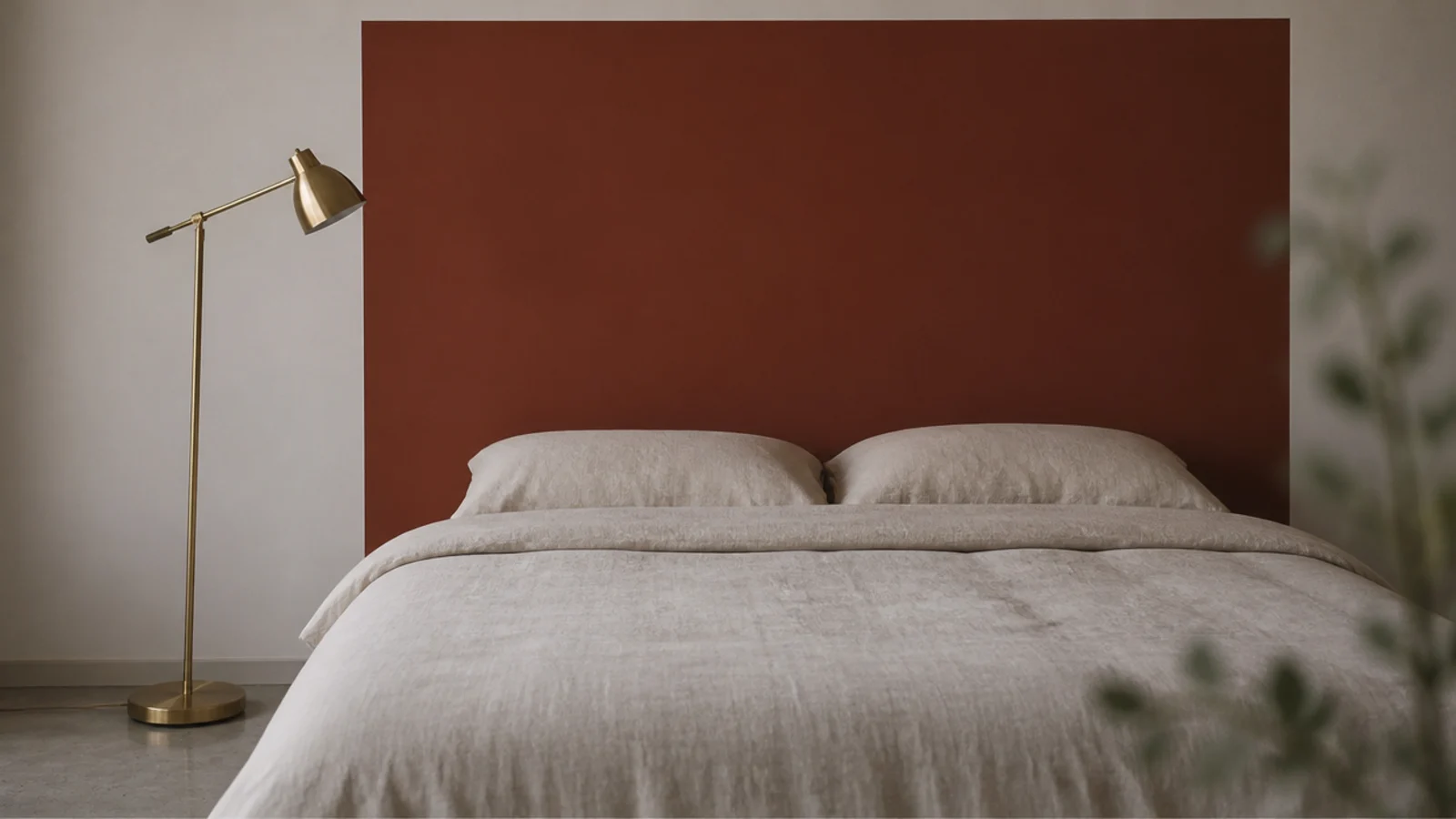
19. A monolithic painted block
No panel at all: a large rectangle of deep color painted directly onto the wall, 68 inches wide by 50 tall.
Everything rests on the edges. Use a laser level, quality tape, and seal the tape edge with a thin coat of the base color first so nothing bleeds. Twelve dollars ($).
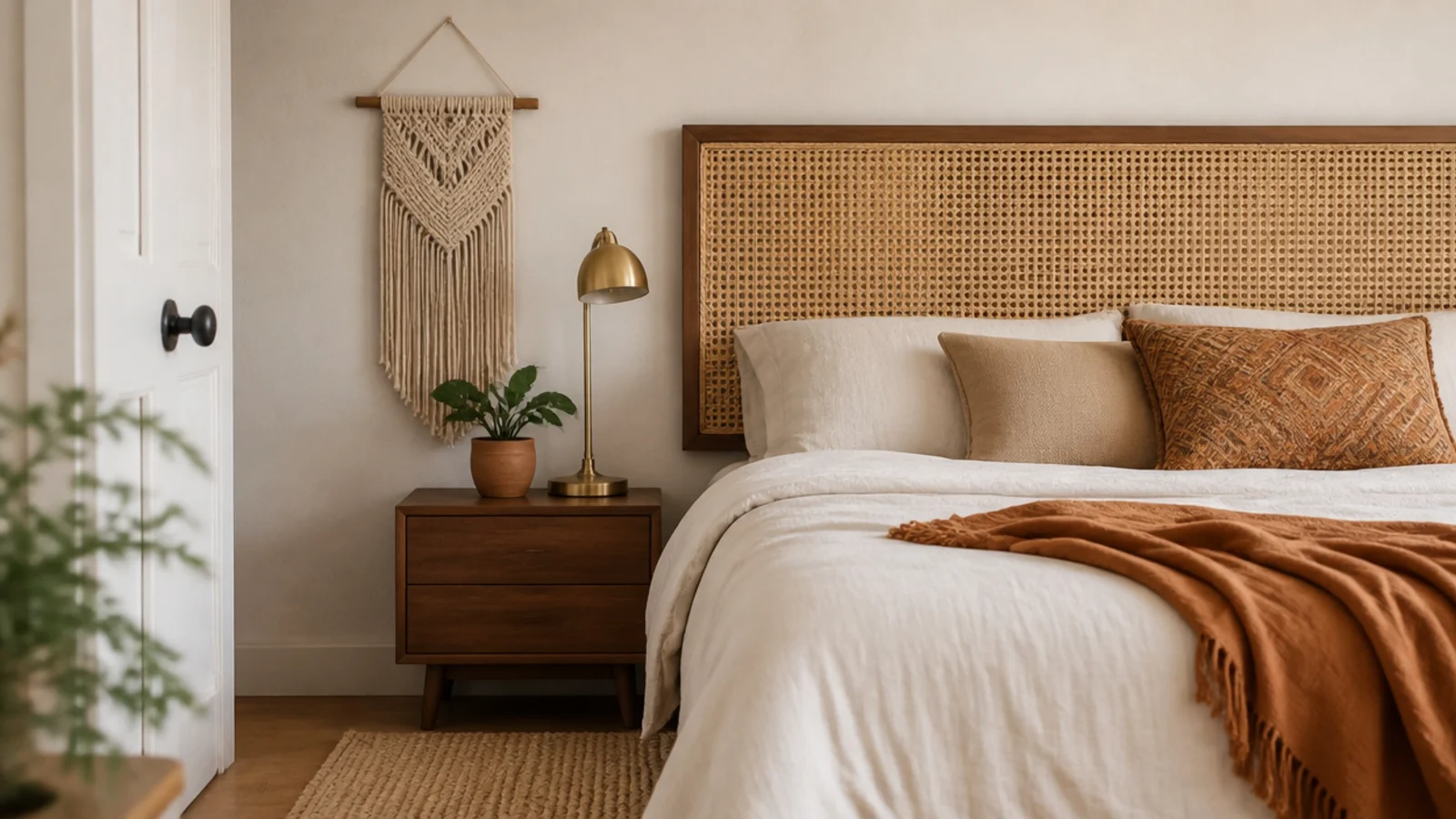
20. Cane inside a minimal oak frame
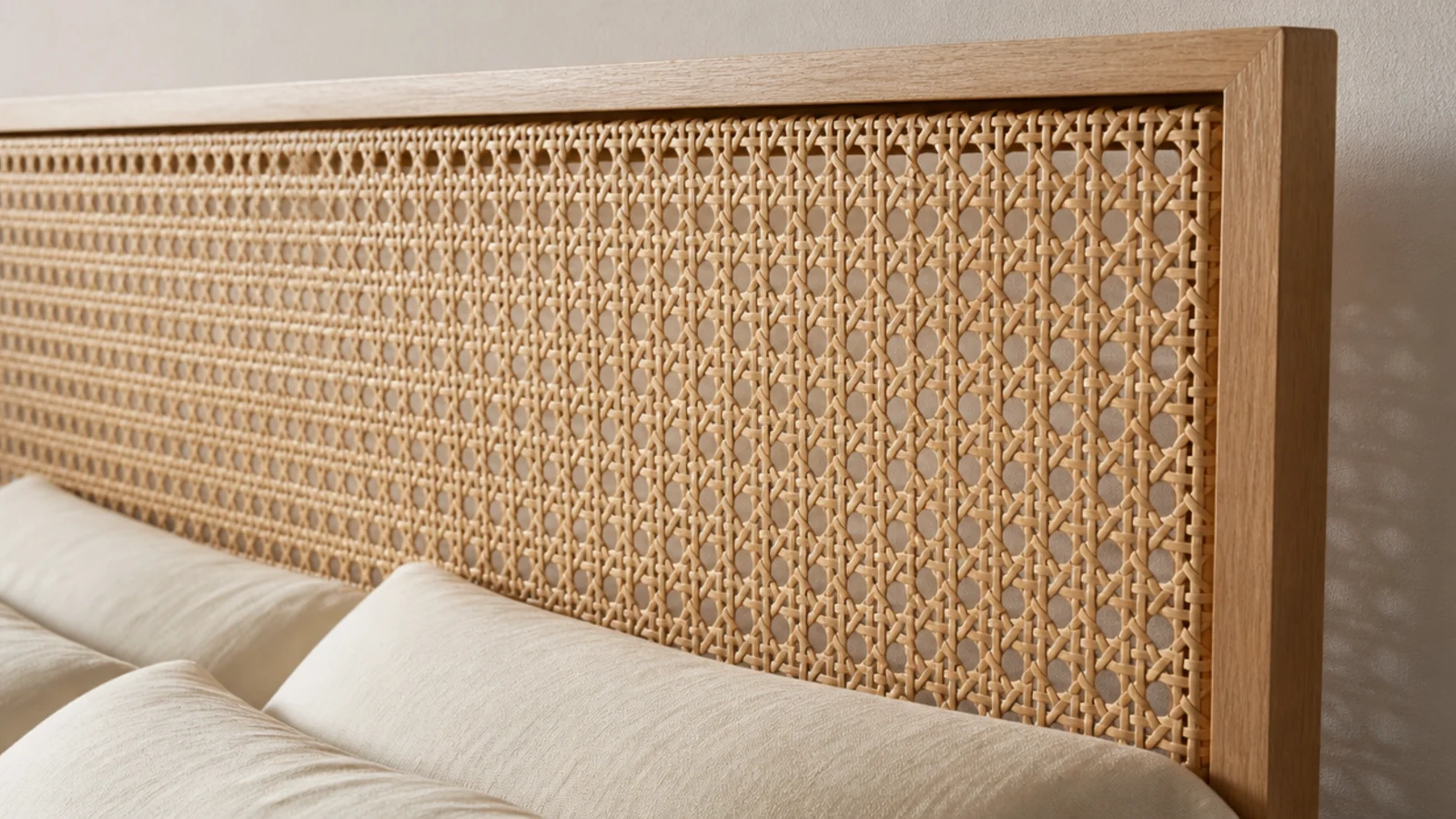
Cane webbing in a narrow square-edged frame keeps the panel light and lets the wall read through it.
Keep the frame under 3 inches wide so the weave stays the subject. Soak the cane an hour before fitting and it dries drum tight. Keep it out of direct afternoon sun.
21. An asymmetric panel offset to one side
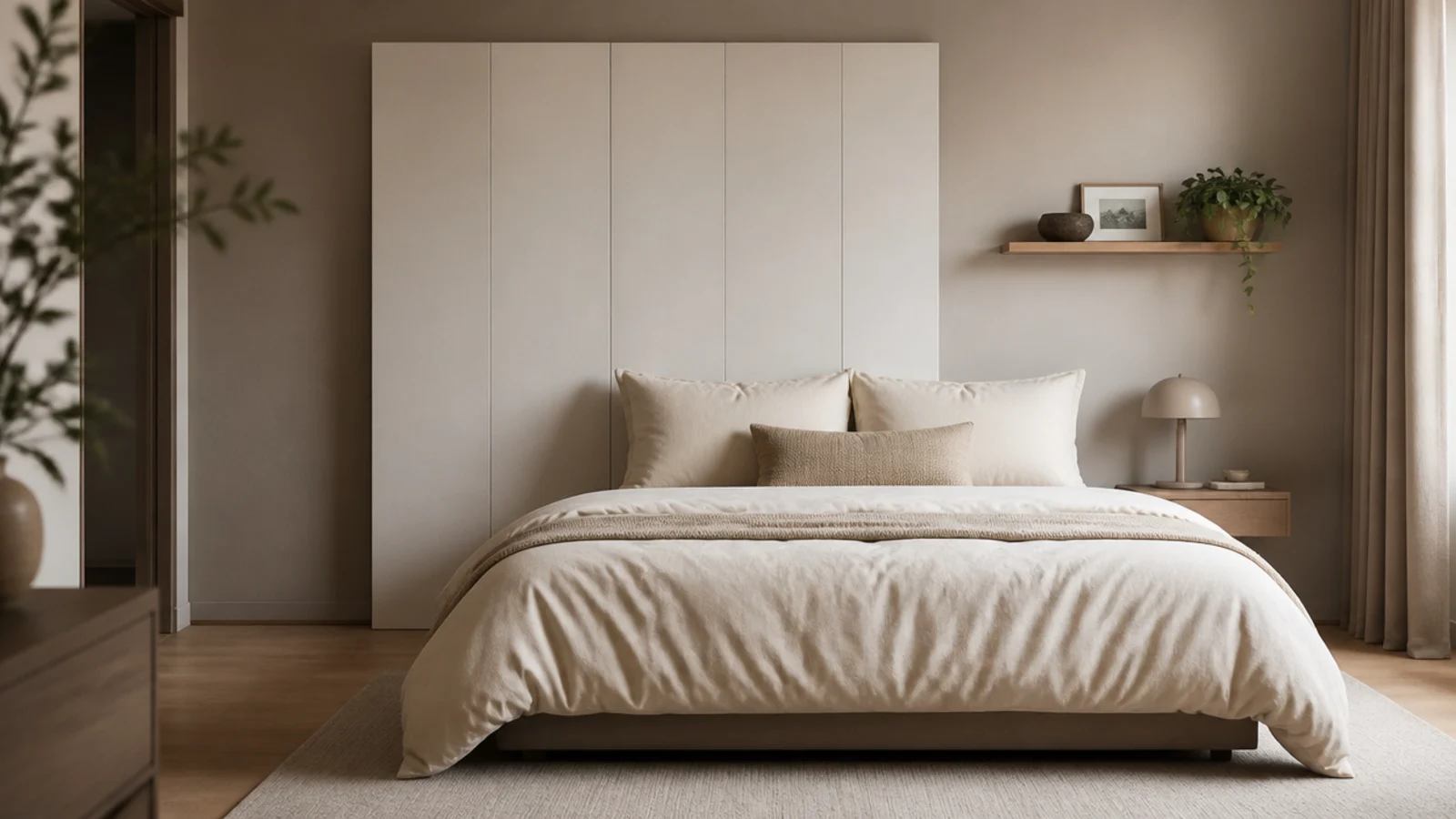
Slide the panel deliberately off center so it extends past one side of the bed only, leaving the other side of the wall empty.
Offset by at least a third of the panel width. Anything less looks like a hanging error rather than a composition, and the empty wall needs to stay genuinely empty.
22. A stone-look large-format panel
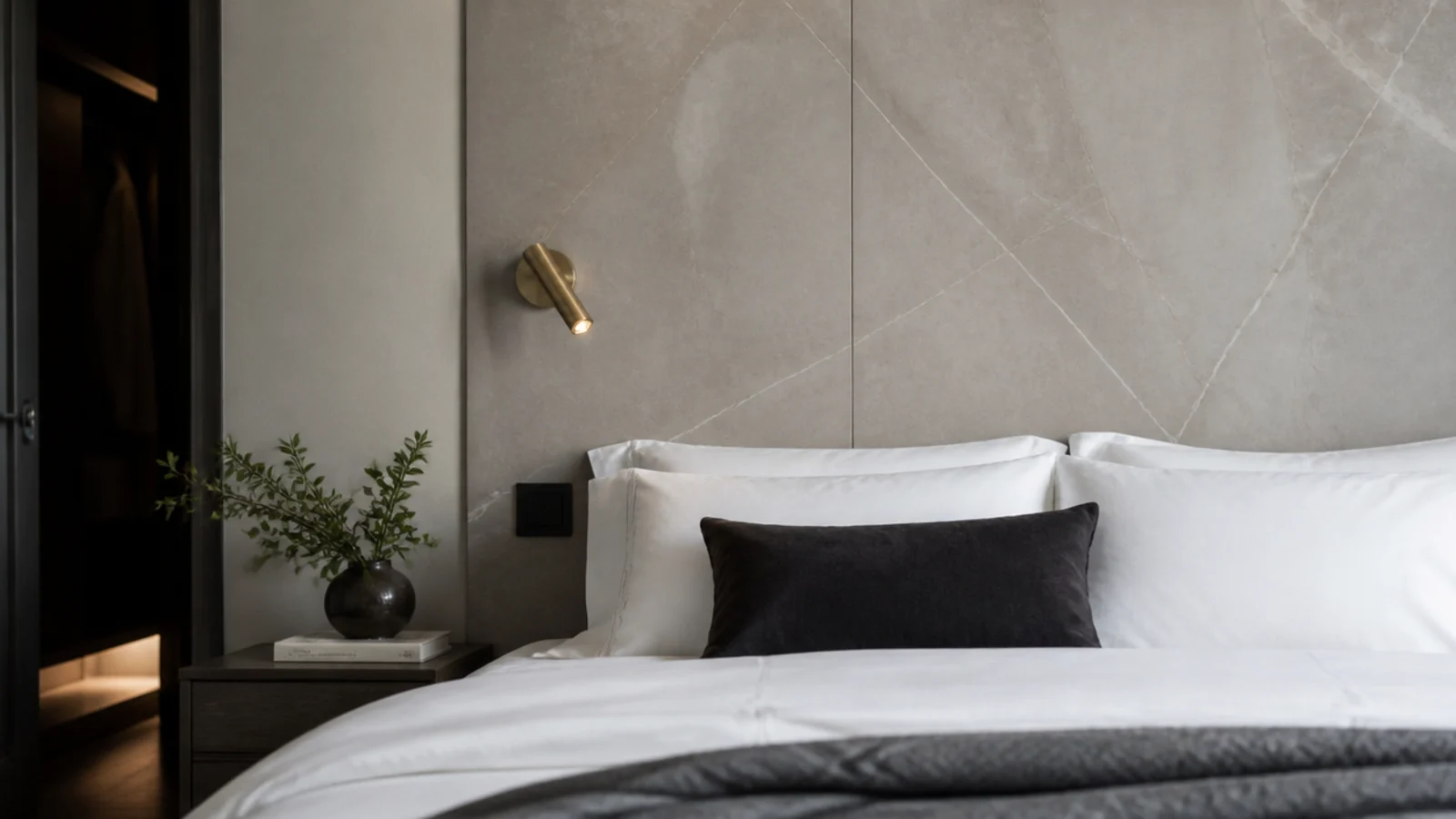
A large-format porcelain or laminate panel with soft pale veining, fixed to a backer and hung as a single piece.
Matte finish only. Polished stone at pillow height reads as a bathroom, and it is cold to lean against. Expect $300 to $700 including fitting ($$$).
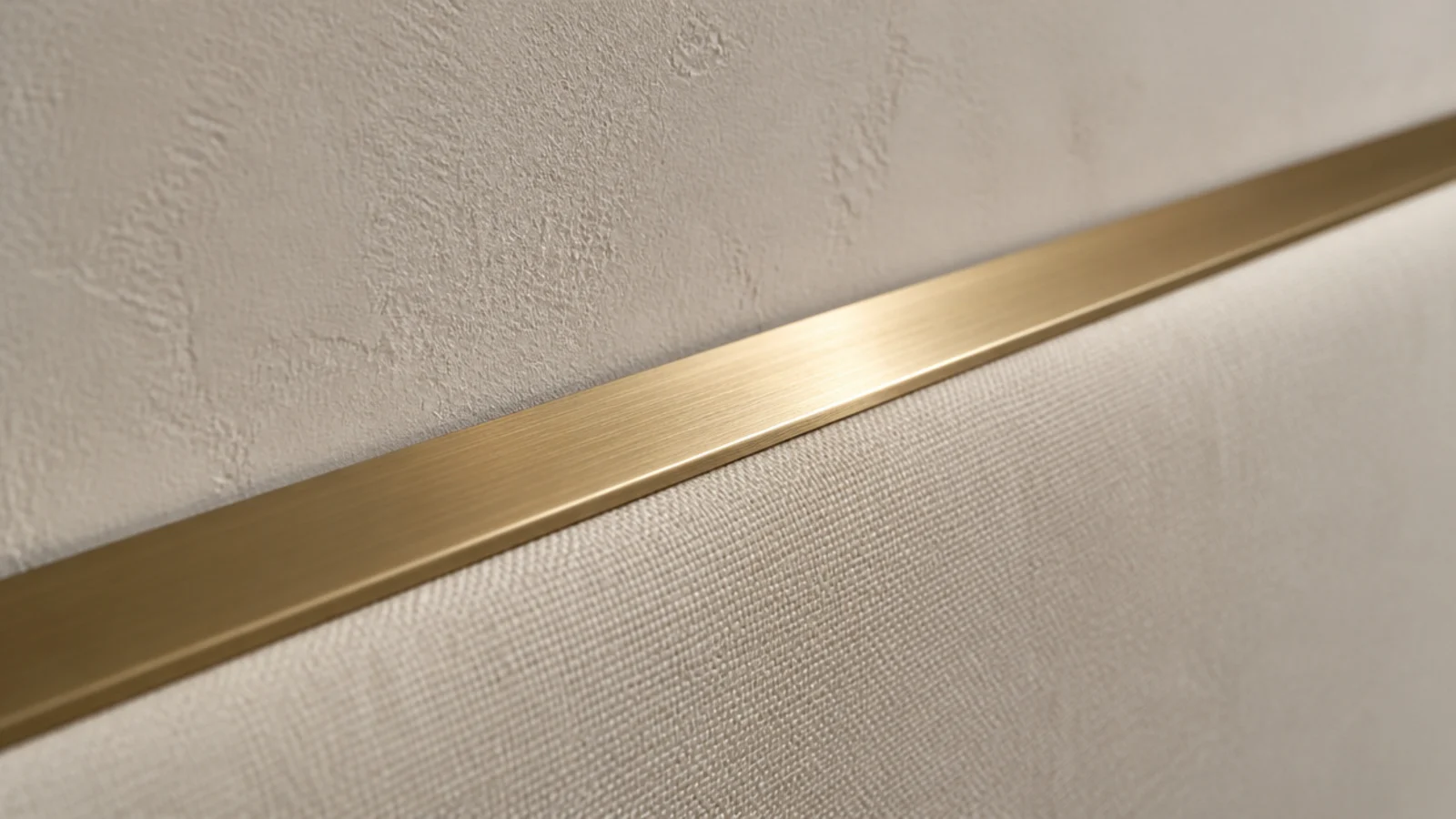
23. A brass reveal line along the top edge
A quarter-inch brushed brass strip set into the top edge of a fabric panel. That single line is the entire decoration.
It catches light as you move through the room, which is exactly why it works. Repeat the same metal in one other place — a lamp, a handle — and nowhere else.
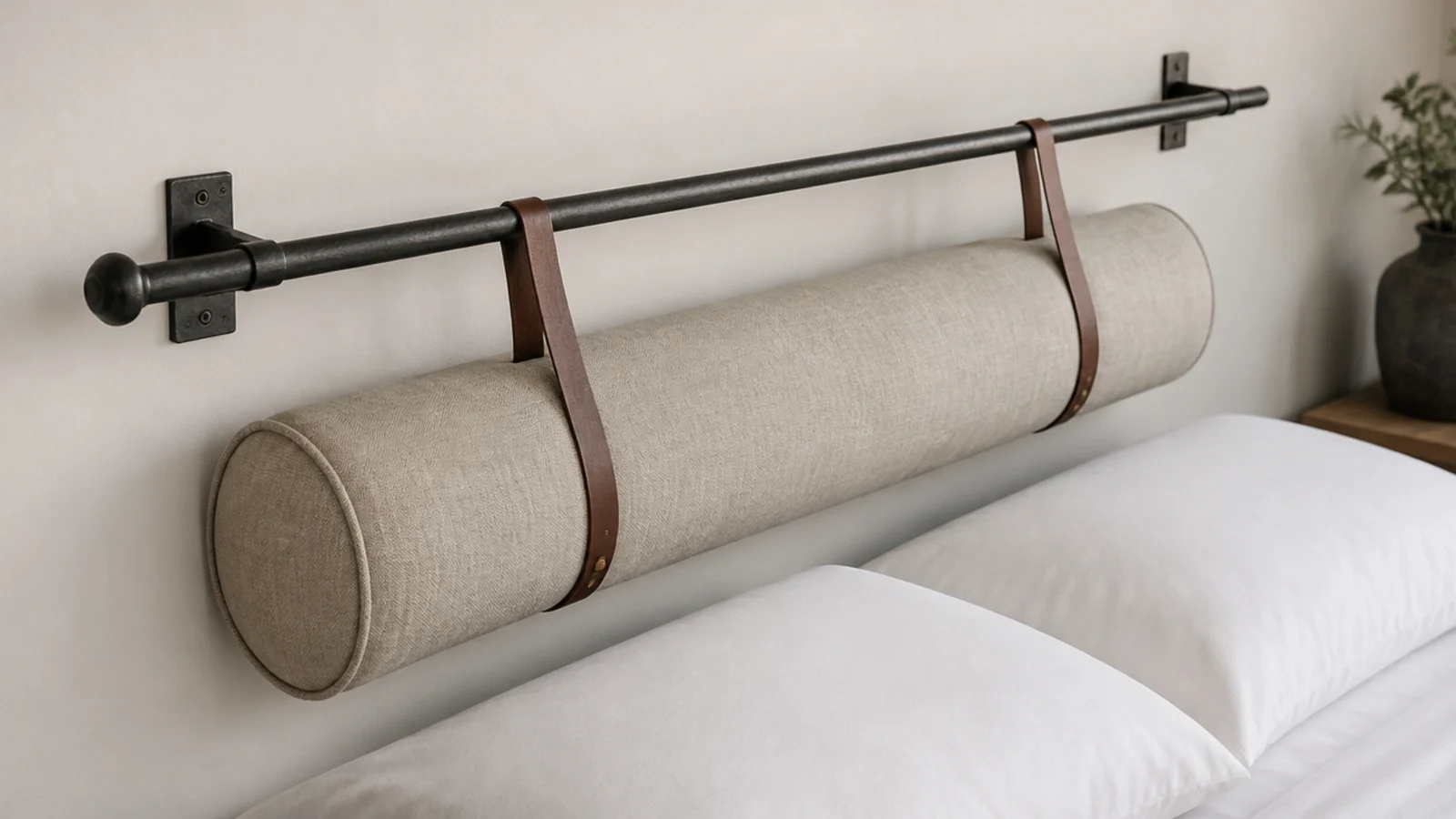
24. A bolster on a slim steel rail
A blackened steel rail mounted 30 inches above the mattress with a long linen bolster hung from it on two leather straps.
The rail is the headboard and the bolster is the comfort. It reads extremely clean and the bolster cover comes off for washing.
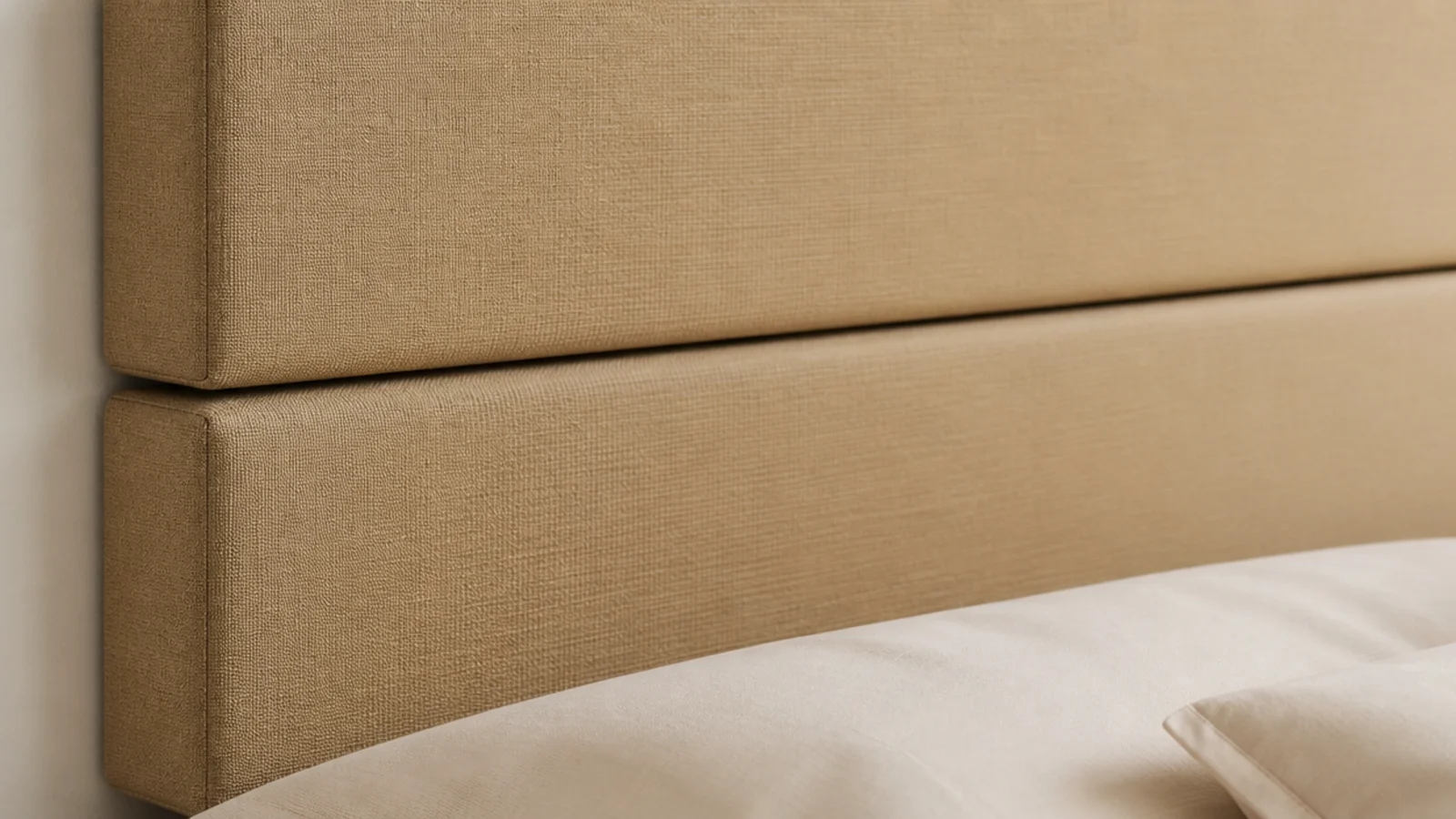
25. Two stacked panels with a shadow gap
Two horizontal panels mounted one above the other with a half-inch gap between them. The gap does more than any trim could.
Keep both panels the same height so the gap sits at the center, and level them off a single line. It also makes each piece light enough to carry upstairs.
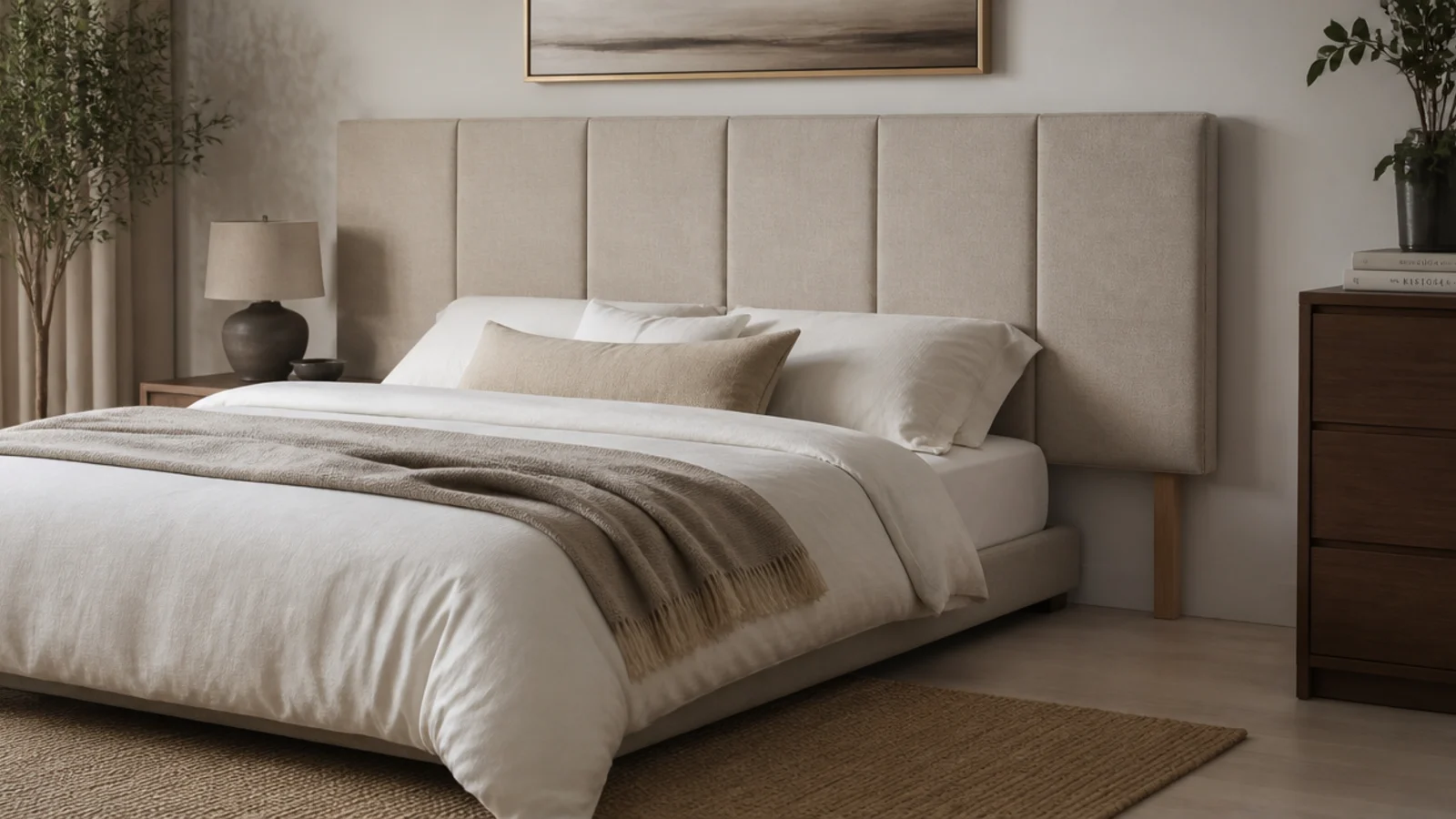
26. An upholstered panel on exposed timber legs
Two slim tapered oak legs turn a panel into a freestanding piece of furniture that needs no wall fixings at all.
It suits a rental, and the visible floor beneath keeps the room feeling open. Anchor the top edge with one small strap into a stud if children are around.
27. Fine reeding at half-inch centers
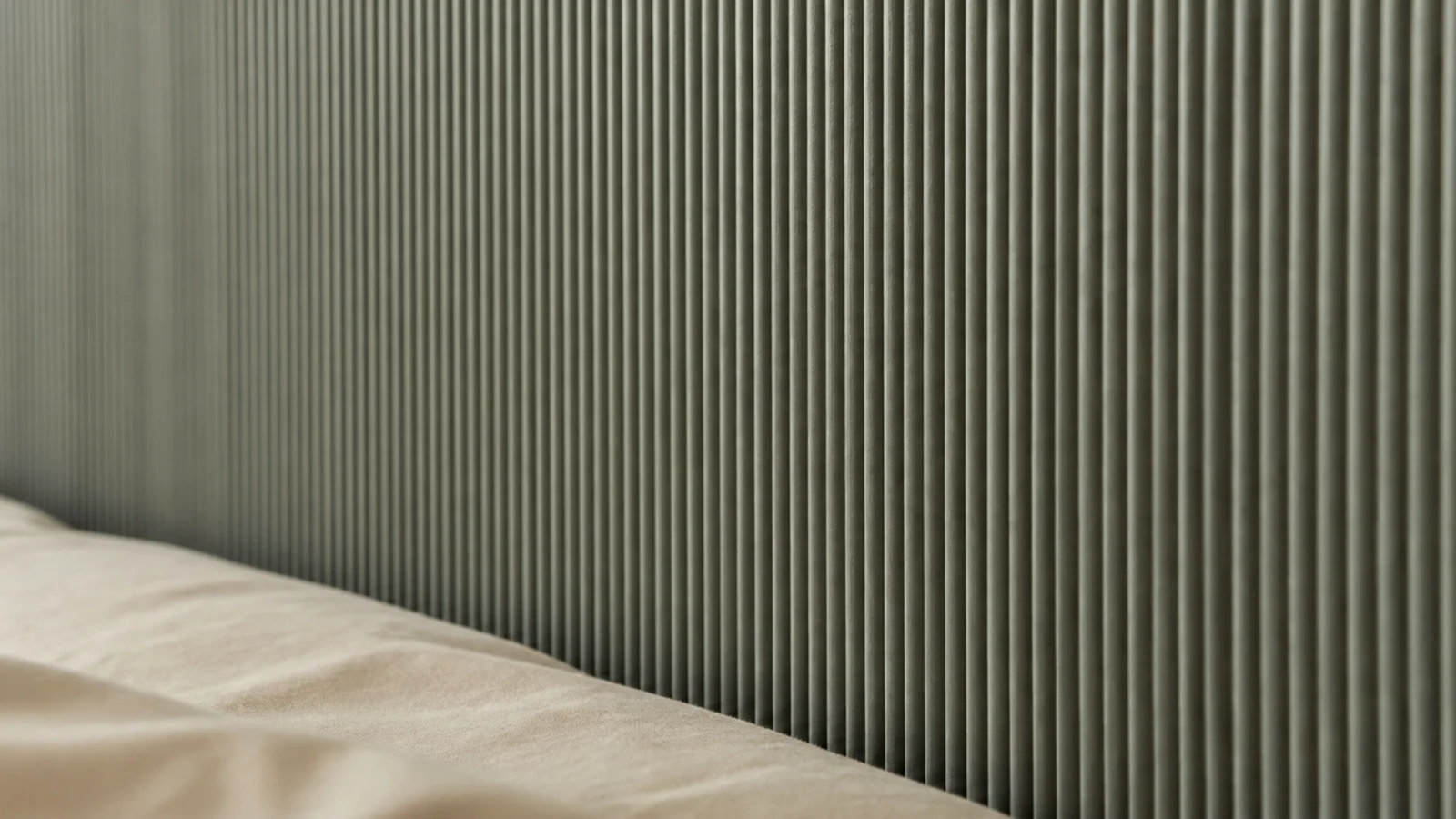
Reeding is fluting at a much finer pitch: quarter-inch beads at half-inch centers, painted in a flat matte color.
At this scale the surface reads almost like corduroy from across the room. Pre-made reeded panels cost about $90 for a queen width ($). Paint rather than stain, so the texture stays the subject.
28. A panel that continues into a floating shelf
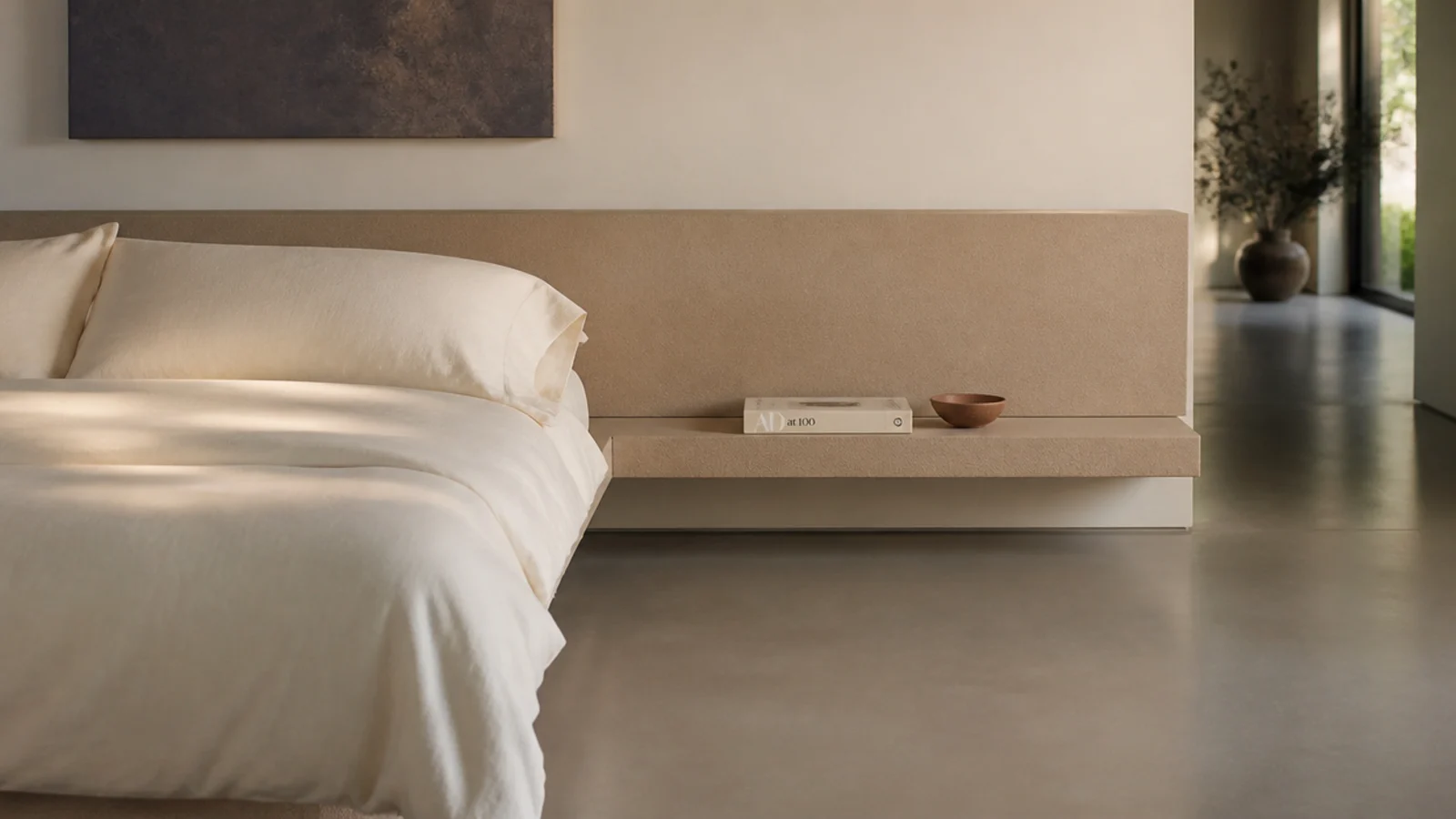
Extend a low panel sideways past the bed and let it become a slim floating shelf at the same height. One continuous line replaces a nightstand.
Keep the shelf 8 to 10 inches deep and the transition seamless — same material, same thickness, no visible joint.
29. A panel painted the exact wall color
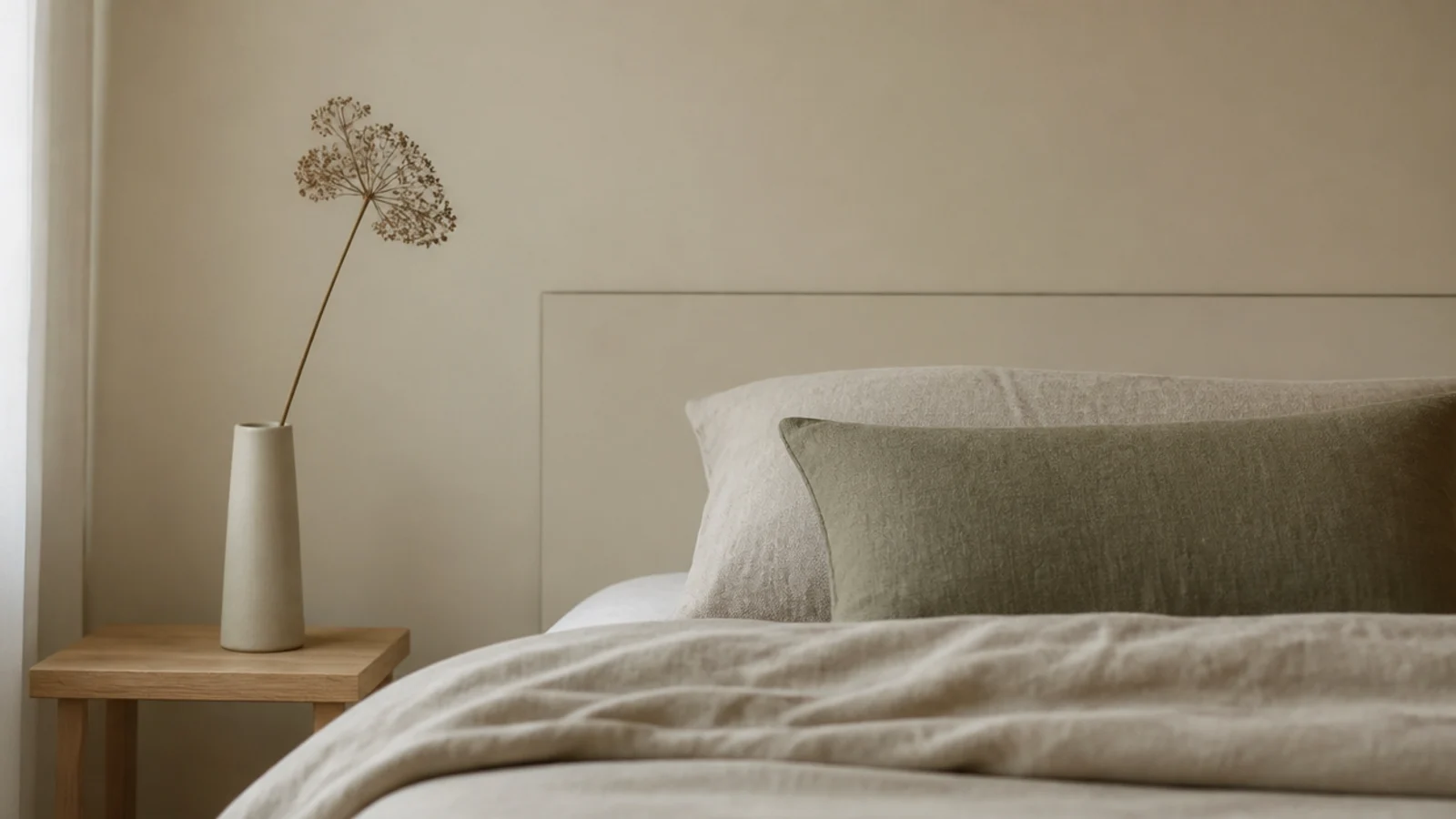
Mount a plain panel and paint it precisely the same shade as the wall behind it. Only the shadow around its edge defines the shape.
It is the quietest idea here and the most flattering to a small modern room. Use the same sheen level as the wall, or the difference gives it away.
30. A lit ledge with the source hidden
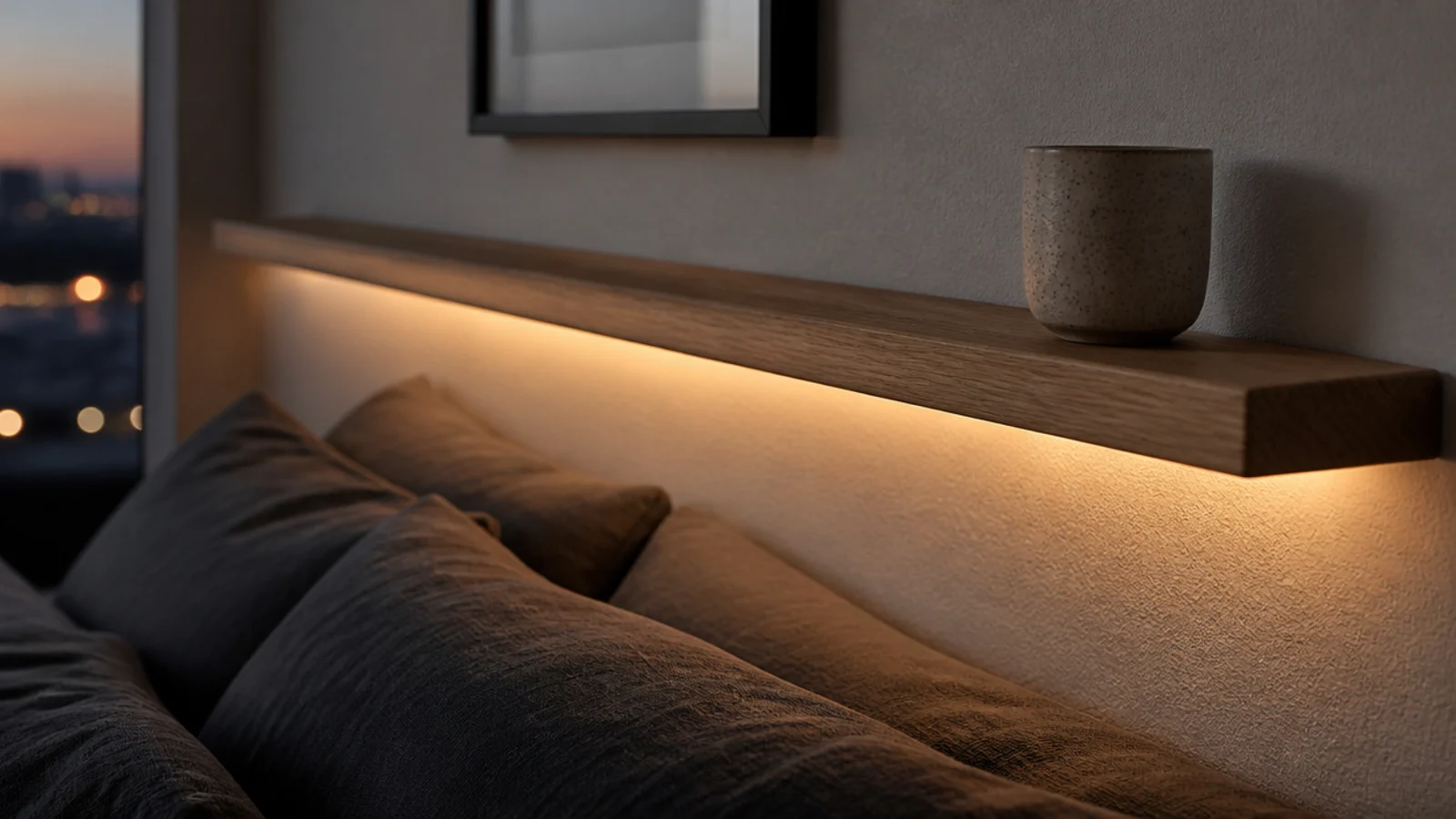
A slim oak ledge above the bed with a warm LED strip concealed beneath its front lip, washing light down the wall.
You see the light, never the fitting. Pair it with a minimal shelf arrangement on the adjacent wall and the whole room reads considered after dark.
Mistakes to Skip
- Sizing the panel to the mattress exactly. Modern proportions want 4 inches past each side, and a flush panel reads as an accident rather than a choice.
- Landing the height between 30 and 38 inches above the mattress. Go low at 24 to 28, or go full height, because the middle band never looks resolved.
- Using cool-white LED strip behind a panel. It turns a warm bedroom clinical instantly, and 2700K costs exactly the same.
Frequently asked questions
What makes a headboard look modern?
Proportion and restraint rather than any particular material. Modern panels are usually wider than they are tall, sit low at 24 to 28 inches above the mattress or run full height with nothing in between, and carry no visible hardware. Edges are square or fully rounded, never shaped. One texture, one color and clean fixings do most of the work.
Should a modern headboard be wider than the bed?
Usually yes. Modern panels read best when they extend 4 inches past the mattress on each side, or run the full wall. Mattress widths are twin 38 inches, full 54, queen 60 and king 76, so a queen panel at 68 inches looks deliberate while one at exactly 60 inches can look like it was sized by accident.
How do you make a headboard look like it is floating?
Hang it on a French cleat and stop the bottom edge 2 to 3 inches above where the bed frame meets it, so a shadow line runs underneath. Because nothing touches the floor and no legs are visible, the panel appears to hover. The cleat must catch two studs, since a floating panel takes the same lateral load every night.
What colors work for a modern headboard?
Anything within one or two steps of your wall color, or a clear contrast in a neutral. Cream boucle, oatmeal linen, warm sand, muted sage and pale oak all sit comfortably in a modern bedroom. Avoid mid-tone greys that match nothing else in the room, and avoid patterns entirely, since pattern is what dates this look fastest.
Can a modern headboard work in an older house?
It can, if it respects the room rather than ignoring it. Keep the panel below any dado or picture rail, match the width to the chimney breast or alcove if there is one, and choose warm materials like oak, linen or plaster over cold ones. A flat panel in a period room reads as a calm modern insert instead of a fight.
Decide between low and full height before anything else — that single choice removes two thirds of this list and every material still works in either. For the soft versions, upholstered headboard ideas covers foam, fabric and channel widths, and floating headboard ideas goes deeper on the shadow gap and the cleat that creates it. Save the pin so the proportions are with you when you order.
Want more like this? Browse all 15 headboard ideas guides — they all use the same measurements and budget tiers.
Pin it for later
Save this to your Headboard Ideas board
Pin it now so it is waiting for you when the tape measure comes out — and so the next person hunting for this idea can find it too.
Save this pinKeep going
More ideas worth saving while you have the tape measure out.