Bookshelf Ideas · Listicle
15 Affordable Bookshelf Ideas for Renters

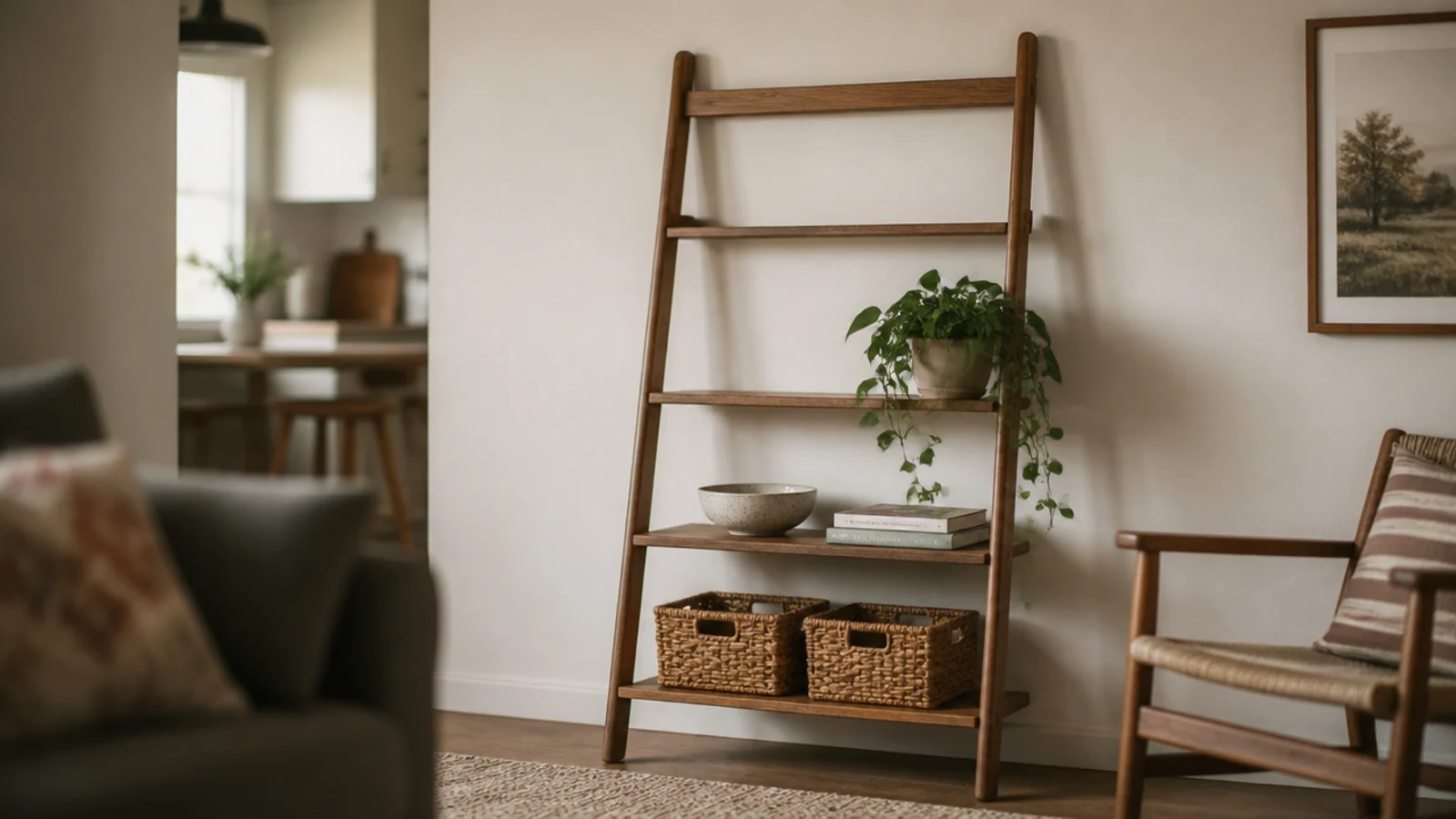
Bookshelf styling with no books is the situation most renters are actually in: a shelf, a handful of paperbacks, and four feet of empty pine staring back. I have furnished five rentals this way. The fix is not buying books — it is treating the shelf like a small stage, where baskets carry volume, plants soften the lines, and roughly a third of every shelf stays deliberately empty. Here are fifteen ways to do it without drilling a hole you cannot patch.
In this guide17 sections — tap to openHide
- 1.Where bookshelf styling with no books actually works
- 2.Lean a ladder shelf instead of drilling anything
- 3.Let baskets do the job the books used to do
- 4.Leave a third of every shelf genuinely empty
- 5.Group by height, never by color
- 6.Stack three books flat and use them as a pedestal
- 7.Give one shelf to a trailing plant
- 8.Lean art at the back instead of hanging it
- 9.Corral the small stuff on one tray
- 10.Buy three pieces of thrifted stoneware, not thirty
- 11.Mount an adhesive picture ledge and respect the limit
- 12.Wedge a tension-pole unit into an alcove
- 13.Turn a cube unit on its side
- 14.Add ten dollars of warm light
- 15.Let a pair of sculptural bookends stand alone
- 16.Drill the one hole that matters
- 17.Mistakes to Skip
Where bookshelf styling with no books actually works
An object-only shelf lives or dies on scale. Books work because a row of them is one continuous mass, and your eye reads mass before it reads detail. Twelve small trinkets spread across a shelf read as clutter; three larger objects read as a decision.
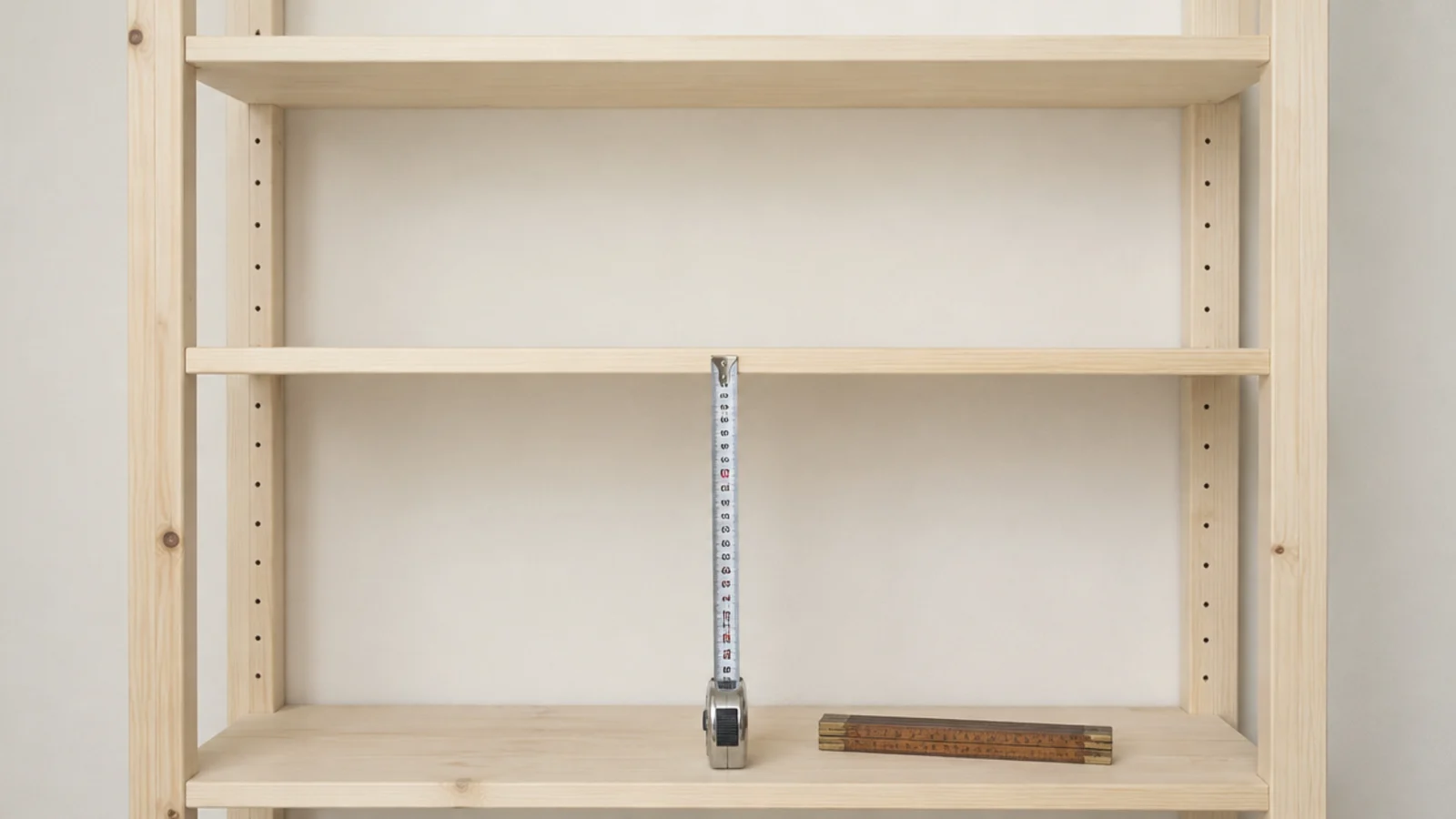
So start by measuring the space you are filling. Clear height between shelves wants to be 11 to 13 inches if hardbacks are ever coming, and 9 to 10 inches of depth is plenty for paperbacks and pottery. Deeper than 12 inches and objects at the front look stranded, because there is visible empty board behind them.
Weight matters less here than it does with books — a linear foot of hardbacks runs 20 to 25 pounds, so a 36-inch shelf of them is 60 to 75 pounds and needs studs or a mid support. Baskets and ceramics rarely reach half that. But 3/4-inch stock still sags past a 32-inch span, so keep runs short or add a front lip.
Budget tiers I use throughout: $ is under $50, $$ is $50 to $150, and $$$ is $150 and up. Almost everything in this article sits in the first two.
1. Lean a ladder shelf instead of drilling anything
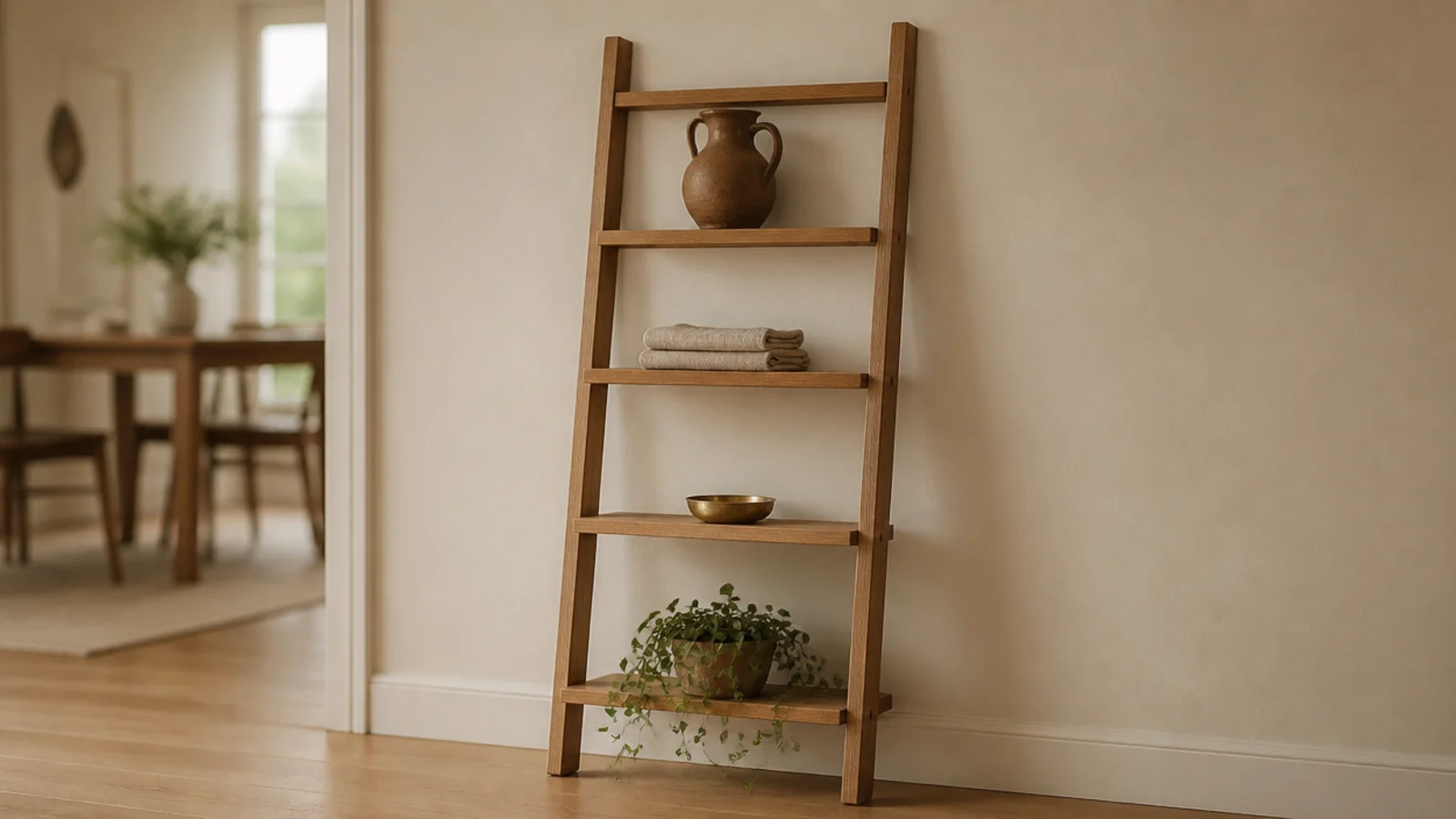
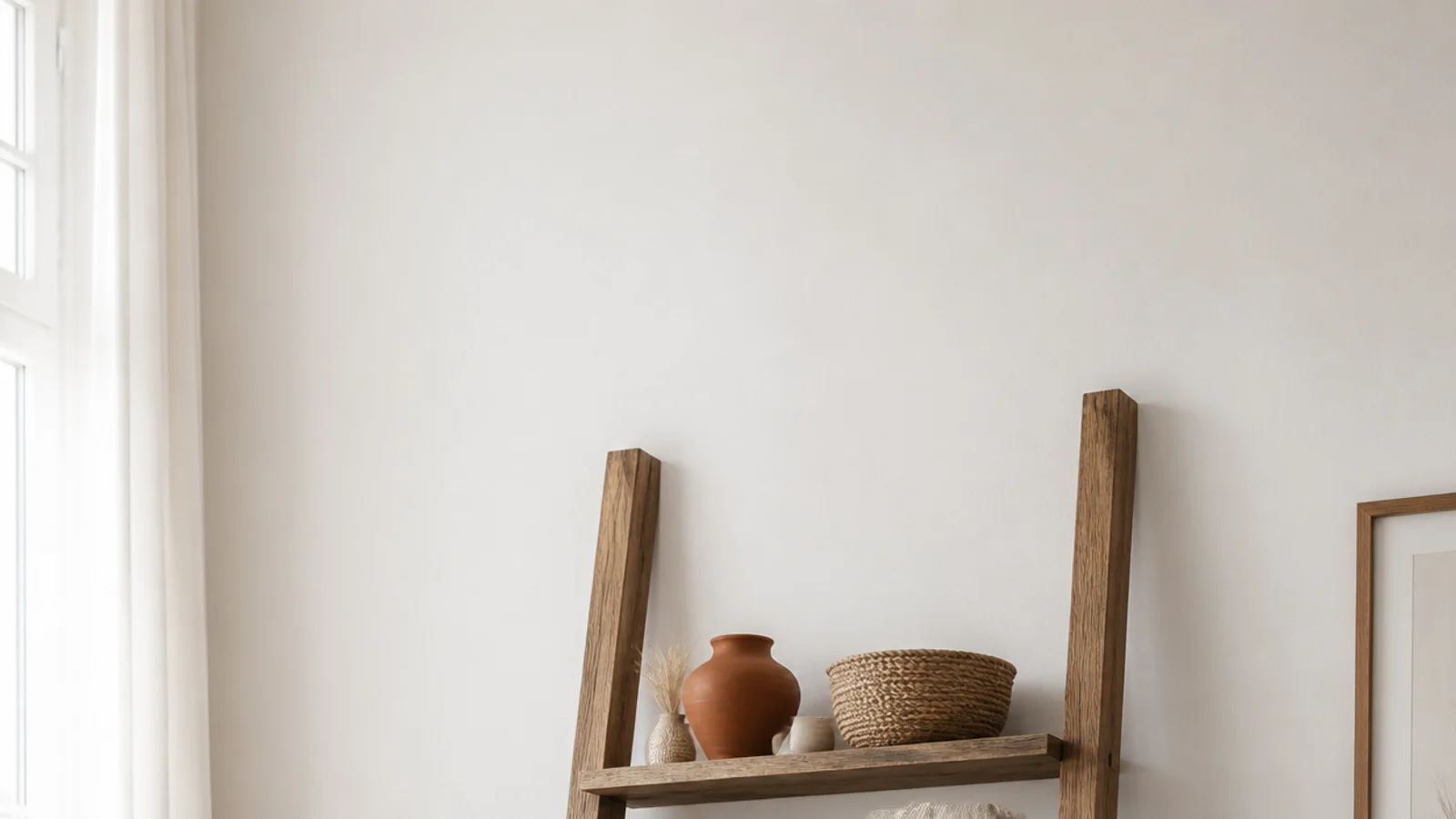
A five-rung ladder shelf leaning at roughly 15 degrees is the most useful piece of rental furniture I own. It carries real weight, sits stable against the wall, and needs nothing but a felt pad under each foot.
Keep the heaviest thing on the bottom rung and the lightest on top — the geometry does the rest. Rungs get shallower as they climb, which suits an object-only shelf perfectly, because the top rung physically cannot hold much and therefore never looks crowded. Expect $45 to $90 ($) for solid pine or oak, and skip anything with a laminated top surface.
2. Let baskets do the job the books used to do
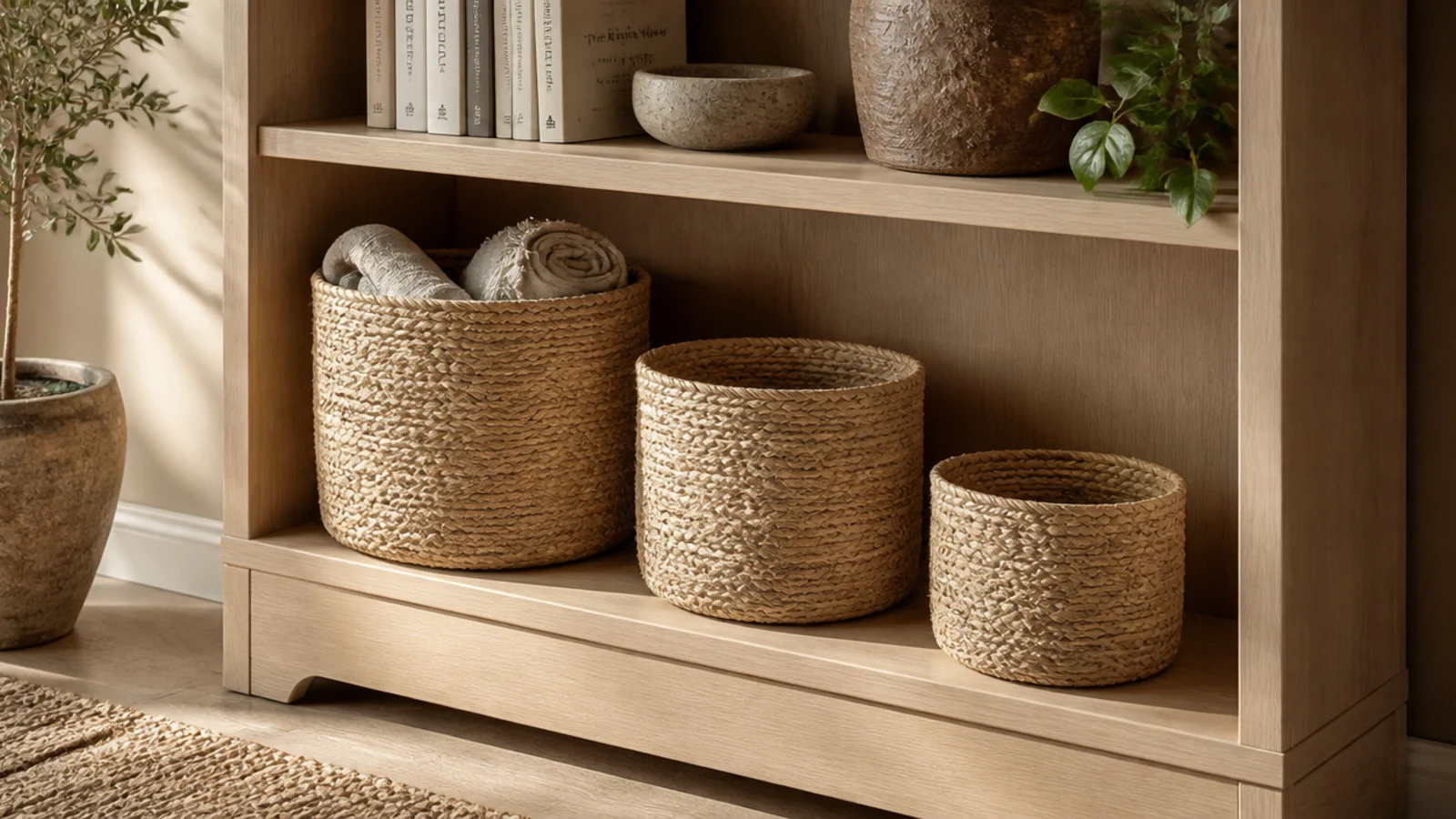
One woven basket, 10 to 12 inches wide, fills the same visual space as fifteen paperbacks and hides whatever you were embarrassed about.
Buy them in a matched material — jute, seagrass or rattan — and in two sizes rather than five. Put them on the lowest shelves, which are the ones your eye reads last and your hands reach most. A pair costs $18 to $35 ($). This is also the single fastest way to make a half-empty case look intentional, because a basket is a large simple shape and large simple shapes are what an empty shelf is missing.
3. Leave a third of every shelf genuinely empty
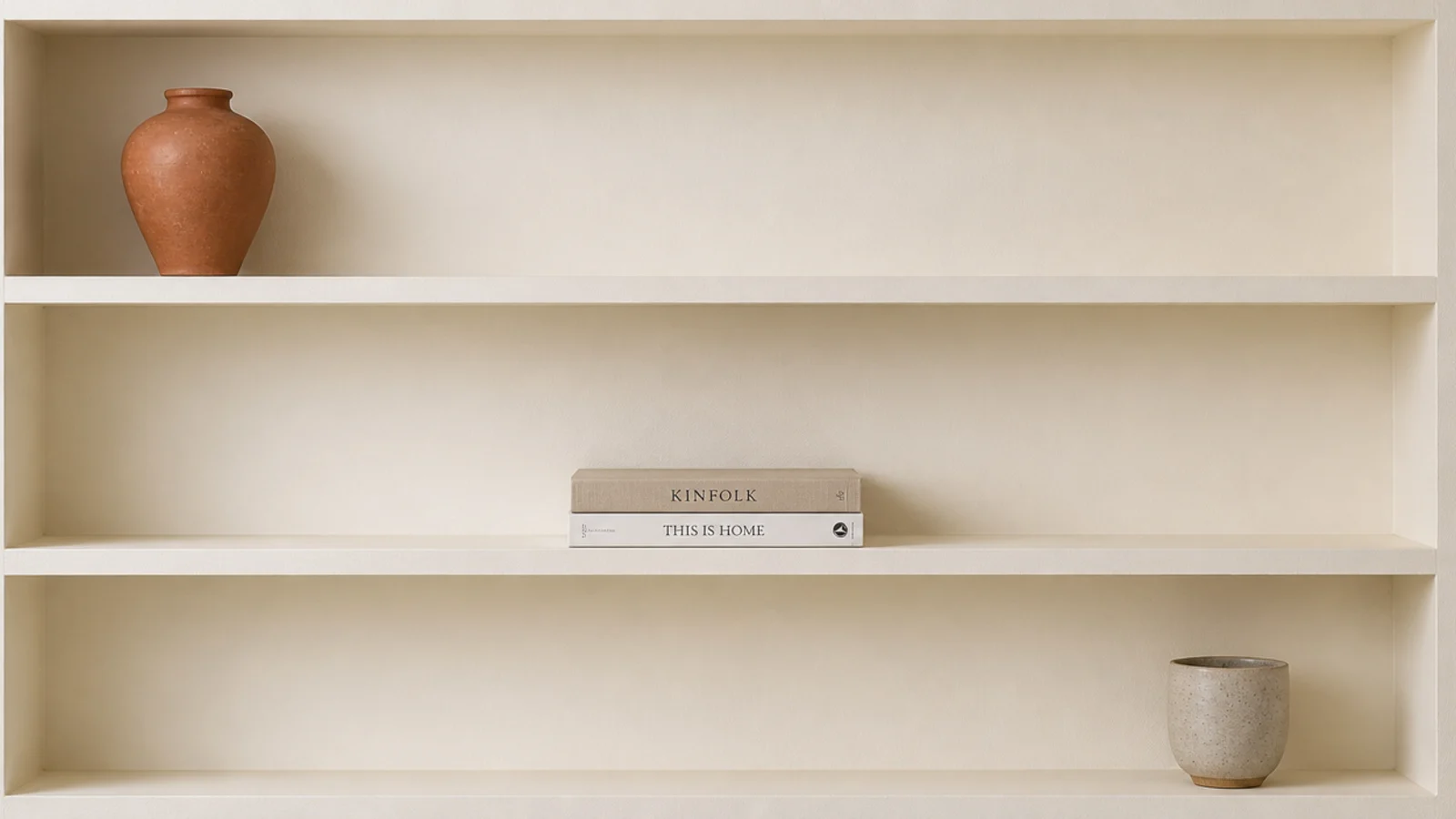
The instinct with a sparse shelf is to spread things out to cover the width. It is exactly wrong. Spreading gives you a thin line of unrelated objects; grouping gives you a composition with air around it.
Push each grouping toward one side, leave the rest bare, and alternate which side you push toward as you go up. About a third of each shelf staying empty is the number I keep landing on. It costs nothing, takes four minutes, and does more than anything you can buy.
4. Group by height, never by color
Arranging by color looks tidy in a photograph and reads as flat in a room, because color-sorting removes the height variation your eye needs to move.
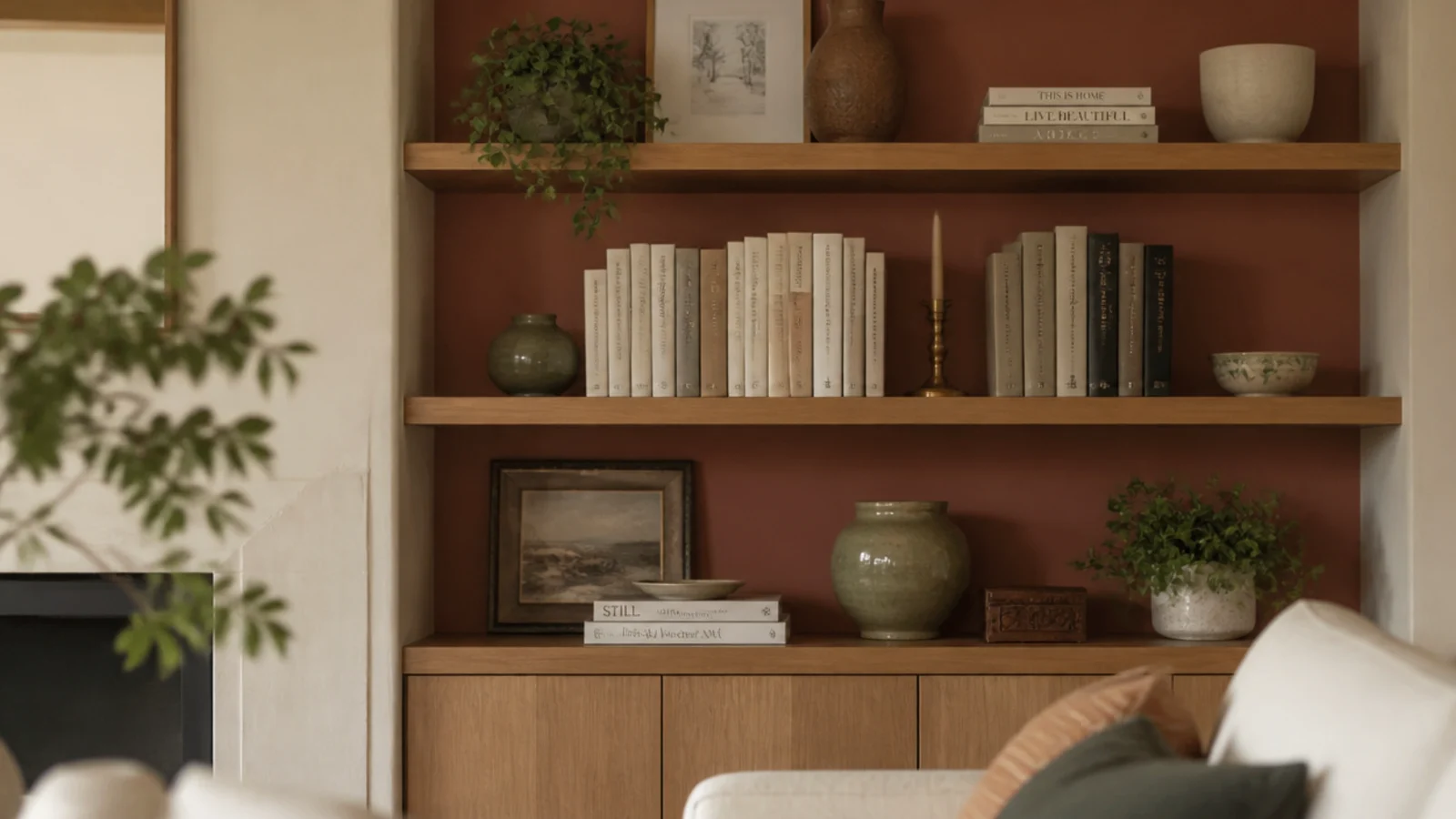
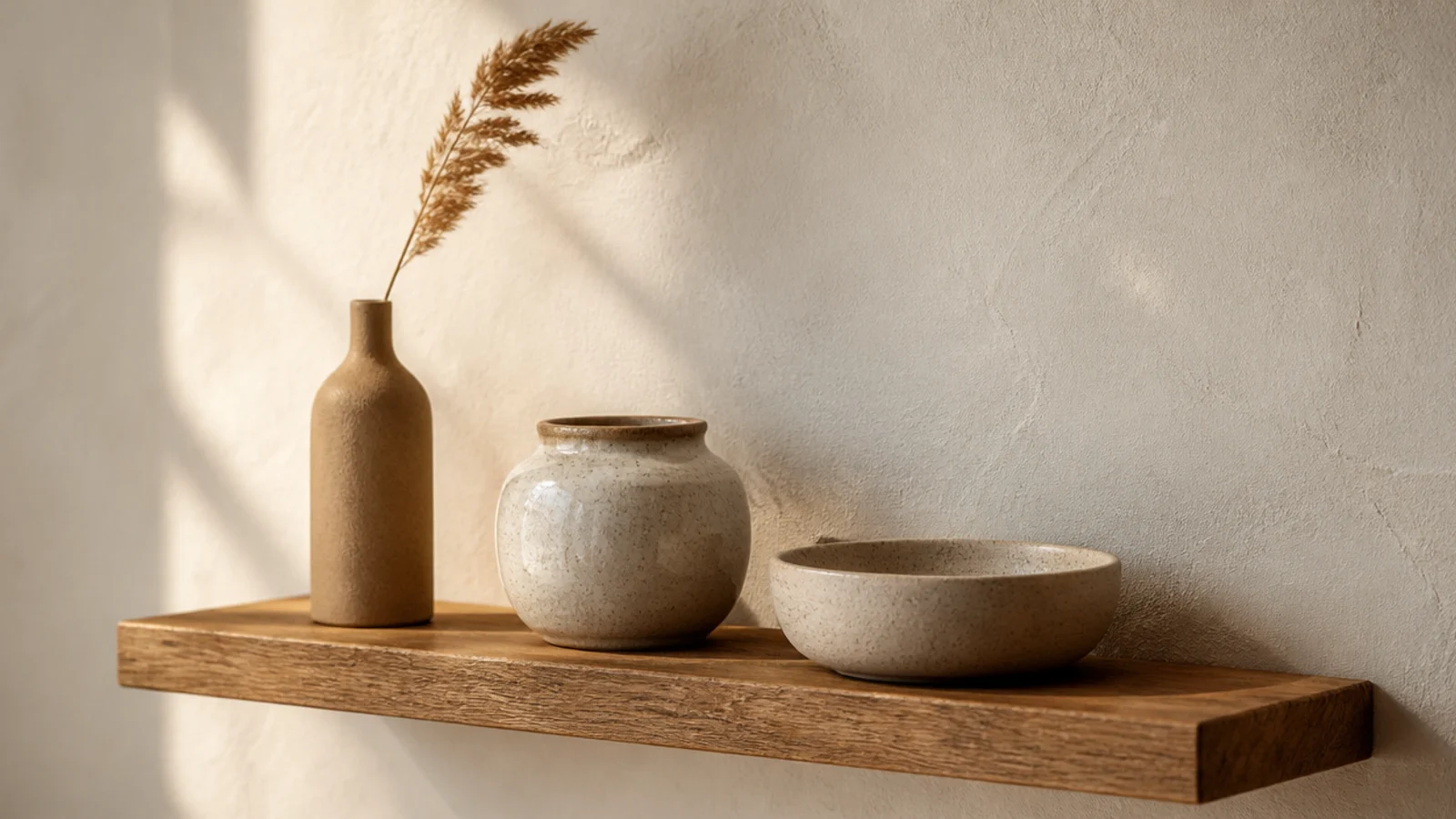
Group by height instead: one tall thing, one medium, one low, in a clear descending line. On a shelf with almost nothing on it this matters more, not less, since there are fewer objects doing the work. A 12-inch clay bottle, a 7-inch jar and a 3-inch bowl is a complete shelf. Nothing else is required.
5. Stack three books flat and use them as a pedestal
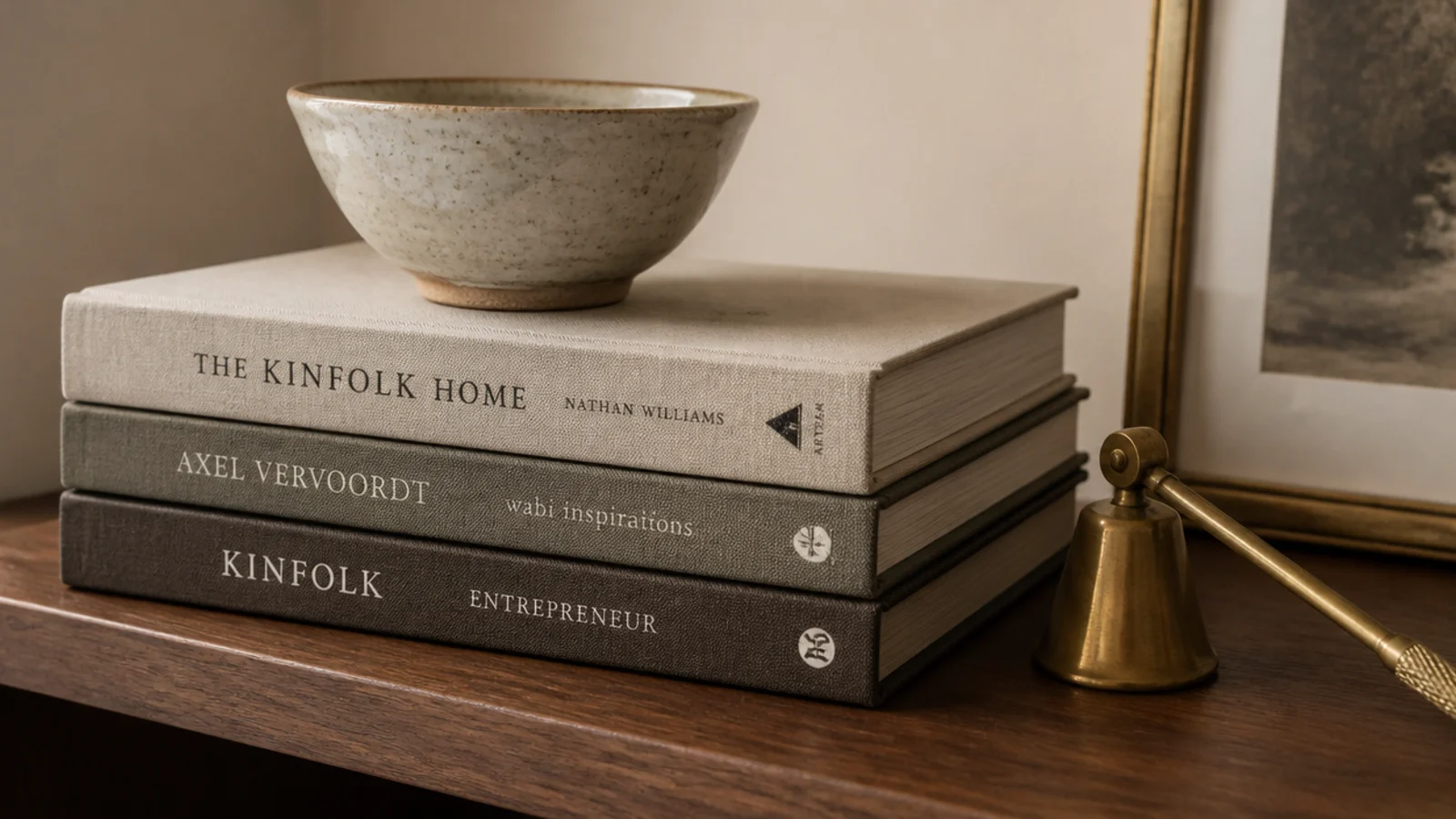
The few books you own are more useful lying down than standing up. Three hardbacks stacked flat give you a 4-inch riser, and a riser is what lifts a small object out of the shelf and into view.
Put a bowl, a small plant or a candle on top. Alternate these horizontal stacks with any vertical rows you have — that rhythm is what stops a mostly empty case reading as an unfinished one. It also uses books as objects, which is honest when you only have nine of them.
6. Give one shelf to a trailing plant
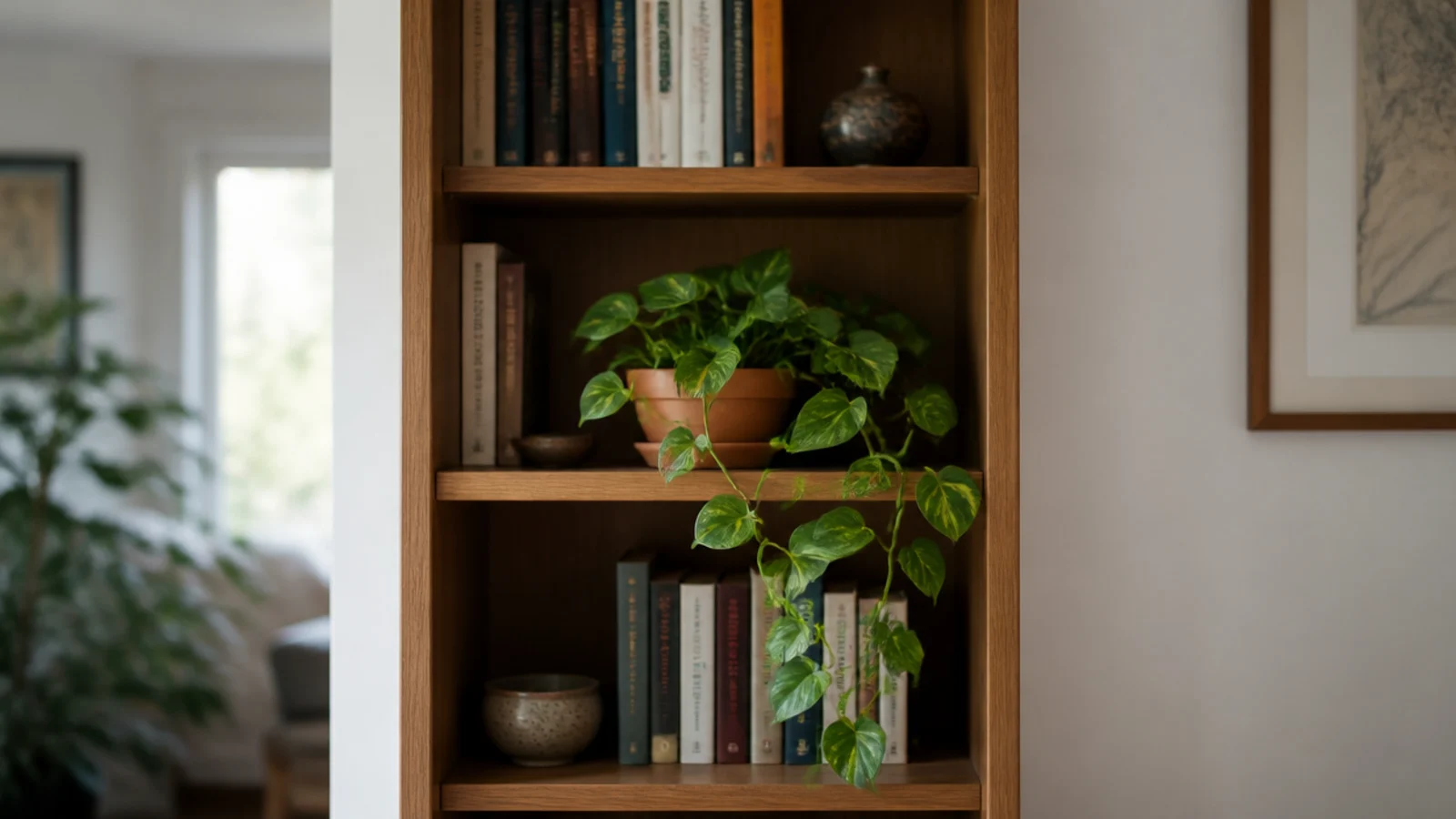
Every hard horizontal line in a bookcase wants one thing falling across it. A pothos, string of hearts or small ivy on the second shelf from the top does that for about $12 ($), including the pot.
Second from the top is the placement that works, because the vines fall into the shelf below and connect two levels instead of decorating one. Use a plain unglazed terracotta pot rather than the black plastic nursery pot — three dollars, and it is the most disproportionate improvement per dollar in this entire list.
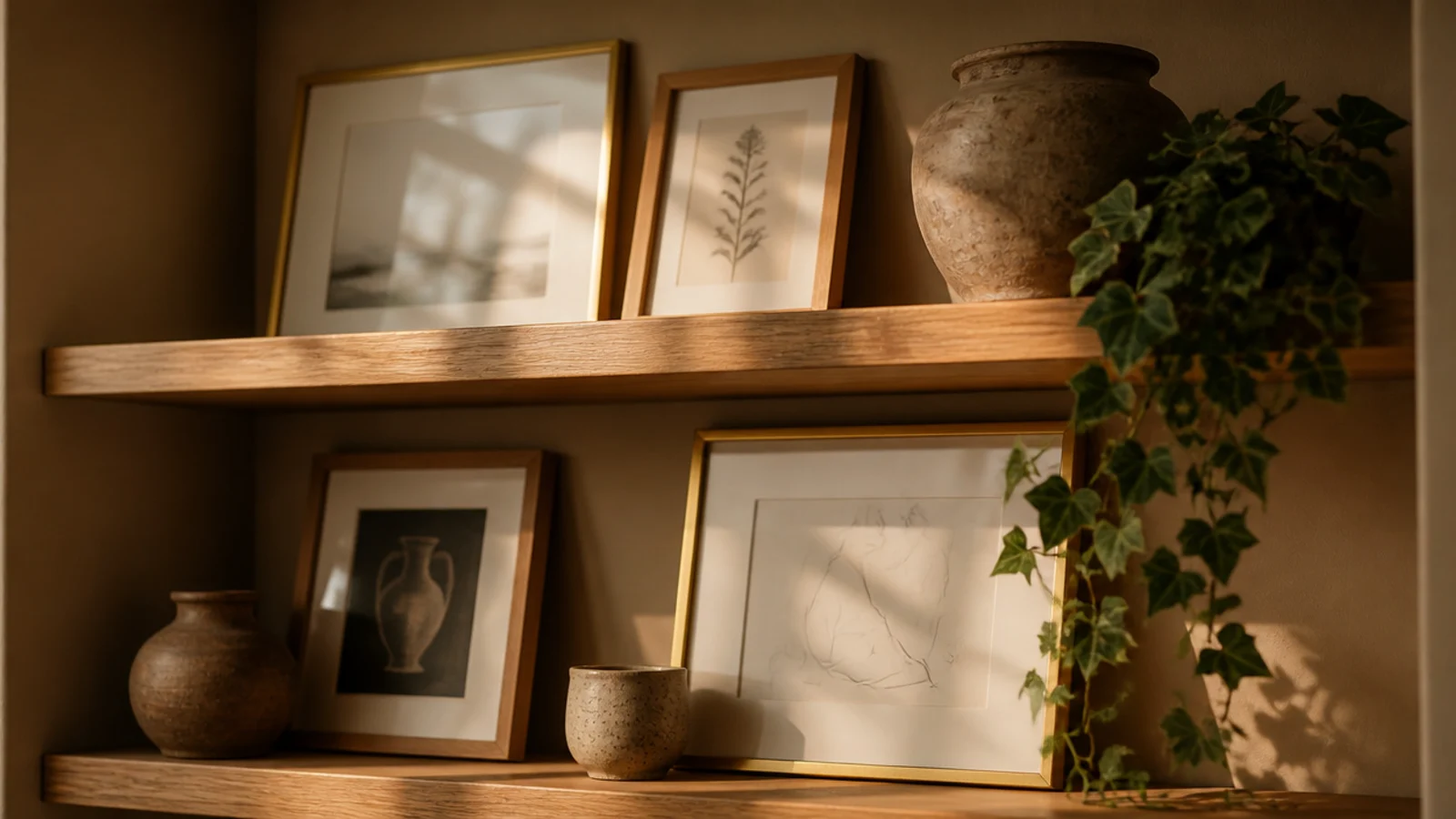
7. Lean art at the back instead of hanging it
A leaned frame gives a shelf depth, and depth is what an under-filled shelf is short of. It also means zero nail holes in a wall you do not own.
Use a frame that reaches at least two-thirds of the clear height so it fills the space rather than floating in it. Overlap the front third of it with a plant or a clay vessel so the layers read properly. Thrifted frames run $3 to $10 each, and mismatched frames in two finishes — oak and brass, say — look considered rather than random.
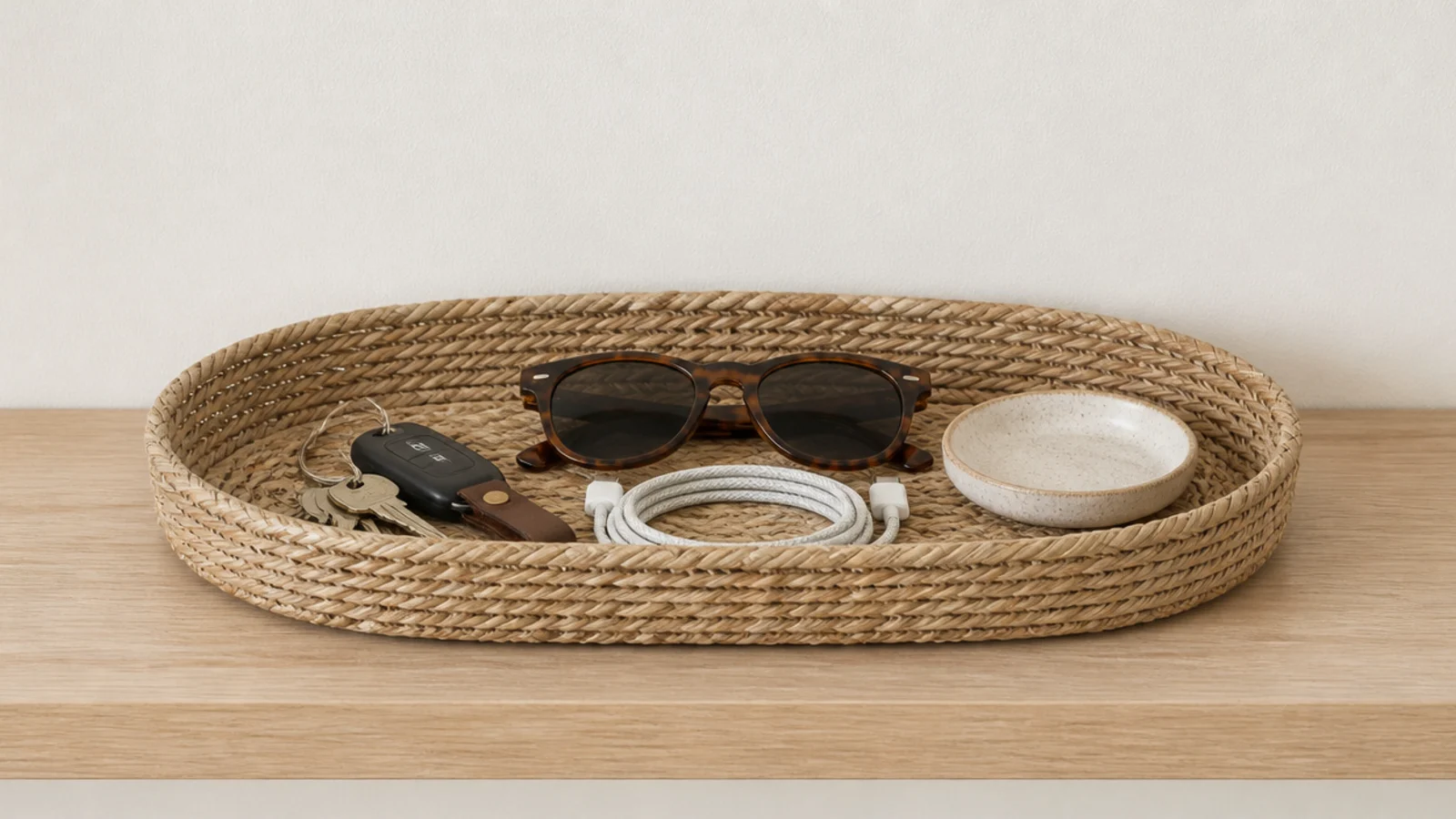
8. Corral the small stuff on one tray
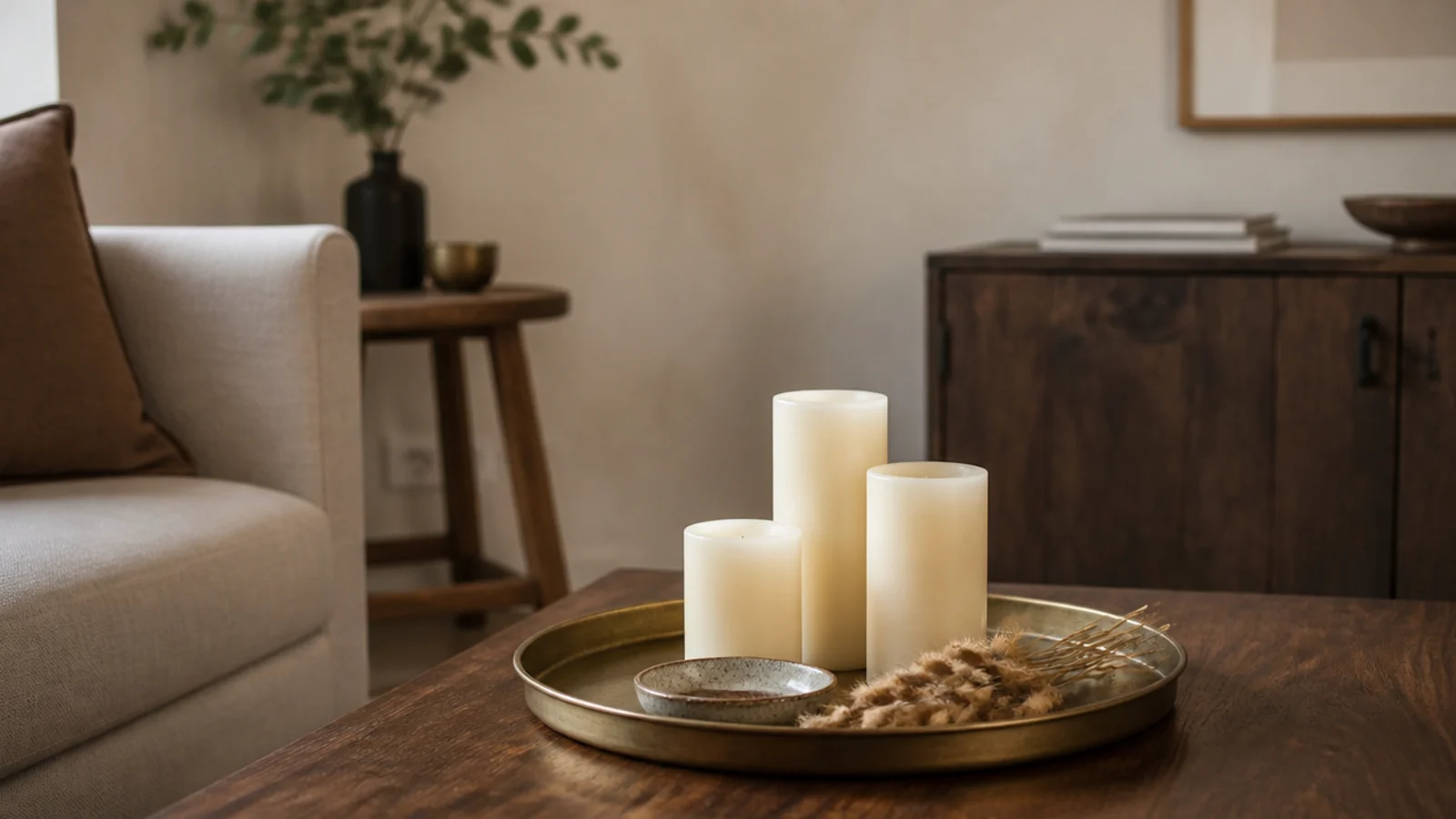
Remotes, keys, chargers and lip balm will find your shelf regardless of your styling plan. Give them one shallow tray with a raised edge and they become a group instead of a scatter.
An 8 to 10-inch woven or wooden tray is right. Without the rim, small items migrate to the back and to the floor. With it, the same objects read as one contained shape — which is the whole trick of styling a shelf that also has to work for daily life in a small apartment.
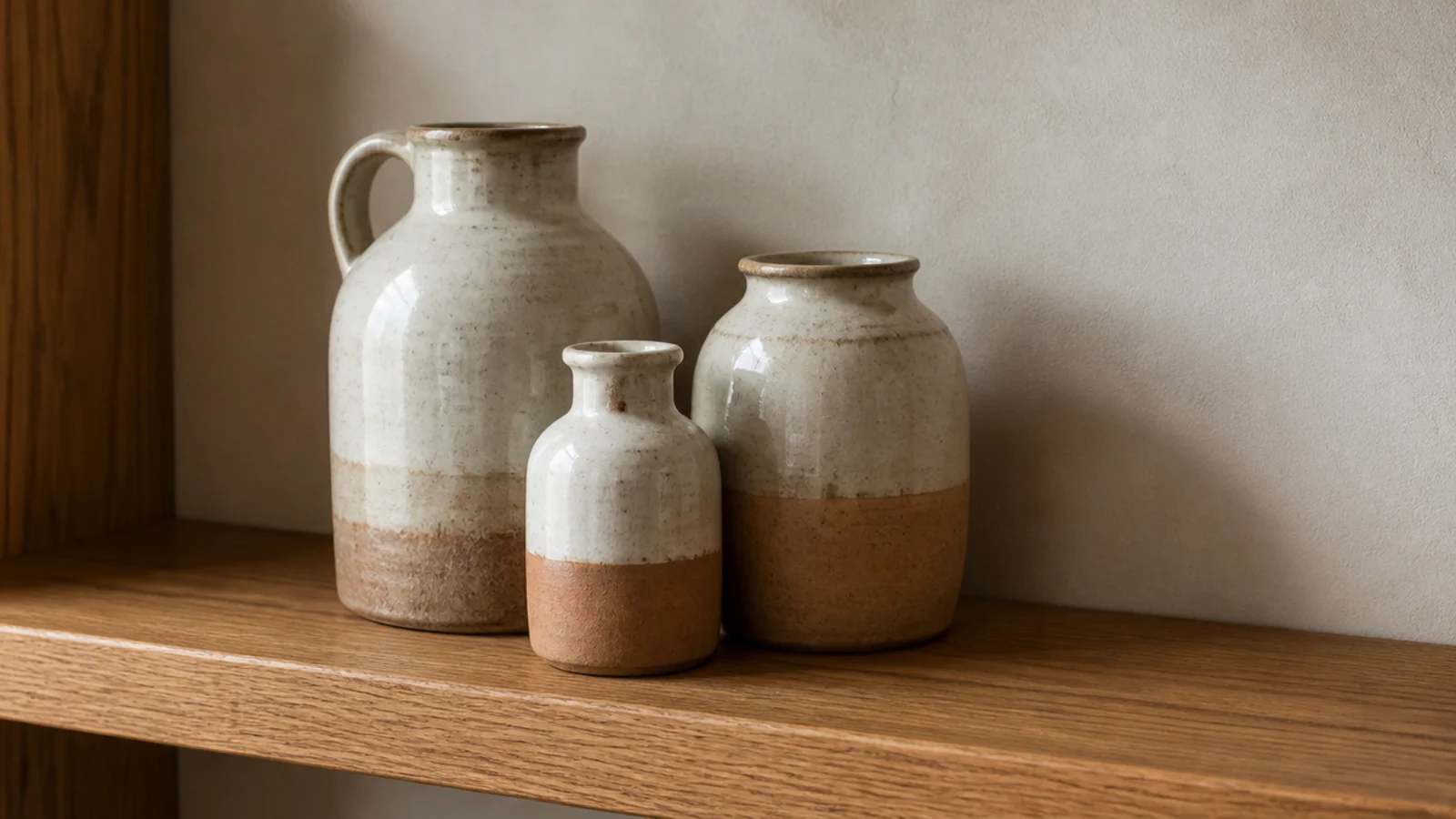
9. Buy three pieces of thrifted stoneware, not thirty
Secondhand pottery is the cheapest way to fill a shelf with real objects. A good stoneware vessel costs $4 to $12 at a thrift store and looks better than anything at that price new, because glaze and weight are hard to fake.
Hunt for three pieces in graduated sizes and a matte finish. Matte reads calm; high-gloss reads busy under warm light. Keep to two glaze tones across the whole case so the pieces look collected rather than accumulated. Small bookshelf ideas has more on scaling this down for a narrow case.
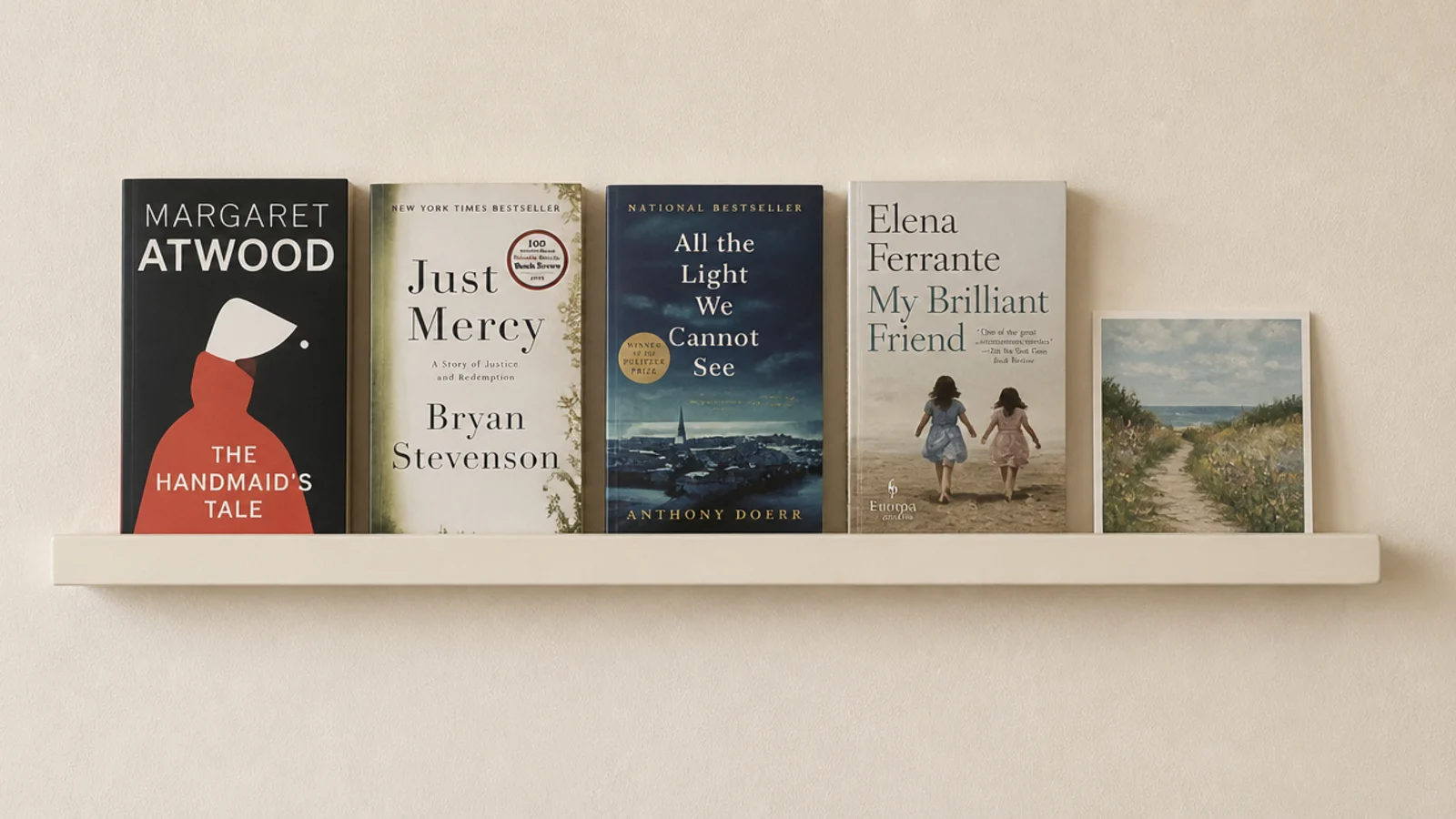
10. Mount an adhesive picture ledge and respect the limit
Heavy-duty adhesive strips rated to about 15 pounds per pair are genuinely no-damage, and that rating is the honest ceiling. A 24-inch ledge holding four paperbacks and a small print sits comfortably underneath it.
Clean the wall with rubbing alcohol first, press for 30 seconds, and wait an hour before loading anything. Test on hidden paint — flat builder-grade rental paint peels off with the strip. Remove later with a hair dryer on low, pulling slowly at a 45-degree angle. A pair of ledges runs $20 to $35 ($).
11. Wedge a tension-pole unit into an alcove
Where an alcove has a solid floor and a solid ceiling, a tension-pole shelving unit gives you four or five levels with no fixings at all.
Set the tiers at uneven spacings — a taller gap at the bottom for baskets, shorter ones above for ceramics. Even spacing is the mistake people make, and it leaves you with five slots that fit almost nothing. Expect $40 to $80 ($). Check your ceiling first: a suspended or lath ceiling will not take the pressure, and you will find that out the loud way.
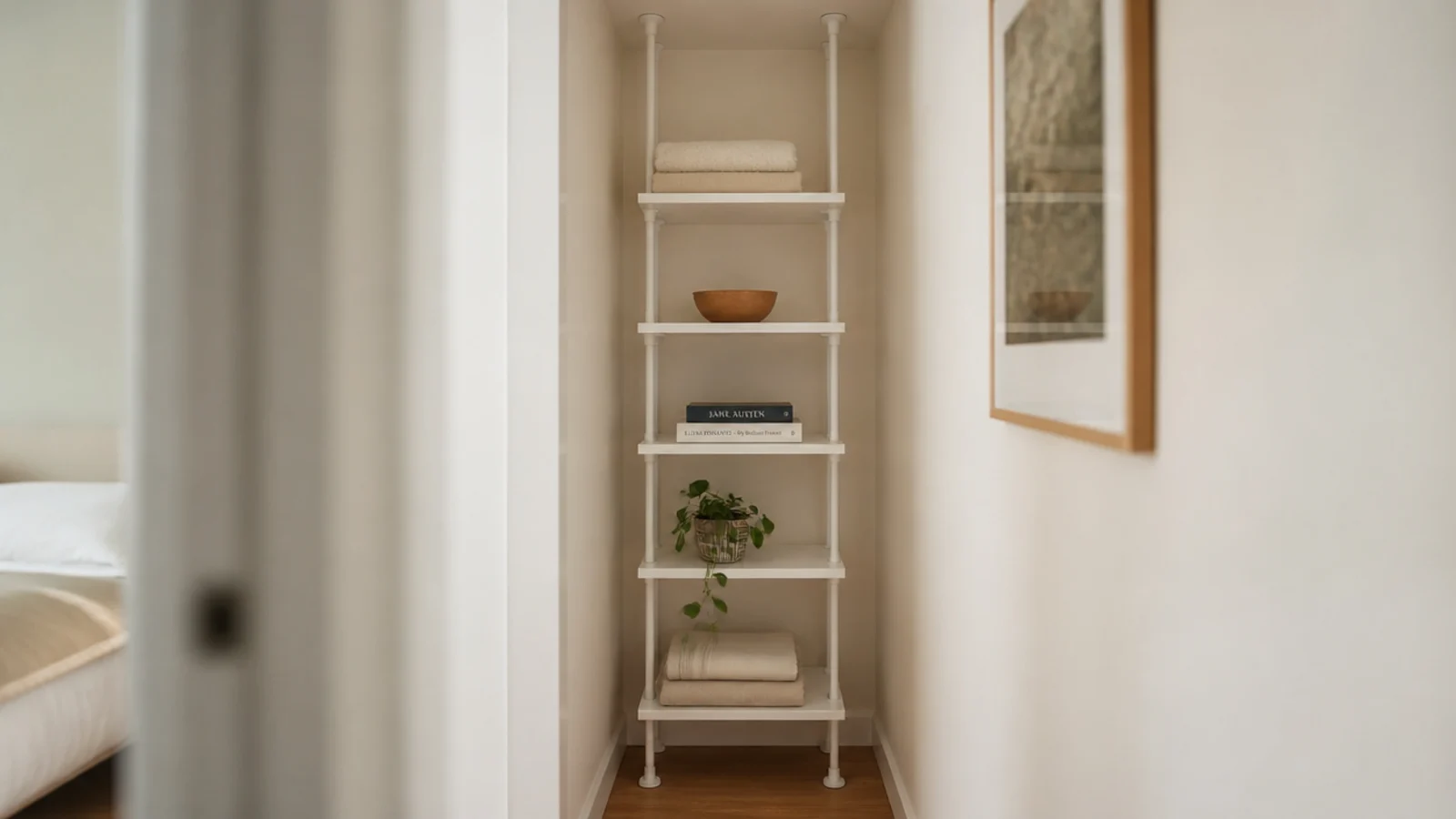
12. Turn a cube unit on its side
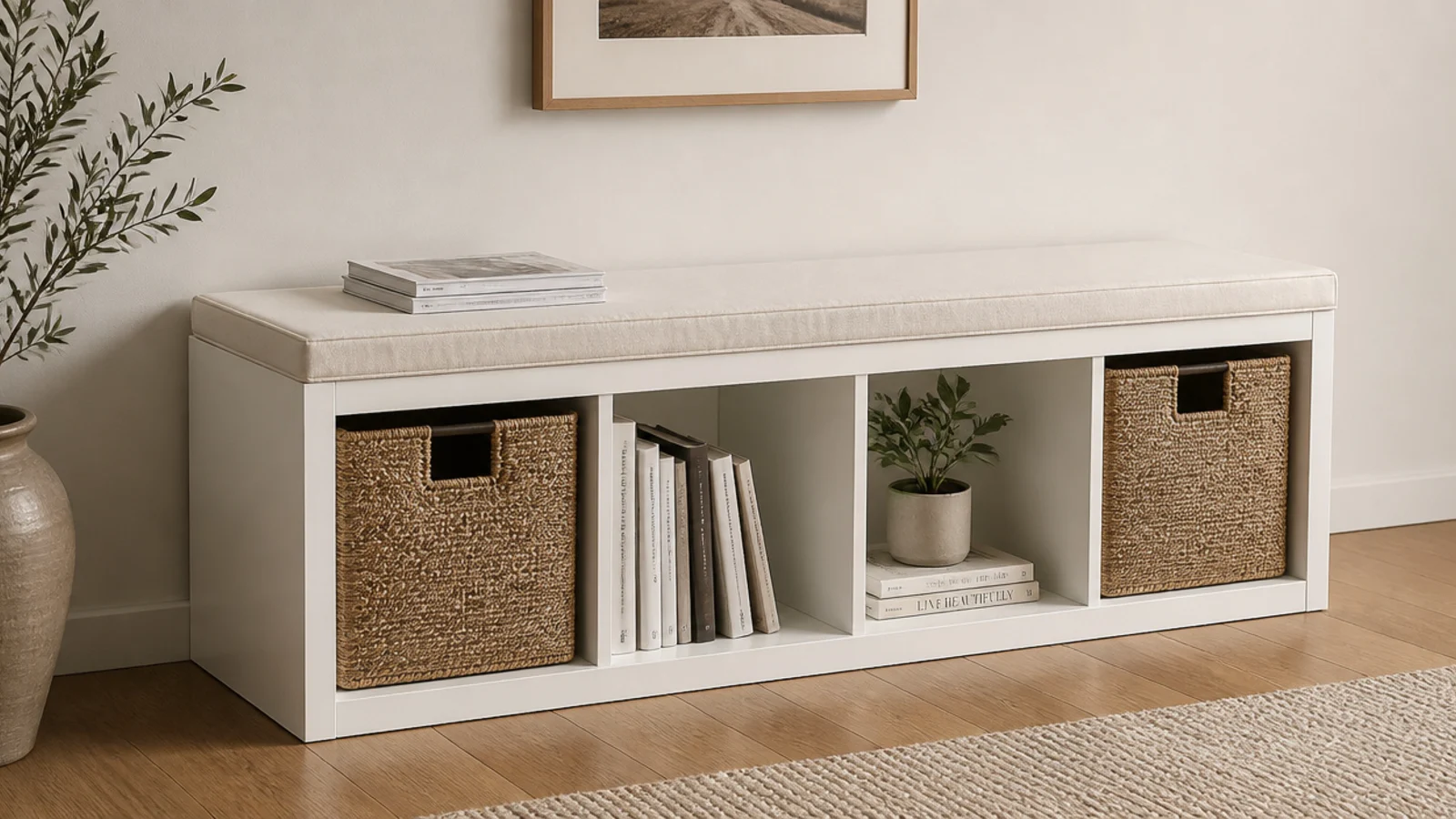
The four-cube unit everyone owns works better horizontally. Laid down along a wall it becomes a 30-inch-high console with storage, a display surface on top, and no risk of tipping at all.
Put baskets in the outer cubes and leave the inner ones open. Add a linen cushion and it doubles as bench seating in a small apartment. Cube units run $35 to $70 ($), and a laid-down unit is the one configuration that needs no strap, which matters if drilling is genuinely off the table.
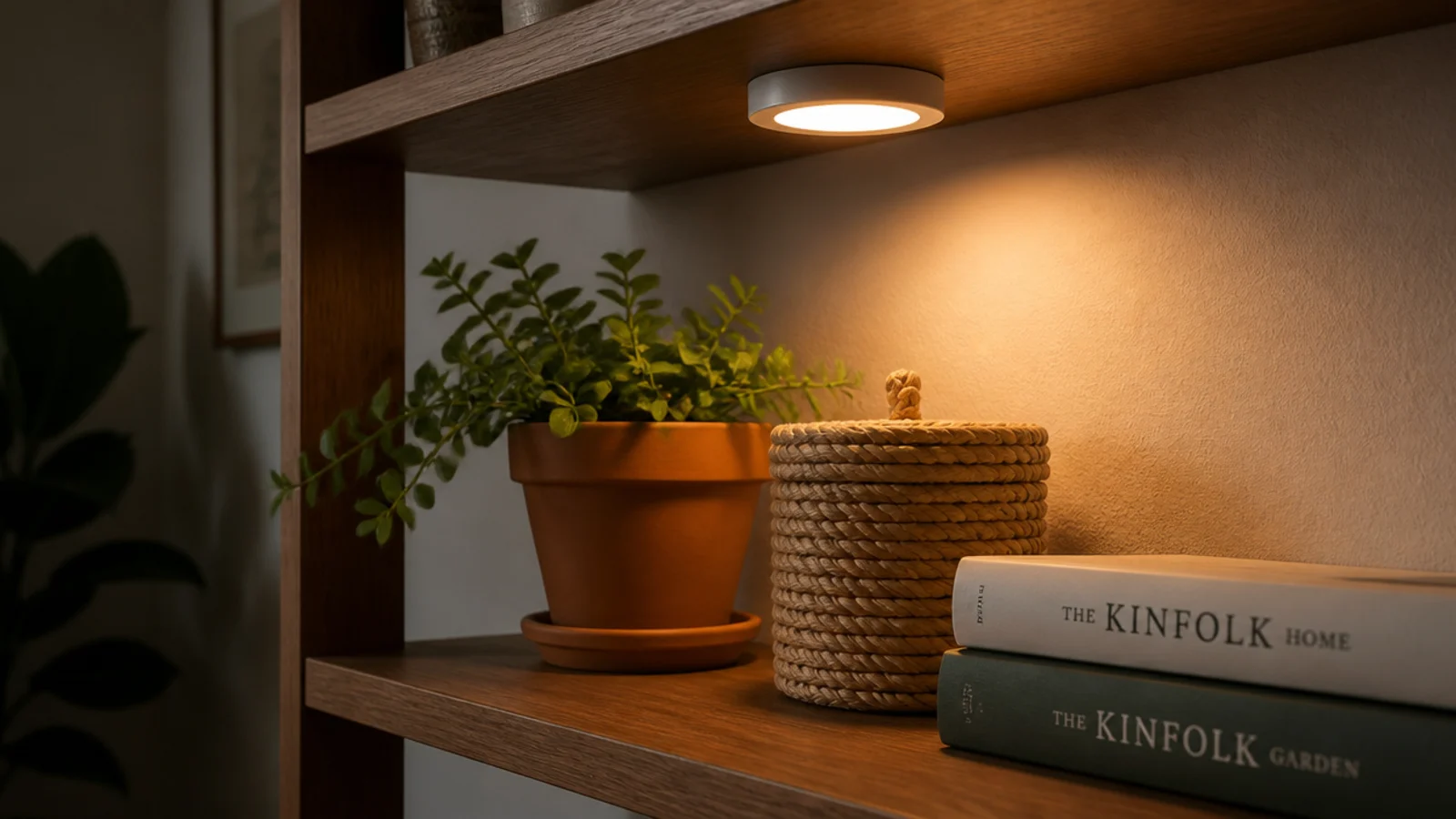
13. Add ten dollars of warm light
A rental shelf usually sits on the wall furthest from the window, which is why yours looks flat no matter what you put on it. One rechargeable puck light at 2700K under a shelf fixes that.
Stick it to the underside of the shelf above so the light falls onto objects rather than into your eyes. Cool 4000K bulbs drain terracotta and oak of all their warmth; 2700K brings both back. Four dollars a bulb, ten for a puck light, and it is the best value change on this list.
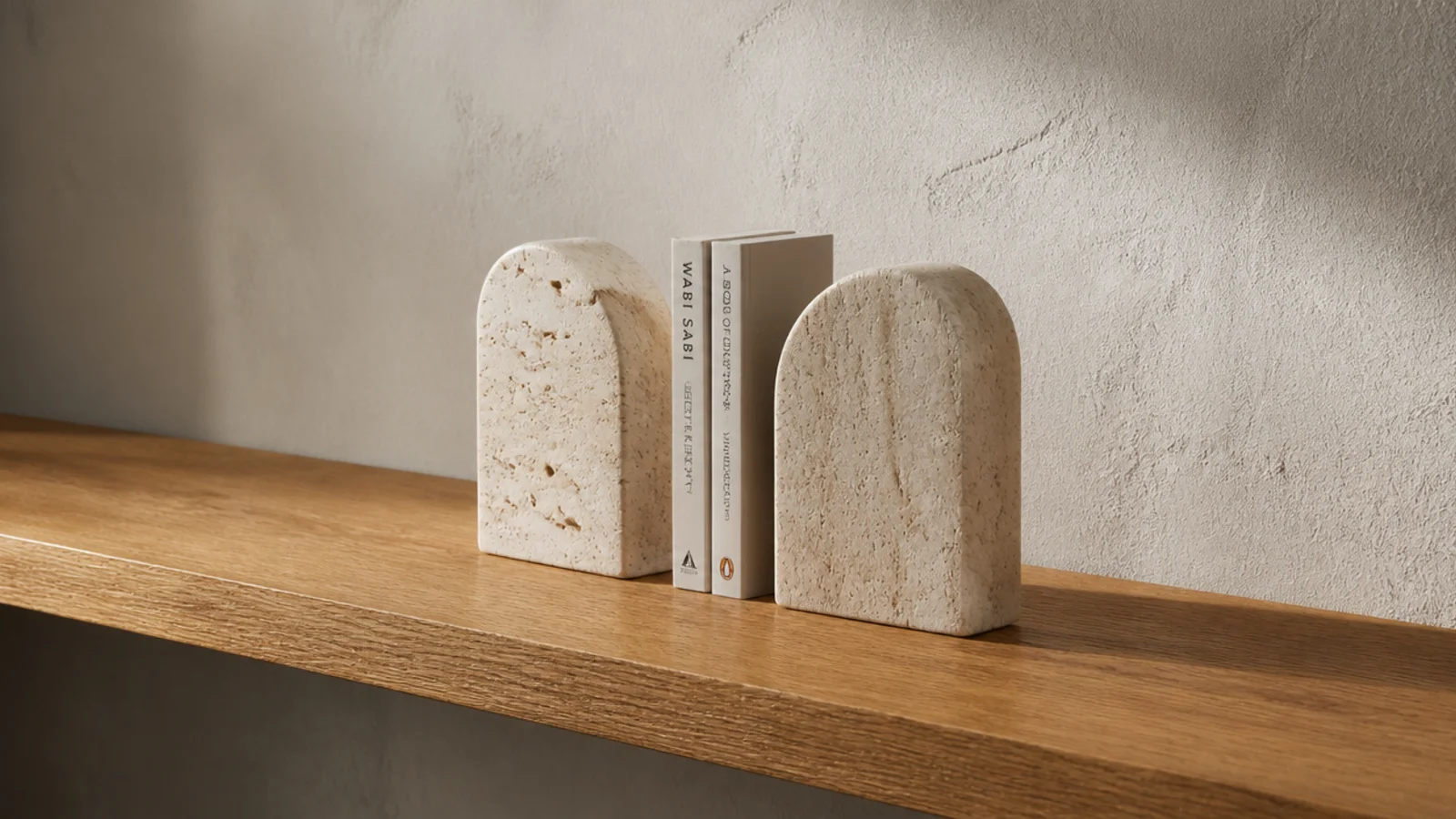
14. Let a pair of sculptural bookends stand alone
Bookends do not need many books. Two heavy stone or wooden bookends with three paperbacks between them read as a deliberate vignette, and the weight makes the shelf feel substantial even where it is nearly bare.
Choose bookends with real mass — marble offcuts, cast concrete, a solid wood wedge. Anything hollow tips over and looks it. Thrift them if you can, $6 to $20 a pair, and place them on the shelf at eye level where the sculpture reads properly. Minimalist bookshelf ideas leans on this trick throughout.
15. Drill the one hole that matters
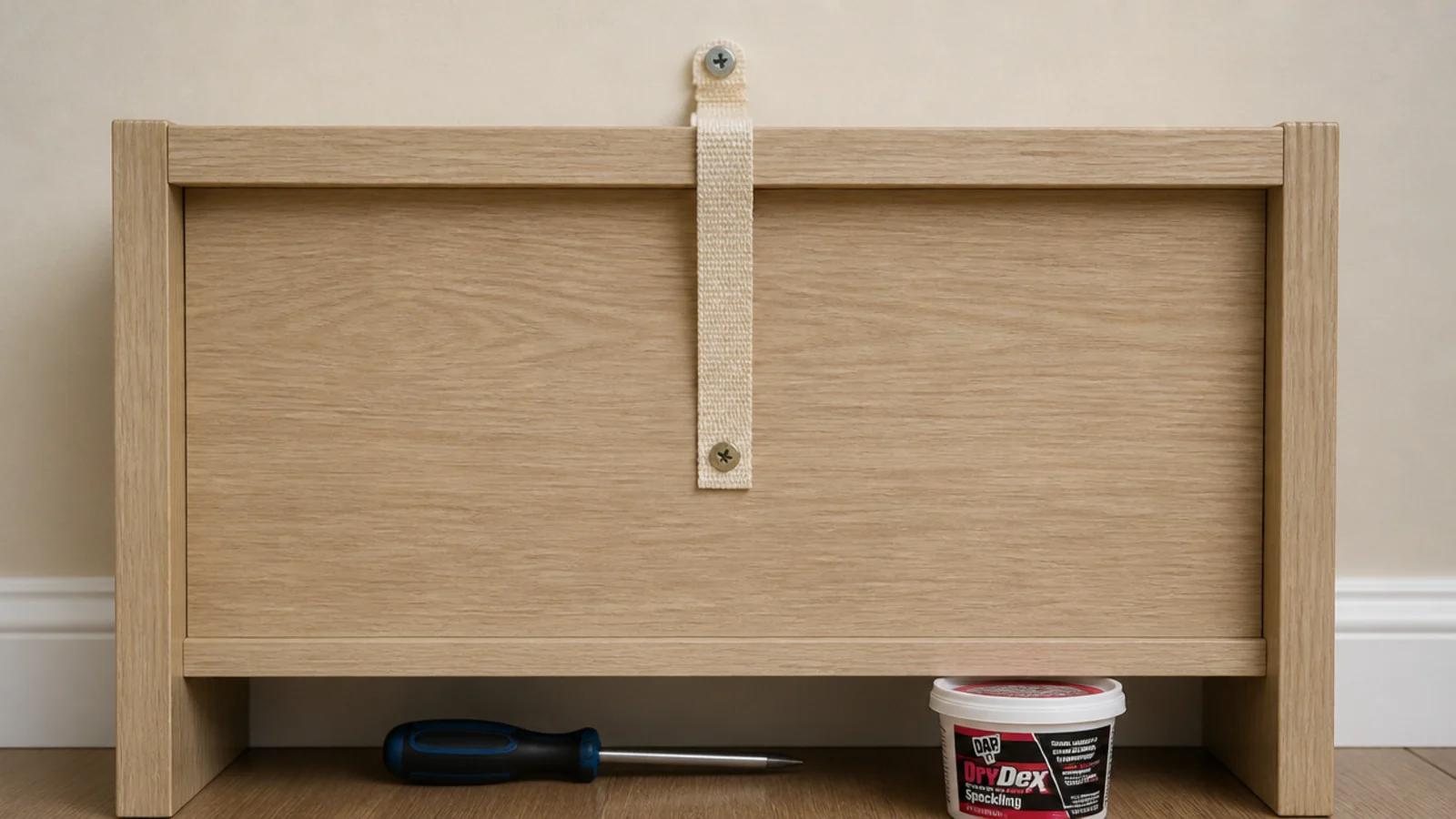
Every freestanding bookcase gets an anti-tip strap, without exception, in any home with children. This is the one rental hole I will always argue for.
It is a single screw, usually into a stud, and it fills in thirty seconds with lightweight spackle on move-out day. A tall case loaded with baskets and pottery is light enough for a toddler to climb and heavy enough to do real harm. There is no version of this where the hole is the bigger problem, and I say that as someone who has watched a loaded case lean.
Mistakes to Skip
- Filling gaps with small trinkets. Twelve tiny objects on a shelf read as clutter; three large ones read as a choice. Scale is the whole game here.
- Spreading objects evenly across the width to cover the shelf. Grouping tightly with real empty space beside the group always looks better than an even line.
- Trusting the plastic wall plugs in the box for anything mounted. They are rated around 10 pounds and creep out of drywall slowly, which is why the shelf looks fine until it does not.
Frequently asked questions
How do you style a bookshelf when you barely own any books?
Replace the volume books would have filled with three larger objects rather than twelve small ones. A jute basket, a wide stoneware bowl and a trailing plant fill a shelf convincingly, because your eye reads mass and shadow rather than a headcount. Keep about a third of every shelf empty and group whatever you do own by height instead of color.
What can I put on a bookshelf instead of books?
Baskets for anything you want hidden, pottery for shape, one plant per two shelves for softness, and framed art leaned at the back for depth. Add a small tray to corral remotes, keys and chargers. Avoid filling the gaps with tiny trinkets. Scale is what makes an object-only shelf look styled rather than abandoned.
Can renters put up shelving without drilling into the wall?
Yes, with honest limits. A leaning ladder shelf carries real weight and needs nothing but felt pads. Tension-pole units work in an alcove with solid floor and ceiling. Adhesive picture ledges are genuinely no-damage but cap out near 15 pounds per pair of strips, so they hold ceramics and a few paperbacks rather than a hardback row.
How deep should a shelf be if I am not filling it with books?
Nine to ten inches suits paperbacks and most decorative objects, and it keeps a small room feeling open. Eleven to twelve inches is only worth it if hardbacks are coming later. Deeper shelves invite two rows of clutter and make anything at the front look stranded, which is the opposite of what a mostly empty shelf needs.
Do I still need an anti-tip strap on a lightweight bookcase?
Yes, without exception in any home with children or pets. A tall case loaded with baskets and pottery is light enough to climb and heavy enough to hurt someone. One strap and one small screw fill in thirty seconds with lightweight spackle on move-out day, which is a far smaller problem than a tipped bookcase.
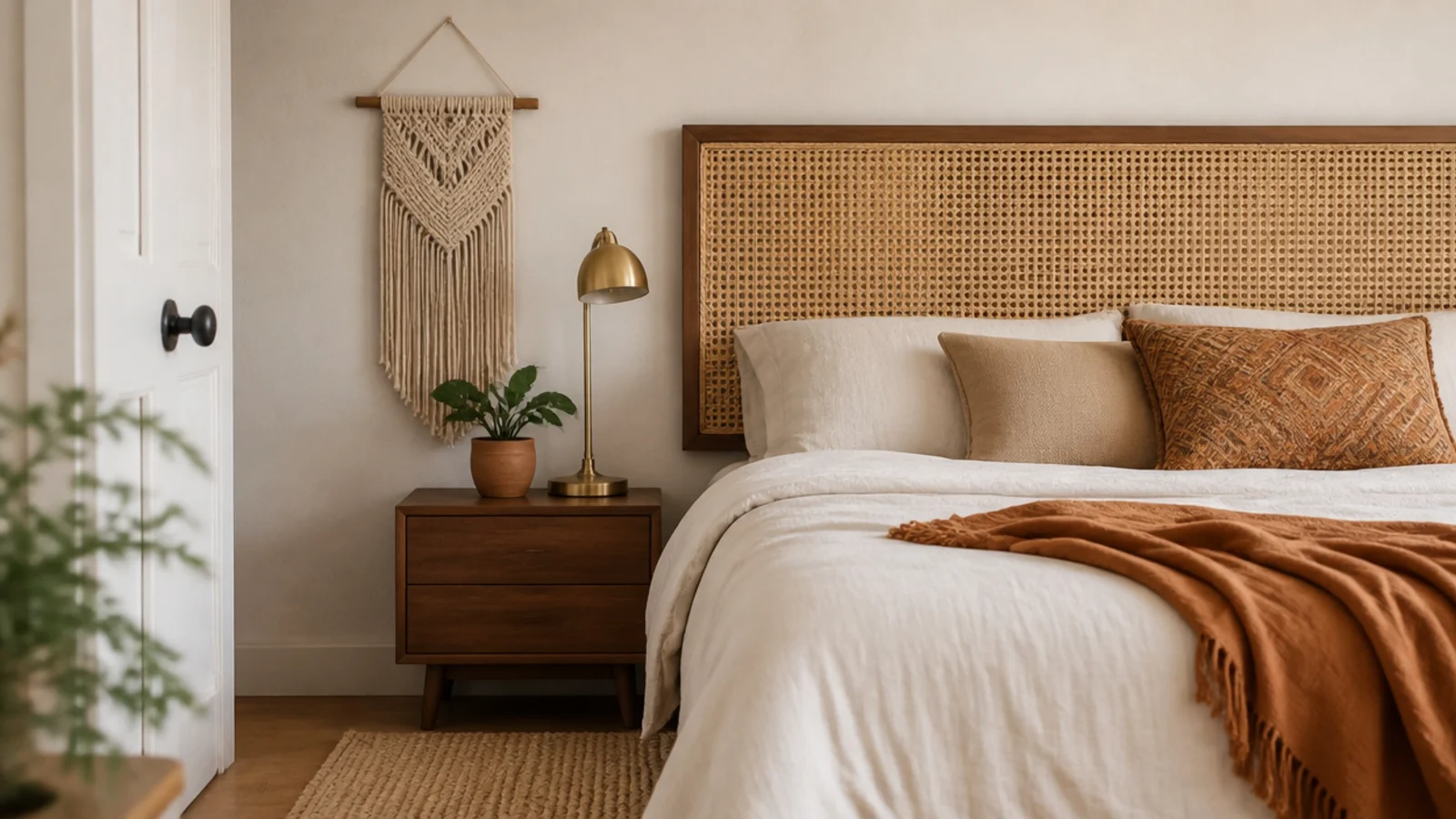
Start with the shelf you walk past most, take everything off it, and put back three objects at three heights with a basket underneath. That single shelf will tell you what the rest of the case needs. The full bookshelf styling walkthrough covers the method in order, bookshelf decor ideas has more object combinations, and if the same wall holds your bed, boho headboard ideas covers the no-drill version above the mattress. Save the pin so the measurements come shopping with you.
Want more like this? Browse all 15 bookshelf ideas guides — they all use the same measurements and budget tiers.
Pin it for later
Save this to your Bookshelf Ideas board
Pin it now so it is waiting for you when the tape measure comes out — and so the next person hunting for this idea can find it too.
Save this pinKeep going
More ideas worth saving while you have the tape measure out.