Bookshelf Ideas · Review
25 Best Bookshelf Picks Worth Buying

Some links on this page may become affiliate links in future. I only recommend pieces I would put in my own home — see the affiliate disclosure.
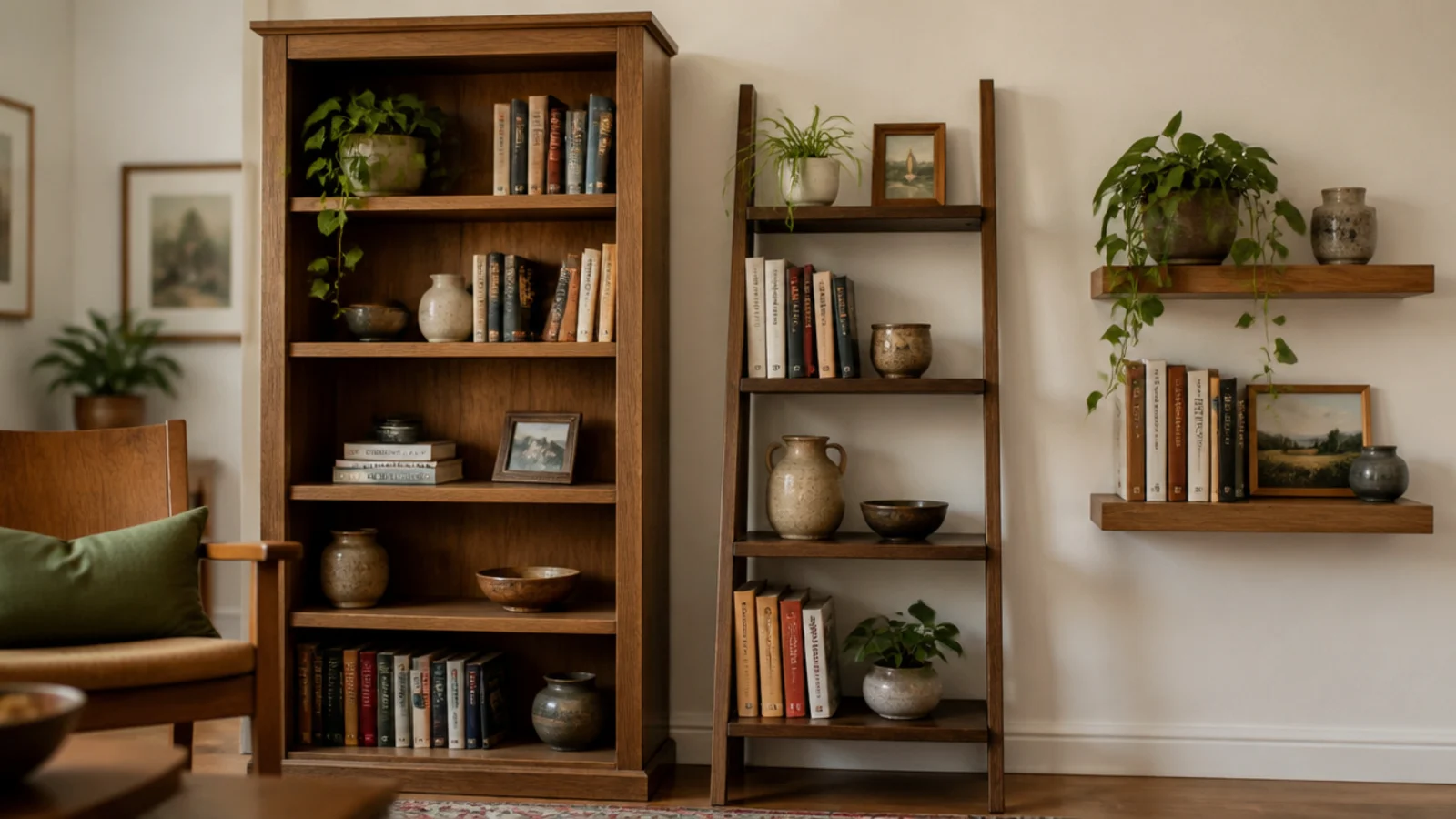
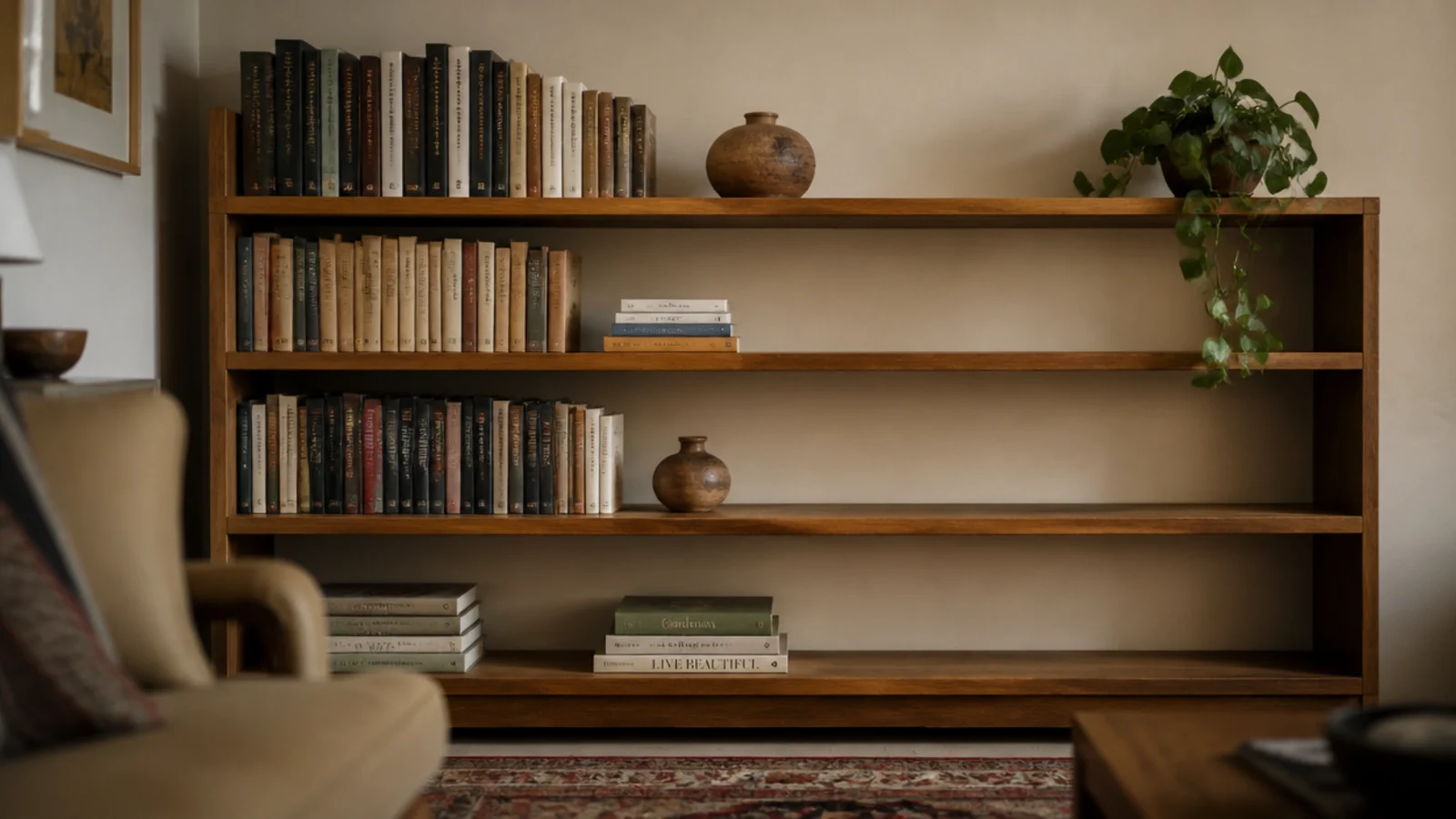
The best bookshelf styling tips are worth almost nothing on the wrong case, which is why this is a buying guide with the styling built into it. A shelf too shallow for hardbacks or too long for its own thickness cannot be arranged into working. I have bought, built and returned a lot of these. Below is every type worth considering, compared on the numbers that decide whether a shelf lasts, plus eight I would buy again.
In this guide11 sections — tap to openHide
- 1.How I Chose the Best Bookshelf Styling Tips and Picks
- 2.The Full Comparison: 25 Bookshelf Picks
- 3.The solid-wood five-shelf bookcase
- 4.The leaning solid-wood ladder shelf
- 5.The steel-and-oak modular tower
- 6.The floating shelf set with concealed rods
- 7.The painted MDF built-in kit
- 8.The narrow twelve-inch tower
- 9.The tension-pole shelving unit
- 10.The picture-ledge book rail
- 11.What to Check Before You Buy
How I Chose the Best Bookshelf Styling Tips and Picks
I judged every type on five things, in this order.
- Load path. Where does the weight actually go? A linear foot of hardbacks weighs 20 to 25 pounds, so a 36-inch shelf carries 60 to 75. Anything relying on drywall alone for that is a countdown, not a fixing.
- Span versus thickness. Three-quarter-inch stock sags past a 32-inch span once books are on it. I looked for bays at or under 32 inches, thicker boards, or a front lip doing the stiffening quietly.
- Usable depth and clear height. Manufacturers quote the board width. What matters is 11 to 12 inches of usable depth for hardbacks, 9 to 10 for paperbacks, and 11 to 13 inches of clear height so a hardback stands upright.
- Adjustability. Pin holes running the full height of the upright, not stopping halfway. Collections change, and a fixed case locks you into one spacing for its whole life.
- Renter reversibility. How many holes, how big, how easily patched. A single anti-tip screw is a completely different commitment to eight toggle bolts.
I did not weight brand, finish trends or how a case photographs empty. Everything below is described by type rather than product name, because the same construction turns up under a dozen labels at Target, IKEA, Amazon, Wayfair, HomeGoods and any decent thrift store — and construction is what you are actually buying.
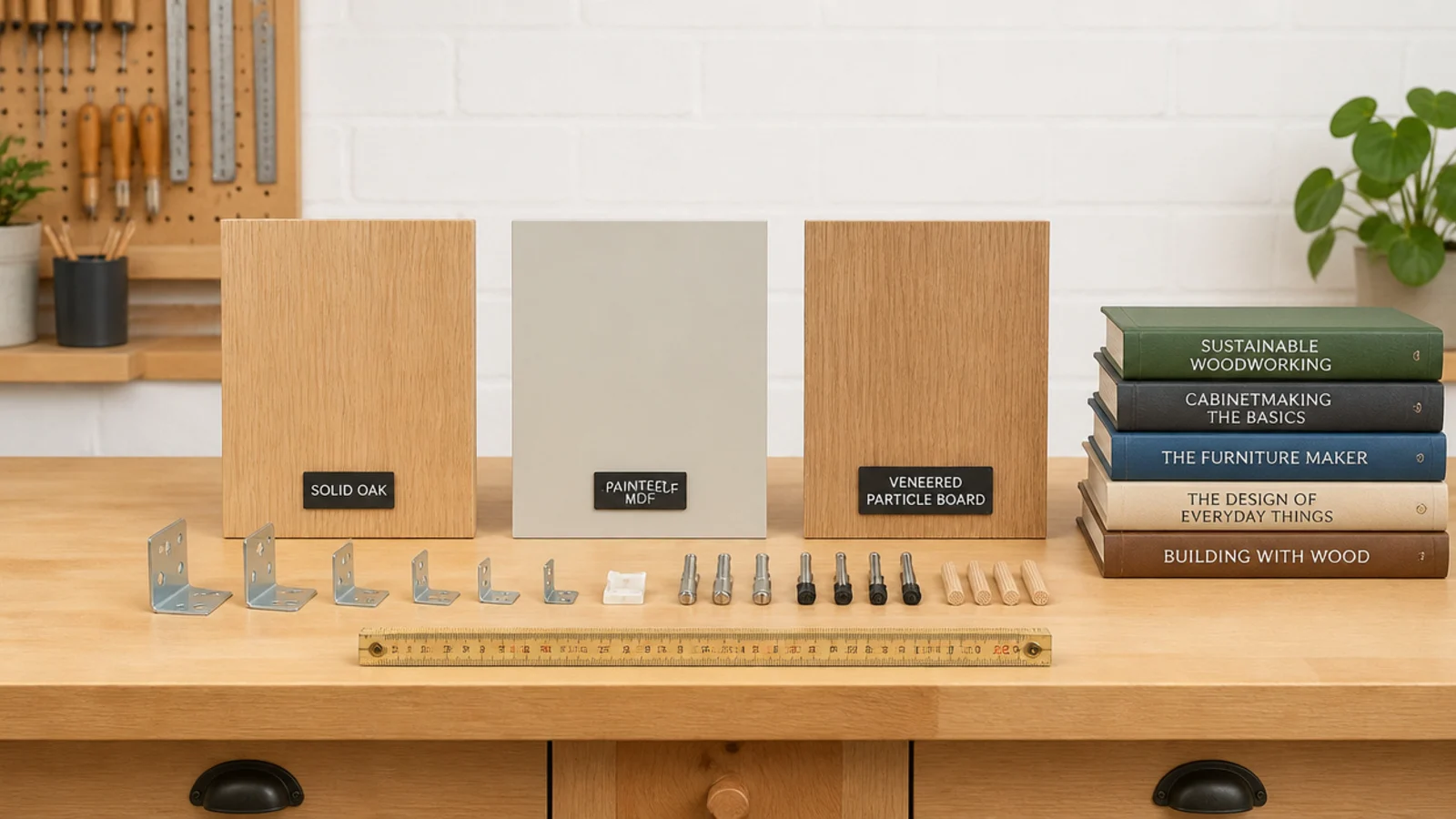
The Full Comparison: 25 Bookshelf Picks
Price tiers: $ under $100 · $$ $100–$300 · $$$ $300+. Weight notes assume correct anchors for the mounting type.
| Pick | Best for | Price | Why it wins |
|---|---|---|---|
| Solid-wood five-shelf bookcase | A lifetime of hardbacks | $$$ | Adjustable pins, rigid back, no sag |
| Leaning solid-wood ladder shelf | Renters with real books | $ | Carries weight with zero wall holes |
| Steel-and-oak modular tower | Art books and records | $$ | Welded frame beats any bracket |
| Floating set with concealed rods | Clean minimal walls | $$ | No visible hardware at all |
| Painted MDF built-in kit | Alcoves and chimney breasts | $$ | Fitted joinery look for far less |
| Narrow twelve-inch tower | Slim gaps beside doors | $ | Fits where nothing else will |
| Tension-pole shelving unit | Rentals with solid ceilings | $ | Floor-to-ceiling pressure, no anchors |
| Picture-ledge book rail | Above sofas and beds | $ | Covers face out, four inches deep |
| Cube storage grid | Families and mixed storage | $ | Baskets low, books high, cheap |
| Backless slim etagere | Small rooms needing light | $ | Wall shows through, room stays open |
| Glass-front barrister case | Dust and precious editions | $$$ | Stacks as the collection grows |
| Low console-height bookcase | Low ceilings and toddlers | $$ | Long top surface, very little to climb |
| Corner bookshelf column | Dead corners | $$ | Uses floor area nothing else claims |
| Room-divider open unit | Studios and open plans | $$ | Splits a room without blocking light |
| Rolling library cart | Current reading piles | $ | Moves to wherever you are sitting |
| Track-and-bracket wall system | Growing collections | $$ | Whole wall reconfigures in an hour |
| Reclaimed plank and pipe shelf | Character on a budget | $ | Real grain, genuinely strong fixings |
| Kids forward-facing ledge set | Children under six | $ | Covers out, capped at 36 inches |
| Bedside nightstand bookcase | Beds in tight corners | $ | Nightstand and shelving in one |
| Under-stair stepped shelving | Awkward diagonals | $$ | Reclaims the most wasted volume |
| Adjustable pin-shelf bookcase | Mixed book sizes | $$ | Respace it as the collection shifts |
| Window bench with shelves | Reading nooks | $$$ | Seating and storage in one footprint |
| Stackable crate set | First flats and students | $ | Reconfigures endlessly, thrifts well |
| Cane-front cabinet with shelves | Hiding half the clutter | $$ | Open above, concealed below |
| Sliding library ladder | Full-height walls | $$$ | Makes the top three feet usable |
Eight of those are the ones I keep coming back to.
1. The solid-wood five-shelf bookcase
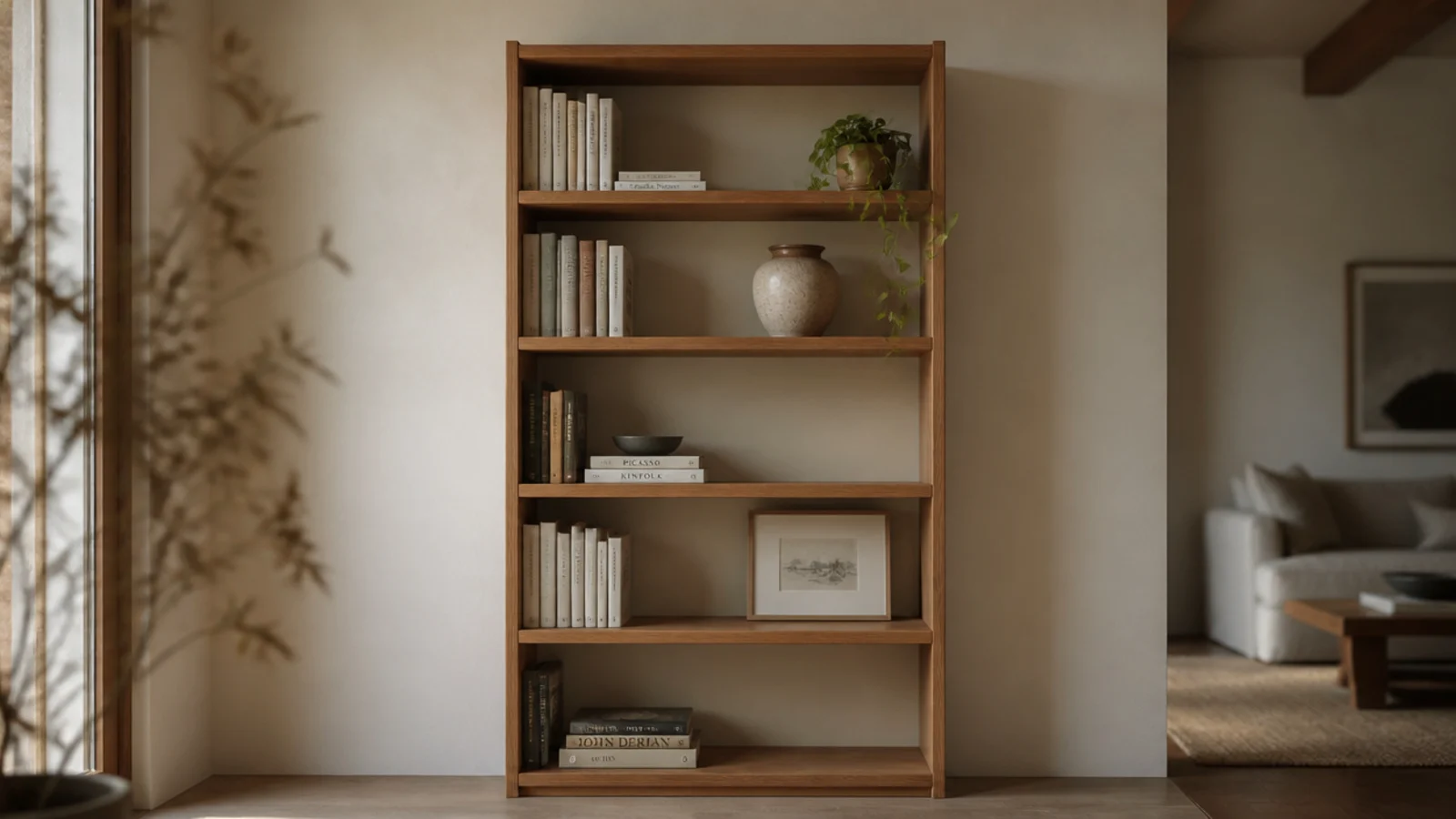
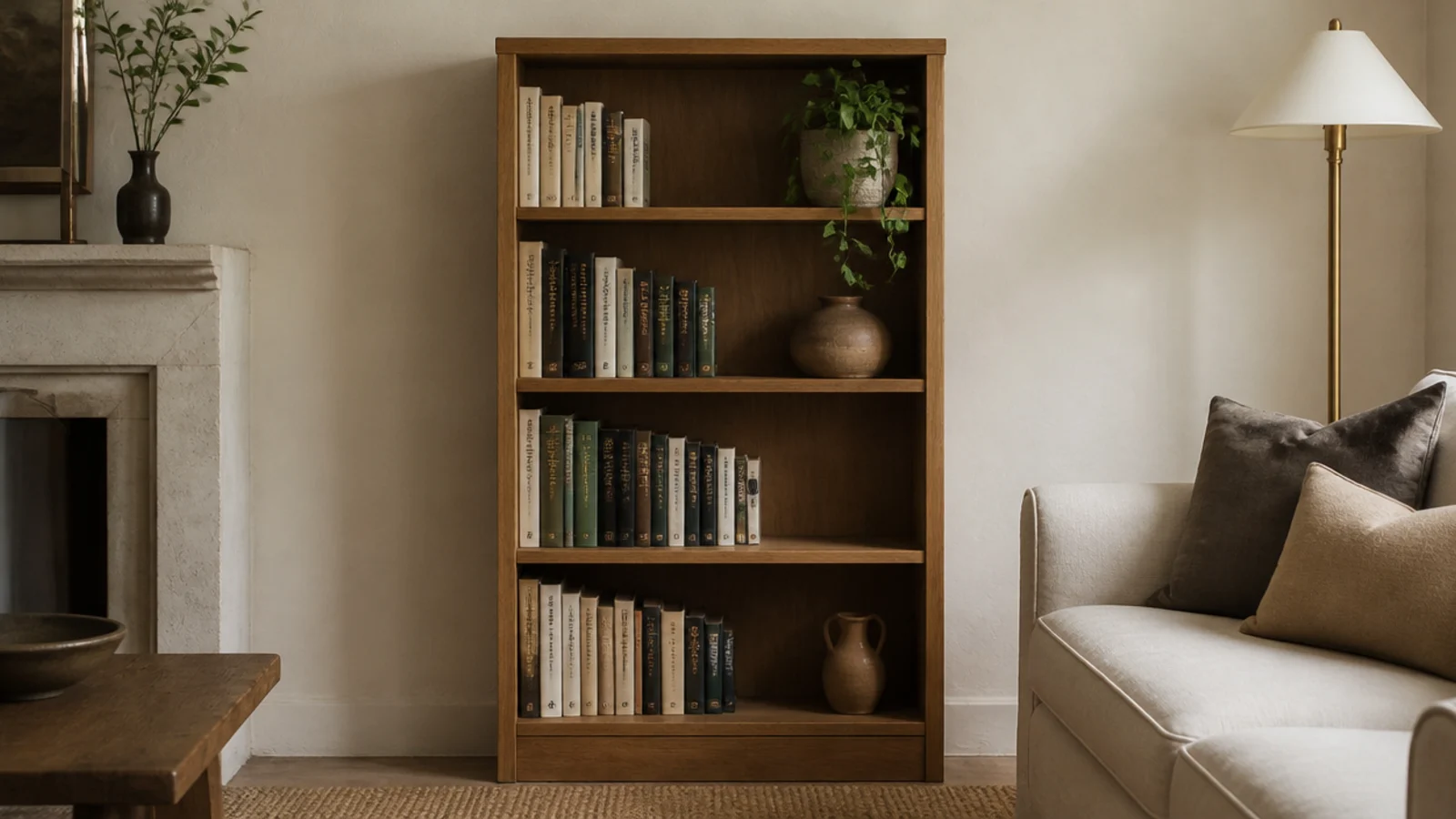
The default answer for anyone with a real collection, and it earns the position. Look for 3/4-inch solid stock, bays at or under 32 inches, adjustable pin holes running the full height, and a back panel that is rigid rather than a stapled sheet of hardboard.
That back panel is what stops a tall case racking sideways, and it is the first thing cheaper versions cut. Expect $150 to $400 ($$$) for solid wood. Strap it to the wall, load the heaviest books on the lowest two shelves, and it will outlive several moves.
2. The leaning solid-wood ladder shelf
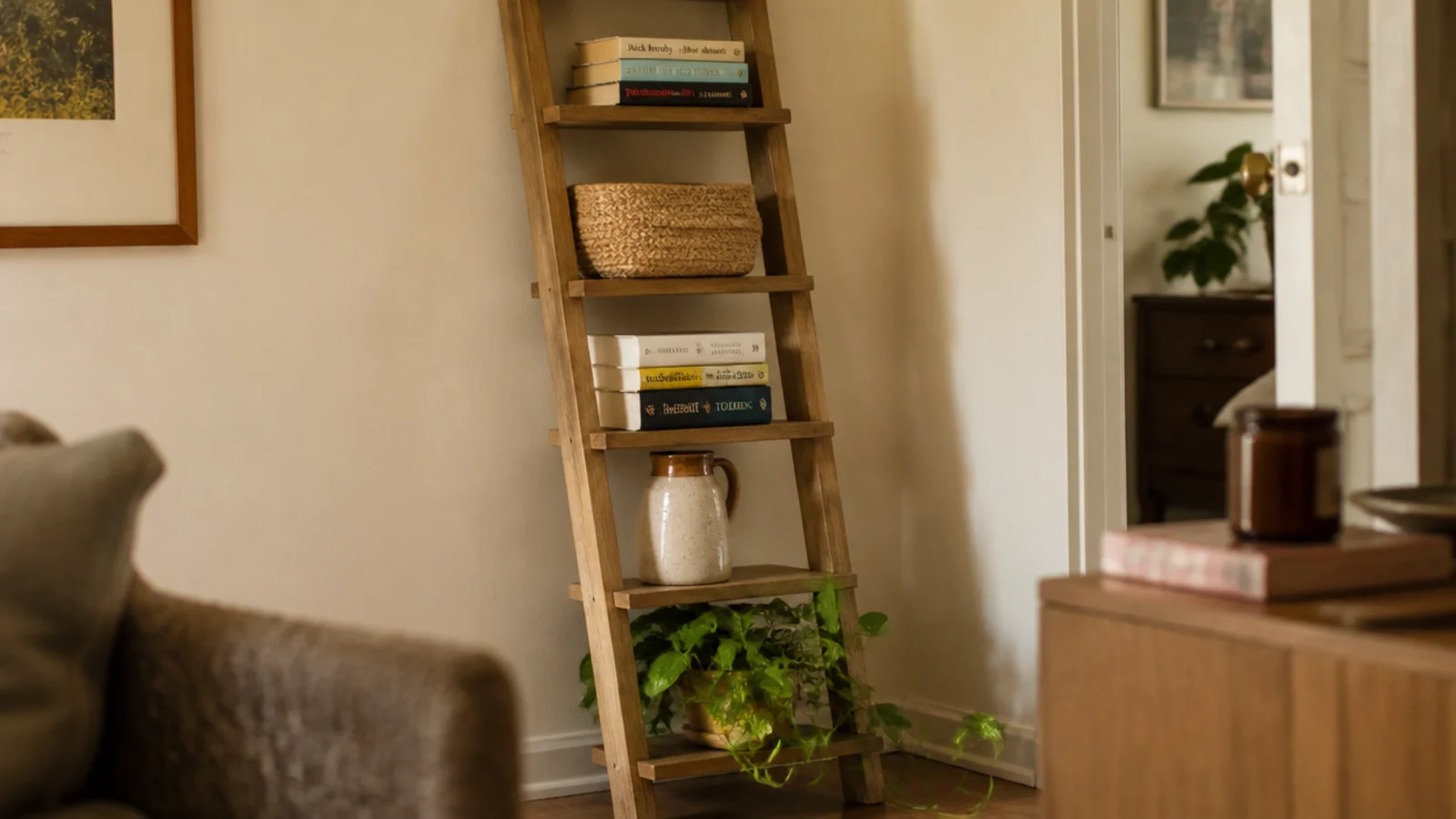
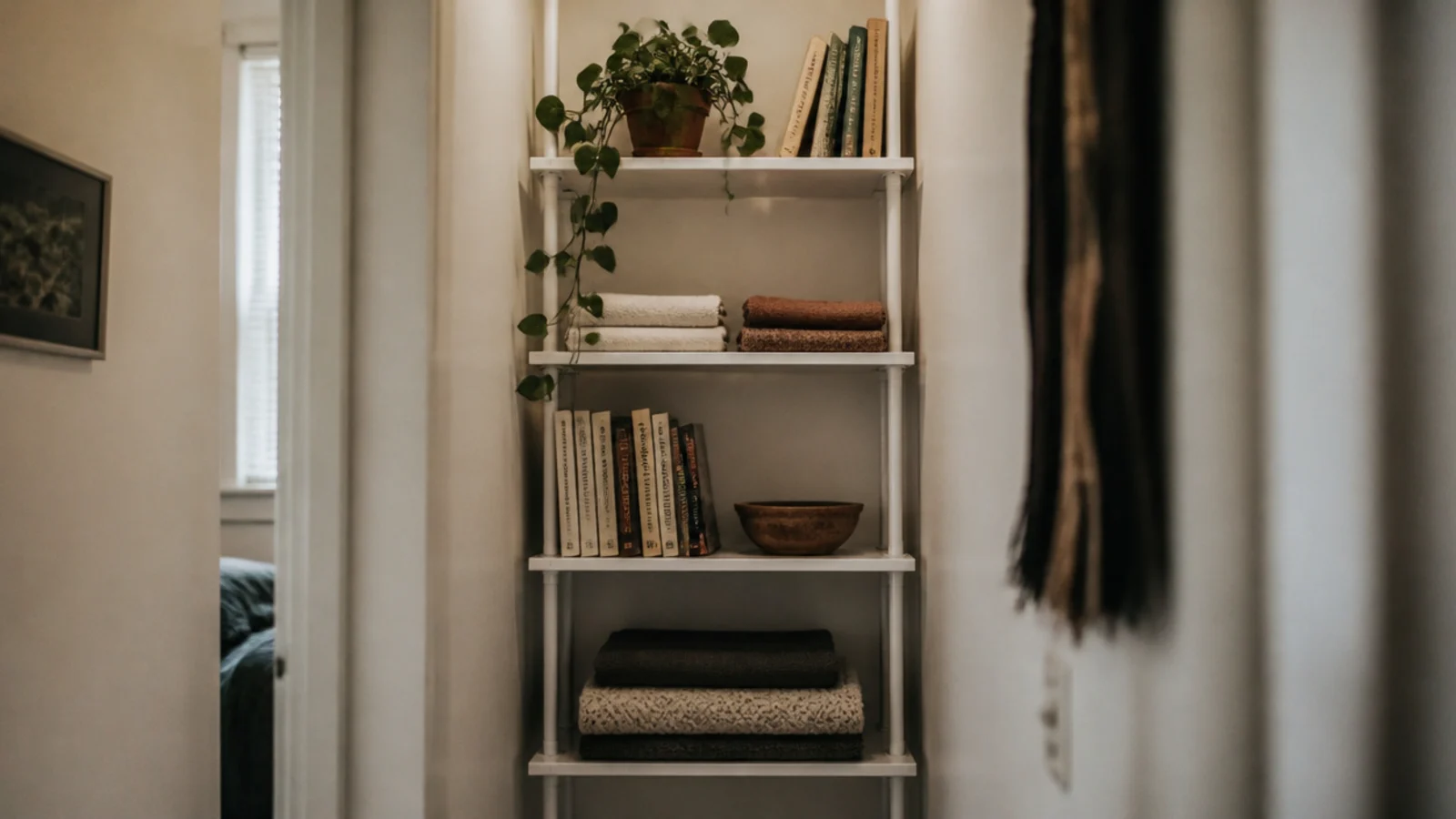
The most useful piece of rental furniture I own. Five rungs, leaning at roughly 15 degrees, stable against the wall with nothing but a felt pad under each foot.
The rungs get shallower as they climb, which does your styling for you — the top physically cannot hold much, so it never looks crowded. Heaviest on the bottom, always. Expect $45 to $90 ($), and skip anything with a laminated top surface, because the front edge chips within a year and there is no invisible repair.
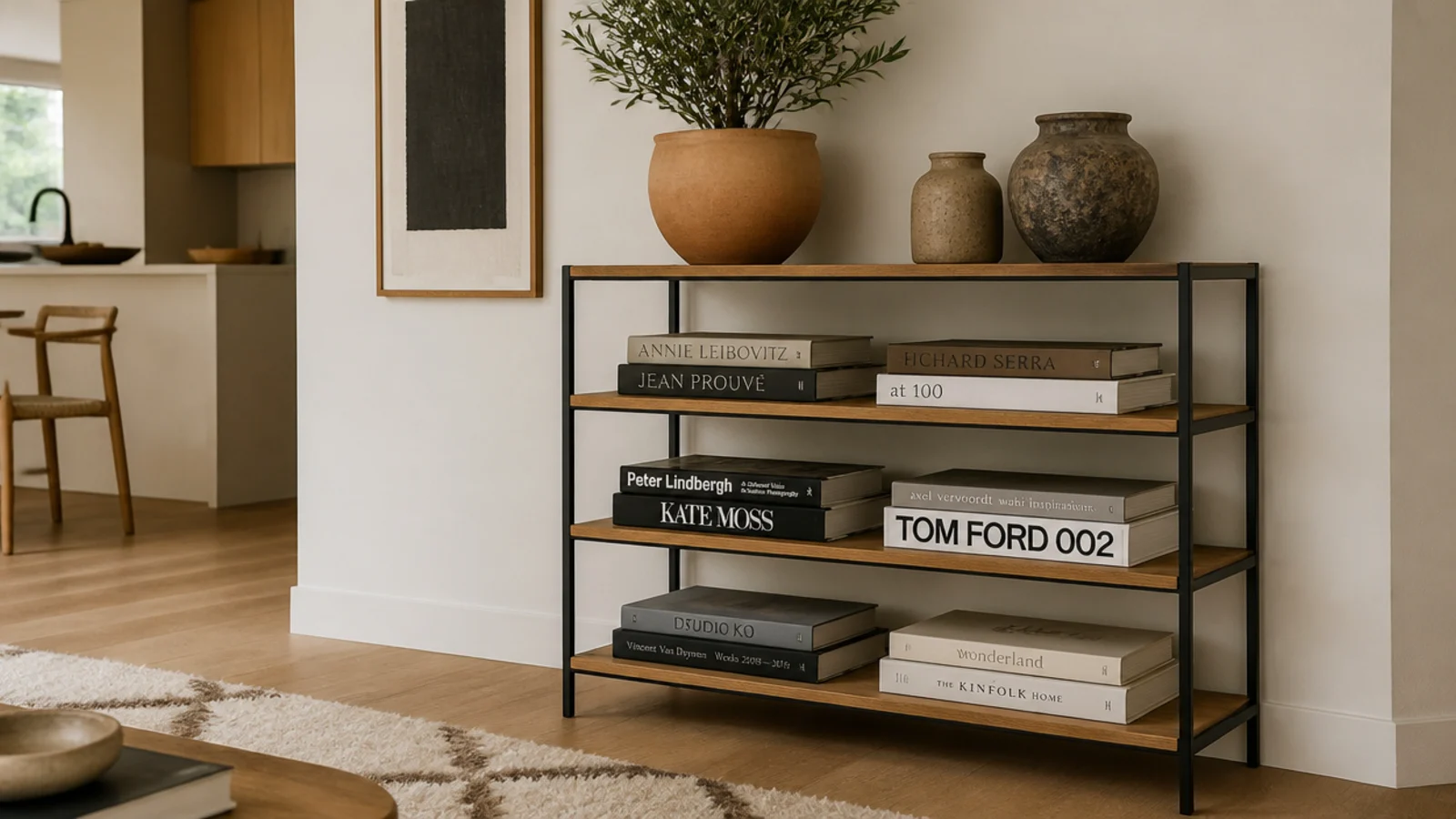
3. The steel-and-oak modular tower
When the load is genuinely heavy — oversized art books, records, a large planter — a welded steel frame carrying solid boards outperforms any bracket-and-board arrangement at the same money.
The frame spreads weight across four wall points rather than two, and the boards sit inside it rather than hanging off it. Check the boards are solid wood and not wood-look laminate over MDF, which is where cheaper versions of this style save their money. Budget $120 to $280 ($$).
4. The floating shelf set with concealed rods
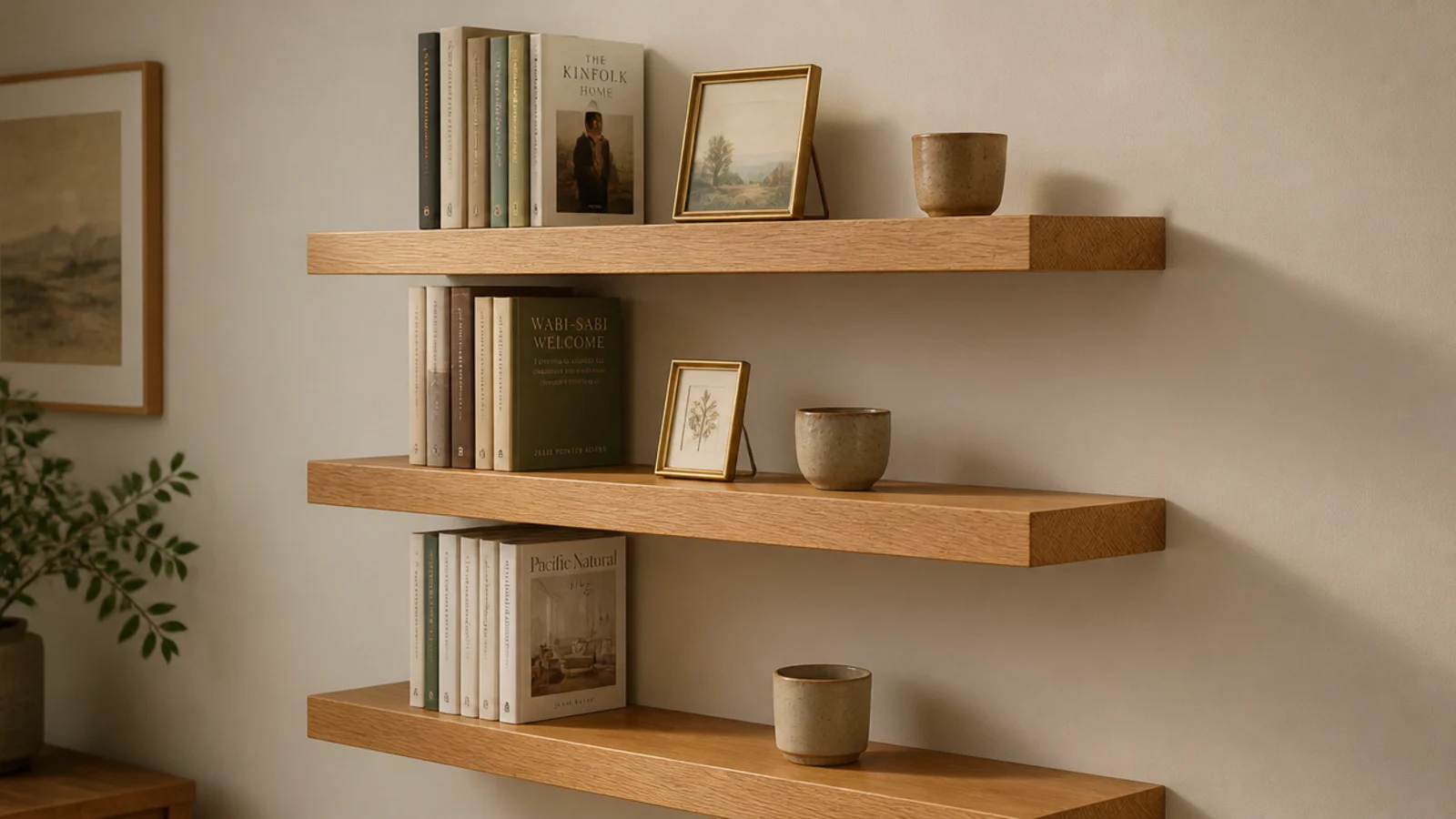
Visually the cleanest option there is, and the least forgiving. Concealed steel rods let a board appear to grow out of the wall with no bracket in sight.
They only work into studs. A 36-inch floating shelf of hardbacks is 60 to 75 pounds, and concealed-rod fixings into drywall alone are the configuration I see fail most often. Keep spans at or under 32 inches, use 3/4-inch stock minimum, and mount at 42 to 50 inches so you can reach the top of the books. Around $80 to $200 ($$) for a set of three.
5. The painted MDF built-in kit
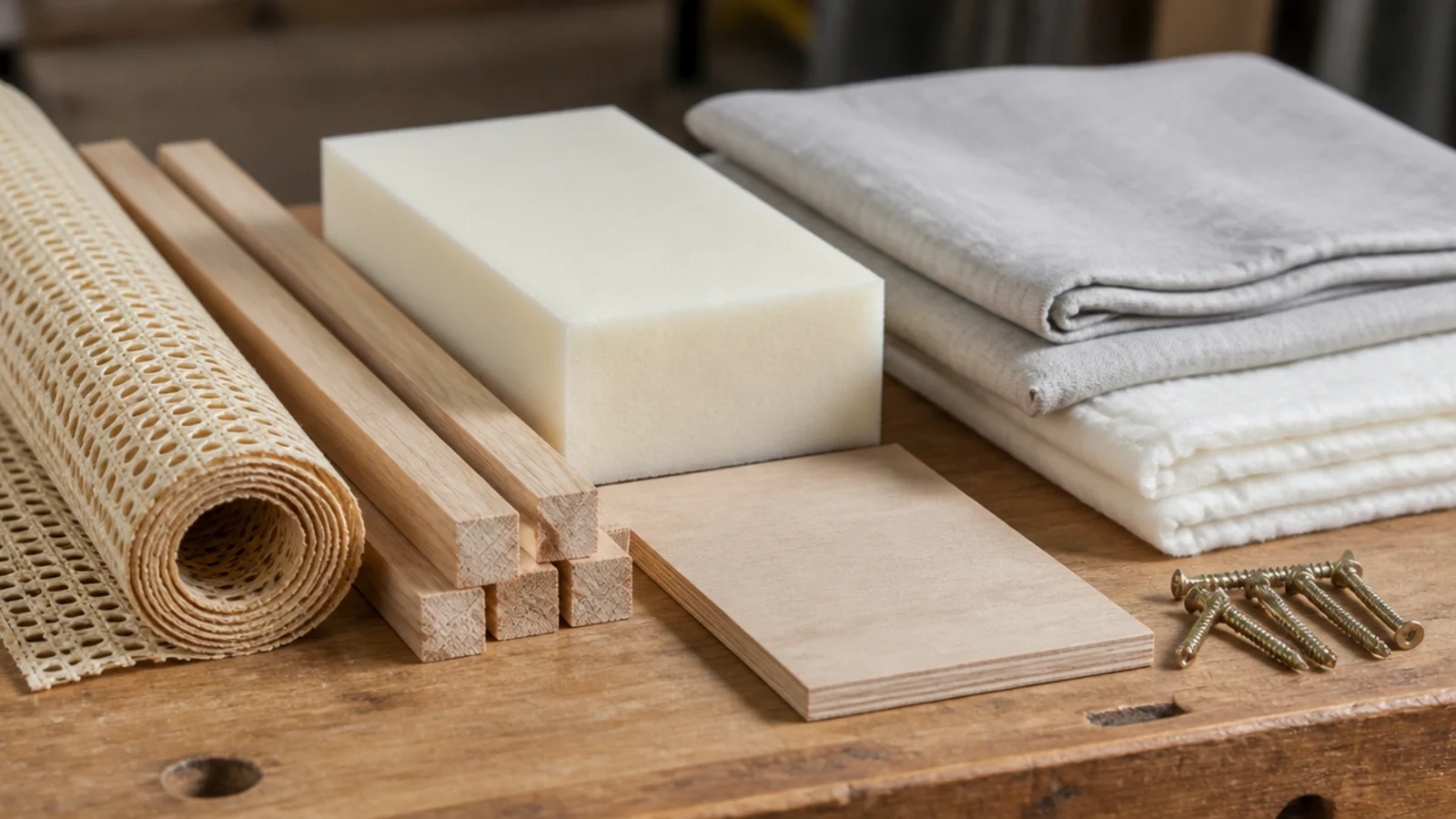
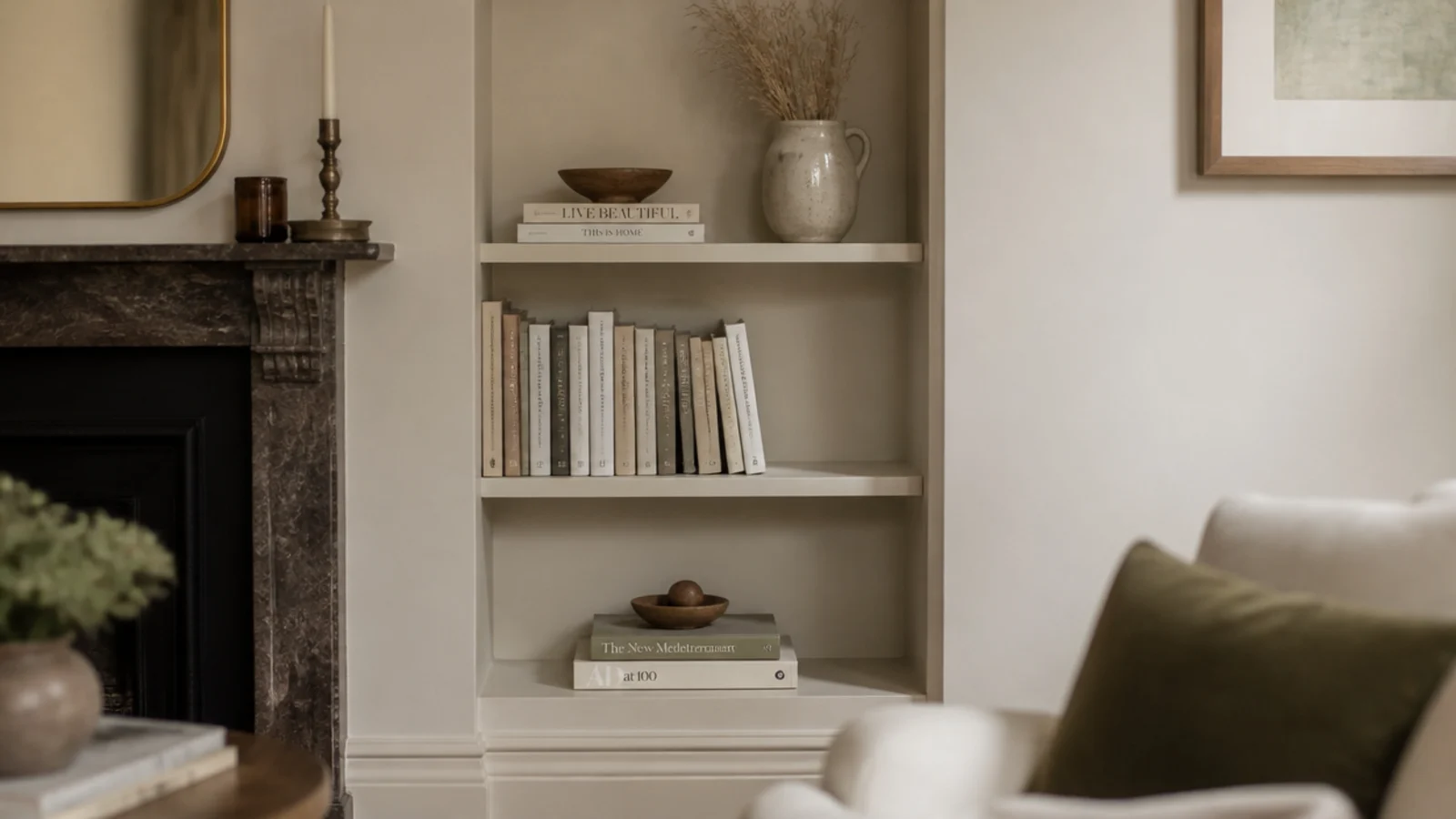
The best value on this entire list if you have an alcove. Cut-to-size painted MDF, scribed to the wall and finished flush with the plaster, reads as fitted joinery at a fraction of joinery prices.
MDF is heavier and less stiff than solid wood, so keep bays under 30 inches or add a front lip. Paint case, wall and trim the same tone — that single decision does more for the built-in effect than the materials do. Materials run $120 to $250 ($$) for a typical alcove.
6. The narrow twelve-inch tower
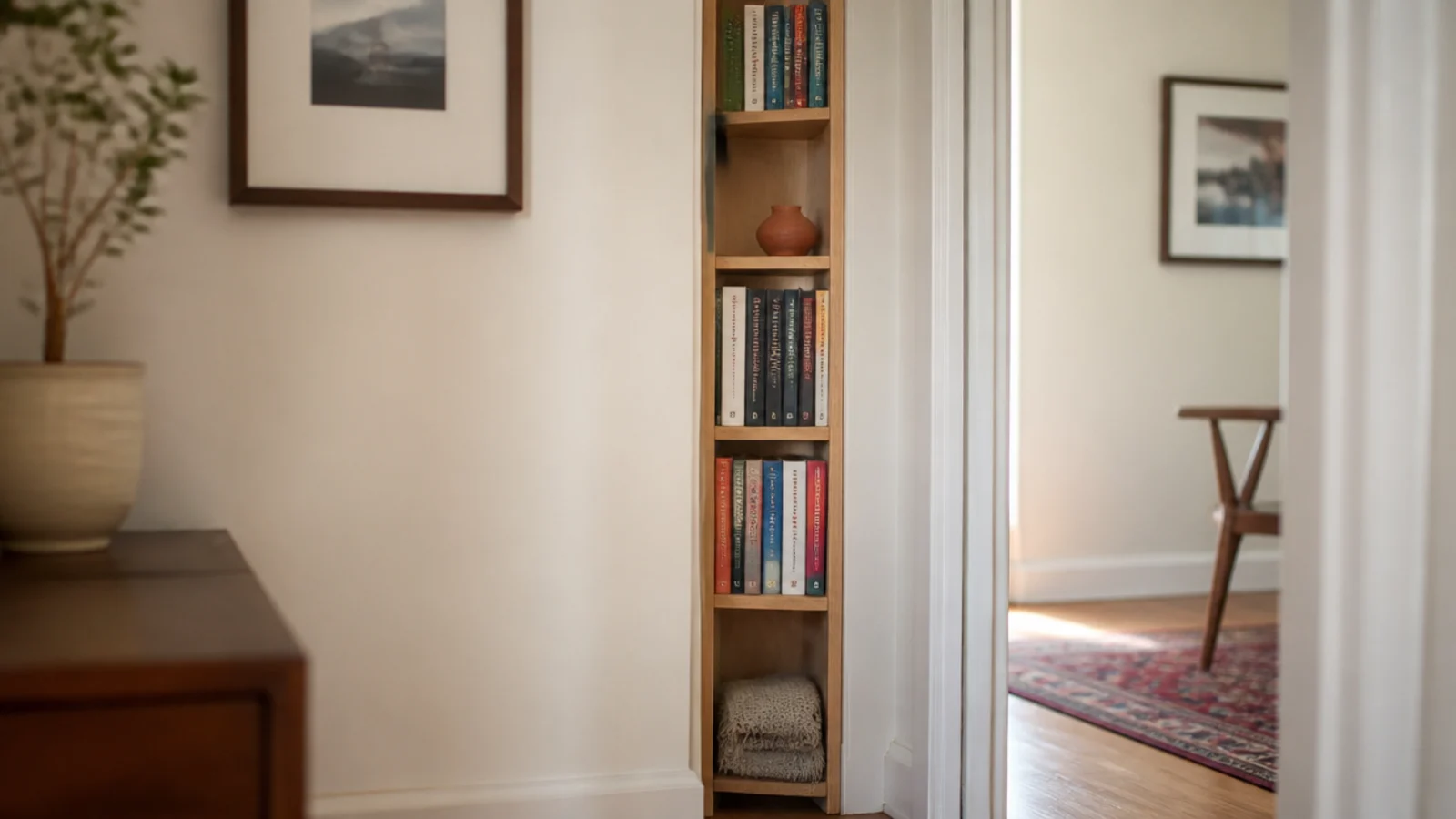
The pick nobody photographs and everybody needs. A 12-inch-wide tower fits the gap beside a doorway, between a window and a corner, or at the end of a hallway where nothing else will go.
Narrow cases are also the tippiest shape in the house, so the anti-tip strap here is not optional in any home with children. Keep the depth at 9 to 10 inches for paperbacks. Expect $40 to $90 ($), and check the shelves are adjustable, since a fixed narrow case is very limiting. Bookshelf for small spaces has more on placing these.
7. The tension-pole shelving unit
Four or five tiers held by floor-to-ceiling pressure, with no fixings at all. In a rental alcove with a solid floor and a solid ceiling, this is the honest zero-hole answer that still carries books.
Set the tiers at uneven spacings — a taller gap low down for baskets, shorter ones above. Even spacing is the standard mistake and leaves you with slots that fit almost nothing. Check the ceiling first, because a suspended or lath ceiling will not take the pressure. Around $40 to $80 ($).
8. The picture-ledge book rail
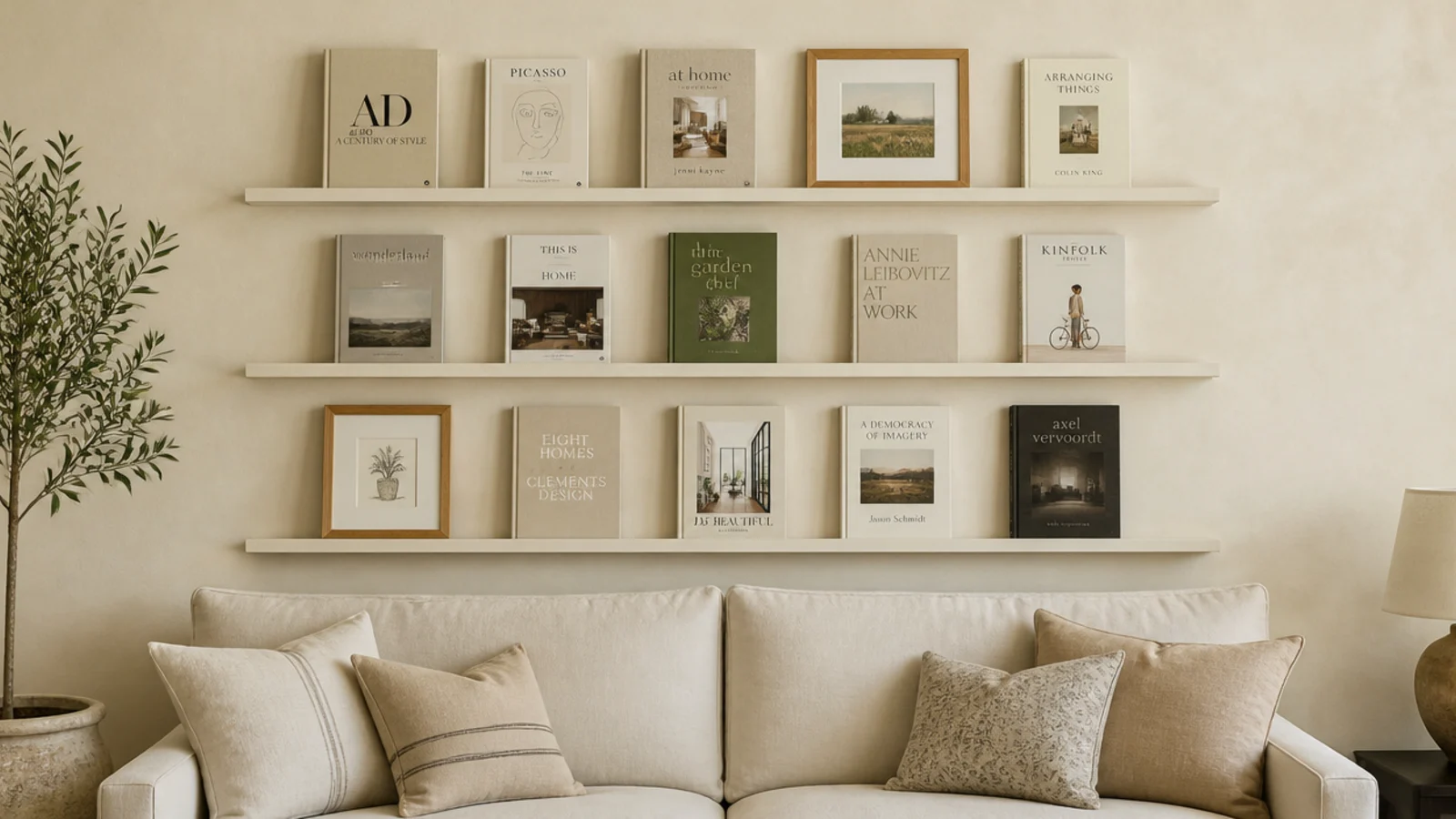
Four inches deep, with a front lip, mounted above a sofa or a bed where a deeper shelf would meet somebody's head.
The value is what it does to reading habits: forward-facing covers get picked up, spines do not. Start the lowest ledge 12 inches above the sofa back and space them 13 inches apart. Every fixing into a stud, and paperbacks only if you are using adhesive strips instead, which cap out near 15 pounds per pair. Around $20 to $40 ($) each.
What to Check Before You Buy
Measure the books, not the wall. Stack your tallest hardbacks and measure them. That number plus two inches is your clear height, usually 11 to 13. Buying a case whose fixed shelves sit under 10 inches apart means your best books lie flat forever.
Read the stated depth as the board width. Usable depth is often an inch less once a back panel and a wall that is not quite square get involved. Eleven to twelve inches for hardbacks, nine to ten for paperbacks, and resist going deeper — a hidden second row is storage you will never search.
Check the bay width against 32 inches. Three-quarter-inch stock sags past that span under books. If a case has 36-inch bays and no mid support, plan on adding one or gluing a lip under the front edge.
Look for pin holes running the full height. Adjustability is the feature that keeps a case useful for twenty years, and half-height pin drilling is a quiet cost saving that limits you permanently.
Press the back panel with your thumb. A rigid back stops a tall case racking; a stapled hardboard sheet does not. This is the single biggest difference between a case that stays square and one that goes diagonal after two moves.
Look at the front edges in the photos. A visible seam where edge banding meets the face means veneer over particle board, and it will chip where you brush past it.
Budget for the anchors separately. Most cases ship with plastic plugs rated around 10 pounds. Toggle bolts cost about a dollar each and carry 25 to 35 pounds in half-inch drywall. Buy them on the same trip, along with the anti-tip strap, which every freestanding case needs without exception in a home with children.
Frequently asked questions
What is the best type of bookshelf for a renter?
A leaning ladder shelf or a freestanding tower, because both carry real weight and need no holes beyond a single anti-tip screw. Tension-pole units work in an alcove with a solid floor and ceiling. Adhesive ledges are the true zero-hole option but cap out near 15 pounds per pair of strips, so they hold paperbacks rather than hardbacks.
How much should I spend on a bookshelf?
A narrow flat-pack tower runs $40 to $90, a solid-wood five-shelf bookcase $150 to $400, and a fitted painted run $300 and up in materials. Spending more mostly buys solid wood instead of veneer, adjustable pin shelves instead of fixed ones, and a rigid back panel. Past roughly $500 for a single case you are paying for brand.
How deep should a bookshelf be for hardbacks?
Eleven to twelve inches for hardbacks and nine to ten for paperbacks, measured as usable depth rather than the quoted board width. Deeper than twelve invites a hidden second row that you will never search again. Leave 11 to 13 inches of clear height between shelves so a hardback stands upright with a little air above it.
Are floating shelves strong enough for a row of books?
Only into studs, and only in stock at least three-quarters of an inch thick with a span at or under 32 inches. A linear foot of hardbacks is 20 to 25 pounds, so a 36-inch floating shelf carries 60 to 75 pounds and needs framing behind it. Concealed-rod shelves into drywall alone are the configuration most likely to fail.
Do adjustable shelves matter, or is a fixed bookcase fine?
Adjustable pin shelves matter more than almost any other feature, because your collection changes and art books, hardbacks and paperbacks all want different clear heights. A fixed case locks you into one spacing forever. Check the pin holes run the full height of the upright rather than stopping halfway, which is where cheaper cases cut cost.
Does every bookcase really need an anti-tip strap?
In any home with children, yes, without exception, and that includes short cases and light ones. A loaded bookcase is heavy enough to do real harm and shaped exactly like a ladder. The strap is one screw and one small hole that fills in thirty seconds with lightweight spackle when you move out.
Buy for the books you actually own and the wall you actually have — depth, span and clear height decide whether a case works, and everything else is arrangement you can change on a Sunday. The full styling walkthrough covers what goes on the boards once they are up, floating bookshelf ideas goes deeper on bracket-free runs, and if the case is heading for a bedroom, best diy headboard materials covers the wall it will sit beside. Save the pin for the next shopping trip.
Want more like this? Browse all 15 bookshelf ideas guides — they all use the same measurements and budget tiers.
Pin it for later
Save this to your Bookshelf Ideas board
Pin it now so it is waiting for you when the tape measure comes out — and so the next person hunting for this idea can find it too.
Save this pinKeep going
More ideas worth saving while you have the tape measure out.